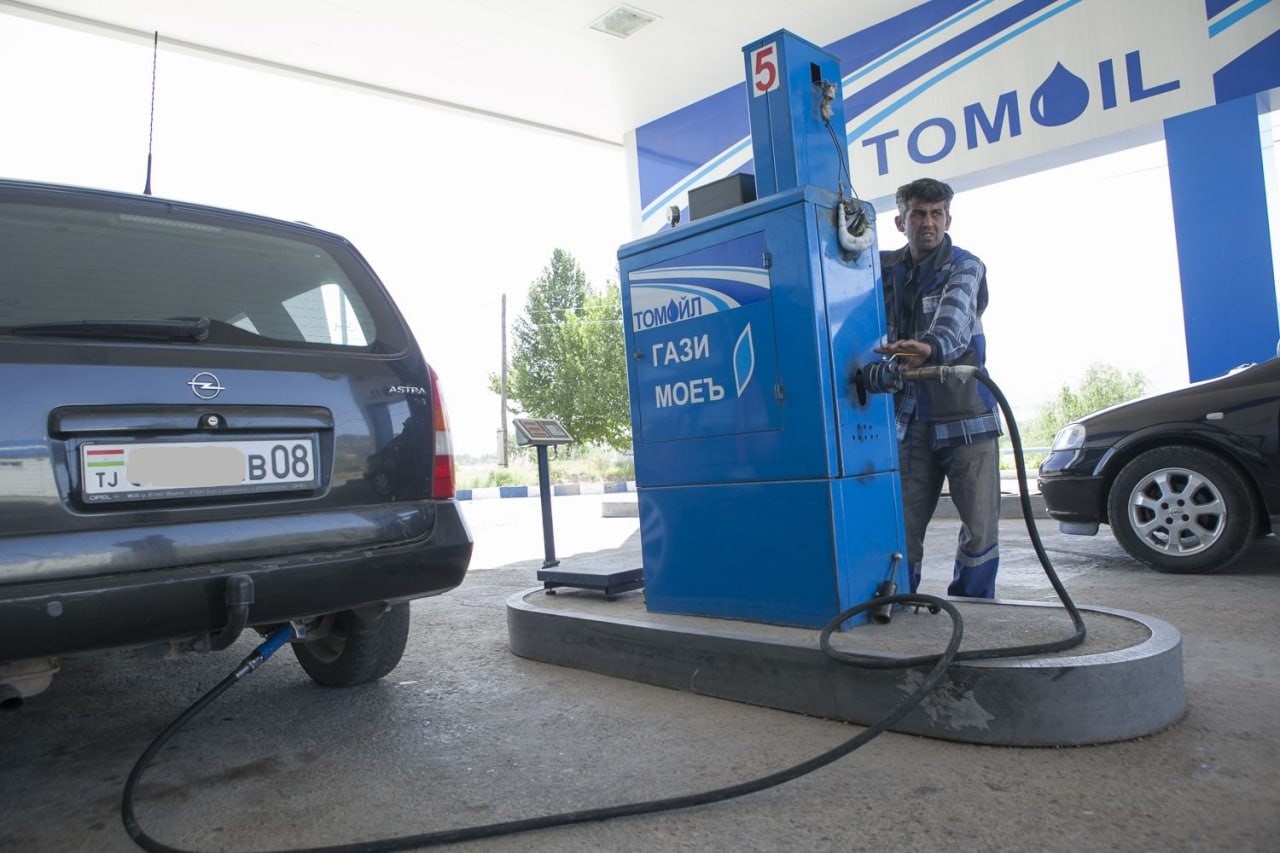
After two weeks of price hikes and supply shortages at fuel stations across Tajikistan, the cost of liquefied petroleum gas (LPG) has decreased by more than 1 somoni per liter, according to the country’s Antimonopoly Service.
As of December 10, the price of LPG at local fuel stations ranges between 4.6 and 4.7 somonis per liter, down from 5.5 to 6 somoni in late November. In some parts of the country, prices had previously reached as high as 6.7 somoni due to a temporary supply crisis.
Alternative import routes stabilize market
An official source within the Antimonopoly Service under the Government of Tajikistan told Asia-Plus that despite ongoing restrictions on gas exports from Kazakhstan — Tajikistan’s main supplier — local entrepreneurs have successfully found alternative import routes, including from private refineries.
"Even with limitations under intergovernmental agreements and export quotas, Tajik business operators are sourcing LPG from private enterprises in Kazakhstan at higher prices, or turning to Russia when necessary," the source said.
Currently, LPG prices in Dushanbe and the Sughd and Khatlon regions range from 4.60 to 4.80 somonis per liter, while in the Gorno-Badakhshan Autonomous Region (GBAO), prices remain higher — between 6.3 and 6.5 somonis — due to transportation challenges and limited access.
Kazakhstan’s export ban triggered shortage
The recent surge in gas prices was largely attributed to Kazakhstan’s decision to ban LPG exports by road and rail for six months, starting November 11, 2025. The move significantly impacted the Tajik market, where LPG is widely used as a more affordable alternative to gasoline.
Earlier this year, the Antimonopoly Service had linked fluctuations in fuel prices to reduced supply and rising prices in exporting countries.
Over the first ten months of this year, Tajikistan imported 291,100 tons of LPG valued at $198.9 million, with an average price of $683 per ton. About 62% of imports came from Kazakhstan (180,000 tons), while 38% originated from Russia (111,100 tons).
Impact on transport and services
Fuel price hikes in Tajikistan often lead to increased public transport fares and service costs. However, as fuel prices drop, these fare increases typically remain unchanged, raising concerns about pricing fairness and inflationary pressure on consumers.