As electricity rationing tighten across Tajikistan, demand for coal has surged — especially in Sughd province, where Kyrgyz coal remains the most sought after. But with increased demand comes rising prices: coal now costs nearly 40% more than it did last season.
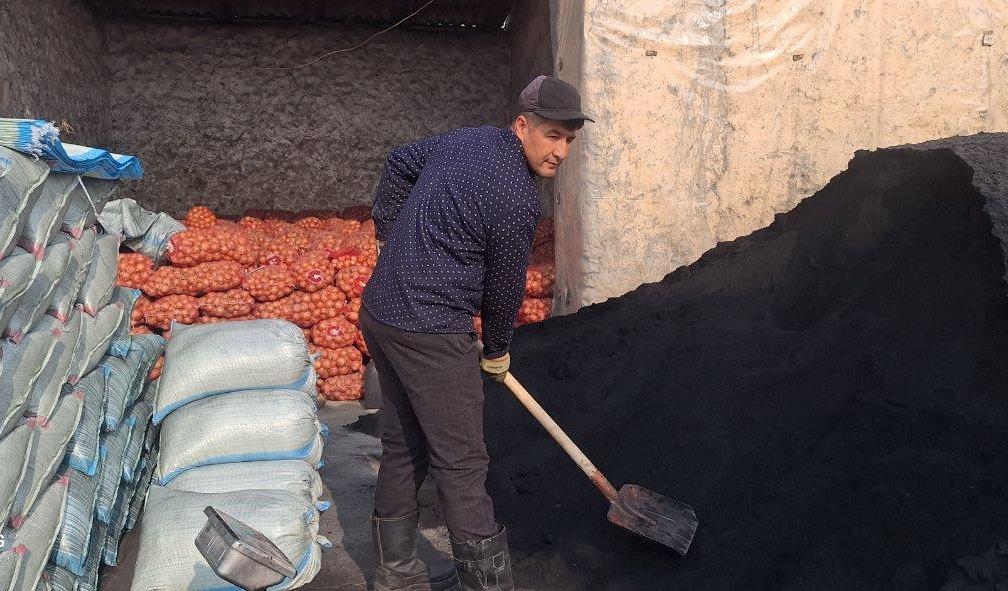
An Asia-Plus correspondent visited coal sale points in Haidar Usmonov village, Bobojon-Ghafourov district — a main hub where residents of Khujand and surrounding areas purchase coal.
Nazarmahmad Nazarov, who traveled from Mastchoh district, said coal in his area is of poor quality:
“I used to buy 2.8–3 tons for the winter. But now it’s too expensive — I’ll have to buy less. At least I can still afford it, but what about low-income families? Both coal and firewood are costly.”
Dilfouza Aminova, from Devashtich district, complains about both price and quality: “We bought coal dust twice for 1.90 somonis per kilo — it smoked and smelled, we had to open all the windows. Kyrgyz coal, by contrast, doesn’t smell, doesn’t smoke, leaves little ash — but it’s the most expensive, and not everyone can afford it.”
According to Sughd regional statistics, over 134 tons of coal and 66,820 tons of lignite were imported from Kyrgyzstan during the first 10 months of 2025.
Price varies by origin
Coal is sold in two forms — solid coal and coal dust (often used industrially). Kyrgyz coal is the most expensive, followed by Tajik and Uzbek coal.
Ibrohim Mutiullozoda, head of the Sughd Consumer Union, claimed prices were stable: “Local coal costs 2.00–2.50 somoni per kilo, Kyrgyz coal is 3.00 somonis.”
But vendors in the field tell a different story.
Urunboy Yusupov, a seller in Haidar Usmonov village, said: “Tajik coal is 4.00 somonis/kg, Kyrgyz — 5.50 to 6.00 somonis/kg, Uzbek — 2.70 somonis/kg. Kyrgyz coal dust sells for 1.50 somonis.”
Abdurasoul Karimov, who sells at Khujand’s Panjshanbe bazaar, confirmed that prices are up by 1.50–2.00 somonis compared to last year. He now sells pre-packed 4 kg coal bags for 20 somoni.
He noted that cafés and grill vendors drive much of the demand: “They prefer Kyrgyz coal — it burns hotter, with no smell. Tajik and Uzbek coal just don’t meet their standards.”
What did coal cost last year?
In December 2024:
· Tajik coal: 2.00–2.50 somonis/kg
· Coal dust: 1.00–1.50 somonis/kg
· Kyrgyz coal: 3.50–4.00 somonis/kg
· Uzbek coal: approx. 2.7 somoni/kg
Last year, prices were blamed on a closed border with Kyrgyzstan. This year, the border is open and imports are flowing — but prices have still increased.
On average, coal prices have risen by 35%, or 1.00 somoni to 1.5 somonis per kilogram, across all three supplier countries.