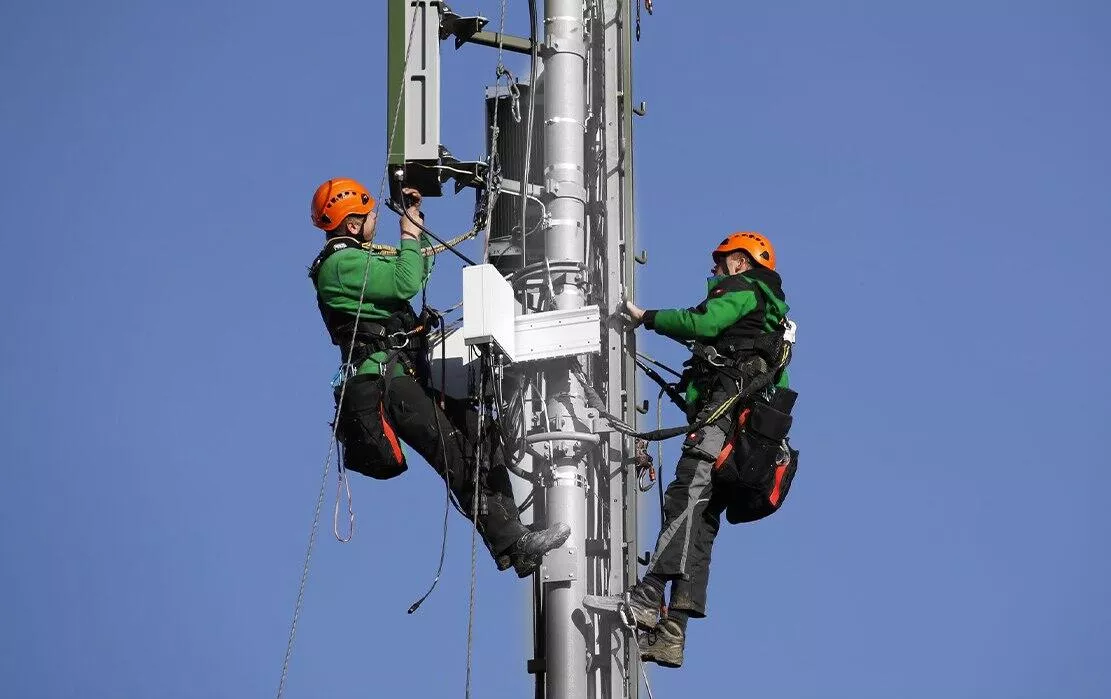
The government of Tajikistan has introduced a recycling fee for mobile operators' base stations. According to government’s decree No. 476, adopted on September 8, 2025, operators will be required to pay for both the use and installation of base stations. The fee will amount to 40 calculation indicators, equivalent to 3000 somonis per station in 2025, and 3120 somonis in 2026, based on a calculation rate of 78 somonis.
This move has raised concerns among mobile operators, who fear the financial impact on the industry. Although operators have declined to officially comment, sources familiar with the situation have indicated that the new policy could cost the companies millions of somonis and affect the development of mobile communication in the country.
Financial impact on operators
“If an operator has 2000 active base stations, they will need to pay at least 6 million somoni just for recycling,” say sources. Furthermore, if a company plans to install 1000 new base stations in the year, the recycling fee for those will total an additional 3 million somonis. In total, the annual recycling costs could reach 9 million somoni for one company.
Mobile operators note that this additional financial burden could significantly hinder the development and modernization of their networks, especially since each base station requires constant maintenance, upgrading, and energy supply.
Infrastructure development challenges
Experts also express concerns that the introduction of the recycling fee, along with other financial obligations, could slow down the development of telecommunications infrastructure in Tajikistan. “These projects require substantial investment: building new towers, upgrading existing networks, purchasing equipment, and hiring specialists. At the same time, operators cannot raise tariffs and are instead required to lower prices,” experts say.
According to them, such financial constraints could hinder the implementation of large-scale projects such as the introduction of 5G and expanding coverage in remote areas. “If tariffs remain unchanged while mandatory fees and taxes continue to rise, the question of developing telecommunications infrastructure in the country becomes even more critical,” experts argue.
Risks to digitization and service quality
While government programs for digitization and improving communication are strategically and socially significant, experts warn that insufficient attention to the financial burden on operators could undermine their successful implementation. “For the successful development of the telecommunications industry, it is essential to consider the actual burden on communication operators and provide them with the necessary conditions to modernize networks and implement new technologies,” experts emphasize.