Tajikistan's President Emomali Rahmon announced that the third unit of the Roghun Hydropower Plant (HPP) will be commissioned in 2027, ensuring the country's energy independence by September of that year.
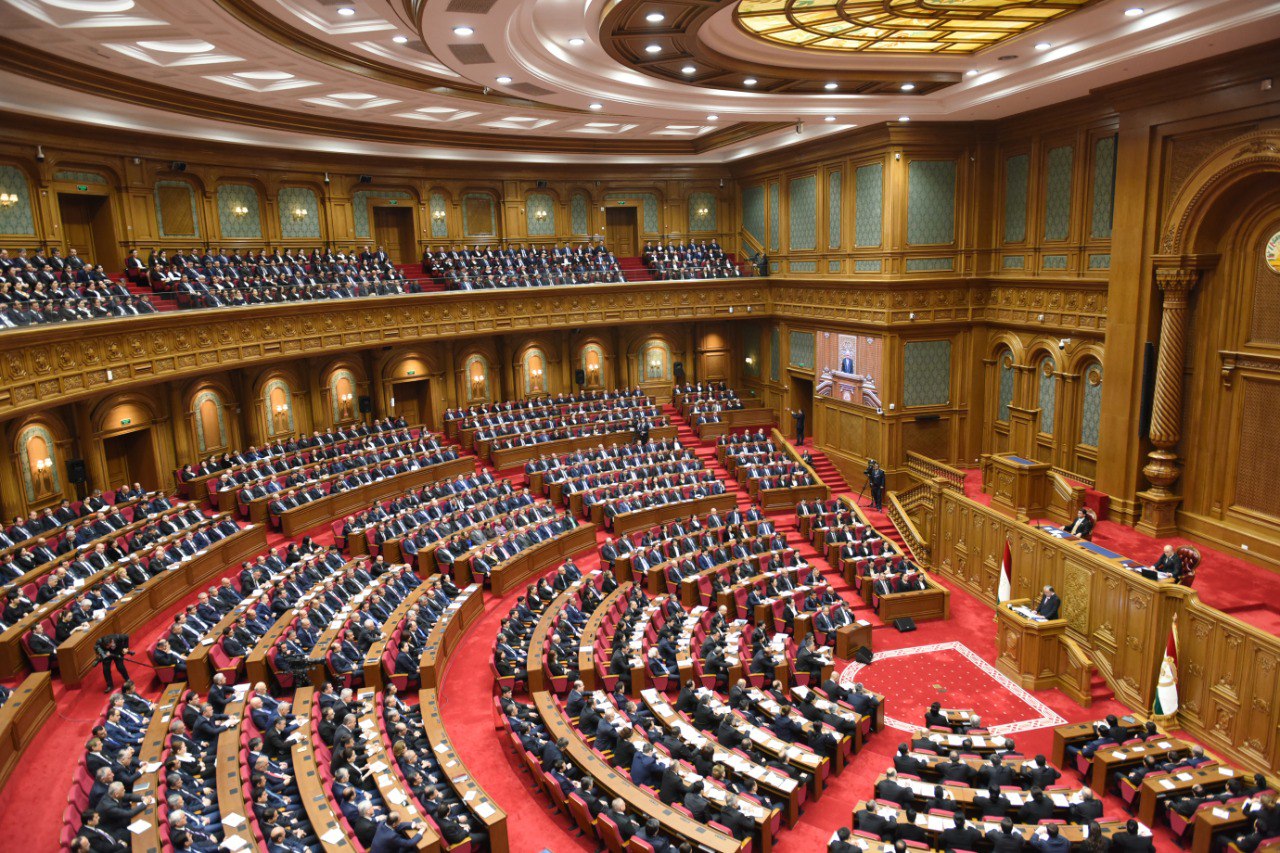
"In 2027, Tajikistan will completely forget about electricity consumption limits. We’ve been through difficult times, but the winter of 2026 will be easier, and from 2027, electricity issues will be a thing of the past," the president said in his address to the parliament.
He also stated that 18,600 workers are currently involved in the construction of the Roghun HPP, with over 60% of the work completed. A total of 9 billion somonis has been allocated from the state budget this year to continue the construction.
Furthermore, the president emphasized that the modernization of the Nurek HPP, other operational hydropower stations, and the development of solar power plants are key contributors to the country's energy independence. Specifically, by 2027, Tajikistan plans to produce 1500 kW of solar energy.
Rahmon noted that with responsible energy consumption, the country has enough capacity to meet the needs of all consumers.
Reasons for the energy deficit and billing Issues
The president also pointed out that one of the main reasons for the electricity deficit is the population growth and the increase in the number of industrial enterprises. In 2025 alone, 400 new industrial plants and workshops began operating in Tajikistan. The deficit was further exacerbated by a decrease in water inflow to the Nurek Reservoir due to drought.
Rahmon emphasized that the situation with electricity supply will improve due to the introduction of modern electricity metering and billing technologies. "Before the implementation of new technologies, 30-40% of the population did not pay for consumed electricity. With the new billing system, all consumers will be accounted for as fully paying for their electricity consumption," the president noted.
He also reported a significant reduction in electricity losses. In the first 11 months of the current year, losses amounted to 3 billion kWh, which is 500 million kWh less compared to the same period last year. A total of 1.5 billion somoni was directed into the energy system.
What supports the claim of Tajikistan’s imminent energy Independence
Tajikistan’s Prime Minister, Qohir Rasoulzoda, had earlier announced that the country will achieve energy independence by August 2027. This statement was made in August 2025.
To support the feasibility of these plans, the authorities have provided five compelling arguments:
· The Roghun HPP will become the foundation of the country's energy independence, eliminating the energy deficit by May 2027. Full operation of all units by 2029 will cover 80-85% of current electricity consumption.
· The modernization of the Nurek, Qayroqqum, and Sarband HPPs will add 180 MW in 2025. By 2027, the upgrades and new projects will increase capacity by 378-431 MW. These stations will play a vital role in ensuring the stability of power supply, particularly during the winter months.
· Solar energy is a key part of the “green” strategy. In 2025, the construction of a 200 MW solar power plant will begin in the Sughd province, and by 2027, two large facilities with a total capacity of 400 MW will be operational. By 2030, the capacity of renewable energy sources in the country is expected to reach 1500 MW.
· Digitalization of metering and reducing electricity losses also play a key role in achieving energy independence. In 2025, losses are expected to be reduced to 17%. By 2027, all consumers will be equipped with smart meters, which will help improve billing accuracy, reduce unauthorized consumption, and increase the efficiency of energy distribution.
· Electricity exports from Tajikistan to neighboring countries and the implementation of the CASA-1000 project for electricity supplies to Afghanistan and Pakistan will generate additional revenue and strengthen Tajikistan's role as an important energy player in the region.