Tajikistan continues to implement measures aimed at mitigating the effects of climate change. In the Shahriotus district of Khatlon province, saxaul has been planted on more than 250 hectares, while in the Asht district of Sughd province it has been planted on 70 hectares. The state-run news agency Khovar reported this, citing the State Research Institute of Forestry.
According to the institute, plans are in place to expand the area of saxaul plantations in the Asht district to more than 350 hectares by 2027.
Director of the Research Institute of Forestry, Nourali Huseinov, emphasized that planting saxaul plays a key role in climate change adaptation and environmental protection.
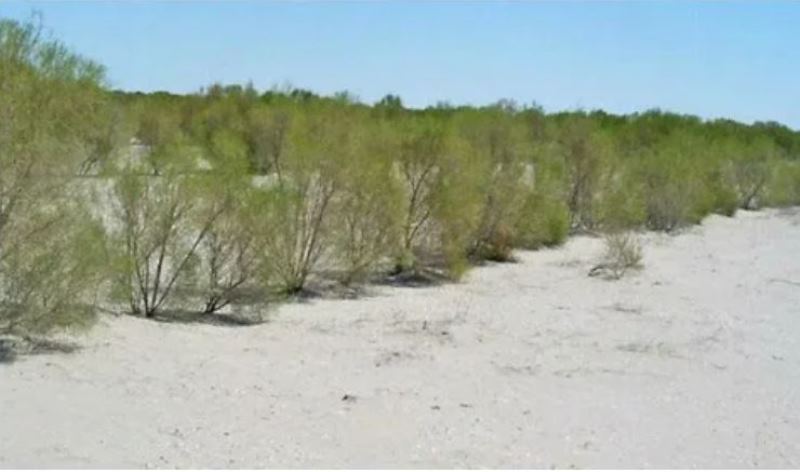
“This plant helps stabilize sands and prevent the formation of sandstorms. Thanks to its powerful root system, saxaul укрепляет sandy areas, effectively curbing desertification and the spread of dust. It improves soil quality, retains moisture, and increases the soil’s capacity to support the growth of other plants. In other words, this rare plant protects the soil and supports local ecosystems,” he said.
Experts note that land degradation remains one of the most serious global challenges. According to estimates, more than 12 million hectares of fertile land are lost worldwide each year, and by 2050 drought could affect up to 75 percent of countries.
In Tajikistan, these processes manifest themselves in soil erosion, desertification, and an increase in the frequency of dust storms. Forestry specialists say that dust and haze in the country mainly originate from arid regions of Uzbekistan, Turkmenistan, and Afghanistan.
Saxaul is well adapted to harsh desert conditions, being resistant to drought, extreme heat, and saline soils. The plant helps preserve natural desert ecosystems and partially prevents wind erosion.
Efforts to expand saxaul plantations are being carried out as part of forest restoration projects implemented in Tajikistan.
The saxaul (genus Haloxylon) is a tough, drought-resistant desert shrub or small tree from Central Asia and Western Asia, known for its tiny scale-like leaves, green branches, spongy bark, and extensive root system that stabilizes sand.