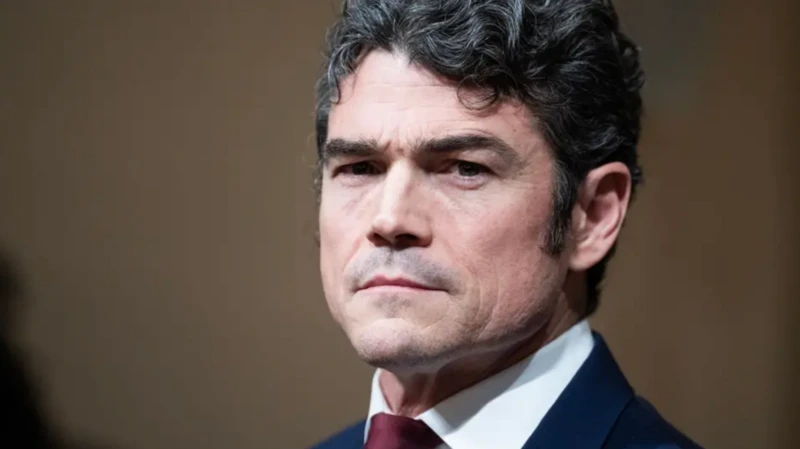
Joe Kent, head of the U.S. National Counterterrorism Center, has resigned, citing disagreement with Washington’s military policy toward Iran, the BBC’s Russian Service reported on March 17.
Kent, 45, who coordinated counterterrorism efforts under President Donald Trump, reportedly called on the White House to “change course.” He became the highest-ranking administration official to publicly criticize the U.S.-Israeli operation against Iran.
Appointed to the post last July after Senate confirmation, Kent had been considered a Trump ally. However, in a letter published on X, he stated that Iran “did not pose an immediate threat” to the United States and argued that the war was launched under pressure from Israel.
“Until June 2025, you understood that wars in the Middle East are a trap in which America loses lives and resources,” Kent wrote, adding that as a combat veteran he could not support sending a new generation into a conflict that does not serve U.S. interests.
Kent is a veteran of U.S. Special Forces and a former CIA officer. His wife, Shannon Kent, a U.S. Navy cryptologist, was killed in Syria in 2019 in a suicide bombing.
He also claimed that “disinformation” spread by Israeli officials and some American journalists had undermined the administration’s “America First” policy.
President Donald Trump, commenting on the resignation during a meeting with Irish Prime Minister Micheál Martin, said he had always considered Kent “weak on security.”
“I always thought he was weak on security. Iran was a threat — everyone understood that,” Trump said.
White House Press Secretary Karoline Leavitt said Kent’s letter contained “many claims that do not correspond to reality.”
Who is Joe Kent
Joe Kent previously ran unsuccessfully for Congress twice. His nomination as head of the National Counterterrorism Center was confirmed by a narrow margin.
Some Democrats accused him of ties to extremist groups, including members of the Proud Boys. During his confirmation hearings, Kent did not retract claims that federal agents may have provoked the January 6, 2021 Capitol riot, nor his assertions that Donald Trump won the 2020 election.
As head of the center, he reported to Director of National Intelligence Tulsi Gabbard and was responsible for analyzing and identifying terrorist threats worldwide.
Before that, Kent was deployed abroad 11 times with the U.S. military, including service with Army Special Forces in Iraq. He later worked in a CIA special unit and temporarily left government service after his wife’s death.