The government of Tajikistan has ordered the approval of a State Program for the Development of the Transport Complex for 2026–2030. The program is considered one of the key strategic documents aimed at transforming the country into a fully-fledged regional transit hub.
The total funding volume is estimated at around 19.2 billion somoni (approximately $2 billion), with the main financial burden expected to fall on international partners and the private sector.
Where will the money come from?
According to the document, funding sources are distributed as follows: (i) state budget — 189.5 million somoni; (ii) development partners (international investors) — 16.51 billion somoni; and (iii) private sector — 2.48 billion somoni.
Thus, the government will assume only a small share of direct financing, focusing instead on attracting external investment and developing public-private partnerships.
Part of the state’s contribution will also be implemented through tax and customs incentives.
Where will the funds be spent?
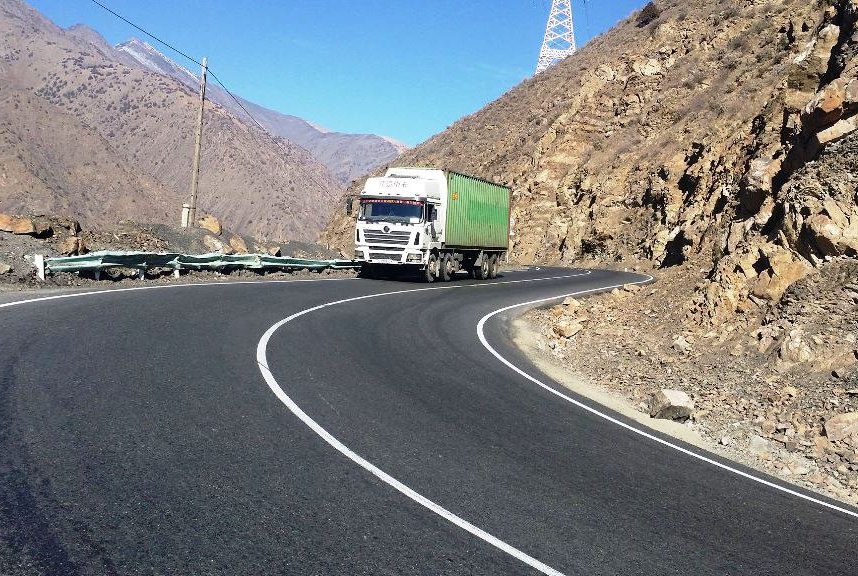
The program provides for large-scale modernization of the country’s transport infrastructure. Key areas include: 1) construction and reconstruction of up to 700 kilometers of roads; 2) development of the railway network; 3) creation of modern logistics centers; and 4) implementation of digital solutions.
Key challenges
Despite progress achieved, the program’s authors note that the transport sector faces a number of systemic challenges:
· weak railway connections with China, Kyrgyzstan, and Afghanistan;
· lack of modern logistics centers;
· low level of digitalization of customs procedures;
· insufficient infrastructure at border checkpoints;
· deterioration of rolling stock and road surfaces;
· high transportation costs;
· shortage of specialists in IT and digitalization;
· underdevelopment of public and electric transport.
Expected outcomes
By 2030, authorities expect significant growth in key indicators:
· argo transportation — up to 126.8%;
· cargo turnover — up to 128.5%;
· passenger transportation — up to 128.5%;
· development of electric transport — up to 124.7%.
In addition, the program aims to reduce transportation costs, improve service quality, and digitalize the sector, including the introduction of electronic customs data exchange with trade partners.
The development of transport infrastructure is seen as a key factor in overcoming Tajikistan’s “communication deadlock” and turning the country into a transit bridge between regions.
Digitalization as a key element
Special attention in the program is given to the sector’s digital transformation. A unified platform for managing transport systems is already being introduced, along with GPS-based transport monitoring systems.
Further digitalization is expected to:
· increase service transparency;
· reduce the shadow economy;
· accelerate logistics processes;
· lower corruption risks.
The program’s authors also highlight key risks related to financing: 1) delays in funding allocation may slow project implementation; and 2) untimely execution of measures could affect the achievement of target indicators.
Overall, the document is aimed at the systemic modernization of the transport sector, which could turn Tajikistan into an important transit player in Central Asia. However, its success will largely depend on the country’s ability to attract investment, accelerate digitalization, and address accumulated infrastructure challenges.
According to the Ministry of Transport, during the years of independence up to 2025, 2,407.8 kilometers of roads, 274 bridges, two three-level and two two-level interchanges, and seven transport tunnels were reconstructed and repaired. In total, 58 projects worth more than $2.2 billion have been implemented in the country’s transport sector during this period.