Digital transformation of Tajikistan: from online services to a new economy

Governments across the world are entering a critical phase of digitalisation. Citizens want faster, simpler, and more transparent services, while businesses and investors want efficiency, predictability, and digital access. Digitalization of government services offers a proven pathway to overcome these challenges. By rethinking how services are designed and delivered through digital means, governments can increase […]

Governments across the world are entering a critical phase of digitalisation. Citizens want faster, simpler, and more transparent services, while businesses and investors want efficiency, predictability, and digital access. Digitalization of government services offers a proven pathway to overcome these challenges. By rethinking how services are designed and delivered through digital means, governments can increase performance, strengthen trust, and support long-term economic growth.

Tajikistan digitalization journey focused early on moving high-demand public services online. Through national e-government platforms, citizens and businesses can now access hundreds of services digitally, including civil registration, licenses, permits, tax services, and social benefits. Processes that previously required multiple in-person visits are now completed online, significantly reducing time and administrative burden,  according to digitalization expert Faridun Yakubov.

 The world is moving fast, and Tajikistan is no longer just watching from the sidelines. As we enter the “Period of Digital Economy and Innovation (2025–2030),” digitalization has shifted from a “bonus” to a national necessity. It is the key to a better life for every Tajik family.

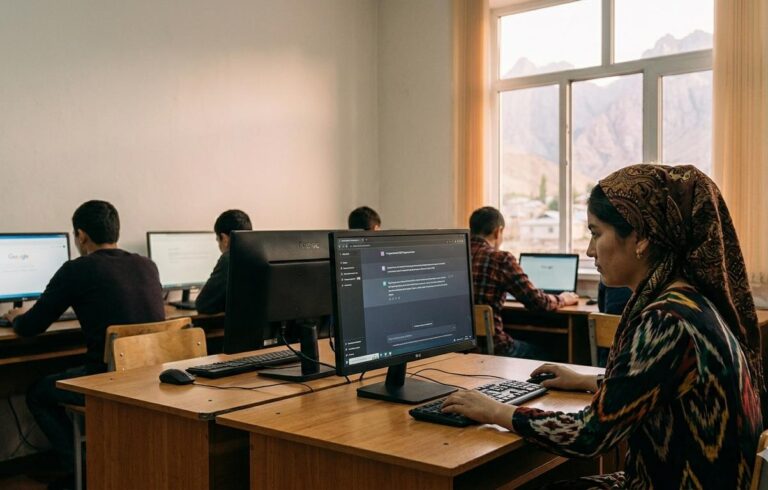
“The goal is to ensure that a student in a remote mountain village has the same digital opportunities as a student in Europe. That is how we achieve true growth.” Yakubov explains.

Starlink is a game changer.

For years, if you lived in a remote village “high-speed internet” was problem to access. Starlink has turned that into a reality overnight. Remote schools and clinics that used to be cut off from the world—especially during winter snowstorms—now have the same connection speeds as an office in Dushanbe.


Join us on social media!

Article translations:

Related Article

Оби зулол
Tenisi
Оби зулол

Most Read

Коммерсбонк Точикистон

Recent Articles

RZD announces the restoration of passenger services between Moscow and Dushanbe

Direct rail services between the capitals of Russia and Tajikistan were suspended in March 2020 due to the COVID-19 pandemic.

#AP30/Stories. “Selam! Heller nichek?” How Tatars live today in Sughd province

On the 30th anniversary of "Asia-Plus," we continue to publish reports that remain relevant even after years. This story was told in 2021, and since then, little has changed in the life of the Tatar community in Tajikistan.

15,000 cameras, drones, and robots: how technology monitors pilgrims in Mecca and Medina

During Hajj 2026, Mecca and Medina were under unprecedented digital control.

Another child in Dushanbe removed from family and sent to boarding school

The Ministry of Internal Affairs reports that the parents did not pay adequate attention to the child.

Emomali Rahmon instructs to address issues in seed production following criticism of the industry

Issues have been noted with certification, seed quality, and the material and technical base of the industry.

Water, climate, and a $130 billion deficit: seven key outcomes of the Water Conference in Dushanbe

At the forum, countries and international organizations discussed new mechanisms for cooperation, investments, and technologies that are essential for addressing the global water crisis.

Eskhata Bank introduces a new generation children’s wallet

"Eshkata Bank" has created a full-fledged digital platform that helps children aged 7 to 16 learn how to manage money.