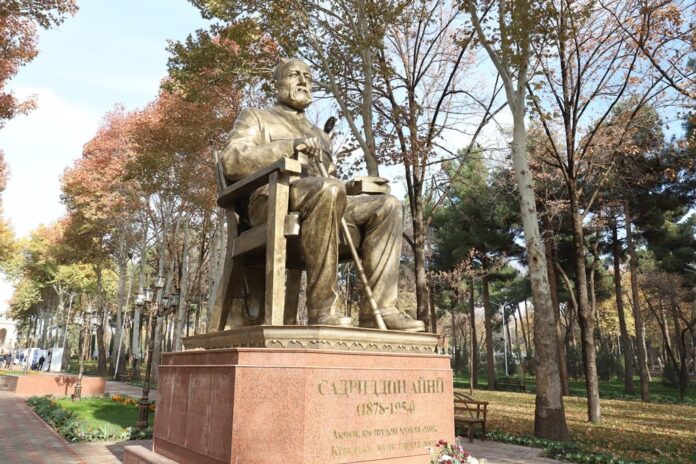
We prepared this story back in 2018 — for the 140th anniversary of Sadriddin Ayni — and today we want to share it again.
At that time, we spent almost a month searching for archival video and audio, then we conducted filming in two stages in Dushanbe and Samarkand, and also selected a suitable actor for the role of the famous writer and scholar.
The founder of Tajik Soviet literature, Sadriddin Ayni (real name — Sadriddin Said-Murodzoda), was born on April 15, 1878, in the village of Soktare, Gijduvan district of the Emirate of Bukhara, in a dehkan family.
Ayni was a distinguished figure in the sciences of the Tajik SSR (1940), an honorary member of the Academy of Sciences of the Uzbek SSR (1949), and a Doctor of Philological Sciences (1949). From 1951, he was the first president of the Academy of Sciences of the Tajik SSR. The first laureate of the State Prize of Tajikistan (1950).
In addition to his native Tajik, Sadriddin Ayni was well-versed in the Uzbek language, and he wrote some of his works in both languages. He made a significant contribution to the literature of both nations.
His main works include: “Odina” (published in 1924), “Dokhunda” (1930), “Slaves” (1934), “The Death of the Usurer” (1939), “Memoirs” (“Bukhara”) (1949-1954). The story “Odina” is considered the beginning of new Tajik literature.
Sadriddin Ayni is remembered by descendants not only as a brilliant writer but also as an outstanding literary scholar, whose work “Samples of Tajik Literature” effectively proved the nation’s right to originality in the pivotal 1920s.
Therefore, today Ayni is rightfully considered one of the founding fathers of the republic, who reintroduced Tajik-Persian literature to the world.
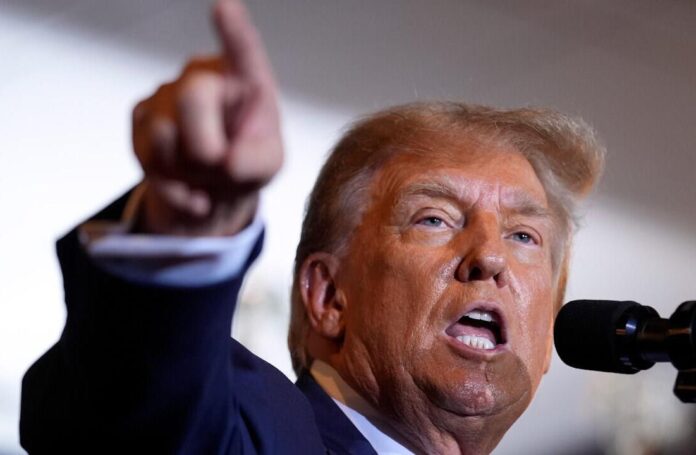
U.S. President Donald Trump stated that a second round of direct consultations with representatives of Iran could take place within the next two days, the BBC reports.
“Something might happen in the next two days, and we are more inclined to go there,” Trump said on April 14 in an interview with the New York Post.
This statement was made against the backdrop of Pakistan’s diplomatic efforts to break the deadlock following an unproductive meeting in Islamabad last weekend. According to AFP, Pakistani authorities are currently working on two fronts: organizing a new platform for dialogue and extending the existing two-week ceasefire.
Pakistan’s Finance Minister Muhammad Aurangzeb told the Associated Press that Islamabad will continue to act as a mediator. He reminded that the recent consultations were a historic event — they were the first direct negotiations between Washington and Tehran in nearly half a century.
UN Secretary-General António Guterres called the resumption of contacts “very likely.” After meeting with Pakistan’s Deputy Prime Minister Ishaq Dar, he again urged the parties to abandon a forceful scenario.
“There is no military solution to this crisis. Peace agreements require constant interaction and political will. Serious negotiations must resume,” Guterres emphasized.
At present, neither side has confirmed the exact location and time of the potential meeting.
According to CNN sources, U.S. Vice President J.D. Vance, along with Trump’s special envoys Steve Witkoff and Jared Kushner, who led negotiations with Iranian officials in the first round in Islamabad, will again participate in the second round of consultations with Tehran. Trump has tasked them with finding a diplomatic solution to the conflict.
Despite the failure of the first round, J.D. Vance previously expressed optimism about the negotiations with Iran, stating that the negotiators “made great progress” in Islamabad, but Trump is eager to strike a “great Trump-style deal” with Iran.
What is Happening in the Strait of Hormuz
According to available data, since the announcement of the U.S. blockade on April 13, several ships have crossed the Strait of Hormuz, successfully leaving Iranian ports. Tehran sharply reacted to Washington’s actions, calling the U.S. retaliatory blockade an “act of piracy.” However, the actual effectiveness of the U.S. Navy’s efforts to isolate Iranian harbors remained in question during the first day.
An analysis of shipping data conducted by BBC Verify specialists confirms that on April 14, at least four vessels related to Iran passed through the strait, with two of them directly departing from Iranian ports. Another three foreign vessels crossed this zone shortly after the official start of the blockade the day before. Additionally, the Wall Street Journal, citing American sources, reported that more than 20 commercial vessels passed through on April 14.
This information directly contradicts official data from the U.S. Central Command (CENTCOM), which stated that no vessel managed to break the blockade on the first day, emphasizing that colossal resources are involved in the operation: over 10,000 military personnel, as well as dozens of warships and aircraft. According to the American military, 6 commercial vessels were forced to turn around and return to Iran, complying with their orders. BBC Verify’s research also recorded that two Iran-related vessels indeed changed course after passing through the strait following the introduction of restrictions.
On the international stage, the U.S. actions have drawn sharp criticism from China. Beijing called the blockade “dangerous and irresponsible,” warning that such steps would only exacerbate regional tension and jeopardize the extremely fragile ceasefire agreement.
Simultaneously, a diplomatic shift has been noted in Washington on another front: Israel and Lebanon held direct talks — the first since 1993. However, a senior U.S. administration official emphasized that these contacts are not related to the negotiation process between the U.S. and Iran taking place in Islamabad.
The war that began on February 28 continues to inflict severe blows on the global economy and markets. Shipping in and around the Persian Gulf is effectively paralyzed, and massive airstrikes have led to widespread destruction of military and civilian infrastructure throughout the region.
The conflict has resulted in significant human losses: at least 3,000 people in Iran, over 2,100 in Lebanon, 23 in Israel, and the number of casualties in the Arab states of the Persian Gulf has exceeded a dozen. Additionally, the conflict has claimed the lives of 13 American servicemen.
Read all the news about the Middle East war in our coverage.
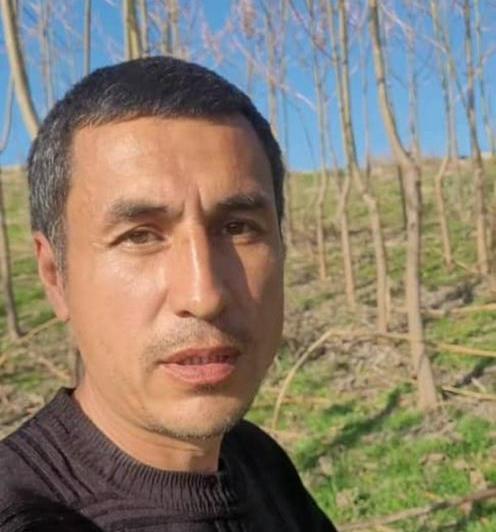
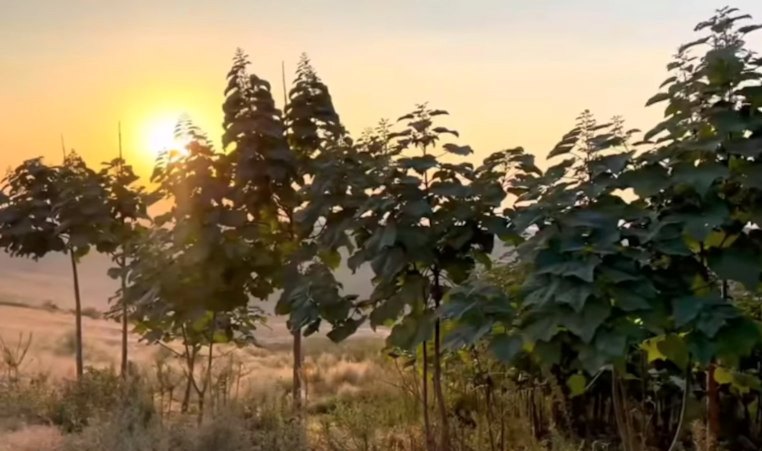
Otabek Nuritdinov, a 41-year-old resident of the Asaka district in the Andijan region, is doing something in Uzbekistan that no one has done before: transforming desert hills into a forest. In 2022, he purchased several dozen hectares of sun-dried land at an auction and began planting trees.
Nuritdinov is neither an agronomist nor an official; he is a former blogger from Asaka, known for his civic activism on social media. The funds for the project are his own: part of it went to solar panels to supply water to the hills. Seeds are sent by compatriots from Poland, the USA, and Turkey; followers on social media provide small financial support. Otabek shared his story with Fergana news agency.
— Please tell us how the idea of planting a forest in the Andijan region, in the desert, came about? Where did this desire come from?
— I was born in 1983. When I was a child, there was a lot of snow in our Andijan during the winter — even snowplows were in operation back then. And there were also heavy rains, downpour-like. If you remember that time and compare it with today, you can see the climate changes with the naked eye. Everything that scientists talk about is already happening.
I remember UN Secretary-General António Guterres presented a major report on climate change in 2020 or 2021. It was prepared by more than two hundred scientists from around the world. The report explicitly stated that Central Asia would become one of the most vulnerable regions. By 2050, mass migration of the population might occur here due to worsening living conditions.
And where does our water come from? Mainly from Kyrgyzstan and Tajikistan. In spring, glaciers melt there, forming rivers — the Amu Darya, the Syr Darya. They feed all of Central Asia. But today, glacier melting is accelerating, and scientists now acknowledge that changes are happening much faster than previously predicted. The region may face irreversible consequences much sooner than 2050.
We used to have many trees. I remember trees growing everywhere in courtyards, greenery was all around. You could walk to the market for three or four kilometers — and the entire road was in the shade. Now, almost none of those trees remain. In summer, walking even a couple of kilometers under the sun is a real challenge.
Otabek Nuritdinov in front of his growing forest. Photo from fergana.agency
I’ve been interested in ecology for a long time, observing climate change. Seeing more and more desert areas around, I began looking for examples of successful solutions. I watched how it’s done in China — they historically have real deserts, but they are turning them into green zones, creating forests. I was also interested in the Korean experience.
During World War II, when Korea was under Japanese occupation, the Japanese cut down vast areas of forest — millions of hectares. The land began to degrade, and desert areas appeared. Then the Koreans massively started planting new trees. People worked shoulder to shoulder, without machinery, by hand. And they managed to restore the forests. Now in South Korea, there are no longer the desert areas that were once called savannas.
Some say, “Well, they have a different climate, they have more rainfall.” But if you remember, it used to be different here too — rains were more frequent, and snow fell regularly in winter. We’ve simply lost the balance, and it needs to be restored.
After deforestation, we also had less precipitation. Why? Because trees have a special property: they evaporate moisture into the atmosphere. This moisture rises, mixes with clouds passing over us, and as a result of this reaction, rain falls. Trees literally cause rain. Moreover, they lower the air temperature by several degrees and retain moisture in the soil.
In desert, open areas, it’s different: after rain, the land becomes dry again in a few days. The sun comes out, the soil heats up — and all the moisture evaporates, carried away by the wind. There’s nothing to retain it. As a result, groundwater also disappears — simply because there are no plants. We’ve ruined our own ecology. Yet, trees and all vegetation raise groundwater levels, cause rains, and enrich the air with oxygen.
All these observations prompted me to act. I thought: if we plant as many desert lands as possible with trees and turn them into forests — people will breathe better, health will improve, there will be places for recreation, moisture will be preserved, groundwater levels will rise. It all came together in my mind as a complete picture — and I started planting the forest.
I plant densely because the problem of water scarcity becomes more acute every year. When the forest is formed, fallen leaves and branches will create natural mulch. Microorganisms and bacteria will develop in it. Tree roots, as they die, form microchannels in the soil, where worms and other organisms live — they also make passages. As a result, the ground turns into a natural reservoir: rainwater and meltwater go deep, rather than evaporating. Tree canopies protect the soil from overheating.
— What area have you already planted?
— According to Google Maps, just under three hectares.
— What trees are you planting?
— Various types. There is elm, willow, mulberry, fruit trees, paulownia. The elm grows poorly — last year some disease ate the leaves, I saw the same thing happening throughout Uzbekistan. The willow dried up in many places — there were irrigation problems. But the paulownia turned out to be very resilient and grows quickly. It’s everywhere now, and under it, there are willow and mulberry. This year, we are sowing oak acorns under the paulownia: when the oak grows in the shade, we will cut the paulownia.
Otabek Nuritdinov’s growing forest. Photo from fergana.agency
Overall, we plant what we can find on our own — there is no opportunity to buy planting material, and we don’t have our own nursery yet. We wanted to build a greenhouse to grow seedlings ourselves. But unforeseen expenses arose — we had to install solar panels, and the money went there. So the greenhouse didn’t happen. Without it, it’s almost impossible to grow decent planting material in open ground.
— I’ve read that you’re investing your own funds. Is there any business component to this? Do you plan to reach self-sufficiency, for example, by selling seedlings?
— Initially, that was our idea: to grow seedlings, sell part of them, and use the rest for planting. But due to unforeseen expenses, we couldn’t build the greenhouse. A year and a half ago, we calculated it would cost around 250 million soms. Now, it’s probably 300 or more — we haven’t recalculated.
— What size is the greenhouse?
— 16 by 90 meters.
— How are things with taxes and land?
— That’s a whole different story. In Uzbek legislation, there is no concept of “private forestry.” Neither a ban nor permission. But in practice, the absence of permission means prohibition — all doors are closed.
When we started, we just wanted to take vacant land for tree planting. We were told: by law — only through auction. We bought the land at auction, and then within five days, we were required to establish a farm and attach the land to it. So we did.
When we contacted the tax authorities, as a new farm, we were given a five-year tax holiday. It’s been two and a half years now — it will be three in September. But there was already a curious incident: we were automatically charged 211 million soms in taxes based on the scheme for dekhkan farms. After I publicly wrote about it, the error was corrected. So, publicity really helps us.
Initially, we had 220 hectares, then we kept 45. If the taxes after the grace period become unbearable — we will keep the 10-15 hectares we manage to develop and return the rest.
Photo from fergana.agency
— Is anyone from the officials willing to help?
— Many want to. We communicate with both republican structures and the leadership of the forestry department. There are people willing to assist. But they can’t directly help: we are a farm, and any funding towards us would formally look like an illegal operation. Many tried to find a way out — a legal solution hasn’t been found.
— Are there any conflicts with local authorities?
— No, they aren’t putting up any obstacles. We are working peacefully.
— Who helps you with the work?
— It’s just my wife and me. We get up early in the morning, work until evening every day. The children sometimes help during school holidays — planting seeds and doing small tasks. But they live with their grandmother in the city and study there.
— What is your main goal now?
— To turn as much land as possible into a forest, and for information about us to reach the highest levels. More and more people are learning about our project, and the number of followers is growing. If someone from those who make decisions comes and sees with their own eyes: there was a desert here — and now there is a forest, it might change something.
Many enthusiasts call me, asking for advice. But honestly, while there is no proper legislative framework, I dissuade many — it’s not worth getting involved. If we manage to convey our experience to the authorities and achieve the adoption of the corresponding law, thousands of degrading lands across the country can be turned into forests. When a forest reaches a certain density, after a few years it no longer needs irrigation — it lives on its own. That’s what we’re striving for.
Russian Commissioner for Human Rights Tatyana Moskalkova stated that she received a positive response from Tajikistan’s President Emomali Rahmon to her letter, in which she requested the repatriation of 200 Tajik women serving sentences in Russian prisons, reports TASS.
In her appeal, she wrote that “foreign female prisoners in Russian prisons face many problems, including the inability to meet with their relatives in a timely manner.”
In February of this year, the ombudsman in Tajikistan, Umed Bobozoda, announced at a press conference in Dushanbe about Moskalkova’s letter to the President of Tajikistan. At that time, the number of Tajik women requesting extradition was estimated to be more than 150 people.
The Tajik ombudsman stated that this issue was first discussed during Moskalkova’s visit to Tajikistan in October 2025, after which she wrote a letter to the President of RT regarding the extradition of female prisoners from Russia to Tajikistan.
Umed Bobozoda at the press conference also mentioned the preparation of places for women whose extradition is under consideration.
“To receive them, we need to prepare prisons so that we can accommodate them,” he said.
Meanwhile, no information or statistics on the exchange of prisoners between Russia and Tajikistan have been disclosed in recent years. It is unknown how many Tajik citizens are serving sentences in Russia and how many Russians are held in Tajik prisons.
During last year’s visit to Tajikistan, Tatyana Moskalkova visited the correctional colony YAS 3/1 of the Ministry of Justice of RT, where she communicated with Russians serving sentences there. It was reported at the time that some convicts asked her for assistance in transferring to Russian correctional facilities for further serving of their sentences.
According to the latest data, 471 women are currently serving sentences in Nurek prison. There are also 11 children under the age of three with their mothers. The children remain here with their mothers until they reach the age of three, after which they are handed over to the women’s relatives.
A group of six leading international human rights organizations and press freedom associations has appealed to the President of Kazakhstan, Kassym-Jomart Tokayev, urging him to intervene in the situation with the increasing pressure on independent media in the country.
In a joint statement, the Committee to Protect Journalists, the Norwegian Helsinki Committee, the International Partnership for Human Rights (IPHR), Civil Rights Defenders, the International Press Institute (IPI), and Freedom For Eurasia (FFE) emphasize that the wave of arrests that began in December 2025 directly contradicts the concept of the president’s proclaimed reform program “New Kazakhstan” and the principles of the rule of law.
Human rights defenders are particularly alarmed by the use of Article 274 of the Criminal Code on the dissemination of knowingly false information. Due to its excessively broad wording, this provision has become a tool of pressure, allowing journalists to be imprisoned for up to three years. Currently, several notable figures in the Kazakh media sphere are under house arrest under this article.
One of the first to face persecution was the founder of the publication Orda.kz, Gulnara Bazhkenova. Since December 2025, she has been awaiting trial in connection with statements about government corruption made in a YouTube broadcast. Human rights defenders point out that the arrest was preceded by an unprecedented harassment campaign: funeral wreaths were sent to the journalist, and deepfake videos with false messages about her suicide were spread online. The situation worsened when Bazhkenova’s lawyer, who was actively defending her interests, was stripped of his license.
The editorial team of the KazTAG agency is experiencing similar pressure. Editor-in-chief Amir Kasenov is under house arrest following a complaint by the company Freedom Finance, which considered the publication’s articles as an “information campaign” against its shareholder. Simultaneously, KazTAG’s director, Aset Matayev, suffered a brutal attack involving a crowbar, after which he himself was arrested on charges of hooliganism. Despite the earlier charges of spreading falsehoods against him being dropped, the international community is demanding a transparent investigation of the incident, seeing it as connected to his professional activities.
The list of those persecuted also includes independent journalist Botagoz Omarova, whose arrest in March 2026 is linked to a publication about financial violations in the construction of facilities for the President’s Administration. Lukpan Akhmedyarov, the founder of the “Prosto Zhurnalistika” project, also remains under threat of criminal prosecution.
International organizations note that the repressions have gone beyond individual cases and have taken on a systemic nature. This is manifested in mass denials of accreditation to journalists from “Radio Azattyk,” the blocking of the ResPublika portal, and the closure of the popular Airan project, whose sponsors faced pressure. The combination of these factors – from cyberattacks to coordinated complaints on social media – creates an atmosphere of fear and enforced self-censorship in the country.
The authors of the appeal urged President Tokayev to initiate the complete decriminalization of the article on false information, release the persecuted journalists, and hold a personal meeting to discuss ways out of the freedom of speech crisis. According to human rights defenders, the absence of decisive measures to protect the press could undermine the authority of the “New Kazakhstan” reform program.
“These attacks on the press threaten to create an atmosphere of fear and self-censorship, which will cause irreparable damage to the authority of your reform program. We are convinced that the criminalization and exemplary punishment of journalists, as mentioned above, have no place in the democratic society you strive to build within the framework of ‘New Kazakhstan,'” concluded the authors of the letter.
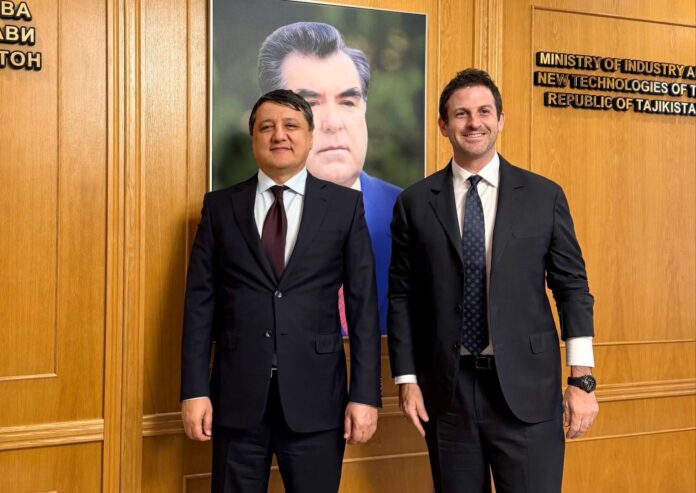
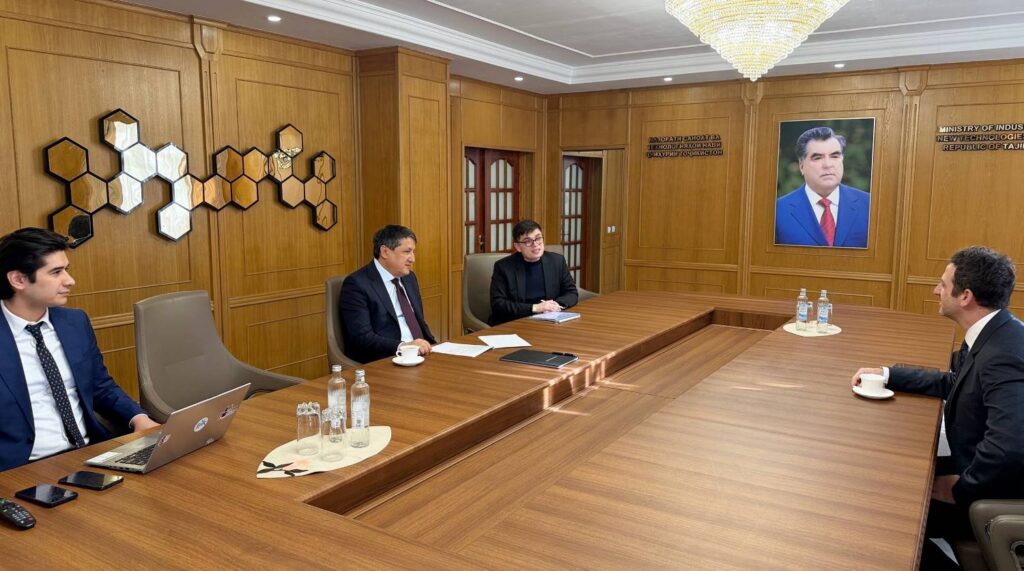
Министр промышленности и новых технологий РТ Шерали Кабир и президент по глобальным вопросам компании Goldman Sachs Джаред Коэн. Фото: Минпром РТ
The Minister of Industry and New Technologies of Tajikistan, Sherali Kabir, held a meeting with Jared Cohen, President of Global Affairs at the international investment bank Goldman Sachs. The negotiations discussed Tajikistan’s course towards creating a sovereign AI ecosystem and using green hydropower as a basis for hosting global infrastructure in the field of artificial intelligence.
“During the negotiations, Tajikistan’s course towards building a sovereign AI ecosystem and using the country’s green hydropower as the basis for hosting global AI infrastructure was presented,” reported the Ministry’s press service.
An AI ecosystem is the collection of all tools, technologies, companies, and people working together to develop and use artificial intelligence (AI).In simple terms, it’s like a whole network of everything related to AI, where each element supports others to improve and apply artificial intelligence in different areas.
Special attention was given to the project of the special AI zone, Area AI — the world’s first specialized free zone for companies in the field of artificial intelligence. This project brings together leading global AI companies such as Perplexity AI, Cerebras Systems, Supermicro, Yotta, and other international technology partners. The meeting also included discussions on Tajikistan’s potential as a hub for green computing, highlighting the country’s strategic interest in sustainable technologies.
Green computing is a concept and set of practices in the field of information technology aimed at reducing the environmental impact of computing technologies.
Photo: Ministry of Industry RT
Sherali Kabir also informed Jared Cohen about the AI-GOV project, which represents an agent-based AI system for government administration. As part of this initiative, the Perplexity Comet platform has already been implemented in the Ministry of Industry and New Technologies and is also used for automating the licensing process of small and medium businesses in Tajikistan.
The meeting resulted in an agreement to continue joint work on implementing strategic AI projects in the country.
Goldman Sachs is one of the world’s largest investment banks, specializing in providing financial services to corporate clients, government institutions, and private investors. Founded in 1869, the bank offers a wide range of services, including investment banking, asset management, and securities trading. Goldman Sachs is actively involved in global projects aimed at implementing innovative technologies and sustainable solutions, including artificial intelligence, green energy, and sustainable development.
The headquarters of Goldman Sachs is located in New York, USA. The company also has offices in key financial centers worldwide, including London, Tokyo, Hong Kong, and Singapore.
More than a year has passed since the border between Tajikistan and Kyrgyzstan was opened and the final border agreement was signed. It was expected that with the opening of borders between the two neighboring countries, the joint border markets would also soon open and trade would resume. But this has not happened yet.
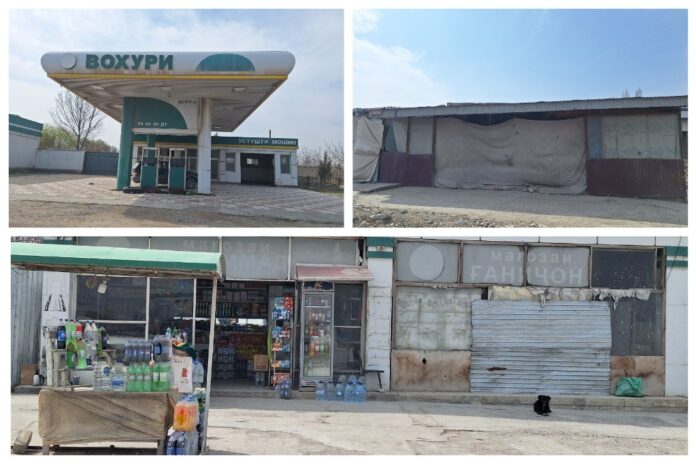
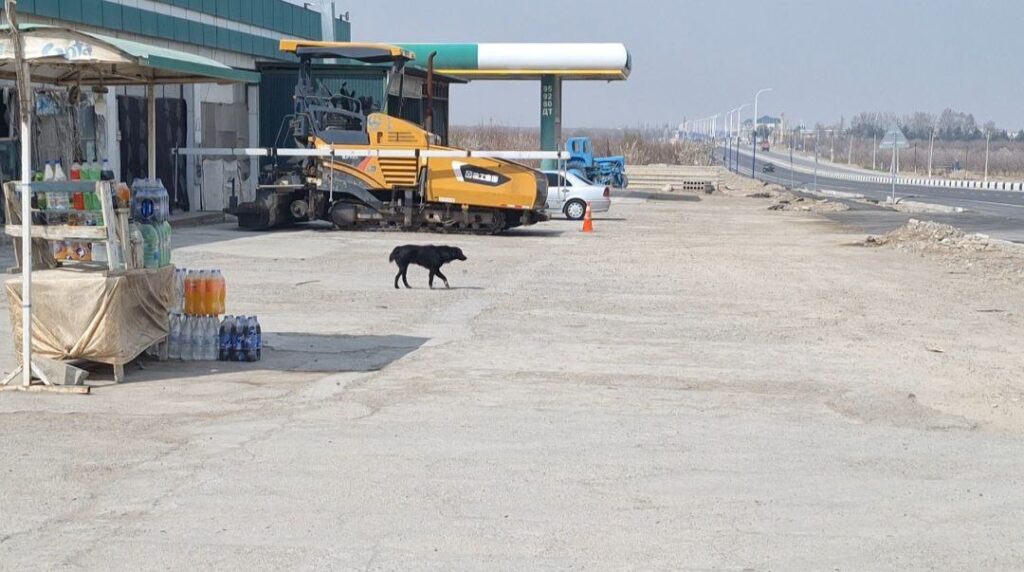
To assess the situation, we visited the “Vokhuri” (“Meeting”) market, one of the joint markets on the border of Tajikistan and Kyrgyzstan, located in the village of Khistevarz in the Bobojon Gafurov district. It used to be full of people.
A Bazaar Turned into Ruins
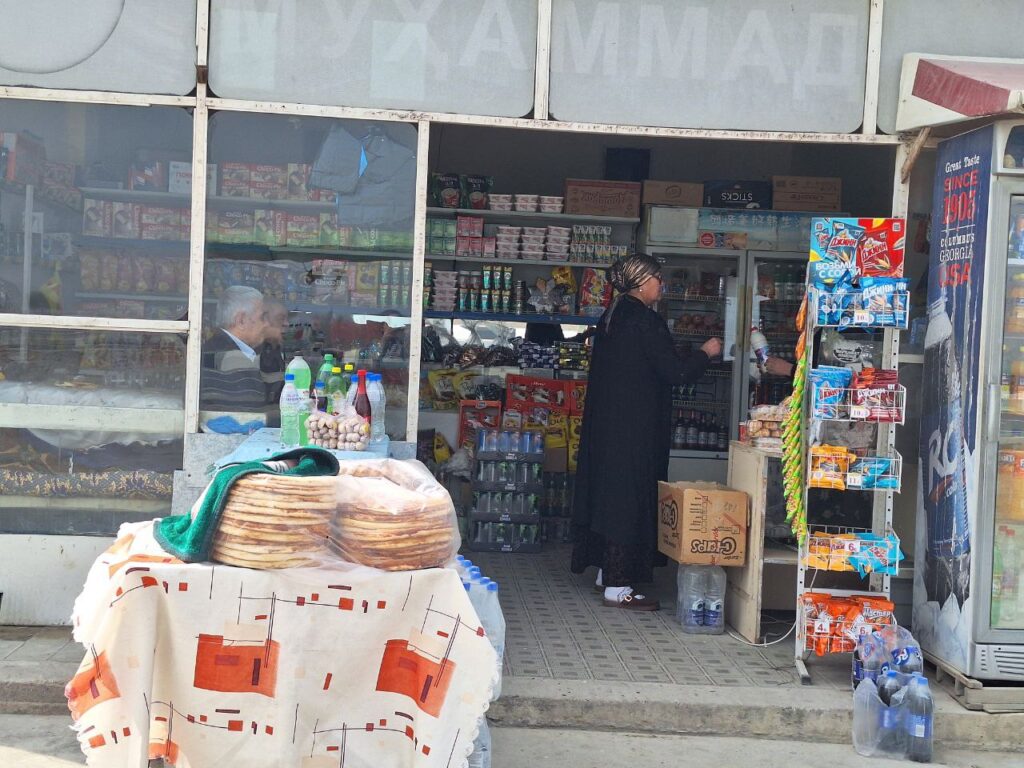
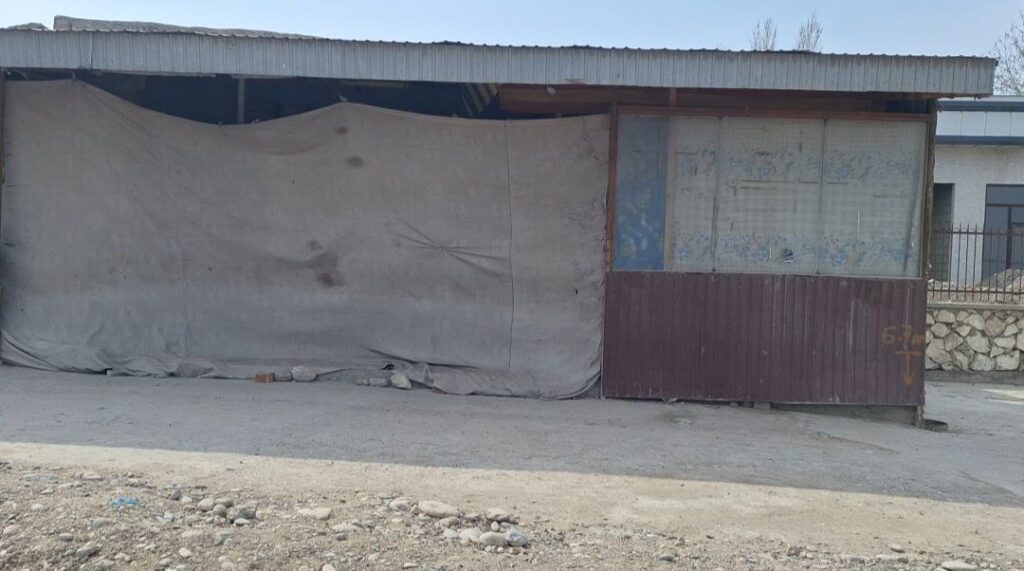
We went to the bazaar on March 18. All the shops, except for one small kiosk where a woman was trading, were closed and sealed.
The only vendor we met at the market was selling food products. At first, she did not want to talk to us, but then she agreed – without giving her name and without recording.
She has been trading here for 13 years.
According to her, trade at the “Vokhuri” bazaar used to be good, but after the start of border conflicts and the closure of the border, due to the significant decrease in trade, vendors began to leave this place.
“The goods we brought from Kyrgyzstan became unavailable,” she says.
But even after the border opened, the situation did not change. “Citizens of Kyrgyzstan no longer come. They fenced their border, and now there is no movement at all,” the woman added.
Her kiosk operates around the clock, but despite this, only 10-15 customers come to her in 24 hours, and most of them are citizens of the border areas of Tajikistan and Uzbekistan.
The entrepreneur says that she used to trade with her husband, but after the decline in trade, her husband left to work abroad. The remaining traders also left the bazaar – now only two people work here – she and her neighbor, but he opens his store only from time to time.
Now “Vohuri” more resembles ruins – with collapsed and worn-out walls and rows.
What Do the Authorities Say?
Two joint markets operated in the Bobojon Gafurov district – one in the “Ovchi-Kalacha” rural community and this one – “Vohuri”. Now the livestock market has completely ceased its activities.
Despite the opening of the border and the development of bilateral relations, the joint markets of Tajikistan and Kyrgyzstan are still not open, and the authorities do not explain the reasons for this.
Abdukahhor Abdudjalilov, deputy chairman of the Khistevarz rural community, confirmed to “Asia-Plus” that there are very few buyers left.
“Entrepreneurs saw that they were paying taxes but had no profits and left the bazaar,” he explained the departure of the traders.
Hope Fades with Each Passing Day
The exact number of markets in the border areas of the two countries is unknown, but several years ago, at least 10 border bazaars operated on the Tajik-Kyrgyz border. Almost all of them are now empty.
These markets, until the last border conflict – in 2021-2022 – were not only places of lively trade but also meetings between Tajiks and Kyrgyz.
Problems began in 2013. At that time, Kyrgyzstan closed the markets to Tajik vendors, citing non-compliance of imported goods with sanitary and epidemiological standards. Later, Tajikistan also prohibited the neighbors from selling goods.
Negmatullo Mirsaidov, a border issues expert, is confident that if bilateral trade in the border areas of the two countries is restored, the situation will gradually stabilize, and the peoples will become closer to each other.
“When people from the two countries begin to depend on each other, they gradually forget about division. Trust in each other becomes stronger,” he explains.
The woman entrepreneur of the “Vokhuri” market also hopes that the bazaar will someday become as lively as it once was, becoming the same meeting place. However, pointing to the construction of fences on the border, she notes that her hope fades with each passing day.
The share of domestic carriers in international transportation in the first quarter of this year was 41% and decreased by 12.8%, reports the Ministry of Transport of Tajikistan.
“The reason for this was the decline in export cargo volumes, the high cost of transportation by domestic transport due to the high prices of fuel and spare parts for vehicles,” the statement said following the expanded meeting of the Ministry of Transport’s board, which took place last Friday.
The meeting was chaired by the Minister of Transport Azim Ibrohim, with the participation of government representatives, relevant agencies, and subordinate organizations.
At the meeting, it was noted that there are 2,884 transport sector enterprises in the country, which is 51 more compared to the first quarter of 2025.
Minister of Transport Azim Ibrohim (right) photo by the Ministry of Transport
In the first three months of this year, 33.5 million tons of cargo and 279.6 million passengers were transported, with an increase of 14% and 10.9% respectively.
Meanwhile, the majority of transportation falls on road transport—92.5% of cargo and 99.8% of passengers. Transit transportation increased 1.7 times and reached 15.1 thousand tons.
In international transportation, railways play a significant role: they accounted for 75.1% of cargo (over 2 million tons). To support carriers, the State Unitary Enterprise “Tajik Railways” offered discounts up to 80% and agreed on preferences with foreign partners.
One of the key areas for the development of the industry is digitalization. It is reported that a Unified Digital Information Platform for the transport sector has been developed, which will become a national resource for registering market participants and interacting with government agencies based on the “single window” principle. In the first half of 2026, all industry enterprises must connect to the system.
It was also noted that currently 11 investment projects worth over $1.19 billion are being implemented, and in 2026, it is planned to start another 8 projects for the construction and reconstruction of roads and bridges with a total length of about 300 km.
Despite the positive dynamics in a number of indicators, the industry still faces problems, including the wear and tear of rolling stock and the need to improve carrier efficiency. Following the meeting, the Ministry of Transport issued several directives to address shortcomings and further develop the country’s transport system.
The authorities of Kaliningrad handed over the “For Combat Merit” medal to Tajikistan, which was found by the “Conscience” search team in 2025.
The award belonged to Junior Sergeant Alim Ishanov — a native of the Leninabad district of the Tajik SSR (now Khujand), a participant in battles as part of the 3rd Belorussian Front. 81 years ago, the 22-year-old junior sergeant took part in combat operations as part of one of the front’s units, reports the Ministry of Foreign Affairs of Tajikistan.
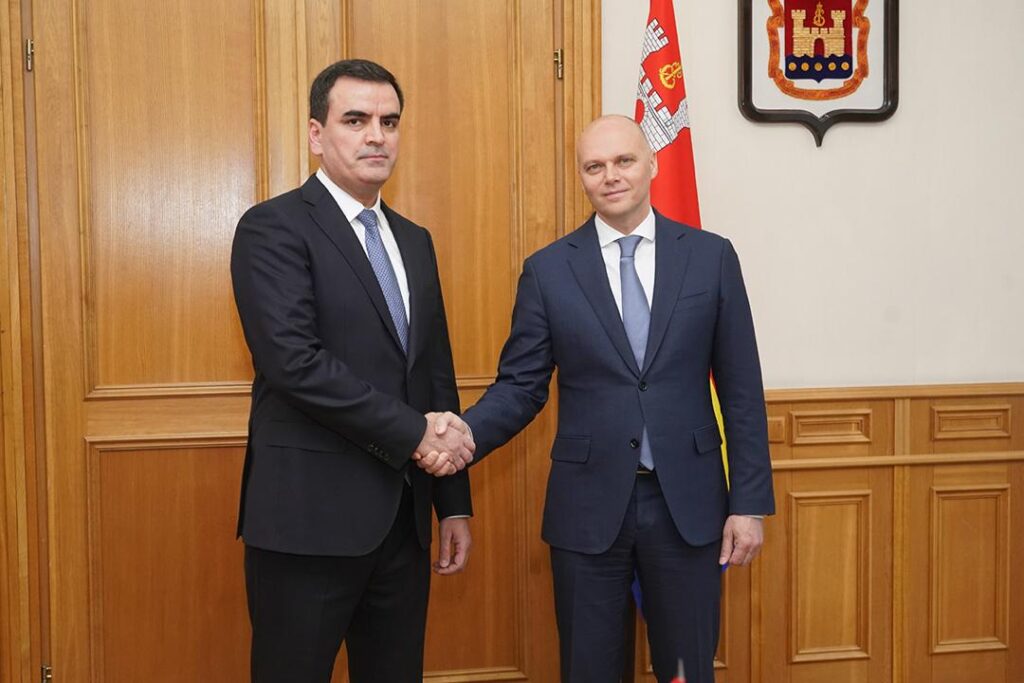
According to the department, the combat award was handed over during a working visit to the Kaliningrad region, during which the Consul General of the Republic of Tajikistan in St. Petersburg Sherali Khurshed held a meeting with the region’s governor Alexey Besprozvanny.
Consul General of the Republic of Tajikistan in St. Petersburg Sherali Khurshed and governor of the Kaliningrad region Alexey Besprozvanny. photo: Ministry of Foreign Affairs of Tajikistan
Where the medal was found ?
The head of the “Conscience” search team, Ruslan Khisamov, told “New Kaliningrad” that the medal was discovered in a field near Znamensk — close to the location where, after the end of hostilities, the 8th Separate Heavy Mortar Königsberg Brigade of the Order of Kutuzov and Alexander Nevsky of the RGC of the 3rd Belorussian Front was quartered, in which Ishanov served.
The medal was awarded to Ishanov on May 21, 1945, for participating in the assault on Königsberg. According to the searchers, the award was likely lost after the war.
It is also noted that “the brigade in which the junior sergeant served was highly regarded, equipped with 160-millimeter mortars used in the most fortified front sections. The unit was deployed to areas of the fiercest battles — near Goldap, Melzak, Ragnit, Labiau, Kreuzburg, and Pillkallen.”
According to the award documents, Ishanov served as a topographical calculator in the 2nd division and repeatedly went out to mark targets detected by scouts during the preparation for the breakthrough of the enemy’s defenses near Königsberg.
“The meticulous work of topographer Ishanov contributed to the destruction of enemy firing points, as the target marking was accurate. The topographical binding was carried out under heavy enemy fire. Despite the danger to his life, Ishanov ensured high accuracy, which contributed to the defeat of enemy targets and the advancement of our infantry,” the award sheet states.
The further fate of the front-line soldier could not be determined. It is known that in 1985 he was alive and was awarded the Order of the Patriotic War, 2nd class.
The award was handed over to relatives on April 10 through the Consul General of the Republic of Tajikistan in St. Petersburg.
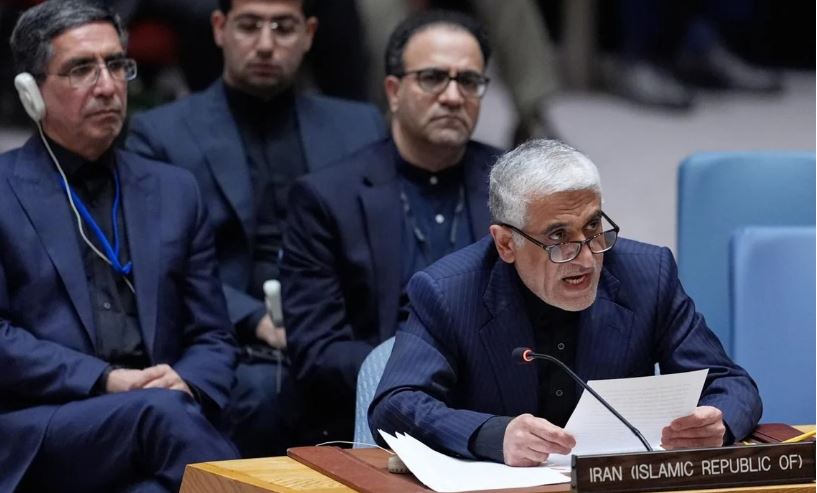
Iran has submitted a demand to the UN for compensation from Bahrain, Saudi Arabia, Qatar, the United Arab Emirates, and Jordan “for their participation in the US-Israeli war against Iran.” This statement was made by the permanent representative of the Islamic Republic to the UN, Amir Saeid Iravani, reports IRNA.
“These five countries have violated their international obligations to the Islamic Republic of Iran, and in accordance with international law, they must fully compensate for the damage caused to the Islamic Republic of Iran, including compensation for all material and moral damage resulting from their international violations,” the diplomat said.
He did not disclose the amount of compensation.
In March, Iran’s permanent representative sent a letter to UN Secretary-General António Guterres, accusing several Middle Eastern countries of allowing their territories to be used for American attacks on Iran.
Permanent Representative of Iran to the UN Amir Saeid Iravani. archive photo Reuters
According to preliminary estimates, the damage to Iran from US and Israeli strikes amounts to about $270 billion, stated the official representative of the government of the Islamic Republic of Iran Fatemeh Mohajerani in an interview with RIA Novosti.
She clarified that these are “initial and very approximate calculations” at the moment: more accurate data will be presented later after a multi-stage assessment. The first stage involves determining the damage directly caused to infrastructure and buildings, followed by assessing the loss of budget revenues and the consequences of halting industrial enterprises.
The government representative also noted that the Iranian negotiation team is discussing the issue of possible military reparations from the US. This topic, in particular, was raised during the negotiations in Islamabad last week.
On April 10, the newspaper The Jerusalem Post (JP), citing intelligence community assessments, reported that Iran suffered economic damage of $140–145 billion over six weeks of war with the US and Israel.
Recall that on February 28, the US and Israel launched military operations against Iran and carried out airstrikes on several cities. On the same day, Iran’s Supreme Leader Ali Khamenei was killed as a result of the strikes.
In response, Iran launched missile strikes on Israeli territory and attacked American military bases in the Persian Gulf countries.
On the night of April 8, the parties agreed to a two-week ceasefire and the opening of the Strait of Hormuz.
On April 11-12, negotiations between Iran and the US were held in Islamabad with Pakistani mediation.
The lengthy discussions ended without reaching an agreement.