Somon.tj, the number 1 real estate platform in Tajikistan*, has published market analytics for the first quarter of 2026. The data shows that the market remains active, and demand continues to concentrate in the capital.
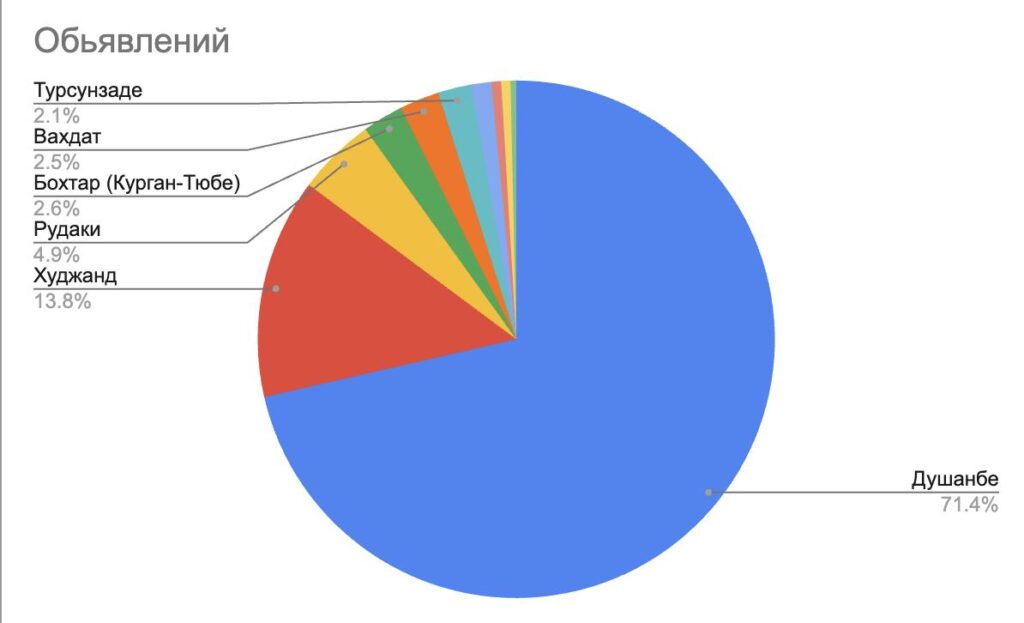
At the end of Q1 2026, 71.4% of all apartment transactions occurred in Dushanbe — nearly three out of four sales take place here. This confirms the capital’s status as a key center of demand, investment, and urban migration.
In second place is Khujand, with a share of 13.8%, followed by:
Rudaki — 4.9%
Bokhtar — 2.6%
Vahdat — 2.5%
Tursunzoda — 2.1%
Experts from Somon.tj note that regional markets are gradually strengthening, however, the capital still remains the main driver of the real estate market.
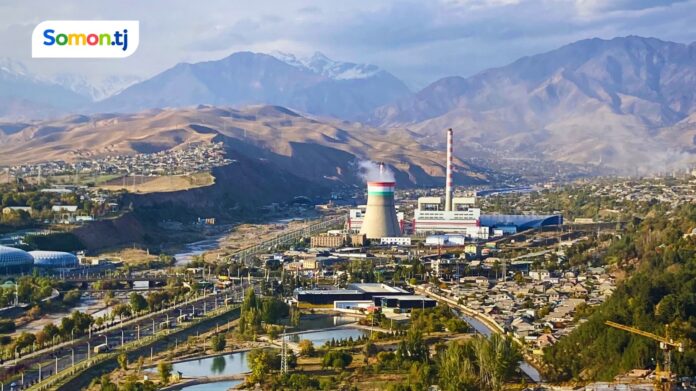
Photo provided by somon.tj
How much does an apartment cost in Tajikistan
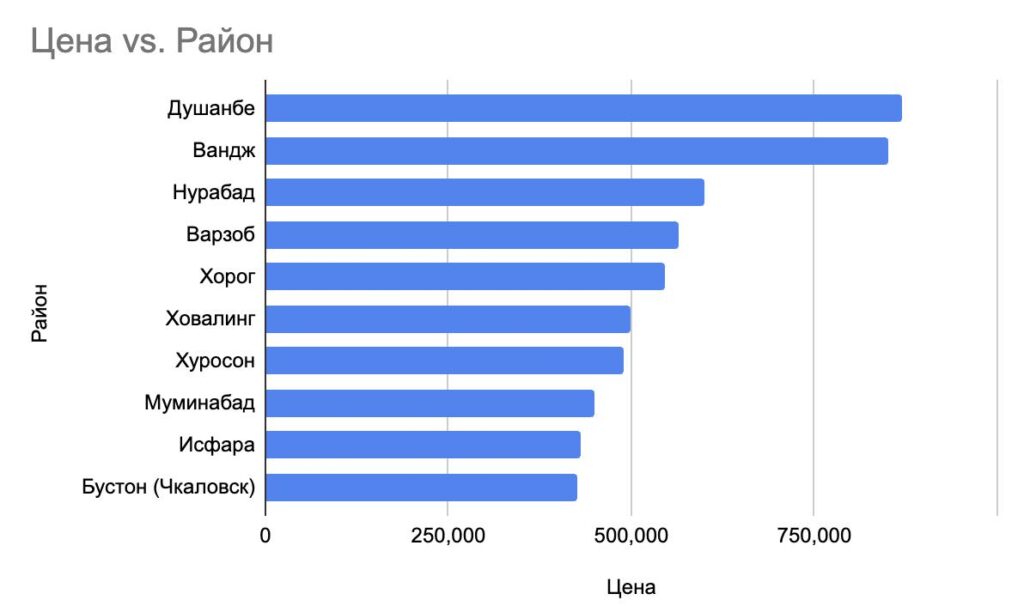
During the first quarter, Dushanbe maintains its leadership in housing prices — the average apartment price is about 850,000 somoni.
At the same time, comparable values are recorded in several regions:
Vanji — ~830,000 somoni
Nurobod — ~600,000 somoni
Varzob — ~560,000 somoni
Khorog — ~540,000 somoni
Khovaling — ~500,000 somoni
Khuroson — ~490,000 somoni
Muminobod — ~460,000 somoni
Isfara — ~440,000 somoni
Buston — ~430,000 somoni
The actual cost of housing, as specified on the platform, depends on the area, condition of the property, renovation, and specific location.
Photo provided by somon.tj
Somon.tj remains the largest advertising platform in the country:
more than 2 million users monthly
over 18 million sessions per month
more than 500,000 active listings daily
The platform covers key categories — from real estate and transportation to jobs and technology.
Current real estate offers are available on the platform:
In Kazakhstan, there is a word “asar.” It refers to a simple concept: if someone needs help, people gather and assist. Without formalities and contracts – they just come and get it done.
The time we live in increasingly requires this – to respond, act, and help. Therefore, today this kind tradition resonates in a new way.
In the 21st century, the spirit of asar hasn’t disappeared. Rather, it has become different – broader and more noticeable.
In recent years, in the country and, overall, in Central Asia, volunteering has seen a targeted development. First, there was the Year of Volunteers in Kazakhstan in 2020, then the Year of Volunteer Movement in the CIS in 2024. Now, largely thanks to Kazakhstan’s initiative, the momentum for the year 2026 as the International Year of Volunteers under the UN’s aegis is growing.
The perspective on volunteering is changing
But it’s not just about international initiatives and information campaigns. We see how in Kazakhstan and the region, the perception of volunteering is gradually changing.
It is no longer perceived as a hobby and is considered an important contribution to solving specific tasks – in education, ecology, healthcare, and search and rescue operations. Government structures, local authorities, and volunteers increasingly work together, not separately.
Against this background, the rules are changing: in the new Constitution of Kazakhstan, there is a direct mention of supporting volunteering. As a result, the understanding itself is changing: volunteer activity is not an addition, but a condition; not a seasoning, but one of the key ingredients.
And Kazakhstan is not alone in this. In many countries, volunteering is being rediscovered today as a practical way to tackle sustainable development challenges that are becoming more complex and changing faster than before.
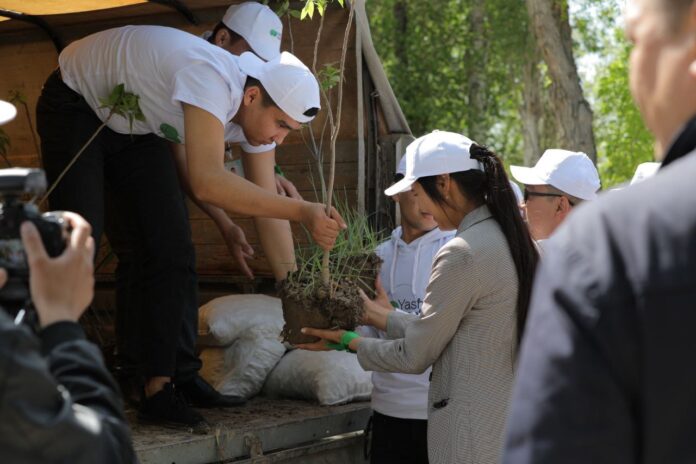
Meanwhile, traditional forms of participation do not disappear: people still go out to clean areas, plant trees. This remains the foundation. But new opportunities are emerging alongside. Online volunteering, for example, allows people to help, share experiences, and work together even when they are on different continents.
Volunteering evolves while preserving the tradition of mutual assistance
This is especially noticeable in Central Asia. A review prepared by the UN Volunteers Programme (UNV) in 2024 shows that volunteering in the region is developing while preserving its foundation – the tradition of mutual assistance. The state, business, and civil society are gradually learning to act more cohesively, and the contribution of volunteers is becoming more noticeable – in ecology, the social sphere, and work in emergencies.
Of course, the role of the UN is also changing. Through UNV, we attract volunteers with diverse experiences, skills, and increasingly with digital competencies, and we strive to make their participation more accessible and effective. And through UNDP, we work with governments to integrate volunteering into development, climate, and ecology strategies – not as a one-time help, but systematically.
And yet, something is missing
Volunteers do a lot. They reduce risks, help people, protect the environment. This is evident in life – around us. But it’s not always visible in systems, in accounting, in budgets. Volunteers are appreciated, but not always supported.
This is precisely what the UNV report “The State of the World’s Volunteerism 2026” addresses. It’s important not only to know how much time and resources have been invested in volunteer activities but also to understand how it impacts society: making it more resilient, strengthening connections among people, helping to tackle challenges.
For Central Asia, this is especially important. Here, traditions of solidarity are strong. But for them to resonate fully in the 21st century, they need support – recognition, data, and investment. Volunteers need not only motivation but also conditions, preparation. Systems need coordination. And the contribution of volunteers to sustainable development should be considered in decision-making.
This concerns not only national but also regional tasks – for example, in the area of the Aral Sea. Environmental issues know no borders, and solutions cannot be limited by them. If regional environmental volunteering receives support from Central Asian countries, it can work for the long term.
Then volunteering stops being just goodwill. It becomes part of how countries cope with the future.
Therefore, 2026 is not just a date. It’s an opportunity to take the next step.
To make helping not the exception, but the norm.
To make people’s participation the rule.
To make volunteering what it essentially already is – a resource for development.
It’s time to help. And it’s important not to miss it.
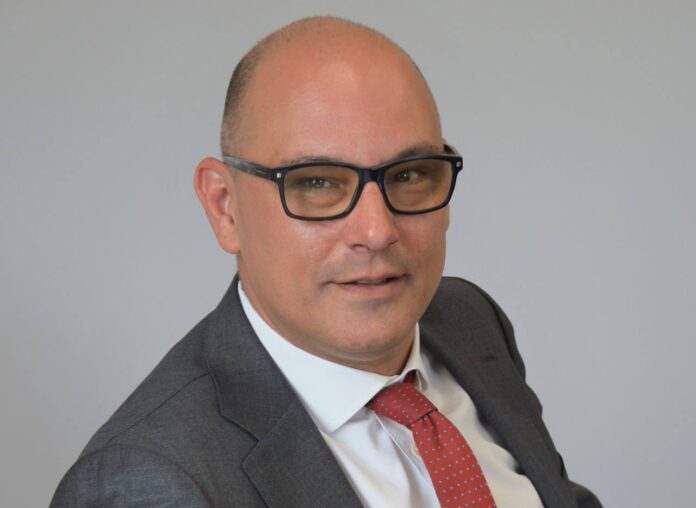
The Head of the European Bank for Reconstruction and Development Representation in Tajikistan, Holger Wiefel, congratulated the Asia-Plus media group on its 30th anniversary.
In his address, he noted that over three decades, the media group has become an important part not only of the country’s information space but also of the lives of its residents and guests, earning the trust of a wide audience in Tajikistan and beyond.
“Over three decades, you have become an integral part not only of the country’s information space but also of its residents and guests, earning the trust and respect of a wide audience both in Tajikistan and beyond. Your work allows everyone to stay informed about the events happening in the country and the world.
I especially want to note and thank you for our close cooperation, which has always been filled with meaningful and interesting live broadcasts, analytical articles, and news.
Thanks to your professionalism and promptness, we have been able to convey important EBRD initiatives and projects to the public, as well as engage in an open dialogue about the development of the economy and society.
We sincerely thank you for the partnership, for your willingness to always support interesting projects, for constructive interaction, and for the energy you invest in every broadcast, every news release, and every publication.
We wish the Asia-Plus team further success, new creative ideas, and projects. May new achievements, audience expansion, and strengthening of positions as one of the leading media holdings in the region await you ahead.”
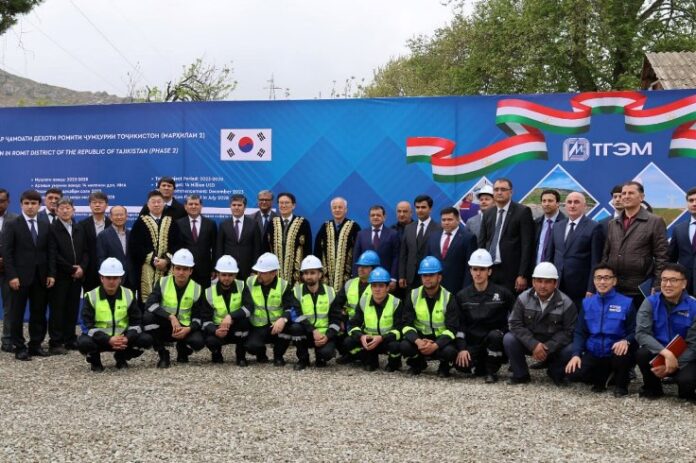
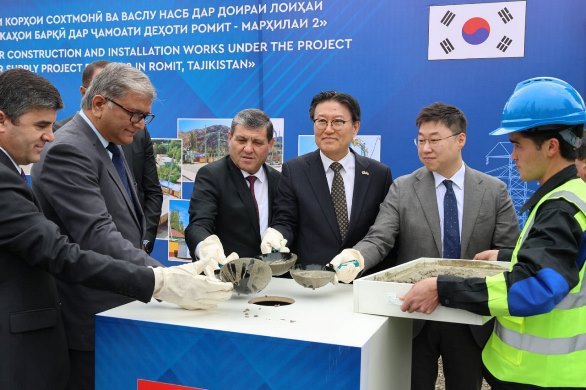
The Korean government has officially launched the second phase of its electricity supply project in Tajikistan, with a groundbreaking ceremony held at the Yavroz electrical substation, located in an area subordinate to Vahdat Township.
The project, implemented through the Korea International Cooperation Agency (KOICA), aims to construct a new Yavroz substation (110/10 kV), expand the Romit substation (110/20/10 kV), install a new transformer, and build 60 km of transmission and distribution lines to supply electricity to 15 villages in the Romit area.
KOICA is funding the project with a total of $14 million, which is expected to provide electricity access to over 8,000 residents in the mountainous region.
This second phase follows the successful completion of the first phase from 2017 to 2021, which connected nine villages—about 1,500 households—to the electricity grid through the construction of a new substation and distribution lines.
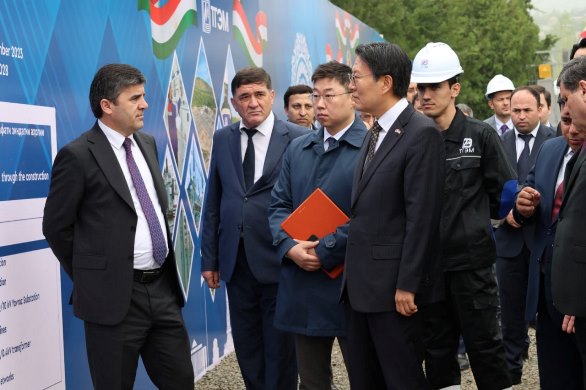
At the ceremony, Korean Ambassador to Tajikistan Jeon Sung-sik, Deputy Minister of Energy and Water Resources Bahodour Safarzoda, and Vahdat Mayor Mirzo Ismoilzoda addressed attendees.
Ambassador Jeon highlighted the project as a symbol of Korea-Tajikistan friendship, stating, “I am very pleased to support Tajikistan and look forward to the success of this project.”
Deputy Minister Safarzoda emphasized the government’s commitment to improving the quality of life for local residents, while Mayor Ismoilzoda noted that the first phase of the project had already brought electricity to remote mountainous communities, significantly enhancing living standards.Korean Government Launches Phase II of Power Grid Project in Vahdat, Tajikistan
The Korean government has officially launched the second phase of its electricity supply project in Tajikistan, with a groundbreaking ceremony held at the Yavroz electrical substation, located in an area subordinate to Vahdat Township.
The project, implemented through the Korea International Cooperation Agency (KOICA), aims to construct a new Yavroz substation (110/10 kV), expand the Romit substation (110/20/10 kV), install a new transformer, and build 60 km of transmission and distribution lines to supply electricity to 15 villages in the Romit area.
KOICA is funding the project with a total of $14 million, which is expected to provide electricity access to over 8,000 residents in the mountainous region.
This second phase follows the successful completion of the first phase from 2017 to 2021, which connected nine villages—about 1,500 households—to the electricity grid through the construction of a new substation and distribution lines.
At the ceremony, Korean Ambassador to Tajikistan Jeon Sung-sik, Deputy Minister of Energy and Water Resources Bahodour Safarzoda, and Vahdat Mayor Mirzo Ismoilzoda addressed attendees.
Ambassador Jeon highlighted the project as a symbol of Korea-Tajikistan friendship, stating, “I am very pleased to support Tajikistan and look forward to the success of this project.”
Deputy Minister Safarzoda emphasized the government’s commitment to improving the quality of life for local residents, while Mayor Ismoilzoda noted that the first phase of the project had already brought electricity to remote mountainous communities, significantly enhancing living standards.
The first phase of the project delivered tangible benefits: households gained access to heating, cooling, and kitchen appliances; schools were equipped for better education with electricity and computers; and local health centers received reliable power. The improved electricity supply also supported economic development, including the creation of new trout farming businesses in the Romit region.Korean Government Launches Phase II of Power Grid Project in Vahdat, Tajikistan
The Korean government has officially launched the second phase of its electricity supply project in Tajikistan, with a groundbreaking ceremony held at the Yavroz electrical substation, located in an area subordinate to Vahdat Township.
The project, implemented through the Korea International Cooperation Agency (KOICA), aims to construct a new Yavroz substation (110/10 kV), expand the Romit substation (110/20/10 kV), install a new transformer, and build 60 km of transmission and distribution lines to supply electricity to 15 villages in the Romit area.
KOICA is funding the project with a total of $14 million, which is expected to provide electricity access to over 8,000 residents in the mountainous region.
This second phase follows the successful completion of the first phase from 2017 to 2021, which connected nine villages—about 1,500 households—to the electricity grid through the construction of a new substation and distribution lines.
At the ceremony, Korean Ambassador to Tajikistan Jeon Sung-sik, Deputy Minister of Energy and Water Resources Bahodour Safarzoda, and Vahdat Mayor Mirzo Ismoilzoda addressed attendees.
Ambassador Jeon highlighted the project as a symbol of Korea-Tajikistan friendship, stating, “I am very pleased to support Tajikistan and look forward to the success of this project.”
Deputy Minister Safarzoda emphasized the government’s commitment to improving the quality of life for local residents, while Mayor Ismoilzoda noted that the first phase of the project had already brought electricity to remote mountainous communities, significantly enhancing living standards.
The first phase of the project delivered tangible benefits: households gained access to heating, cooling, and kitchen appliances; schools were equipped for better education with electricity and computers; and local health centers received reliable power. The improved electricity supply also supported economic development, including the creation of new trout farming businesses in the Romit region.
The second phase is expected to further expand these benefits, providing sustainable energy and improving social and economic conditions for thousands more residents in Tajikistan’s mountainous areas.
The second phase is expected to further expand these benefits, providing sustainable energy and improving social and economic conditions for thousands more residents in Tajikistan’s mountainous areas.
The first phase of the project delivered tangible benefits: households gained access to heating, cooling, and kitchen appliances; schools were equipped for better education with electricity and computers; and local health centers received reliable power. The improved electricity supply also supported economic development, including the creation of new trout farming businesses in the Romit region.
The second phase is expected to further expand these benefits, providing sustainable energy and improving social and economic conditions for thousands more residents in Tajikistan’s mountainous areas.
Around 32 million people worldwide are at risk of falling below the poverty line due to the economic consequences and the intensification of the military conflict in the Middle East, according to a report by the United Nations Development Programme (UNDP).
The ongoing confrontation affects tens of millions of people in 162 countries. The most vulnerable are the Gulf states, as well as countries in Asia, Africa, and small island states.
The UNDP emphasizes that even with a temporary ceasefire, the crisis shifts from an “acute” to a “prolonged” stage. The longer this situation persists, the higher the risk of accelerated poverty growth—in a negative scenario, up to 32 million more people could fall below the poverty line.
While the main impact is on countries directly involved in the conflict and those dependent on energy imports, experts note long-term consequences for poorer countries, even those far from the conflict zone.
“War is a setback for development. It can destroy the results of years of work in just a few weeks. Our analysis shows that the escalation in the Middle East affects not only the directly involved countries but hits particularly hard those with fewer resources to adapt to rising energy and food prices. They face a choice: curb prices today or invest in healthcare, education, and jobs tomorrow. This is unacceptable, and it can be avoided. Timely measures play a key role,” said UNDP Administrator and UN Deputy Secretary-General Alexander De Croo.
To mitigate the consequences of the crisis, the organization proposes a range of measures. Specifically, it suggests introducing targeted and temporary cash payments to support low-income and vulnerable families—this could require up to 6 billion dollars.
It also recommends implementing temporary subsidies and providing vouchers for basic electricity and gas consumption.
However, the report warns against universal energy subsidies that keep prices below market levels. These measures are often used in developing countries but mainly benefit the affluent and are financially unsustainable in the long term.
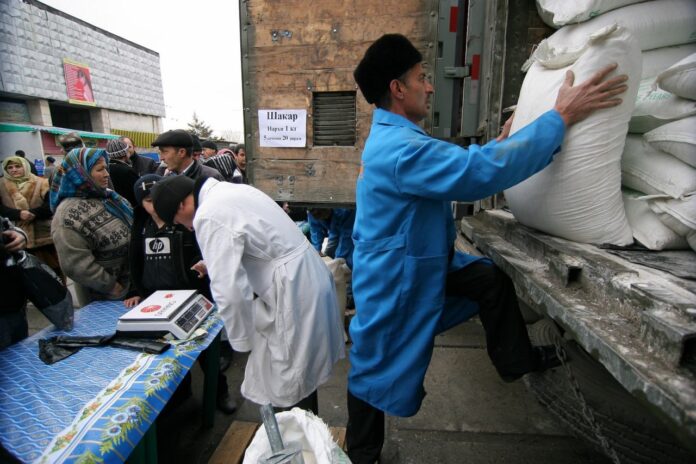
7-8 лет назад сахар стоил 5 сомони за кг. Архивное фото asia+
In April 2026, Tajikistan recorded a noticeable increase in sugar prices. If at the end of March a kilogram cost 9–11 somoni, its price now reaches 12–14 somoni. Wholesale products have also significantly risen in price: the cost of a 50-kilogram bag increased from 380–400 to more than 500 somoni.
The Republic of Tajikistan is almost entirely dependent on external sugar supplies. In 2025, more than 117.4 million kg of products were imported into the country, amounting to over 191 million dollars.
The main suppliers remain Russia, Belarus, and India. Russia accounts for almost 52 thousand tons of imports, Belarus for 28.2 thousand tons, and India for 16.9 thousand tons. Significant volumes also come from Pakistan (9.5 thousand tons) and Kazakhstan (5.7 thousand tons).
Smaller volumes of sugar are imported from Azerbaijan, Iran, and Uzbekistan. Small batches are supplied from Lithuania, Latvia, Turkey, China, Poland, and Kyrgyzstan.
The absence of domestic production makes the sugar market in the country dependent on external factors. Any changes — whether export restrictions in other countries, currency fluctuations, or increased transportation costs — quickly affect prices.
Such fluctuations have been observed before, including in the context of sugar export restrictions from Russia and Kazakhstan.
Additional influence is exerted by the situation on the global market. According to FAO, in March 2026, food prices increased by 2.4%, with sugar rising the most — by 7.2% for the month. This is linked to the rise in oil prices and the unstable geopolitical situation affecting supply and production.
Sellers say that if the situation does not change, sugar may remain expensive in the coming months.
It should be noted that the rise in sugar prices in Tajikistan has been observed for several years. If in 2017–2019 the average price per kilogram was about 6–6.5 somoni, in 2020 it sharply increased to 9 somoni.
In subsequent years, prices continued to gradually rise: in 2021–2022, sugar cost an average of 9.5 somoni, and in 2023–2025, about 10 somoni per kilogram.
In 2026, the average price has already reached 12 somoni, confirming the ongoing rise in the cost of this product in the domestic market.
Судоходство в Ормузском проливе остается ограниченным Фото: IMAGO/Anadolu Agency
“`html
The US has begun implementing a maritime blockade of Iranian ports: on Monday, the deadline set by US President Donald Trump for the start of the operation expired, reports the BBC.
The US began the blockade of the Strait of Hormuz on April 13 at 10:00 AM Eastern Time (17:00 MSK). In Iran, it was called doomed to fail.
Initially, the American leader announced his intention to “block all ships without exception” entering or leaving the Strait of Hormuz but later clarified that it only concerns ships heading to or coming from Iranian ports.
At the same time, the American command emphasized that it would not hinder transit shipping through the strait to third countries.
The US Central Command (CENTCOM) reported that the operation would be conducted in the Gulf of Oman and the Arabian Sea east of the Strait of Hormuz and would affect vessels under any flag.
According to the official notice, any vessel entering the blockade zone or leaving it without permission may be intercepted, redirected, and detained. Neutral vessels will be able to pass through the strait if their routes are not related to Iran, but they may also be subject to inspection.
Humanitarian goods — including food and medicine — will be allowed through provided they are inspected.
In the first hours after the blockade began, there were no reports of merchant ship detentions, but the United Kingdom, through the UK Maritime Trade Operations (UKMTO), warned that the restrictions apply to the entire Iranian coast — both in the Persian Gulf and beyond. More detailed navigation guidelines are promised to be provided later.
Amid the developments, two tankers associated with Iran left the Persian Gulf.
Shortly after the blockade began, Donald Trump stated that the Iranian navy was effectively destroyed, although the country still has combat boats. According to him, any attempts to approach the blockade zone will be strictly suppressed.
Iran, in turn, sharply condemned the US actions. The country’s armed forces and authorities called the blockade an act of maritime piracy and stated that they do not intend to succumb to pressure. The Islamic Revolutionary Guard Corps warned of a strong response to the appearance of foreign warships near the strait and threatened that if Iranian ports are threatened, no port in the Persian and Gulf of Oman will be safe.
The decision on the blockade was made after the failure of negotiations between the US and Iran held in Islamabad. The parties could not agree on further steps, and as analysts noted, the chances of success were initially low.
From legal, military, and economic points of view, the situation creates a fundamentally new scenario. As experts note, American ships are likely to avoid approaching Iranian ports due to the risk of missile and drone attacks. Instead, they will track vessels using satellites and intelligence data and intercept them after they enter the Gulf of Oman, even if AIS transponders are turned off.
How the blockade may affect China and Russia
There is particular uncertainty about how the blockade will be applied to ships from neutral states and countries supporting Iran, primarily China and Russia. Inspecting ships can effectively be considered an act of war and could lead to serious diplomatic consequences.
China, although it receives only about 13% of its oil from Iran, is heavily reliant on energy supplies through the Strait of Hormuz overall. Moreover, the Middle East has gained special significance for Beijing in recent years: by 2025, China’s exports to this region were growing nearly twice as fast as to other parts of the world. Global instability poses a threat to the Chinese economy, and Beijing is unlikely to be interested in increasing US control over this strategically important route. Nevertheless, China traditionally adheres to a policy of non-intervention and has not yet shown a readiness to actively intervene.
Additional complications may arise if China decides to accompany its merchant ships with warships from its base in Djibouti. Additionally, the precedent of a maritime blockade could have broader implications: in particular, Beijing may consider similar measures in other regions, such as the South China Sea.
Against this backdrop, France and the United Kingdom announced plans to hold an international conference dedicated to restoring freedom of navigation in the strait. French President Emmanuel Macron emphasized that it is about creating a peaceful multinational defensive mission that is not affiliated with any side of the conflict.
Israeli Prime Minister Benjamin Netanyahu, on the contrary, expressed full support for the US actions, stating that the decision to impose the blockade is a tough but necessary step.
The document, aimed at “organizing and regulating the processes of labor migration of foreign citizens in the Republic of Tajikistan,” was published on the legal information portal of the Ministry of Justice of the republic.
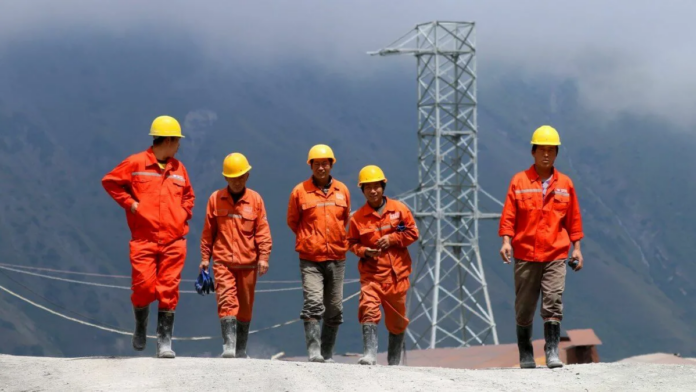
The decree instructs to establish a quota for immigration and attraction of foreign labor force into the republic for the year 2026 in the amount of 5500 people. This is 500 fewer compared to the similar quotas that were established for the year 2025.
“Foreign citizens engaged in labor activities in priority projects and investment sector agreements on the basis of interstate or intergovernmental acts are not included in this quota,” the document specifies.
According to the appendix to the decree, about 62% of quotas (3440 quotas) are allocated to citizens of China.
The remaining portion of the quotas is allocated to citizens of the following countries:
– Afghanistan – 520;
– Iran – 400;
– India – 300;
– Russia – 200;
– Turkey – 150;
– Pakistan – 100;
– Uzbekistan – 50;
– Kazakhstan – 20;
– Kyrgyzstan – 50;
Other countries – 350.
Almost 59% (3236 quotas) of foreigners will be granted the right to work in Dushanbe, more than 32% (1885 quotas) in RRP, about 13% (709) in Sughd region, over 5.6% (310) in Khatlon region, and about 2% (60 quotas) in GBAO.
Quotas are provided for the employment of foreigners in the following areas and sectors of Tajikistan’s economy:
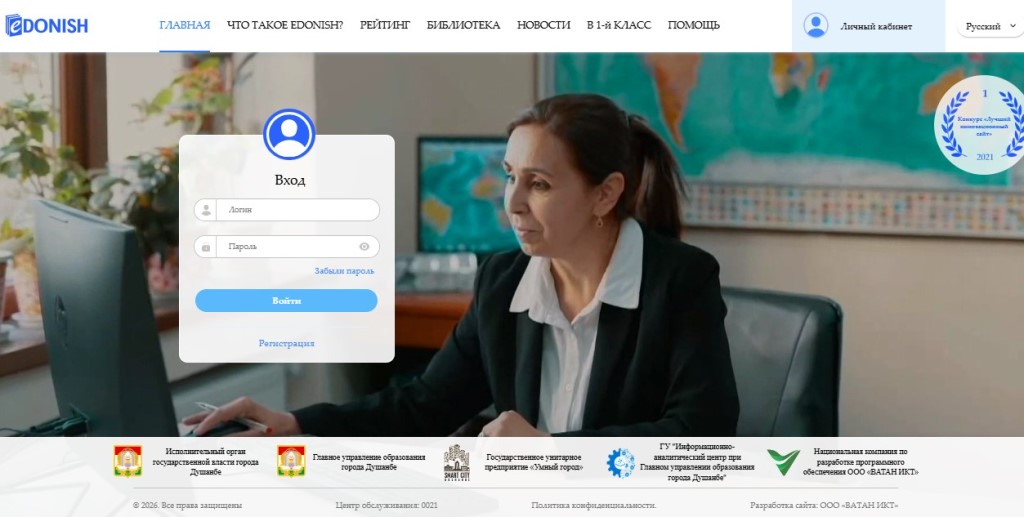
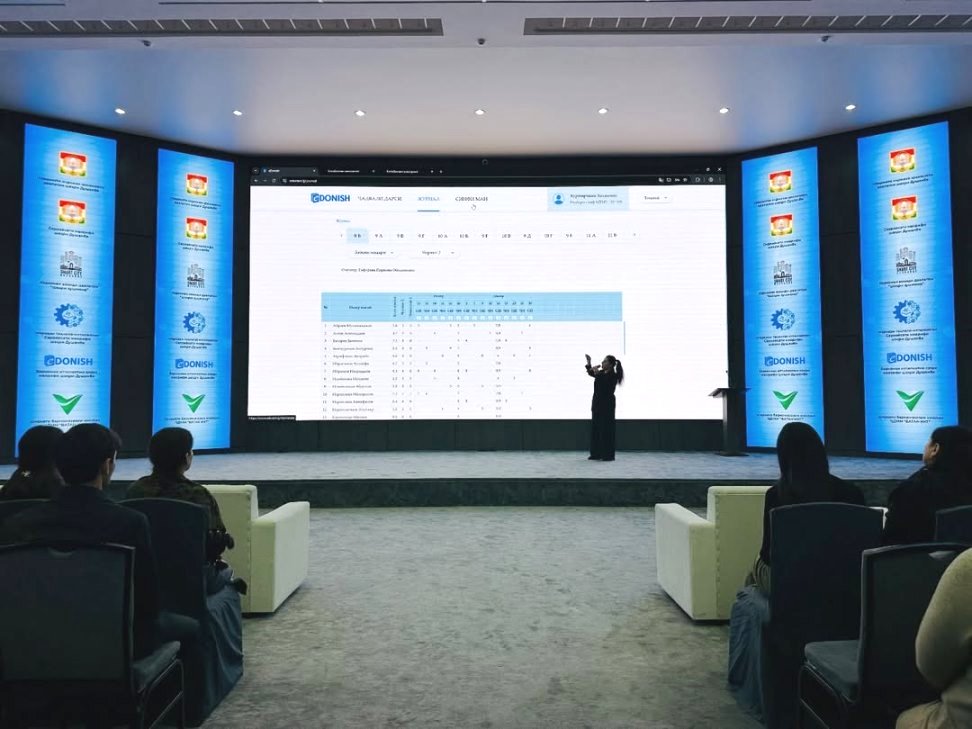
With the launch of the eDonish program in Dushanbe, parents now have the opportunity to track their child’s arrival and departure from school, grades, and academic performance. However, some questions and issues have also arisen. We address them in this material.
Gathering all the relevant questions, “Asia-Plus” contacted the State Unitary Enterprise “Smart City” of the Executive Body of State Authority of Dushanbe, which launched eDonish.
Assistance in understanding the most frequently asked questions was provided by Dilnoza Ismoilzoda, a senior project implementation specialist.
Sometimes I receive a message that my child has entered the school, even though they haven’t left home yet, and vice versa, when they enter the school, I get a message saying they’ve left. Why does this happen and when will this issue be resolved?
Sometimes parents may receive notifications about their child’s entry or exit from school with inaccuracies. As analysis shows, in most cases, such situations are related to outdated or incorrect photos of students in the recognition program (for example, if the photo does not meet the set requirements or significantly differs from the child’s current appearance).
Additionally, a notification may come from the exit camera at the moment when the student is actually entering the school. This can happen if the child lingers in the entry area, interacts with other students, or turns toward another camera. In such cases, the system may capture the student’s face with the camera installed at the exit and automatically send the corresponding notification.
To improve the system’s accuracy, joint work is being conducted with the administrations of educational institutions. In particular, attention is given to promptly updating students’ photos in the database and organizing a more orderly passage of students and staff through the school’s entry area without crowding in front of the cameras.
When these conditions are met, the system’s accuracy significantly increases, and the number of such cases is minimized.
The child is not at school/sick, yet they receive grades for that day or vice versa, the child is at school, but I receive a message saying they are not.
Electronic class journals are filled in directly by teachers. Currently, no technical errors have been identified in the system regarding the input and display of grades and absences.
If parents have questions regarding the appearance of grades or attendance information, they can contact the class teacher or subject teacher. In case of questions or possible errors in the program’s operation, parents can contact the support service call center at 446400021 or the short number 0021.
Additionally, each school is assigned a program administrator who helps resolve such issues. If necessary, you can also contact the eDonish program office directly at: 27A M. Tursunzoda Street (IT park building).
How and by whom is the process of entering information into eDonish regulated?
The process of entering information into the eDonish program is regulated by the institution’s administrator. Control is carried out at all levels: from the director of the educational institution to the staff of the main department, who have personal accounts with access to all the institution’s processes in the program.
Moreover, special accounts have been provided to a number of supervisory and controlling bodies, enabling them to monitor and control work in their direction in the education sector of Dushanbe.
In the event that the child is not at school, but according to eDonish data they are, and something happens to the child, who will be responsible?
This is practically impossible. If such factors do occur, they are isolated incidents and may be related to a technical error. But in such cases, the school administration bears responsibility.
Is there a possibility to correct data in eDonish and who can make corrections?
If a teacher makes a mistake when assigning a grade, it can only be corrected upon approval (in writing) from the management of the Main Department of Education of the city.
Trainings and Consultations
Not all eDonish users even today fully understand how to use the program and request the publication of training video reviews where it would be accessible and clear how to use it.
As noted by Dilnoza Ismoilzoda, the “eDonish” program actively supports users and conducts training for both teachers and parents.
“Training and consultations are regularly organized, and recently updated video materials have been prepared, which will be available on all official program resources in social networks.
The “eDonish” team is ready to continue conducting training events at the request of educational institutions and users to facilitate the use of the system even for those who have little understanding of technology,” she noted.
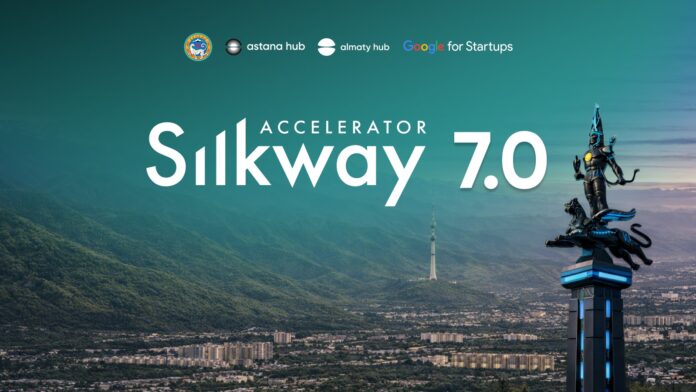
The International Innovation Cluster Astana Hub, in collaboration with Google for Startups and the Almaty city administration, has announced the start of applications for the seventh batch of Silkway Accelerator – a flagship intensive growth program for tech startups at the Product-Market Fit and Scale stages.
Teams from Tajikistan, Uzbekistan, Kyrgyzstan, Kazakhstan, Turkmenistan, Azerbaijan, Georgia, and Mongolia are invited to participate. Applications are open until April 30 on the platform astanahub.com.
Kazakhstan is the first and only country in Central Asia where an acceleration program is implemented in collaboration with Google for Startups. This year, the program will be held in Almaty for the first time at the Almaty Hub. The relocation of the accelerator to the southern capital reflects the city’s role as one of the main business centers of the country with an active entrepreneurial environment and growing IT community, as well as expands the ecosystem’s geography.
Silkway Accelerator has already established itself as one of the key tools for scaling startups in the region. Over four years of the program’s implementation, 1470 applications have been received. Of these, only 73 startups were selected and completed the acceleration. Program graduates have collectively attracted more than $48 million in investments, and their total valuation has exceeded $500 million. The scaling geography covered markets in the UAE, Turkey, the USA, and other countries.
Graduates demonstrate sustainable growth and entry into international markets. Among them are startups from Tajikistan:
● zypl.ai – develops software for fintech, telecom, retail, and manufacturing.
The key product is zypl.score, an ML solution for credit scoring, automating the issuance of microloans by financial institutions. The startup attracted $4.6 million in investments and reached a valuation of $35 million. The solution has already secured loans worth more than $60 million and is used in the MENA and Southeast Asian markets.
The project became the winner of the Silkway Accelerator program and was recognized as AI Startup of the Year at the Digital Bridge Awards 2023.
● epsilon3.ai – an AI platform for government agencies: forecasting, anomaly detection, and workflow automation. It is used in energy, industry, territorial and housing planning.
The startup attracted $240,000 in investments, operates in six markets, and is an implementation partner of the national AI-GOV initiative of the Ministry of Industry and New Technologies of Tajikistan.
The Silkway Accelerator program is designed for 12 weeks and is aimed at teams with a ready product focused on growing key metrics, entering new markets, and scaling the business.
Participants receive comprehensive support: free accommodation and office in Almaty for non-resident and international teams, access to Google Cloud resources of up to $100,000 and Google Workspace services, as well as guidance from a personal development manager. Throughout the program, teams work with experts who help improve the product and accelerate growth.
“Kazakhstan is one of the few markets in the region where the startup ecosystem has been systematically developing for several years: infrastructure has been formed, acceleration programs are in place, and there is access to funding and international initiatives. Today’s key challenge is not creating new tools, but improving the quality of startups and their ability to scale.
According to our experience, the main deficit is not in ideas or access to resources, but in the ability to go through the market entry stage and build scalable models. Silkway Accelerator works precisely at this stage – when a startup already has a product, but the key task becomes growth,” noted one of the leading trackers of the Silkway Accelerator program, Evgeny Frolov.
The acceleration concludes with Demo Day, where finalists present their solutions to a target audience of investors – venture funds, business angels, and strategic partners. The most promising startups are shortlisted by Astana Hub Ventures with the opportunity to attract investments.
Google for Startups is an international program supporting entrepreneurs, launched by Google in 2011. It unites more than 50 coworking spaces and accelerators in 125 countries and provides practical tools for startup development.
Astana Hub is the largest international innovation cluster of IT startups in Central Eurasia. More than 2000 IT companies are registered in the ecosystem, including about 500 with foreign participation.
Almaty Hub is a branch of Astana Hub in the city of Almaty. It contributes to the development of the IT community, supports startups, and fosters an entrepreneurial environment. It provides access to programs, knowledge, and resources of the Astana Hub ecosystem.