Home Blog Page 24

Tajikistan and Uzbekistan presidents outline results of high-level talks

0

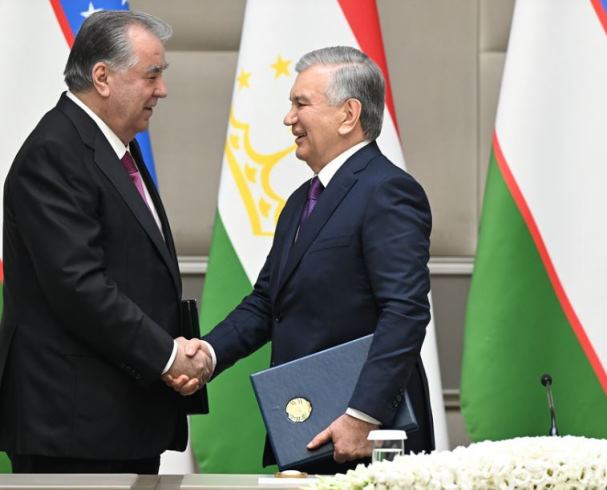
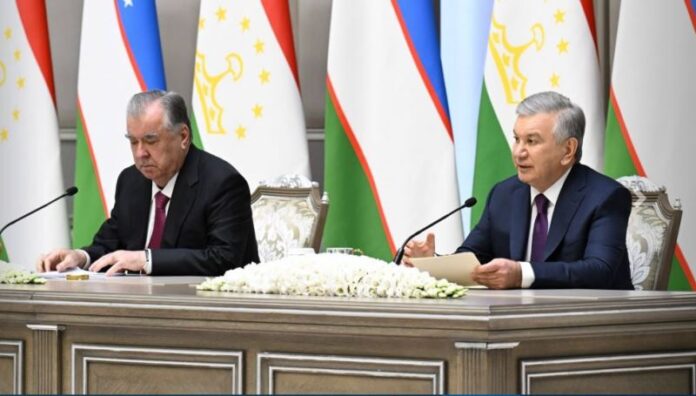
The presidents of Uzbekistan and Tajikistan, Shavkat Mirziyoyev and Emomali Rahmon, summarized the outcomes of high-level talks during a joint press briefing held at the Kuksaroy Residence on March 26, following the first meeting of the Supreme Interstate Council.

The Uzbek president’s press service reports that opening the briefing, President Mirziyoyev praised Tajikistan’s recent economic performance, highlighting steady growth, successful investment attraction, controlled inflation, and rising real incomes.

He reaffirmed that Tajikistan remains a reliable strategic partner and ally, noting that bilateral relations continue to develop dynamically across political, economic, and humanitarian spheres, underpinned by shared goals and mutual trust.

Both sides reportedly welcomed the regular engagement between parliaments, governments, regional leaders, and representatives of the intelligentsia. Trade between the two countries approached $1 billion last year, while industrial cooperation has expanded significantly, with more than 500 joint ventures operating in Uzbekistan.

Transport links have also strengthened, with ten weekly flights currently connecting the two capitals.

Mirziyoyev highlighted the extensive preparations leading up to the summit, including meetings of the intergovernmental commission, regional forums, and exchanges involving rectors, scientists, youth, and think tanks. Cultural initiatives such as the Days of Tajik Culture and Cinema were also successfully held.

During the talks and the inaugural session of the Supreme Interstate Council, the two leaders reportedly discussed a wide range of issues and identified key priorities for advancing their multifaceted partnership. They emphasized the importance of sustained engagement at all levels and closer coordination within regional and international platforms, including the Consultative Meetings format and “Central Asia Plus” initiatives.

Economic cooperation featured prominently on the agenda. The two governments were tasked with taking concrete steps to boost bilateral trade to $2 billion under a dedicated program. Plans include accelerating the establishment of the Oybek–Fotehobod trade zone and implementing a $2 billion cooperation program spanning energy, geology, metallurgy, textiles, agriculture, and pharmaceuticals.

The leaders also agreed to make active use of the Joint Investment Company to support these initiatives.

In the transport and transit sector, the sides signed an agreement on introducing an electronic permit system for freight transport and reached understandings on expanding air and rail connections, as well as increasing the capacity of border checkpoints.

They stressed that these measures are aimed at creating favorable conditions for businesses and citizens, while unlocking the economic potential of border regions.

Water and energy cooperation was identified as another strategic priority. Both countries expressed readiness to jointly advance major green energy projects and enhance coordination on water resource management, including the digitalization of water infrastructure.

Cultural and humanitarian ties were also highlighted as a key pillar of bilateral relations. Joint initiatives include the production of a film dedicated to the friendship between historical figures Abdurahmon Jomi and Alisher Navoi, as well as the naming of a street in New Tashkent after Dushanbe.

The two sides also agreed to expand exchanges in education, tourism, and youth programs, supported by an annual calendar of events. A comprehensive cooperation program will be developed to support diaspora communities, strengthen cultural centers, and preserve language and traditions.

Both leaders concluded that the outcomes of the visit would significantly strengthen allied relations and contribute to the long-term development and prosperity of both nations, according to the Uzbek president’s press service.
Presidents of Tajikistan and Uzbekistan visit historic sites in Bukhara

0

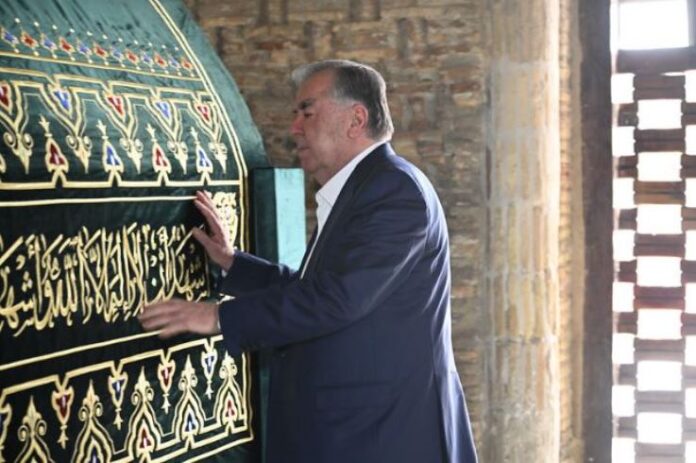
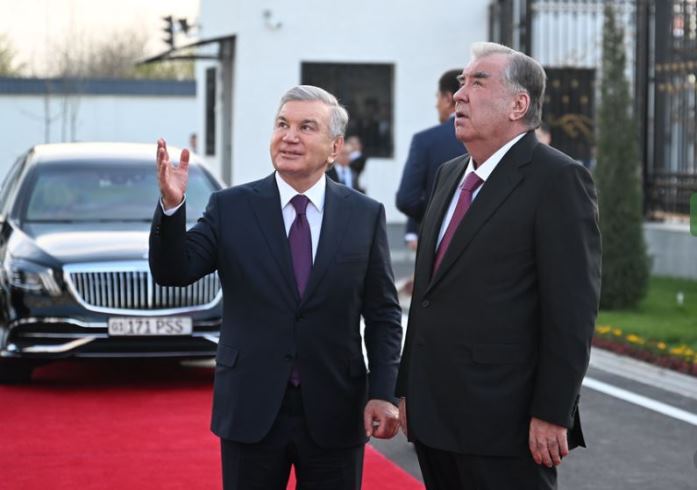
On March 27, President Emomali Rahmon of Tajikistan and President Shavkat Mirziyoyev of Uzbekistan jointly toured major historical landmarks in the ancient city of Bukhara as part of Rahmon’s state visit to Uzbekistan.

The Tajik president’s official website says the visit included stops at the Bukhara Fortress, the memorial complex and mausoleum of Bahauddin Naqshband, the Labi Hauz ensemble, the Poi Kalon architectural complex, and the Mausoleum of Ismoil Somoni.

Particular attention was given to the Samanid Mausoleum, an architectural monument dating back to the 9th–10th centuries. Widely regarded as a masterpiece of early Islamic architecture, the structure reflects the craftsmanship of its era.

According to historical accounts, the mausoleum was commissioned at the end of the 9th century by the prominent statesman Ismoil Somoni (849–907) over the burial site of his father, Ahmad ibn Asad. Ismoil Somoni himself, along with his son Nasr II and other members of the dynasty, are also buried there.

The square-shaped structure is crowned with a large dome and features decorative elements along its perimeter, including four corner towers that enhance both its architectural balance and structural strength.

The Samanid Mausoleum, also known as the Mausoleum of Ismoil Somoni, is one of the few structures to have fully survived from the Samanid period. It remains one of Bukhara’s most significant historical landmarks and a rare example of early Central Asian architecture.

The site is included in the ISESCO Cultural Heritage List and attracts hundreds of visitors from around the world each day.

During Tajikistan’s independence period, special recognition has been given to the legacy of Ismoil Somoni as a founder of Tajik statehood. In 1999, Tajikistan marked the 1100th anniversary of the Samanid state with national celebrations, including the unveiling of a monument to Ismoil Somoni in Dushanbe. The national currency, the somoni, and a district of the capital are also named in his honor.

Tajikistan opens new embassy building in Tashkent

0

On March 26, the President of Tajikistan, Emomali Rahmon, and the President of Uzbekistan, Shavkat Mirziyoyev, officially inaugurated the new building of the Tajik Embassy in Tashkent during a ceremony held as part of Rahmon’s state visit to Uzbekistan.

The Tajik president’s official website says the opening took place in a formal setting, with the two leaders unveiling a symbolic plaque to mark the inauguration of the modern diplomatic facility.

National anthems of both Tajikistan and Uzbekistan were performed in honor of the occasion, followed by the raising of the Tajik national flag at the embassy.

After the ceremony, the two presidents toured the new embassy complex and signed the guest book, expressing their commitment to further strengthening friendly, brotherly and good-neighborly relations between the two countries.

Diplomatic relations between Tajikistan and Uzbekistan were established on October 22, 1992. The Embassy of Uzbekistan currently operates in Dushanbe.

The opening of the new Tajik embassy building follows the inauguration of Uzbekistan’s embassy in Dushanbe on April 19, 2024, which was also attended by both presidents during Mirziyoyev’s state visit to Tajikistan.

Tajikistan and Uzbekistan sign broad package of cooperation agreements

0

On March 26, Tajikistan and Uzbekistan signed a wide range of new cooperation agreements following high-level talks between President Emomali Rahmon and President Shavkat Mirziyoyev, in a move aimed at deepening strategic partnership and expanding bilateral ties, according to the Tajik president’s official website.

At the conclusion of the talks, and allied relations between their countries.

Prime Ministers Qohir Rasoulzoda of Tajikistan and Abdulla Aripov of Uzbekistan also signed key documents, including a program to increase bilateral trade turnover to $2 billion by 2030, as well as a framework for industrial cooperation.

In the presence of the two presidents, officials from both sides signed a series of agreements and memorandums covering a broad range of sectors. These included culture, tourism, technology and innovation, mining, finance, agriculture, scientific research, public administration, and vocational education. Additional agreements addressed cooperation in healthcare, transport, digital systems, and the mutual recognition of electronic certificates of origin for goods.

The two sides also agreed to enhance collaboration between law enforcement training institutions and to amend the founding agreement of the Tajikistan-Uzbekistan Investment Company.

Officials noted that the agreements build on momentum from the Second Interregional Forum “Tajikistan–Uzbekistan,” held on March 24 in the city of Jizzakh, where additional investment deals were concluded. These agreements span industrial processing, textiles, agriculture, construction materials, services, and digitalization.

Following the signing ceremony, Presidents Rahmon and Mirziyoyev held a joint press conference, where they praised the steady expansion of bilateral cooperation and emphasized the importance of fully implementing the newly signed agreements.

Both leaders expressed confidence that, given current momentum and existing opportunities, trade between the two countries could reach $2 billion by 2028. 

Tajikistan and Uzbekistan launch joint projects in virtual ceremony

0

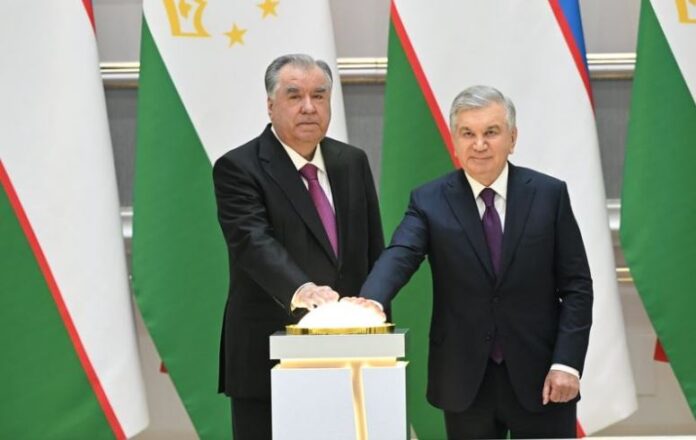
On March 26, the presidents of Tajikistan and Uzbekistan, Emomali Rahmon and Shavkat Mirziyoyev, took part in a virtual ceremony marking the inauguration and launch of several joint infrastructure and industrial projects in both countries.

According to the Tajik president’s official website, the event was held at the Kuksaroy Palace in Tashkent as part of President Rahmon’s state visit to Uzbekistan. During the ceremony, the two leaders authorized the start of construction and opening of multiple facilities aimed at boosting bilateral economic cooperation.

In Tajikistan, construction began on seven projects. These include the expansion of the Artel household appliances production line, the building of the Shox Med medical clinic in Dushanbe, the establishment of a textile cluster, the development of a modern fruit processing line, the production of medical solutions, and the launch of a furniture and industrial equipment manufacturing project in Sughd province.

The ceremony also marked the approval of several joint initiatives in Uzbekistan. These include projects for milk processing and cheese production, juice manufacturing, the naming of a street in New Tashkent as “Dushanbe,” the construction of a modern high-rise residential complex, and the establishment of a canned food production facility.

In total, 12 projects were approved during the virtual event. According to official figures, the seven projects in Tajikistan are valued at $98 million, while five projects in Uzbekistan amount to $63.2 million.

Officials said the initiatives are expected to create new jobs and further strengthen economic ties between the two neighboring countries. 

Navruz, Wrestling, and Cars: How the Pahlavon from Rogun Conquered the Gushtingiri Tournament in Dushanbe

0
Subhiddin Khalilzoda (in white) Photo: Dushanbe City Hall

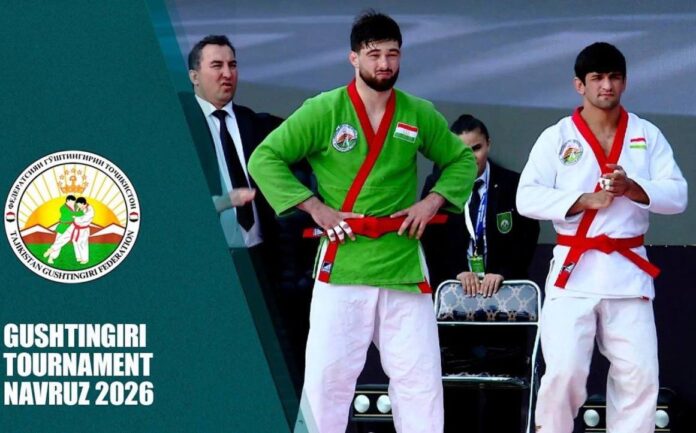
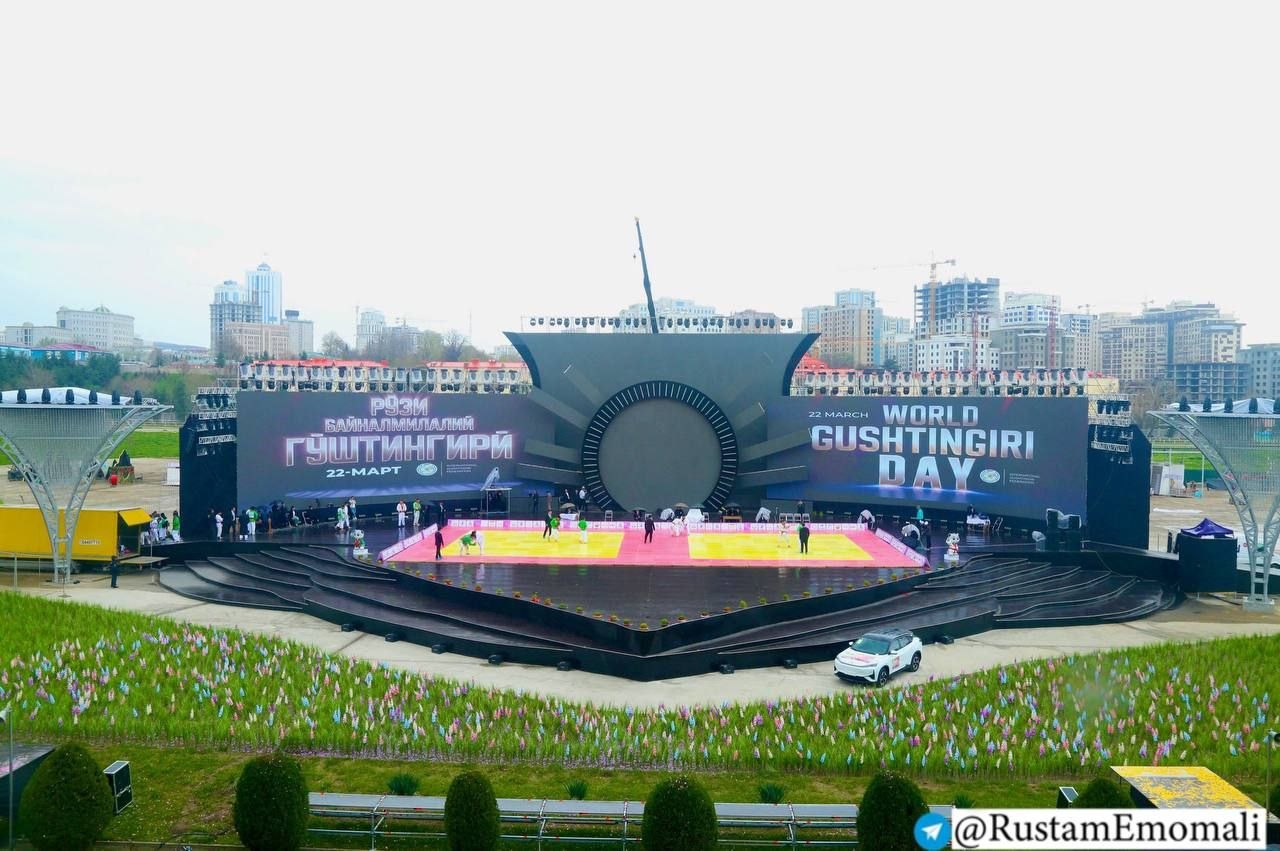
Navruz in Tajikistan is not just music, treats, and public festivities. It is a time when wrestlers take to the arena, and the strongest in the country is determined. On March 22 in Dushanbe, the main Navruz tournament in gustingiri once again gathered the best wrestlers, and the final turned into a true climax of the celebration. The winner was Subkhiddin Khalilzoda from Rogun, who not only won the main bout but also went home in a new car.

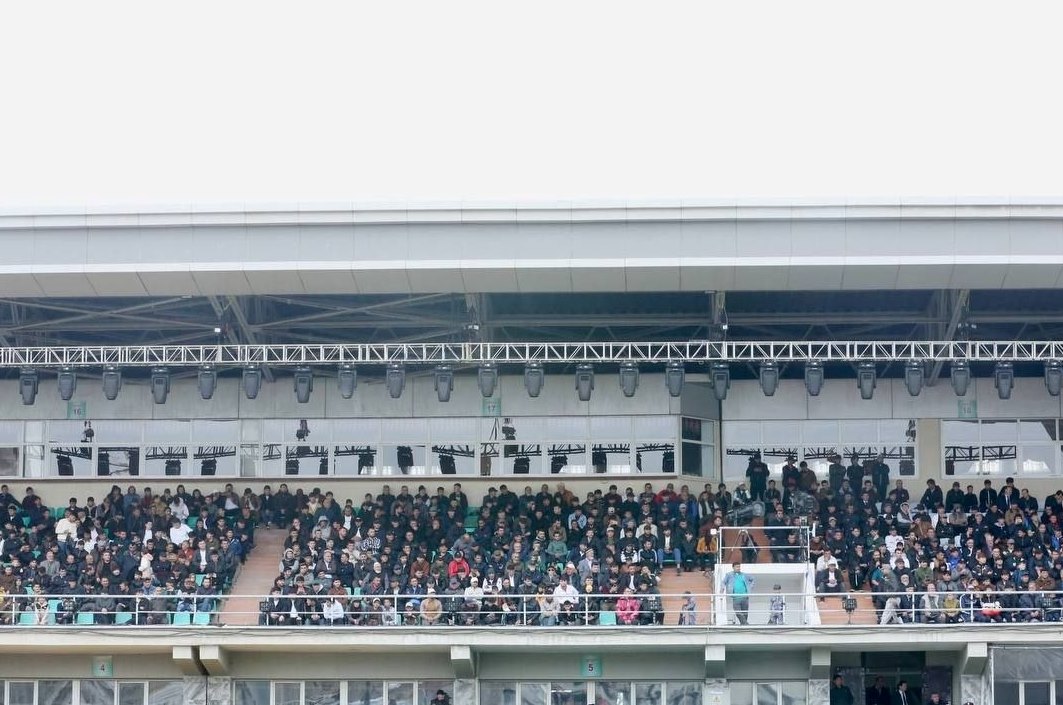
From early morning, the territory of “Navruzgoh” in Dushanbe began to fill with people. Some came with families, others with groups of friends, but they all shared one goal: to see the wrestling. Gustingiri during Navruz is more than just a sport. It is a tradition, a spectacle, and a kind of people’s court, where strength and skill leave no room for chance.

On the mat are the best wrestlers in the country. There were no random names here: the Majidov brothers, Haknazar Nazarov, Mullorajab Khalifaev, Sharifjon Nazriev, Mansur Rahmonov, Shodmon Rizoiev, and of course, Subkhiddin Khalilzoda. Each of them came not just to participate — they came for victory.
The matches went one after another. The tournament format was strict: victory was counted only for a “halol” — a clean throw onto the back. No dubious decisions, no points for activity — either you put your opponent down, or you leave empty-handed.

Each bout lasted up to ten minutes, and the final — twenty. But in gustingiri, time rarely plays a primary role. Everything can be decided in seconds — one grip, one turn, one moment.

The arena in “Navruzgoh,” where the gustingiri competitions took place
Photo: Dushanbe City Hall

Nevertheless, the tournament was challenging. Many matches ended in a draw, and wrestlers who could not determine a winner left without awards. This added tension: everyone understood — there was no time to waste; decisions had to be made.

Gradually, the tournament approached the main moment. In the final, two equally aged and ambitious wrestlers faced off — 24-year-olds Subkhiddin Khalilzoda and Shodmon Rizoiev. This was not just a final — it was a test of character. From the very first seconds, it became clear that no one intended to yield. Grips, attempts to unbalance, body work — the struggle was at its limit. The spectators literally could not take their eyes off.

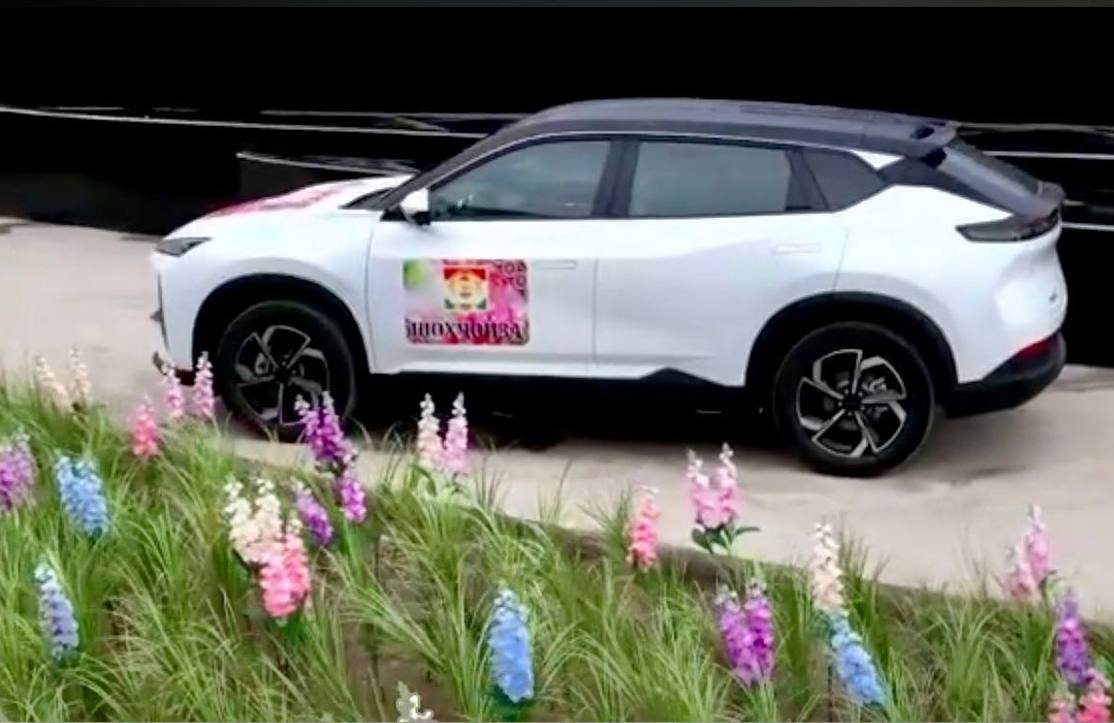
And one moment decided it all. Khalilzoda found an opportunity, executed a precise move, and managed to put his opponent on his back. Cleanly, confidently, and without question. With this throw, Subkhiddin not only won the tournament but also became the owner of the grand prize — an electric car worth about 140 thousand somoni.

For him, this is not his first such success. Last year, he also won the Navruz tournament in the Shahmshiddin Shohin district and took home a car then too. But this victory is special: it came in the capital, at the main arena of the celebration.

The car that Subkhiddin Khalilzoda received
Photo: Dushanbe City Hall

Khalilzoda is not just a gustingiri wrestler. His career is much broader. He is a product of the Tajik wrestling school, a six-time national champion in sambo among juniors, and a silver medalist at the 2022 Youth World Championship. He also competes in judo, kurash, and national wrestling. After the final, he stated that he dreams of victories on world stages, of standing on the podium to the national anthem of Tajikistan.

The series of Navruz competitions does not end here. In the coming days, similar tournaments will take place in Dangara, Shahmshiddin Shohin, Yavan, and Khorog. And there, they will again wrestle — for recognition and for the grand prizes.

Gustingiri in Tajikistan is part of the culture. It is no coincidence that on March 22, the country celebrates International Gustingiri Day, and the sport itself has already received official international status.

This spring, stay with us on Telegram, Facebook, Instagram, OK, VK and MAX

Tajikistan identifies key barriers to agricultural exports and ways to address them

0
Tajikistan adopts the State Export Development Program for 2026–2030.

Farmers and agribusiness exporters in Tajikistan face numerous constraints that hinder the sector’s development. The State Export Development Program for 2026–2030 outlines a set of incentive measures aimed at removing these barriers and supporting entrepreneurship.

The document identifies more than 50 challenges affecting agricultural exports and proposes solutions. Below are ten key issues and the government’s planned responses.

1.     Lack of modern logistics infrastructure — One of the main challenges is the shortage of modern logistics centers, cold storage facilities, and refrigerated transport. This leads to product losses, reduced incomes, and limited ability to export goods on time. The government plans to modernize the transport and logistics system. The program includes the construction of logistics complexes with a total area exceeding 50,000 square meters, including low-temperature storage facilities. These measures are expected to reduce losses and expand export capacity.

2.     High transportation costs — High transport costs remain a major obstacle, reducing the competitiveness of Tajik products. As a landlocked country, Tajikistan depends on transit routes, while weak border infrastructure causes delays. The program provides for development of transport corridors, modernization of border infrastructure, and creation of logistics centers to lower costs and improve delivery efficiency.

3.     Customs procedures and delays — Lengthy customs clearance, especially for perishable goods, significantly increases delivery times and affects product quality. Proposed solutions include automation, the introduction of a “single window” system, simplified certification, and the creation of “green corridors” for perishable goods.

4.     Lack of international certification — The absence of internationally recognized certifications (ISO, HACCP, GlobalG.A.P.) limits access to European and Middle Eastern markets. The program aims to develop certification systems, establish laboratories, and train producers in international standards.

5.     Limited processing capacity — Insufficient processing capacity forces the export of raw materials, reducing added value and profitability. The government plans to support processing enterprises, expand domestic processing, and improve logistics.

6.     High cost of credit — Interest rates ranging from 18% to 25% hinder the development of small and medium-sized businesses and limit modernization. Measures include preferential lending programs, guarantee funds, and state subsidies.

7.     Limited export diversification — Heavy reliance on CIS markets increases economic vulnerability. Authorities plan to diversify exports toward China, Turkey, and Gulf countries while improving transport routes and product standards.

8.     Phytosanitary barriers —Differences in standards and the lack of accredited laboratories complicate certification and lead to shipment rejections. Solutions include digital certificates, laboratory development, and harmonization of standards.

9.     Insufficient incentives — Existing support measures, including awards and competitions, are considered insufficient. The program proposes expanding financial and tax incentives and increasing support for SMEs.

10.  Lack of a national brand — Tajik products are often marketed under foreign brands, reducing recognition and competitiveness. Plans include developing a national brand, participating in international exhibitions, and digitalizing export processes.

The implementation of these measures is expected to remove key barriers, enhance competitiveness, and strengthen Tajikistan’s position in global markets.

US sets tentative date for end of conflict with Iran — Ynet

0
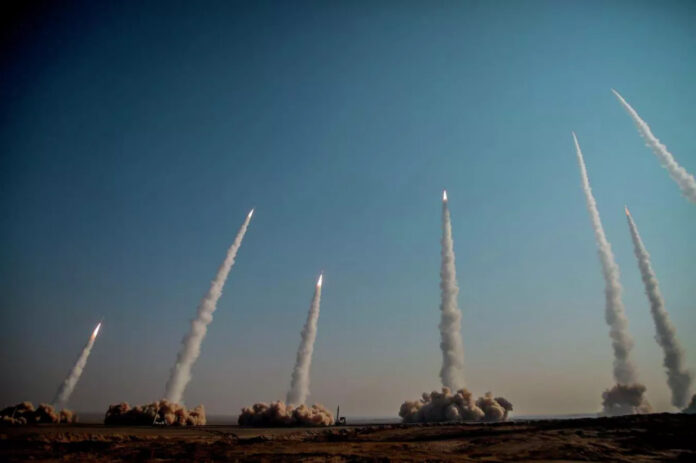
Launch of ballistic missiles in Iran.

The United States is considering April 9 as a possible date for ending the military conflict with Iran, Ynet reports, citing an informed Israeli source.

According to the source, the choice of this date may be linked to a planned visit by U.S. President Donald Trump to Israel for Independence Day, celebrated on April 21–22. During the visit, Trump is reportedly expected to receive the Israel Prize, according to RBC.

The source also stated that talks between U.S. and Iranian representatives may take place in Pakistan this week. The possibility of such negotiations was also previously reported by Axios.

Iran’s delegation is expected to be led by Parliament Speaker Mohammad Bagher Ghalibaf. On the U.S. side, the talks may include White House Special Envoy Steven Witkoff, Jared Kushner, and possibly Vice President J.D. Vance. Turkiye, Egypt, and Pakistan are said to be acting as mediators.

On March 23, Donald Trump announced “productive negotiations” with Iran and suggested the possibility of a full resolution of differences in the Middle East. In this context, he ordered a five-day suspension of strikes on Iranian territory, as he wrote on the social network Truth Social.

At the same time, Iran’s Ministry of Foreign Affairs denied holding direct negotiations with Washington. Parliament Speaker Mohammad Bagher Ghalibaf described reports of talks as “fake news.”

“No negotiations with the United States have taken place, and fake reports are being used to manipulate financial and oil markets and to help the United States and Israel out of the difficult situation they are facing,” Ghalibaf wrote on the social network X.


Strikes continue

Israeli Prime Minister Benjamin Netanyahu stated that Israel continues to carry out strikes on targets in Iran and Lebanon. His video address was published on March 23 on the social network X.

According to him, the strikes are aimed at Iran’s missile and nuclear infrastructure, as well as at Hezbollah facilities in Lebanon. Netanyahu added that several days ago, two more Iranian scientists linked to the nuclear program were eliminated, noting that “this is not the end.”

In response, Iran carried out strikes on central Israel. The attacks affected Tel Aviv in particular, where damage and injuries have been reported.

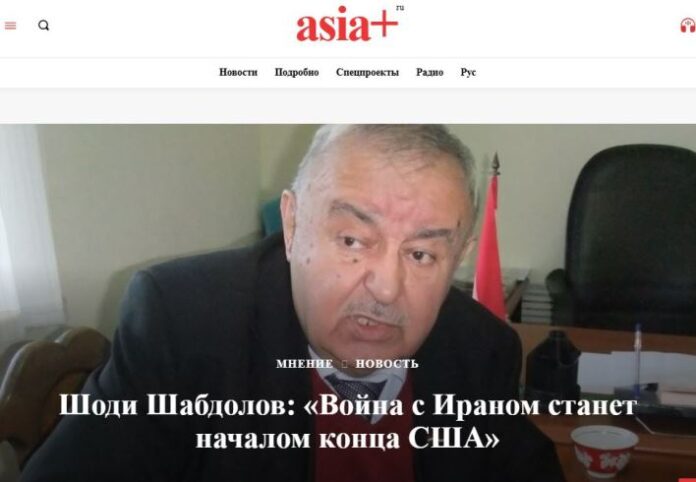
Shodi Shabdolov: “A war with Iran will be the end of the USA”

0

This short interview was conducted with Shodi Davlatovich Shabdolov at the beginning of January 2020 and published by Asia-Plus on January 7, 2020.

“The administration of U.S. President Donald Trump and the current occupant of the White House himself, through their actions, statements, and attacks against states and politicians they find objectionable, resemble madmen who say whatever they want without fearing the consequences of their actions and statements,” said the well-known Tajik politician Shodi Shabdolov in an interview with Asia-Plus.

Addressing the current tension that has arisen between Washington and Tehran following the killing of Iranian General Qasem Soleimani in Baghdad, Shabdolov emphasized that apparently Trump and his administration today do not have sufficient information about Iran’s military, political, and economic power.

“The United States, having achieved easy victories over the regimes of Muammar Gaddafi in Libya and Saddam Hussein in Iraq, apparently underestimates Iran’s strength and its potential, and this misunderstanding may turn into the beginning of the end for Washington itself,” the politician emphasized.

Shabdolov believes that after the killing of General Soleimani, Iran’s withdrawal from previously reached nuclear agreements has brought official Tehran closer than ever to creating weapons of mass destruction.

According to the politician, Iran’s current military and economic power, even without nuclear weapons, can successfully withstand U.S. threats, and Trump’s statements about Washington’s readiness to strike Iranian cultural heritage sites are turning the civilized society of the entire world, including in the United States, against his policy.

“I am an optimist by nature and am confident that the wise people of this world will resolve the current crisis without war, but if it happens, everyone will suffer from it, including Central Asia, the Caucasus, and the entire Middle East. Russia, China with their investments in the region’s economy, the United States and its allies around the world,” the politician emphasized.

At the same time, he is convinced that in a war with Iran, the United States will not have many allies, including among NATO countries.

“Many clear-minded politicians in Berlin, Paris, Tokyo, London, Moscow, and Beijing understand that a U.S. war with Iran is a road to nowhere; it is a threat not only to the security of Washington and Tehran, it is a threat to all of humanity,” Shabdolov concluded.

Shodi Davlatovich Shabdolov (October 17, 1943 – October 19, 2023) was a Tajik politician who was the chairman of the Communist Party of Tajikistan from 1991 until July 2016, when the party replaced him with Ismoil Talbakov. 

Shodi Davlatovich Shabdolov was born in Khorog, Gorno-Badakhshan Autonomous Region (GBAO).

Shabdolov was a member of the Parliament of Tajikistan (1989-2015).  He had scientific degree of the Candidate of Sciences in Economics.    

Navrouz greetings

0

Dear readers and subscribers! Asia-Plus News Agency congratulates you on International Navrouz Holiday!  Let this beautiful spring holiday bring you success, love and happiness!