New IT Park building to be constructed in Dushanbe

0
2a301d6d-a600-433f-9f91-1a3e153efd2d

A new building for the IT Park will be constructed in Dushanbe as part of Tajikistan's collaboration with the Republic of Korea, according to the Innovation and Digital Technology Agency.

The primary goal of the project is to foster the development of startups, attract local and international experts, and create a conducive environment for research in the field of digital technologies.

The IT Park will serve as an innovation hub and a digital platform for startups and technology companies, laying the foundation for the growth of the digital economy and boosting the IT sector’s human resource potential.

Details about the location of the new building and the construction timeline have not yet been disclosed. Currently, the IT Park, which was opened in April 2024, operates from the former registry office building on Mirzo Tursunzoda Street (opposite the Russian-Tajik Slavic University, or RTSU).

As of the summer of 2025, the IT Park had 18 resident companies, including well-known entities like Alif, zypl.ai, and Planet9. A full list of residents, along with their names and areas of activity, can be found on the IT Park’s website.

Being part of a large, well-known company is not a requirement for joining the IT Park – individual entrepreneurs are also welcome. Prospective residents can apply online through the IT Park's website. Applications are reviewed by a special commission, which will contact applicants with the results.

As an IT Park resident, businesses can benefit from tax and customs incentives, providing a significant advantage for growing tech ventures.

Tajikistan extends legalization of assets and funds for another year

0
легализация

The Government of Tajikistan has extended the deadline for the legalization of citizens' funds by another year, until January 5, 2027.

“We have extended only the monetary aspect of the law for another year. The legalization of other assets, such as property, concluded on January 5,” Firdavs Tolibzoda, head of the National Bank of Tajikistan (NBT), told Asia-Plus.

Tolibzoda highlighted that around 42% of the legalized funds were directed toward investments, while about 29% were deposited into bank accounts. The remaining funds were used for currency exchange, with foreign currency being exchanged for the national currency.

Initially introduced on July 5, 2021, the law was meant to allow individuals to declare and legalize assets and money that were either undeclared or acquired illegally. The law’s term has already been extended four times—on June 20, 2022, June 22, 2023, February 23, 2024, and January 4, 2025.  

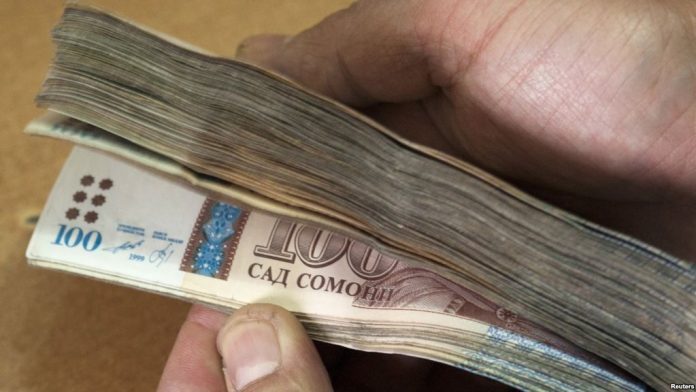
Since the law came into force, approximately 11.7 billion somoni (over $1.2 billion at the current official exchange rate) in funds have been legalized. In 2025 alone, nearly 4 billion somoni were legalized, accounting for 34.2% of the total amount.

The law, following its latest amendments, allows for voluntary declaration of funds. Legalizing these funds automatically grants immunity from administrative or criminal liability, as well as waives taxes, interest, and penalties related to those funds.

The law aims to encourage the legalization of both assets and money, providing immunity from administrative and criminal liability for those who comply. Under the law, precious metals and gems that were mined or acquired illegally—whether in Tajikistan or abroad—can also be legalized. However, assets and money subject to confiscation or under investigation for criminal or administrative violations are excluded from this amnesty.

This law allows Tajik nationals, including individual entrepreneurs and the founders or shareholders of legal entities, to legalize their assets and money. Legalization is facilitated through commissions set up in all cities and districts, while the process for legalizing money takes place in banks, where individuals receive a relevant certificate.

Information about the legalized assets and their owners is confidential and can only be disclosed by a court order.

Tajikistan has previously carried out similar amnesties. The first such initiative took place in 2003, aiming to attract additional investment into the country’s economy. During that amnesty, $190 million owned by 18,000 individuals was legalized. The next round, conducted in 2008-2009, focused solely on the legalization of assets, with more than 87,000 assets legalized, amounting to a total value of 19 billion somoni (around $5 billion at the time). Another amnesty occurred in 2010-2011, allowing individuals to legalize money for investments in the OJSC NBO Roghun, which was established for the completion of construction of the Roghun Hydropower plant. The results of that amnesty were not disclosed, likely due to a small volume of legalized funds.  

How radars and cameras improve road safety in Dushanbe

0
IMG_0425

In recent years, automated traffic control systems have become a common tool in large cities. Their main goal is to reduce the number of dangerous situations on the roads through continuous monitoring.

When drivers know that speeding or running a red light will be recorded, they are more likely to follow the rules, which directly impacts the accident rate.

In Dushanbe, radars and automated violation detection cameras started operating on June 20, 2024. The system detects speeding, running red lights, driving in the wrong lane, and several other violations.

The cameras and radars autonomously capture violations, record the vehicle's license plate, and transmit this information to the country's traffic police (UGAI). Afterward, an inspector verifies each case, and only after confirming the violation is a fine imposed.

The implementation of radars and cameras is part of a larger urban project called NERU. The project includes not only the automated violation detection system but also paid parking spaces and charging stations for electric vehicles. The mission of the project is to restore order on the roads, reduce traffic congestion, and create a safer urban environment.


Is the accident rate really decreasing?

The effectiveness of automatic violation detection systems is also supported by international research. According to reports by the European Commission on road safety, the use of speed and intersection cameras can reduce accidents by an average of 15-20%.

The Cochrane Systematic Review, based on the analysis of dozens of studies, shows that in areas with camera installations, the total number of accidents decreases by 14-25%, and in some cases, the reduction reaches almost 50%. The effect is particularly noticeable in accidents with severe consequences.

Similar approaches are used in other Central Asian countries. In Uzbekistan, cameras and radars are installed in areas with high accident rates and near social facilities. Uzbek media reported that after the installation of radars and a reduction in the speed limit to 60 km/h, the number of accidents in certain areas decreased by about 30%.

In Kazakhstan, the "Sergek" system is widely used in major cities. Official data from Kazakh authorities links its implementation to a steady decrease in accidents and fatalities on the roads.


Why is this especially important for Dushanbe?

In the capital:

·         Speeding remains one of the key factors in severe accidents, and automatic control directly influences adherence to speed limits.

·         Constant violation detection helps form more predictable and stable behavior among drivers.

·         The system operates as part of a comprehensive approach to urban traffic management within the NERU project.

Thus, the implementation of radars and cameras in Dushanbe aligns with international practices and the experiences of neighboring countries. With proper configuration and transparent rules of application, such systems are seen as an effective tool for improving road safety and reducing the number of traffic accidents in the city. 

Teacher shortage and quality issues: what’s wrong in Tajikistan’s schools?

0
Главная

"The shortage of teachers in Tajikistan's schools has been completely resolved," recently declared the Ministry of Education. The statistics look convincing: thousands of new teachers, formally closed vacancies, no shortage of staff.

But once you step away from the reports and enter the classrooms, the reality seems entirely different—teachers in the country are "plentiful" only on paper.


From shortage to "full staffing"

In the 2025-2026 school year, over 9,000 new teachers were hired in Tajikistan’s schools. This was announced at a recent press conference by Deputy Minister of Education Ravshan Karimzoda, who emphasized that the issue of teacher shortages has now been fully resolved.

Just six months earlier, in the summer of 2025, Education Minister Rahim Saidzoda had spoken about the shortage of nearly 4,000 teachers across the country. Since then, the situation, according to reports, has drastically changed.

Officially, the number of teachers has increased by more than 5,000 compared to the previous year, which is said to indicate that the system has reached a stable level. However, the Ministry acknowledged that around 700 teachers are working outside of their specialty, and a significant number of teachers are temporarily replacing colleagues on maternity leave. These nuances are described as technical details, and they seemingly do not change the overall picture: schools are considered staffed.

But the crucial question remains—have parents and students felt these changes? "Asia-Plus" asked directly, and the answers were, unsurprisingly, telling.


"No problem," but teachers are still lacking

The statements claiming that the teacher shortage has been entirely resolved don’t align with what parents and educators see on the ground—there is still a shortage of teachers.

A telling example comes from the Ziyodullo Shahidi Music School in Dushanbe, where, according to parents, there has been no algebra teacher in the 11th grade since the beginning of the school year. Similar situations are reported from other schools. Parents note that after a teacher leaves, the school often goes without a replacement for an indefinite period:

·         "At the Presidential Lyceum in Buston, the primary school teacher left for another school, and there has been no replacement for two weeks."

·         "School No. 46 in the Rudaki district lacks a foreign language teacher in the primary classes."

·         "In School No. 54 in Dushanbe, the senior classes with Russian as the language of instruction have no math teacher."

·         "In School No. 54 in Dushanbe, only two out of five lessons were held today. There were no teachers for the other subjects. A teacher might be giving lessons to three classes at the same time."

These cases are not isolated.

·         "We moved our children from a public school to a private one precisely because of the shortage of teachers."

·         "In School No. 32 in Dushanbe, there is no Russian language teacher."

·         "Teachers are still lacking. And don’t be deceived. The real situation in schools is very different from what is presented in press conferences."


A teacher exists, but not for their subject

Many parents pointed out that the real problem today isn’t whether there is a teacher, but rather who is teaching the classes.

Parents and educators speak of schools where algebra and geometry are taught by a physicist, history by a mathematician, and English by a graduate of an entirely different faculty.

·         "Even in a fairly expensive gymnasium, the algebra and geometry teacher teaches physics. Well, teaches? They just write notes," complained a reader from Dushanbe.

Formally, lessons are held according to the schedule, but according to parents, the content of the classes increasingly boils down to copying notes and mere "seat warming."

·         "Worse still is when the teacher teaches a subject outside their specialty. It’s as if the teacher is there, but in reality, it’s better if they’re not," confessed one commenter.

Others noted that such practices have become a forced norm, especially in regions where schools are ready to accept any specialist just to fill gaps in the schedule:

·         "We graduated from the Faculty of History and Law, and one of my classmates is now teaching English in his village school because there’s simply no teacher."

Under these conditions, children quickly lose interest in the subject and their motivation to learn because, in essence, there’s little difference between having a lesson or not.

·         "All the skilled teachers left for work in Russia. 90% of them received citizenship, took out mortgages, and now live in their own homes. I wanted to write about the problems I face as a teacher in a public school, but let's not dwell on the bad…" said one teacher.

Many readers note that even teachers often lack basic literacy, and attempts to "fill the gaps" with students do not resolve the issue:

·         "There needs to be a strict selection process in education. We must understand the significance of teachers on a large scale. When will the issue of professional competency be addressed? More than 90% of current teachers do not meet the requirements, and this is a huge social problem. It’s time to invest in education; it’s the best investment in the nation's future."

·         "It’s not the shortage of teachers in schools; it’s the shortage of 'intellect.' Instead of providing children with knowledge, they focus on their hairstyles and appearance! That’s where you need to focus your attention."


One teacher for fifty students

Even in schools that are formally staffed, parents complain about another problem—overcrowded classrooms with 40-50 students:

·         "We have 52 students in the class. They can’t divide the class because there’s no teacher."

·         "In one class in Buston, there are 48 students."

Parents acknowledge that with such overcrowding, discussions about the quality of education become irrelevant.

·         "Poor teachers are exhausted by the third lesson, I can only imagine their workload," writes a mother of a student at a Dushanbe gymnasium, where classrooms hold 42-47 students. "Sadly, with so many students in each class, what can you expect from the quality of education?"

Some commenters point out that the problem is not only the shortage of teachers but also the lack of schools and basic conditions:

·         "There are not enough teachers, and not enough places for students. Three students sit at each desk."


Problems in Russian-language classes

Parents also report issues in Russian-language classes. Many consciously choose these classes, expecting a certain level of instruction, but find themselves faced with a completely different reality:

·         "My daughter has spoken only Russian since childhood. Since I’m sending her to a Russian school and a Russian class, I expect proper education. If I wanted her to study in Tajik, I would have sent her to a Tajik school. Can we at least ensure they do their work competently and skillfully, as we are sending children to school to learn and gain knowledge?"

And these are not isolated cases:

·         "My daughter went to the first grade. The teachers are unqualified, write with mistakes, and speak Tajik in the Russian class. Not all families can afford private or expensive schools, and the public system doesn't provide the desired quality."

·         "Osimi Gymnasium in Dushanbe lacks a Russian language and literature teacher."

·         "At the Presidential Lyceum in Buston, the primary school teacher left, and there has been no replacement for two weeks in the Russian group."

In the comments, there is also concern about the culture of communication in schools. One mother recalls overhearing teachers yelling and swearing into the microphone during a ceremony:

·         "Where is their competent speech, tactics, and methods of education?"


Physical education without physical education and schools without men

Some comments address subjects that are effectively excluded from the educational process. Physical education is frequently mentioned:

·         "In many schools, there are no physical education classes; either they write notes, or just walk around the school."

Others specify that there are almost no qualified physical education teachers left:

·         "The critical situation surrounding this subject is already bearing unwanted fruits. In almost all general education schools (and even in lyceums and gymnasiums), both junior and senior classes lack good physical education teachers. It’s terrible. And I won’t even mention other subjects…"

Some commenters also highlight a systemic issue—the near-total absence of male teachers in schools:

·         "95% of teachers are women, and there are almost no men. This affects the development of children."

The root of all these problems is well-known and has been discussed for years. Salaries for Tajik teachers remain among the lowest in the region, while workloads are excessive. The situation is particularly dire in rural and remote schools. Additionally, teachers are often burdened with endless paperwork and checks.

An ongoing issue is the practice of involving teachers in the cotton harvest campaigns, which lasts for months and effectively removes them from the educational process, as well as compulsory meetings with high-ranking guests and mandatory community workdays.

Until these systemic issues are addressed, the annual graduation of new educators is unlikely to change the situation. Young specialists either leave for other sectors, go abroad for work, or remain in schools without significant motivation.

Tajikistan announces electricity and heating tariff increases due to energy sector financial deficit

0
photo_2026-02-11_10-05-24

The recent increase in electricity and heating tariffs in Tajikistan is linked to the need to eliminate the financial deficit in the energy sector, fulfill obligations to credit institutions, rising production costs, and increased fuel and spare parts prices, as well as wage hikes for industry workers. This was stated by Haidarali Rajabzoda, head of Tajikistan’s Anti-Monopoly Agency, during a news conference on February 6.

According to Rajabzoda, tariff revisions were made twice in 2025. It is worth noting that electricity tariffs for households had already been raised in April of the previous year.

"Starting from February 1, 2026, the decree on 'Tariffs for Electricity and Heat Energy' has come into effect. This project was adopted at a government meeting on December 29 and aims to develop the energy sector and achieve financial stability for companies such as Barqi Tojik, the Electricity Transmission Network, and the Electricity Distribution Network," said Rajabzoda.

A representative of the Anti-Monopoly Agency emphasized that the tariff hikes will impact many sectors of the economy, as electricity is a key resource for most industries.

For example, mobile operators and telecommunications companies will see an increase in costs for operating base stations, which rely heavily on electricity.

The changes will also significantly affect the household sector, as more than 90% of the equipment in homes and apartments in Tajikistan runs on electricity.

In the manufacturing sector, almost all equipment also depends on electricity. As a result, a chain reaction of rising costs is formed, ultimately leading to higher prices for goods and services.

This latest round of changes, implemented nine months after the tariff increase in April, is part of a long-term strategy to develop Tajikistan's energy sector. 

Tajikistan-Kazakhstan bilateral trade declines by 7.9% in 2025

0
Иллюстративное фото

In 2025, a two-way trade between Tajikistan and Kazakhstan dropped by 7.9%, amounting to $1.19 billion, compared to $1.29 billion the previous year. The primary reason for this decline was a sharp fall in Tajikistan's exports, while imports remained consistently high.


Export decline

Tajikistan's exports to Kazakhstan in 2025 plummeted by more than half, dropping from $197.4 million in 2024 to $85 million, a decrease of 56.9%. This is the lowest level in the past five years and the key factor behind the overall reduction in trade turnover.

The most significant drop was seen in the export of ores and concentrates, which traditionally make up the largest share of Tajik exports to Kazakhstan. In 2025, shipments of this group fell by 65%, to $46.1 million. Lead ore and concentrates saw a staggering 92.5% decline, copper ore exports were completely halted, and zinc ore exports decreased by nearly 40%.

This decline in raw material exports was the determining factor for the overall downturn. While ores and concentrates contributed the majority of export revenues in 2024, their role sharply diminished in 2025.

Declines were also recorded in other categories. Vegetable exports to Kazakhstan fell by nearly 58%, totaling about $0.9 million, primarily due to reduced shipments of onions, potatoes, and other fresh produce. Fruit and nut exports decreased by 23%, to $9.6 million, mainly due to a drop in apricot and stone fruit shipments, despite growth in some processed product categories.

A negative trend was also observed in the export of paper and stationery, ready-made textile goods, oilseeds, and seeds. Only specific niche products—such as processed fruit products, silkworm cocoons, and carpet items—showed growth, but their volumes were insufficient to offset the overall decline.


Steady imports

In contrast to exports, imports from Kazakhstan remained steady in 2025. The total volume of imports reached $1.11 billion, a 0.9% increase compared to 2024.

The structure of imports remains diversified, with Tajikistan increasingly reliant on key goods from Kazakhstan. The largest volumes continue to come from energy resources, primarily propane and butane, vegetable oils—mainly sunflower and rapeseed oils—cereals and processed grain products, ferrous metals, construction materials, as well as chemical products and aluminum oxides.

Particularly notable was the 43% increase in the import of fats and oils, which reached $97.3 million in 2025. Kazakhstan’s share in this segment accounted for around 70-80% of Tajikistan’s total vegetable oil imports, reflecting strong domestic demand and limited local production capabilities.

Imports of meat, cereals, ferrous metals, electrical equipment, and vehicles also rose. Meanwhile, there was a decrease in the purchase of mineral fuels, beverages, and fertilizers, signaling structural changes in consumption patterns and investment activity.


Trade deficit

Against the backdrop of a sharp decline in exports and steady imports, Tajikistan's trade deficit with Kazakhstan in 2025 exceeded $1.02 billion, the highest figure in the past five years. In comparison, the deficit was $458 million in 2021 and $898 million in 2024.


Outlook

In Astana, the strategic importance of economic ties with Tajikistan is emphasized. As noted earlier by Kazakhstan's Ambassador to Tajikistan, Valikhan Turekhanov, mutual trade is primarily based on the supply of food, metal products, petroleum products, chemicals, construction materials, and equipment.

Meanwhile, exports of Kazakh wheat and sunflower oil continue to grow, and cooperation between the relevant government bodies of the two countries is expanding. To further boost bilateral relations, the 19th meeting of the Intergovernmental Commission on Economic Cooperation took place in Astana in August 2025. Currently, a roadmap is being prepared to increase trade turnover by 2030, as well as a separate roadmap for agricultural cooperation for 2026–2027.

According to the diplomat, the accreditation of Kazakhstan’s Freedom Finance Bank in Tajikistan’s financial market has provided an additional boost to economic cooperation. The establishment of an IT hub and the introduction of digital financial services at the bank are expanding opportunities for business and investment collaboration.

Widespread violations of land legislation identified in Tajikistan

0
photo_2026-02-11_09-53-09

In a report released at a news conference in Dushanbe, Chairman of the State Committee for Land Management and Geodesy, Orif Khojazoda, revealed on February 10 that 13,420 violations of land legislation were recorded in the country in 2025.

According to Khojazoda, 12,218 notices were issued to address the identified violations, and administrative proceedings were initiated in 11,677 cases. As a result of the inspections, fines totaling more than 7 million somoni were imposed, with 5.9 million somoni already transferred to a special account.

Furthermore, 1,035 case materials were sent to the prosecutor's office for legal assessment, and 927 were forwarded to enforcement agencies, he noted.

Khojazoda emphasized that violations of land legislation are committed not only by private individuals but also by employees of the Land Management Committee itself. Specifically, the heads of land management offices in the cities of Isfara, Kulob, and the Abdurahmon-Jomi district have been detained.

An investigation is underway concerning the head of the Isfara Land Management Department, Muhammad Bobozoda, on suspicion of accepting a bribe. Final conclusions regarding his guilt will be made only after a court decision.

Earlier, in 2024, the Agency for State Financial Control and Combating Corruption under the President of Tajikistan instituted criminal proceedings against the head of the land management office in the city of Kulob.

According to the investigation, he promised to allocate an agricultural land plot in exchange for 81,000 somoni, but failed to fulfill his obligations.

The sale of land remains one of the country's most pressing issues, as repeatedly stated by Tajikistan's president.

Orif Khojazoda emphasized that even employees of the land management authorities are not immune to violations, which once again highlights the need for strengthened anti-corruption efforts in this sector.

Sadyr Japarov removes Kamchybek Tashiyev from position as head of Kyrgyzstan’s GKNB

0
RIA_6356915

Kyrgyzstan's President Sadyr Japarov has dismissed Kamchybek Tashiyev from his position as head of the State Committee for National Security (GKNB) and removed him from his role as Deputy Prime Minister. The announcement was made on the Kyrgyz president’s official website.

The decision was reportedly made in accordance with paragraph 4, part 1, article 70, and article 71 of the Constitution of the Kyrgyz Republic. The reasons for the decision were not specified.

On the same day, February 10, it was announced that Jumgalbek Shabdanbekov has been appointed acting head of the GKNB. His appointment is subject to approval by the Jogorku Kenesh, the country's parliament, according to Fergana.

Later, the president’s press service released a comment from Sadyr Japarov explaining the rationale behind the personnel changes.

"First and foremost, I made this decision in the interest of our state, to prevent division in society, including between state institutions, and, on the contrary, to strengthen unity," Japarov stated.

In addition, there were reports of the dismissal of three deputies of Kamchybek Tashiev. These included Daniyar Rysaliyev, Director of the Cybersecurity Coordination Center, Kurbanbek Avazov, First Deputy Head of the GKNB, and Elizar Smanov, Director of the Anti-Terrorism Center.

Kamchybek Tashiyev had headed the national security agency since October 2020, following an appointment by Sadyr Japarov, who was acting president at the time. The two had often worked in close alignment, and sources indicate that a joint criminal case from 2012 helped to strengthen their personal relationship.

After the events of October 2020, political experts began to speak of the emergence of a political tandem, and Tashiyev took on one of the key positions in the government, holding both the Deputy Prime Minister and GKNB Chairman roles. He was responsible for overseeing high-profile criminal cases and was considered one of the president's closest allies.

Jumgalbek Shabdanbekov, born September 22, 1970, was appointed acting head of the GKNB. Prior to this appointment, he served as deputy head of the agency and led its 9th service. He holds the military rank of Major-General.

Tajikistan’s ombudsman comments on involvement of Tajik citizens in the war in Ukraine

0
ҷанг 111

Tajikistan’s Human Rights Ombudsman, Umed Bobozoda, confirmed that citizens of Tajikistan serving their jail terms in Russian prisons are being sent to fight in the war in Ukraine. However, he emphasized that most of them hold dual citizenship and are participating in the conflict as Russian citizens.

Speaking at a press conference on February 9, Bobozoda revealed that he had discussed this issue with Russia's Human Rights Ombudsman, Tatiana Moskalkova, in Minsk. "Ms. Moskalkova also mentioned that they are being mobilized as Russian citizens," he noted.

The Tajik ombudsman stressed that Tajikistan’s legislation prohibits its citizens from participating in armed conflicts abroad. "Despite our monitoring efforts, unfortunately, when a Tajik citizen is incarcerated in a Russian correctional facility, they are essentially under the jurisdiction of that state. In practice, we are seeing that such individuals are being sent to armed conflicts," Bobozoda said.

According to him, participation in the war by a Tajik citizen who does not have Russian citizenship is considered a criminal offense. In Tajikistan, participation in combat abroad is punishable under Article 401 of Tajikistan’s Penal Code – mercenary activities, which can result in up to 20 years in prison.

Earlier, in a news conference in August 2025, Tajikistan's Prosecutor-General, Habibullo Vohidzada, stated that no citizens of the country had been prosecuted "for participating in hostilities in Ukraine." "Some citizens have dual citizenship—Tajikistan and Russia. When a person acquires the citizenship of another state, they are obliged to comply with its laws and obligations. The decision to participate in combat is made by the state in relation to the person who has taken its citizenship. It depends on the individual's citizenship, personal decision, and obligations," explained Vohidzada.

Russian authorities have openly acknowledged recruiting citizens from other countries, including Tajikistan, to sign contracts with the military and participate in the war in Ukraine. According to the Russian Investigative Committee, as of June 2024, over 10,000 migrant workers who had obtained Russian citizenship were sent to fight in the conflict.

In 2025, media outlets reported the deaths of several Tajik citizens in the war in Ukraine. Experts note that Russia views migrants as a potential military resource and seeks to deploy them in combat.

However, the authorities have not addressed numerous reports of deception, threats, coercion, and the exploitation of migrants' vulnerable status to force them into signing military contracts.

In April 2025, the Ukrainian state project "I Want to Live," which collects data on the war, published the names of 931 individuals from Tajikistan, claiming they had signed contracts with the Russian army and were fighting against Ukraine. According to the project, 196 of them had been killed.


Tajikistan’s “blacklist”: over 27,700 debtors banned from leaving the country

0
Главное

As of now, there are 27,703 individuals listed as debtors by Tajikistan's Penal Enforcement Service. Of these, 11,553 were added to the "blacklist" in 2025, thus being prohibited from leaving the country, Akhtam Abdullozoda, head of the Penal Enforcement Service, told reporters in Dushanbe on February 10. According to him, compared to 2024, the number of debtors has increased by 7,579 individuals.

The Service reports that the travel ban has yielded positive results. In 2025, 2,156 individuals fully paid off their debts, amounting to a total of 33,018,575 somoni, 108,560 USD (over 1,018 somoni), and 1,736 Belarusian rubles (about 5,600 somoni). Compared to 2024, the number of debtors settling their obligations has increased by 341 individuals, with the total amount of debts growing by 12,109,393 somoni, 74,316 USD, and 1,736 Belarusian rubles.

These debts arise from unpaid alimony, fines, loans, and other obligations. The Penal Enforcement Service initiates recovery procedures when a debt exceeds 10 indicators. All actions taken by the service are based solely on judicial decisions, with debtors being placed on the "blacklist" through a court ruling.

Akhtam Abdullozoda emphasized that restrictions on debtors' ability to travel abroad and limitations on certain legal services have been effective. The Service is also studying international practices for forced debt recovery. He stated, "Even if a debtor travels abroad for medical treatment, it will not be grounds for lifting the travel ban. We remove individuals from the blacklist daily once their debts are cleared. When a person arrives at the airport and finds they are listed as a debtor, they can pay their debt at a corresponding terminal, and the system will automatically lift the restrictions."

Alijon Aminzoda, head of the Organization and Enforcement Control Department, told Asia-Plus that 27,703 individuals are currently banned from leaving Tajikistan due to their debts. The list only includes those who are legally required by a court to settle their obligations. The goal of this measure is to enforce debt recovery from individuals and legal entities based on court orders.

In addition, 3,893 individuals and legal entities were added to the Unified State Register of Debtors in 2025. According to this register, relevant state bodies, notaries, the Ministry of Internal Affairs, registration services, and other agencies are prohibited from processing requests from these individuals and entities.