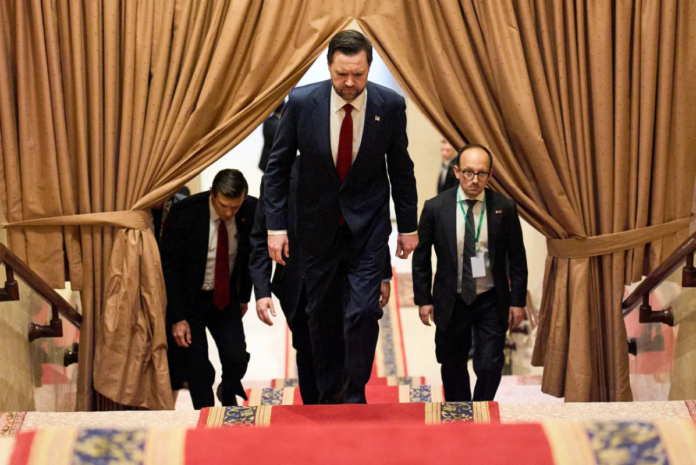
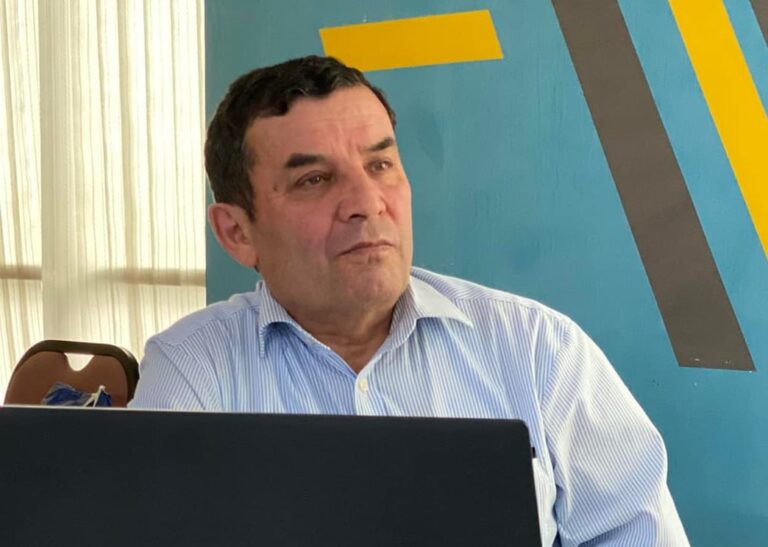
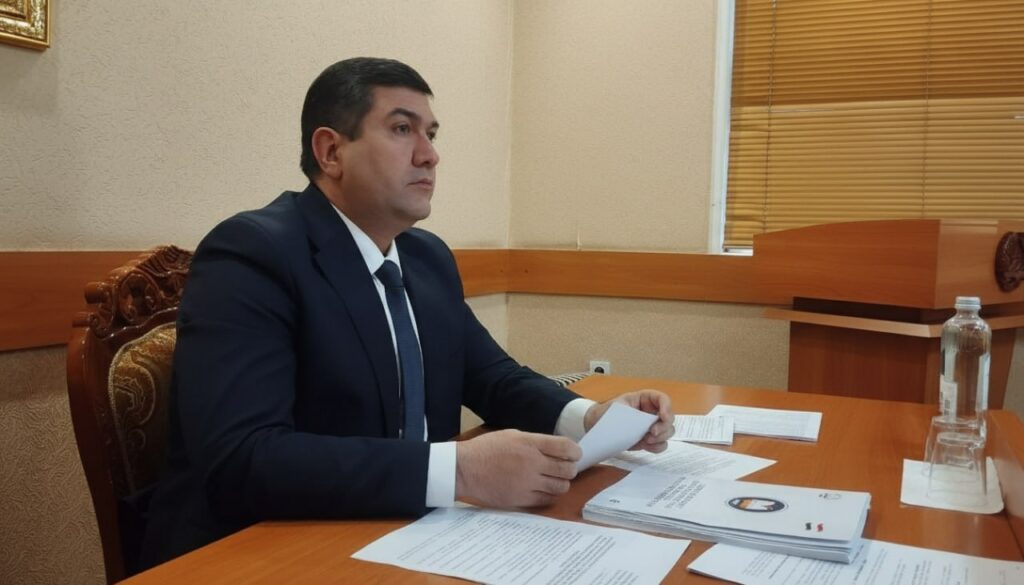
Вице-президент США Джей Ди Вэнс на переговорах в Исламабаде, 11 апреля 2026 года. Фот о Reuters
The US failed to reach an agreement with Iran on ending the war after negotiations in Pakistan, US Vice President J.D. Vance reported on the night of April 12. The US and Iranian delegations left Islamabad, writes Meduza.
“I think this is a much worse news for Iran than for the United States of America,” said Vance. According to him, the US made a final offer, but Iranian negotiators refused to accept Washington’s terms.
The Iranian Foreign Ministry, in turn, stated that the parties reached mutual understanding on a number of issues, but “disagreed on two or three important matters.” According to Tasnim, the US demanded that enriched uranium be removed from Iran. As reported by the Financial Times, the sides were at an impasse over the opening of the Strait of Hormuz.
The negotiations took place on April 11 and the night of April 12. Iranian representatives stated that the talks lasted almost 25 hours.
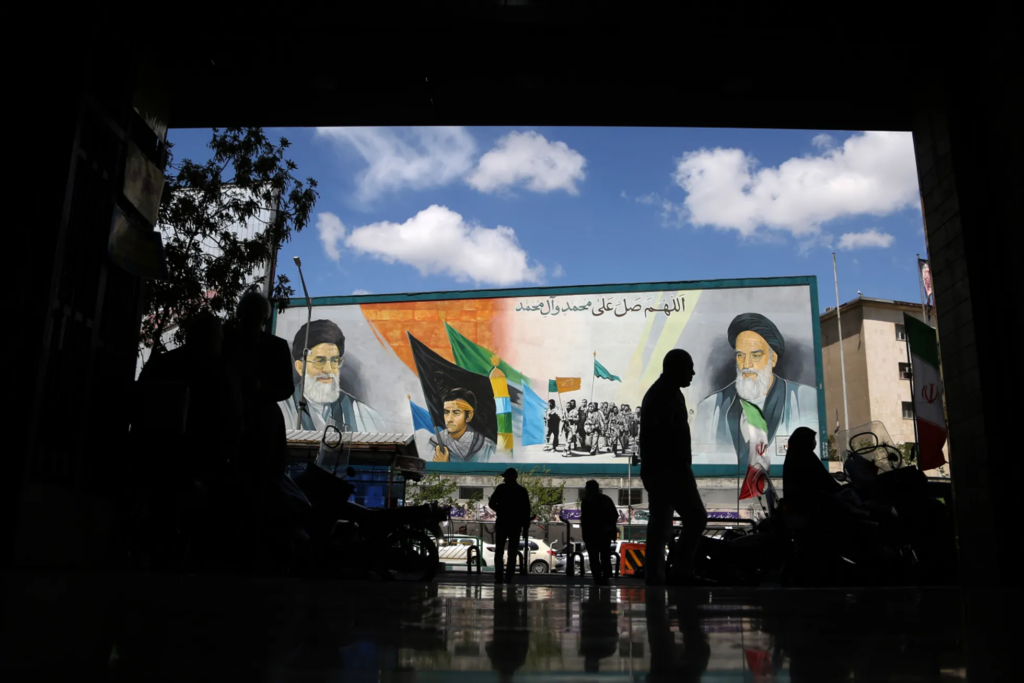
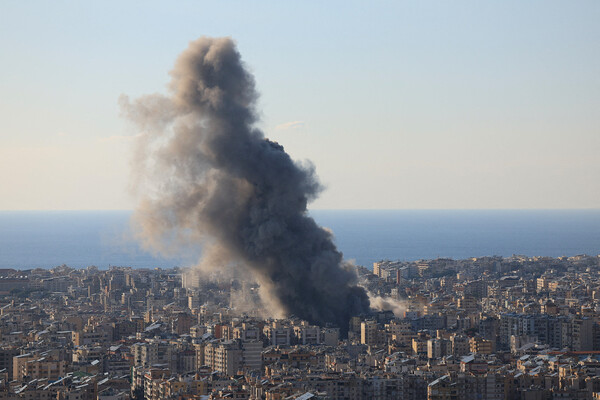
Tehran, April 8, 2026. Photo Anadolu
After the negotiations ended, the US Central Command reported that the Navy is preparing aircraft for flights over their area of responsibility.
Pakistan, which acted as a mediator at the Islamabad meeting, urged both sides to adhere to the ceasefire and expressed readiness to continue facilitating dialogue. The Iranian side indicated that it was “in no hurry”: Tasnim agency, citing informed sources, reported that no changes in the situation with the Strait of Hormuz should be expected until a “reasonable deal” is reached on Tehran’s terms. Meanwhile, Israeli Prime Minister Benjamin Netanyahu stated that the war with Iran is “not over yet.”
The US and Iran agreed on a two-week ceasefire and the opening of the Strait of Hormuz on the night of April 8. Due to the stalemate in negotiations, the truce is under threat, writes Axios.
On April 11, amid negotiations in Islamabad, the US military began an operation to clear the Strait of Hormuz, announced US President Donald Trump. The Islamic Revolutionary Guard Corps (IRGC) stated on April 12 that any attempt by military ships to pass through the strait will be prevented. The IRGC emphasized that under certain conditions only civilian vessels are allowed to pass through the strait. According to this report, shipping is currently closed.
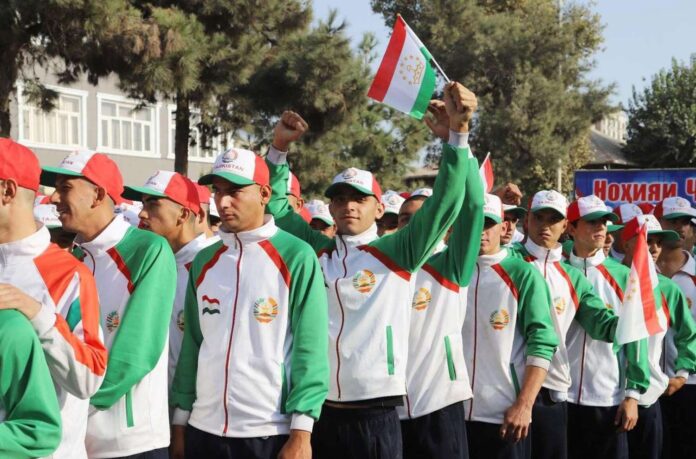
Архивное фото пресс-службы администрации Хатлонской области
The plan for the spring conscription for mandatory military service in Tajikistan has been completed by more than 80% in the first 10 days, reports the Information and Public Relations Department of the Ministry of Defense of the country.
The Gorno-Badakhshan Autonomous Region and the city of Dushanbe have fully completed the conscription plan.
Khatlon Region also demonstrates high results, reaching 96.2% of the plan’s completion. The dispatch of conscripts to military units continues.
In Sughd Region, the plan’s completion stands at 57.5%, and in cities and districts of republican subordination, it is at 68.3%.
Currently, across the republic, the plan for the spring conscription into the Armed Forces is 80.1% fulfilled.
The spring conscription campaign began on April 1 and will last until May 31. This year, young men aged 18 to 27 (born from 1999 to 2008) are being conscripted into the army.
Local authorities associate the successful fulfillment of the plan in the early days with an increase in the number of volunteers, offering various benefits for conscripts, and well-organized explanatory work. Experts note that according to the new law on military obligations, the authorities have the right to conscript youth throughout the year, which helps fulfill the plan at the early stages of the campaign.
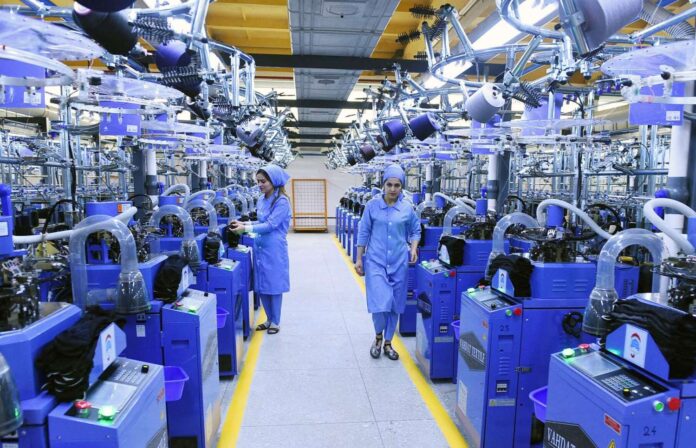
Текстильное предприятие в Таджикистане. Фото пресс-службы президента Таджикистана
Economic growth in the countries of Europe and Central Asia will significantly slow down due to the consequences of the Middle East conflict, geopolitical tension, and fragmentation of trade links. This forecast is given in a review of the economic situation in the region, published by the World Bank, reports UN News.
It is expected that in 2026, the growth rates in the region will be 2.1%. In Russia, economic growth will slow to 0.8%, and in other countries of the region — to 2.9%, which is associated with rising energy prices, limiting consumption, and uncertainty affecting investments.
“The resilience of the region continues to be tested, as several countries depend on imports of natural gas, oil, and fertilizers,” said Antonella Bassani, World Bank Vice President for Europe and Central Asia.
She emphasized that many countries need to focus on overcoming the crisis’s consequences, especially on measures to protect vulnerable populations. Continuing political reforms aimed at ensuring sustainable growth and job creation will also help mitigate the crisis’s impact.
It is forecasted that in 2026–2027, growth in Central Asia will slow to 4.9% amid stabilizing oil production in Kazakhstan.
In Central Europe, growth in 2026 will be 2.4%, and by 2027 will decrease to 2.3%, with EU-funded government investments partially compensating for the decline in consumption.
In the Western Balkans, economic growth in the coming years will average 3.1%, thanks to infrastructure investments and active export of services. In Ukraine, economic growth in 2026 will decrease to 1.2% due to ongoing hostilities, rising energy prices, and budgetary problems.
The Middle East conflict remains a key risk that could seriously limit global supplies of energy resources and fertilizers. This could lead to higher energy and food prices, further slowing economic development in the region.
Industrial policy in the countries of the region is also changing. The slowdown in labor productivity growth over the past decade has prompted policymakers to complement reforms with industrial policy aimed at supporting specific sectors or companies. Experts believe that the countries in the region should focus on measures that strengthen future competitiveness, such as supporting high-tech industries and creating new production facilities. At the same time, nearly two-thirds of all industrial policy measures are currently focused on agriculture and food production.
Ivailo Izvorski, a representative of the World Bank, noted that for more dynamic productivity growth and job creation, the countries in the region need to focus on political reforms that will facilitate the modernization of the business environment, stimulate entrepreneurship, and improve the quality of education.
Experts emphasize that industrial policy should support new and dynamic companies, rather than protect old ones, such as state-owned enterprises. It should strengthen competition, not undermine it.
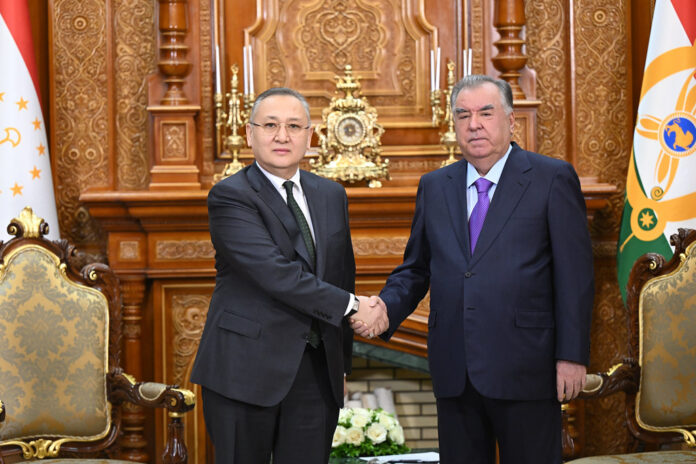
Таалатбек Масадыков и Эмомали Рахмон. Фото пресс-службы президента Таджикистана
On April 10, President of Tajikistan Emomali Rahmon received the Secretary General of the CSTO, Taalaatbek Masadykov, who arrived in Dushanbe on a working visit. The parties reviewed the main tasks of cooperation within the CSTO and exchanged views on the situation in and around the Organization’s area of responsibility.
According to the CSTO press center, the interlocutors discussed the situation in Afghanistan in detail. The issue of strengthening the Tajikistan-Afghanistan border and the relevant Targeted Interstate Program implemented by the CSTO was considered. The parties noted the important significance of this Program for all Central Asian countries and CSTO member states.
The interlocutors emphasized the need to work on the establishment of a Central Asian Regional Humanitarian Response Center in Tajikistan.
Speaking about regional security, Rahmon and Masadykov expressed hope for the diplomatic resolution of the Middle East conflict, as well as other armed conflicts affecting the situation in the CSTO’s area of responsibility.
The Secretary General of the CSTO thanked the President of Tajikistan for actively supporting CSTO initiatives, expressed gratitude to the leadership of the country’s security forces for their comprehensive support in preparing and conducting joint exercises, and noted the high combat training of Tajik servicemen.
Taalaatbek Masadykov informed the president about a series of large-scale joint exercises planned for the second half of the year, including “Indestructible Brotherhood”, “Interaction”, “Frontier”, special exercises “Cobalt” and “Rock”, as well as joint operations “Channel”, “Mercenary”, and “Illegal”.
Among the main areas of joint work, the Secretary General noted the preparation for the upcoming meetings of the statutory bodies – the Council of Foreign Ministers, the Council of Defense Ministers, and the Committee of Secretaries of Security Councils of the Organization.
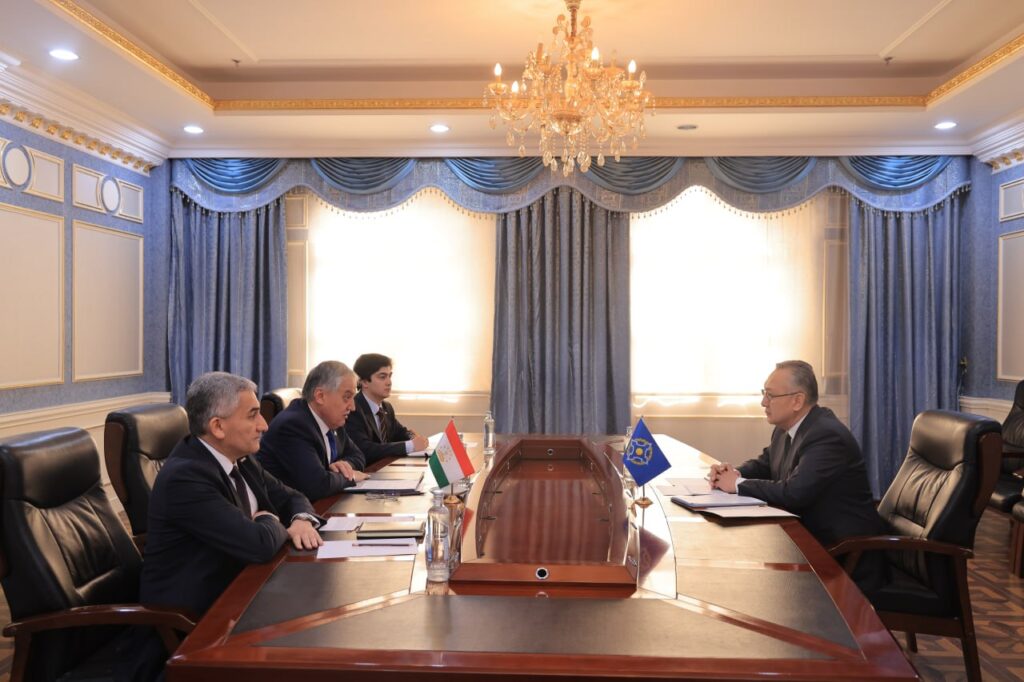
On the same day, Taalaatbek Masadykov met with the Minister of Foreign Affairs of the Republic of Tajikistan, Sirojiddin Muhriddin.
Photo from the Ministry of Foreign Affairs of Tajikistan website
During the meeting, there was an exchange of views on current issues of ensuring regional security amid growing challenges and threats. Special attention was paid to coordinating efforts within the CSTO framework, as well as strengthening mechanisms for collective response.
The meeting concluded with a mutual commitment to continue constructive dialogue and enhance practical cooperation between foreign policy departments and relevant structures.
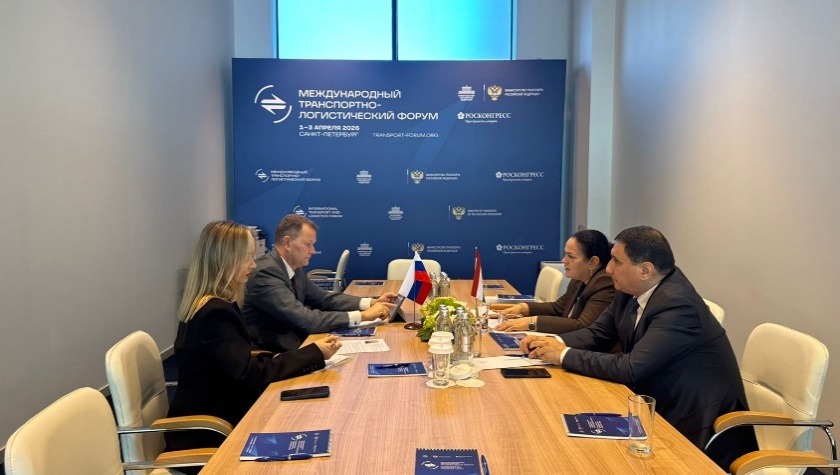
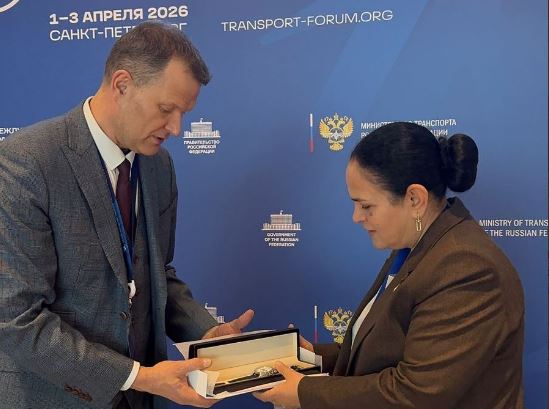
Deputy Minister of Transport of Tajikistan Shoista Saidmurodzoda discussed with Deputy Minister of Transport of Russia Dmitry Zverev the issue of restoring passenger railway service on the Dushanbe — Moscow route, reports the Tajik transport department.
The meeting took place from April 1–3 in St. Petersburg on the sidelines of the First International Transport and Logistics Forum.
Photo: Ministry of Transport of RT
In addition, the parties considered the possibility of purchasing Russian railway equipment, including under leasing terms, as well as modern freight and passenger cars.
The discussion also touched on the development of alternative routes and the elimination of infrastructure constraints, including the launch of regular bus services between the cities of Tajikistan and Russia.
During the meeting, prospects for creating new transport corridors to increase cargo volumes were discussed, as well as the implementation of navigation seals for road transport between the countries.
The parties noted the positive growth dynamics of freight and passenger traffic between the two countries. It was emphasized that this is facilitated by the application of tariff discounts, including a reducing coefficient on railway transportation of agricultural products from Tajikistan to Russia.
Photo: Ministry of Transport of RT
The stability of the annual exchange of permits for international freight transport to third countries was also noted.
The parties expressed interest in the participation of Russian companies in transport and logistics projects on the territory of Tajikistan.
It was noted that the implementation of the interdepartmental roadmap for cooperation in the transport sector for 2025–2030 continues.
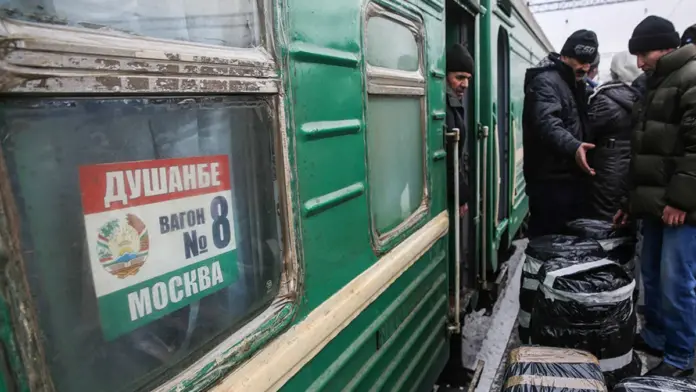
Let us recall that the passenger train Moscow – Dushanbe stopped running in 2012 due to insufficient passenger traffic.
However, there are routes departing from Dushanbe and arriving in Moscow with a transfer in Volgograd. The entire journey, including transfers, takes approximately 3 days and 22 hours. Trains on this route run once a week (departing from Dushanbe on Saturdays).
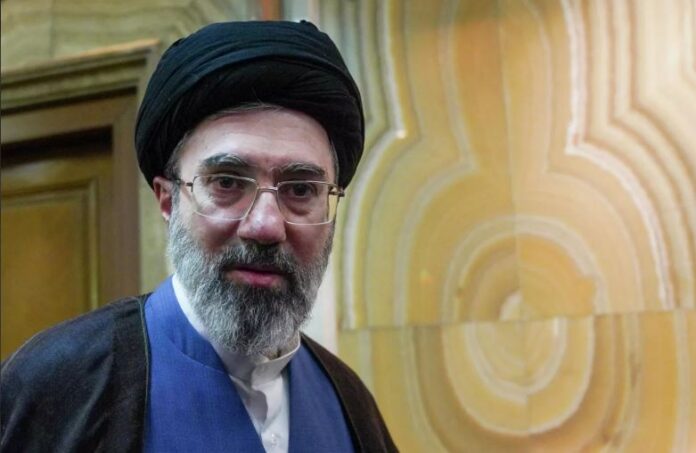
Iran’s Supreme Leader Mojtaba Khamenei stated that Tehran will not leave the actions of the US and Israel unanswered and intends to seek compensation from them for the damage caused. Iranian media published the Supreme Leader’s address following reports of his critical condition.
Mojtaba Khamenei addressed Iranians on the occasion of 40 days after the death of his father, the country’s former leader Ali Khamenei, who died as a result of US and Israeli attacks on Iran that began on February 28.
According to him, the country did not seek war, but will defend its rights and considers itself the winner in the current confrontation.
In the text of the address, distributed by the Tasnim agency, it is stated that Iran is ready to move to a new stage of control over the Strait of Hormuz — a strategically important artery of global energy. This issue remains key in negotiations with Washington.
“Everyone should know: we will not leave in peace the criminal aggressors who attacked our country. We will definitely demand reparations,” he promised.
Khamenei separately addressed the Persian Gulf countries, urging them to “take the right side” and not to trust external pressure.
At the same time, Tehran insists on security guarantees, the lifting of sanctions, and the recognition of its nuclear rights within the framework of future agreements.
Earlier, the British newspaper The Times, citing a diplomatic note and data from American and Israeli intelligence, reported that Iran’s Supreme Leader Mojtaba Khamenei is unconscious and in critical condition. According to the newspaper, he is undergoing treatment in Qom and currently cannot participate in decision-making.
Trump announced a two-week truce with Iran, stating that the US will cease strikes provided the Strait of Hormuz is opened. According to him, Washington received a ten-point plan from Tehran, which could form the basis for negotiations. However, it later became clear that the parties interpret the ceasefire conditions differently.
Despite US statements, the strait remains effectively closed, and passage of ships is carried out only in agreement with Iran.
A day before the talks in Islamabad, scheduled for April 11, the situation around a possible truce in the Middle East remains tense: the parties continue to exchange accusations and military strikes, casting doubt on the prospects for agreements.
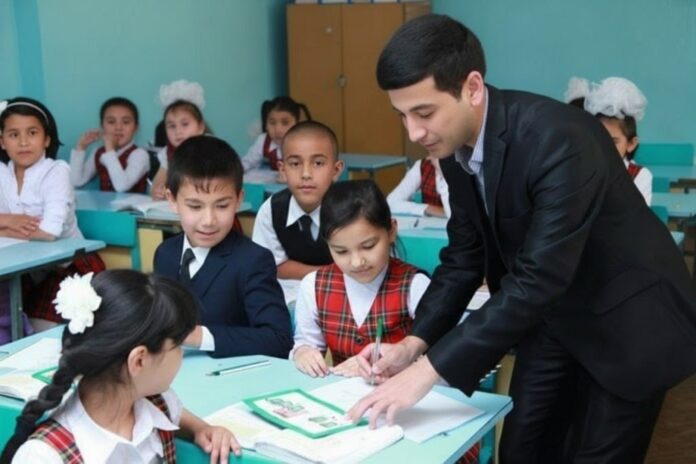
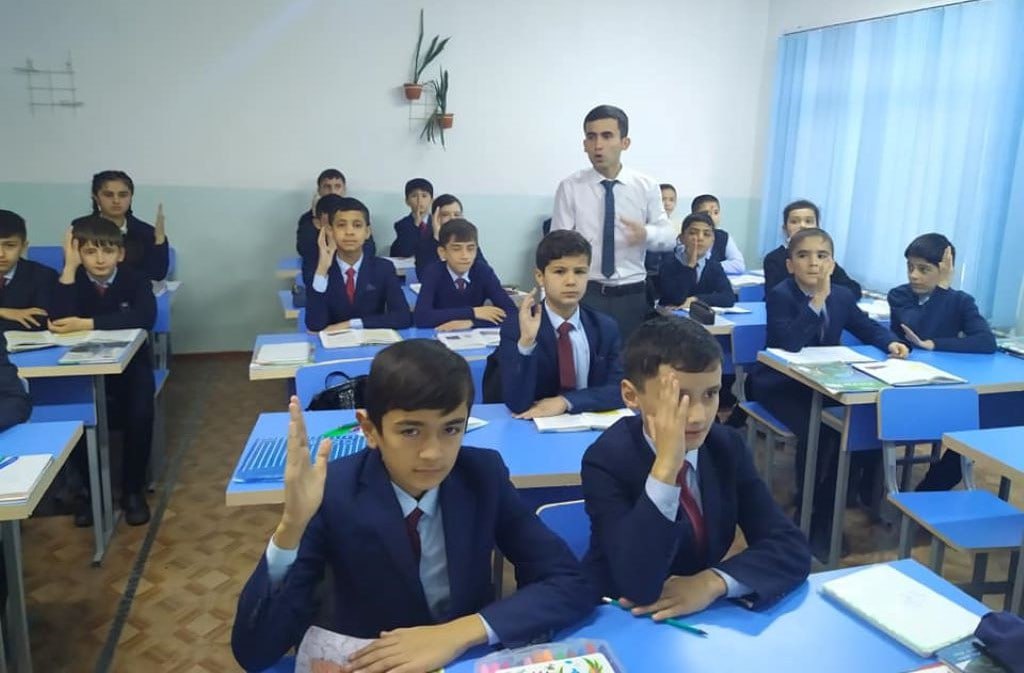
In Tajikistan, the spring military service draft is underway and will last for two months. In 2025, a new law was adopted to protect the status of teachers, and later, amendments were made to the law on military service. According to these changes, some teachers are granted a deferment from military service.
The Ministry of Education and Science and the National Center for Legislation provided clarifications. However, not everything is clear from them…
From “rural” to “general” – changes in legislation
In Tajikistan, until October 2025, only teachers of rural schools were exempt from military service during their employment. Their colleagues in cities and districts were subject to army draft. But at the end of 2025, the Law “On the Status of a Teacher” was adopted, equating city and district teachers to rural ones.
Based on the adopted law, the parliament made amendments to the Law “On Military Duty and Military Service”: in its Article 31, the words “rural general education” were replaced with the word “general education.” Therefore, according to these amendments, teachers of general education institutions in districts and cities also received the right to deferment from military service during their activities.
Khomid Khoshimzoda, the first Deputy Minister of Education and Science, stated at the time in parliament that these changes were made to elevate the status of teachers and address the issue of staff shortages.
Now, subparagraph 11 of Article 5 of the Law “On the Status of a Teacher” grants all teachers the right to deferment from military service, but subparagraph 4 of part 2 of Article 31 of the Law “On Military Duty and Military Service” restricts this benefit. According to this point, only teachers who have completed pedagogical directions and are working in general education institutions are entitled to deferment from military service.
Let’s explain clearly – which teachers are exempt from the army?
The first condition for exemption – working in general education institutions
The Ministry of Education and Science, in a written response to “Asia-Plus,” reported that according to the requirements of Article 31, part 2, point 4 of the Law “On Military Duty and Military Service,” only teachers of “general education institutions” have the right to deferment from compulsory military service.
The group of “general education institutions,” according to the Regulation, includes: – primary education institutions (grades 1–4); – basic general education institutions (grades 5–9); – secondary general education institutions (grades 10–11); – gymnasiums; – lyceums; – presidential schools; – boarding schools.
The second condition. Higher pedagogical education
At the same time, according to another norm of this law, not all teachers of general education institutions enjoy this benefit. Article 31 of the Law “On Military Duty and Military Service” emphasizes that teachers with “higher pedagogical education” are exempt from military service during their employment.
According to the Ministry of Education and Science, each graduate of an institute or university in the “pedagogical direction” receives “higher pedagogical education.”
The specialties of the “pedagogical direction” are defined by the government resolution “On the Approval of the List and Classification of Directions and Specialties of Professional Education.”
In table 6 of the annex to this resolution, more than 600 specialties in the field of pedagogy are listed.
For example, the specialty “English Language” with the code 1-02 03 06-01 belongs to the “Pedagogy” group, and its graduate is considered a “teacher.” However, the specialty “Modern English Language” with the code 1-21 06 01-02 04 belongs to the “Linguistic Sciences” group, and its graduate is considered a “Linguist. Translator” specialist.
Thus, a graduate of the first specialty, when working in general education institutions, has the right to deferment from military service, whereas a graduate of the second specialty does not enjoy this benefit and is subject to conscription.
Why is there such a difference?
The Ministry of Education and Science explained that the educational programs of pedagogical specialties are specifically aimed at training specialists in the field of education. In this direction, students study not only their subject but also teaching methods, psychology, pedagogy, and other profile disciplines.
While in other directions, educational programs are oriented towards training industry specialists, such as translators, philologists, engineers, economists, and they do not include disciplines related to pedagogy.
According to the Ministry, in addition to the Tajik Pedagogical University, pedagogical specialists are also trained in the following higher education institutions: Tajik National University, Tajik Institute of Physical Culture, Tajik International University of Foreign Languages, state universities of Khorog, Bokhtar, Kulob, Dangara, and Khujand, as well as the Pedagogical Institute in the Rasht district.
If students are studying in the specified universities in pedagogical directions and their diplomas indicate the code of this group of specialties, they receive the right to deferment from military service.
Lawyer: there is a contradiction in the legislation
According to Muzaffar Bobojonov, a lawyer with the Office of Civil Freedoms who deals with military draft issues, there is a contradiction between two laws regarding the deferment of teachers from military service – “On the Status of a Teacher” and “On Military Duty and Military Service.”
He notes that according to subparagraph 11 of Article 5 of the Law “On the Status of a Teacher,” the right to deferment from military service is granted to “teachers during their pedagogical activities,” and this norm is general and covers all teachers (regardless of the type of institution and specialty or diploma).
However, subparagraph 4 of part 2 of Article 31 of the Law “On Military Duty and Military Service” restricts this right only to teachers of “general education institutions” and only to those who have “higher pedagogical education.”
Muzaffar Bobojonov, lawyer with the Office of Civil Freedoms
Photo: DOSH
According to him, despite the amendments made to Article 31, part 2, subparagraph 4 of the Law “On Military Duty and Military Service,” it still does not fully comply with subparagraph 11 of Article 5 of the Law “On the Status of a Teacher.”
The lawyer emphasizes the need to eliminate contradictions between the two sectoral laws.
Bobojonov notes that according to Articles 9 and 84 of the Law “On Normative Legal Acts,” both laws have equal legal force. However, in this case, the “special act” takes precedence over the “general act”:
“The Law ‘On the Status of a Teacher’ is a general normative legal act, while on the issue of deferment, the Law ‘On Military Duty and Military Service’ is a special normative legal act,” says Bobojonov.
The Ministry of Education and Science denied the existence of contradictions but referred the clarification of this issue to the National Center for Legislation.
The regulatory body does not recognize contradictions
“When applying, according to the Law ‘On Normative Legal Acts,’ preference is given to the sectoral law, that is, the Law ‘On Military Duty and Military Service,'” said Izzatullo Saidzoda, director of the Center, at a press conference on January 30.
Thus, he effectively confirmed the words of the lawyer from the Office of Civil Freedoms but stated that he does not see any contradictions, “on the contrary, there is a logical connection here,” Saidzoda said.
Izzatullo Saidzoda, director of the National Center for Legislation
Photo asia+
To summarize. In fact, in Tajikistan, the legislation functions as follows: teachers who are exempt from military service during their employment are those who:
– firstly, work in general education institutions (schools, gymnasiums, lyceums, presidential schools, and boarding schools); – secondly, have an education in the pedagogical direction.
Other categories, including college teachers; as well as university and institute teachers without a specialized education, working in schools with diplomas in other specialties, are subject to conscription.
A day before the talks in Islamabad, scheduled for April 11, the situation surrounding a possible ceasefire in the Middle East remains tense: the sides continue to exchange accusations and military strikes, casting doubt on the prospects for agreements.
U.S. President Donald Trump accused Iran of violating the terms of the two-week ceasefire he announced, pointing to the actual blockade of the Strait of Hormuz, writes BBC.
According to him, Tehran does not ensure the free passage of oil tankers and even charges a fee for transit. At the same time, he promised that oil supplies would soon be restored “with or without Iran.”
Iran, in turn, links shipping restrictions to ongoing Israeli strikes on Lebanese territory. After the ceasefire was announced, movement through the strait partially resumed, but remains extremely low: in a few days, only about ten ships passed through it instead of the previous approximately 140 per day.
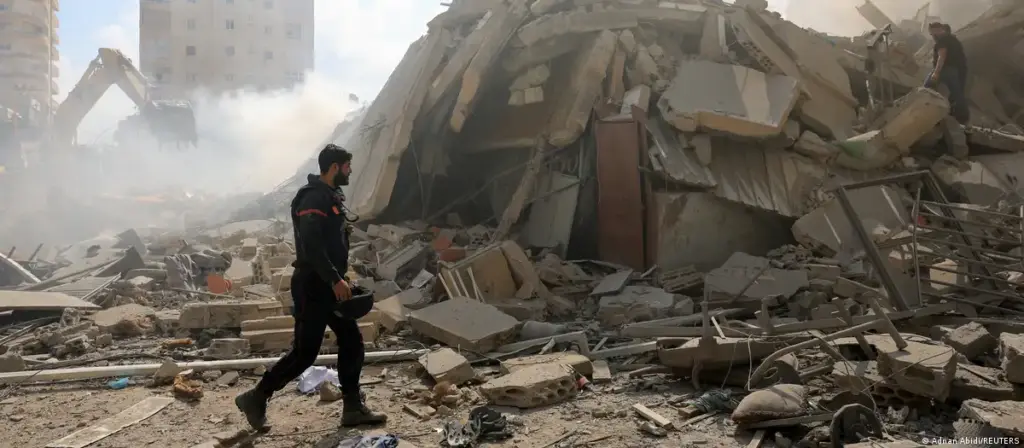
At the same time, the conflict between Israel and Hezbollah has sharply intensified. Israel conducted one of the largest air strikes on Lebanon in the entire history of the hostilities, declaring strikes on the group’s military infrastructure. According to Lebanese authorities, the death toll exceeded 300 people, and mourning was declared in the country.
Destruction in Beirut from the Israeli strike on April 8, 2026 photo: Adnan Abidi/REUTERS
Israeli Prime Minister Benjamin Netanyahu announced the start of preparations for direct negotiations with Lebanon, emphasizing that the issue of Hezbollah’s disarmament will be key. At the same time, he noted that there is effectively no ceasefire on the Lebanese front.
According to him, the talks will focus on the disarmament of the Hezbollah group and establishing peaceful relations between the countries. However, as Axios sources note, the start of the dialogue does not mean the cessation of hostilities, reports The Times of Israel.
Despite this, Trump reported that in a conversation with the Israeli leader, he discussed the need to reduce the intensity of strikes and expressed hope for more restrained actions in the coming days.
The U.S. and Israel insist that the ceasefire does not apply to Lebanon, while Iran considers the cessation of strikes on this country a mandatory condition for the deal and refuses to fully open the Strait of Hormuz until they stop. A similar position was voiced by Iranian Parliament Speaker Mohammad-Bagher Ghalibaf, who is expected to lead the Tehran delegation at the talks.
Pakistan acts as a mediator in the process, but the statements of the parties indicate an actual impasse: Washington insists on Iran fulfilling the conditions of the ceasefire, while Tehran demands the cessation of military actions by the U.S. and their allies.
Against this backdrop, even the composition of the meeting participants remains unclear: according to Iranian media, the country’s delegation has not yet departed from Tehran and may refuse to participate if the strikes on Lebanon do not cease.
Meanwhile, the Islamic Revolutionary Guard Corps of Iran stated that since the beginning of the ceasefire, it has not launched any attacks towards any countries, notes IRNA.
“In the last few hours, news agencies have spread reports of drone and missile attacks on facilities in some countries on the southern coast of the Persian Gulf. The Iranian Armed Forces have absolutely not carried out any launches towards any countries during the ceasefire so far,” the IRGC statement, published last night, said.
The IRGC stated that if the Iranian Armed Forces strike any target, it is announced in an official statement, and any action not officially confirmed by Iran “has nothing to do with us.”
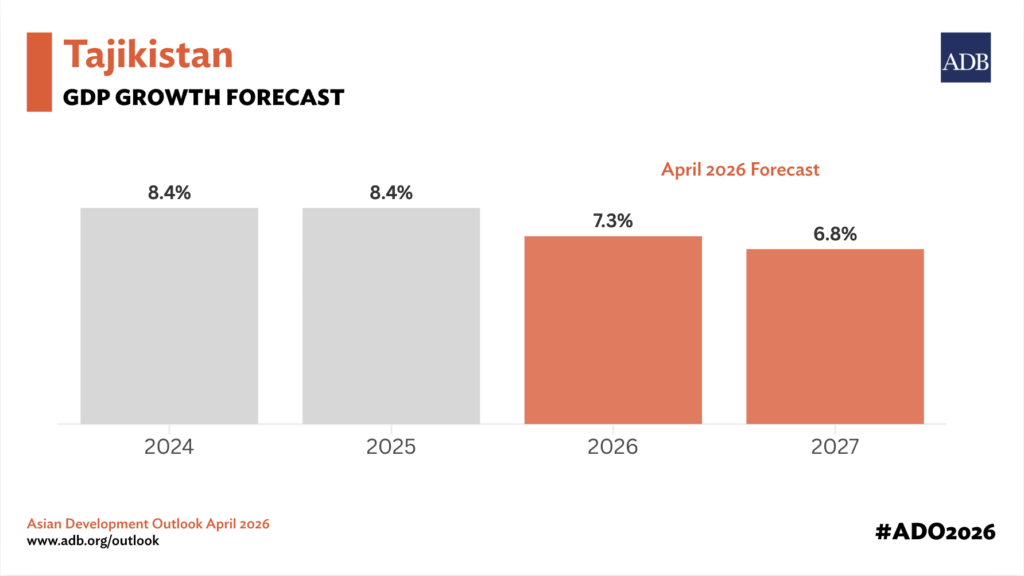
According to the latest forecast from the Asian Development Bank (ADB), Tajikistan’s economic growth is expected to remain high in 2026 and 2027, primarily driven by growth in the industry and services sectors. Increasing industrial competitiveness, leading to higher added value, will contribute to long-term economic growth and job creation.
According to the ADB’s economic report “Asian Development Outlook” published today for April 2026, Tajikistan’s gross domestic product is projected to grow by 7.3% in 2026 and by 6.8% in 2027 after an 8.4% growth in 2025.
Inflation is expected to be 4.0% in 2026 and 4.5% in 2027 amid increased consumer lending and remittances, wage growth in the public sector, supply chain disruptions, and adjustments in utility tariffs. In the face of ongoing uncertainty in the region, forecasts may be revised.
“Tajikistan’s high economic growth creates opportunities for accelerated job creation,” noted ADB’s Country Director in Tajikistan, Ko Sakamoto. “By developing competitive and high-income industries, from food and textile production to mineral products manufacturing, the country can translate economic growth into more quality jobs, which is a key priority of our Country Partnership Strategy with Tajikistan.”
In recent years, industrial production in Tajikistan has shown steady growth. However, the country’s economy is still characterized by a narrow production base. Exports mainly consist of unprocessed raw materials and low to medium technology products, while industrial goods and products with high added value account for less than 10% of the total volume of goods exported.
In this context, the “Asian Development Outlook” recommends that Tajikistan implement a comprehensive industrial development program based on an ecosystem approach. Such a coordinated approach should go beyond individual sectors and address constraints across a broad business ecosystem, including infrastructure, the availability of skilled labor, access to finance, and the overall business environment.
ADB is a leading multilateral development bank supporting inclusive, resilient, and sustainable growth in the Asia-Pacific region. Working with its countries and partners to jointly address complex development challenges, ADB uses innovative financial instruments and strategic partnerships to transform lives, build quality infrastructure, and protect our planet. Founded in 1966, ADB is owned by 69 countries, 50 of which are in the region.
According to a new study, over the past three decades, the US has inflicted a staggering $10 trillion in damage to the world due to its colossal greenhouse gas emissions heating the planet. A quarter of this economic blow has hit the United States itself, writes The Guardian.
As the largest source of carbon emissions in history, the US has done more harm to the global economy than any other country. According to the study’s findings, it surpasses even China, the current leader in emissions, which since 1990 has caused a $9 trillion damage to global GDP.
About 25% of this GDP growth slowdown occurred within the US itself, but other countries have paid an even higher price: economic losses are disproportionately felt in the poorest nations. The study showed that since 1990, US emissions have cost India’s economy about $500 billion and Brazil’s $330 billion.
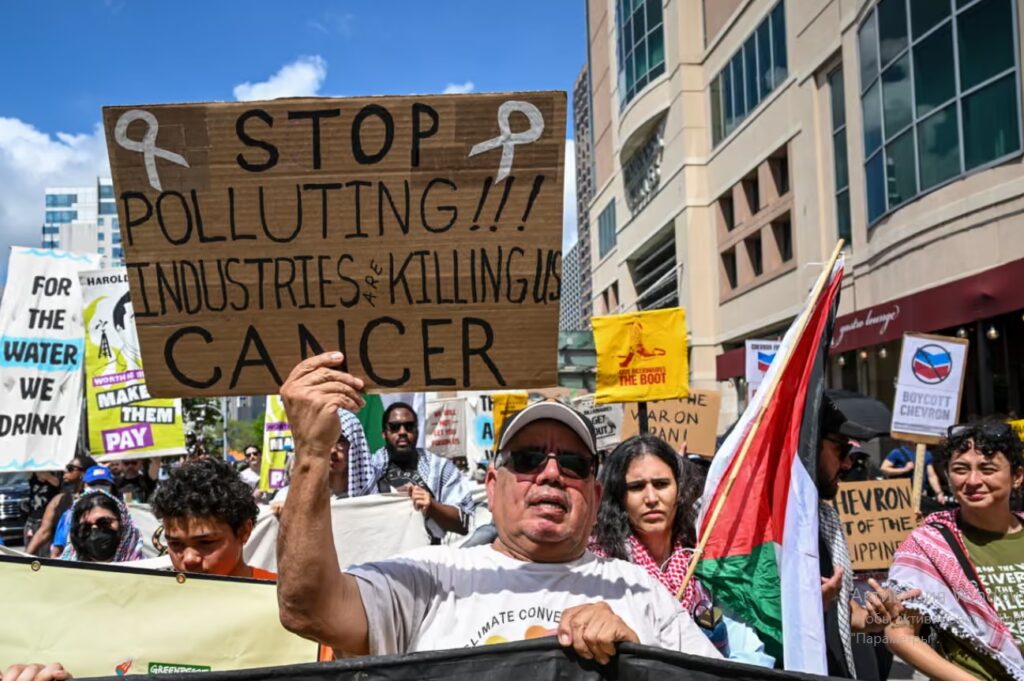
Protesters took to the streets against the global energy conference S&P 2026 in Houston, Texas, on March 23. Photo: Ronaldo Schemidt, AFP
“These are colossal numbers,” acknowledged Marshall Burke, an environmental scientist from Stanford University, who led the new study.
Burke added that the US “bears a significant responsibility: our emissions have caused damage not only to ourselves but also considerable harm to other parts of the world.”
Like a death by a thousand cuts…
The study, published on March 25 in the journal Nature, attempts to quantify in monetary terms the notion of “loss and damage.” This term is used to describe the harm inflicted on societies due to the dangerous rise in global temperatures caused by burning fossil fuels.
Developing countries are calling on wealthier nations, which have emitted most of the greenhouse gases since the industrial revolution, to provide them with financial assistance. These funds are necessary to combat the consequences of catastrophic heatwaves, floods, droughts, and crop failures exacerbated by rising temperatures.
The new study sums up this damage by calculating how much global warming has limited GDP growth and distributing responsibility among countries based on their emissions since 1990. This metric does not account for all the consequences of climate change but shows how economies suffer from heat that reduces workers’ productivity and overburdens healthcare systems.
Photo: Rafael Urdaneta Rojas
“If you raise the temperature a little, as clear historical experience shows, economic growth will slow,” Burke explained. “If you accumulate these effects over 30 years, you will see really significant changes at the end of this period. It’s like death by a thousand cuts. And the people who suffer are not the ones who caused the problem, which seems extremely unfair.”
Gernot Wagner, a climate economist at Columbia Business School, noted: “Past emissions accumulate quickly, and the damage from them even faster. Paying the full social cost of carbon for future CO₂ and other greenhouse gas emissions pays off many times over.”
The US shirks its commitments
The United States of America has long resisted the idea of legal responsibility for pollution that heats the planet, which has helped push the world towards unprecedented climate conditions in the history of human civilization.
Donald Trump accelerated this shirking of commitments: he withdrew the US from the “loss and damage” fund created to help vulnerable countries and exited global climate agreements. Trump advocates a “drill, baby, drill” approach to oil and gas extraction and takes unprecedented measures to slow down domestic clean energy projects.
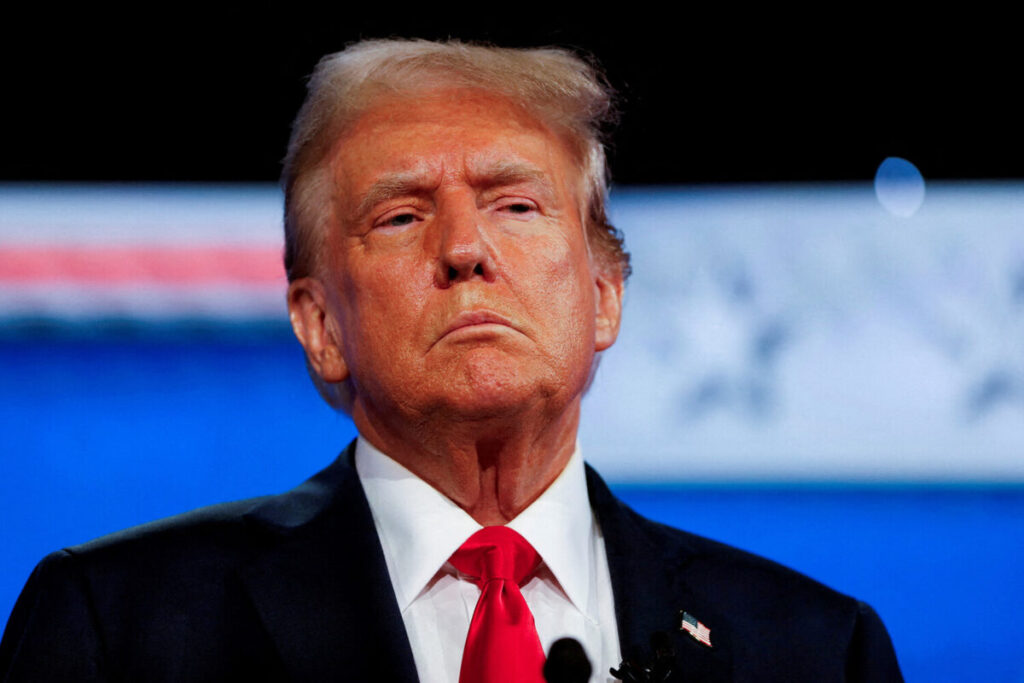
Donald Trump. Photo: Reuters
“I don’t think our numbers can bring the Trump administration back to the negotiating table on loss and damage issues, but they certainly suggest that it should,” said Marshall Burke.
Frances Moore, an expert on the social costs of the climate crisis at the University of California, Davis, who was not involved in the study, called the work “useful” but noted that it might still not fully account for the burden of damage incurred by the poorest countries due to a climate crisis they did not cause.
“Many economists argue that the welfare consequences when a very poor person loses a dollar are much more severe than for a wealthier person,” she explained. “This difference in the impact of dollar damage on welfare in rich versus poor countries is not captured in this study.”