Home Blog Page 43

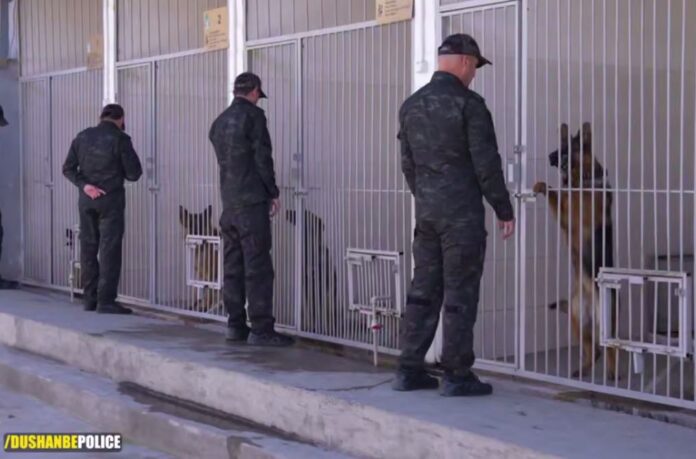
Explosive detection and canine unit established within Dushanbe patrol service

0

An explosive detection and canine unit has been established within the patrol and post service battalion of the Dushanbe Police Department, the department’s press center reported.

According to the Dushanbe police, the new unit was created “to strengthen public order, ensure the safety and protection of citizens, and enhance the effectiveness of crime prevention efforts.”

The unit has been provided with the necessary infrastructure, including specially equipped facilities for housing and breeding service dogs, appropriate working conditions for personnel, as well as modern explosive disposal equipment and technology.

The service dogs were brought from Belgium and Germany. While the ministry did not specify their exact training, such units are  typically involved in detecting explosive substances and identifying explosive devices.

The press center noted that the explosive detection and canine unit operates on a 24-hour duty basis. Its personnel are ready to carry out assignments and respond promptly to potential emergencies at any time.

In Tajikistan, canine services also operate under the Drug Control Agency under the President of the Republic, where trained dogs assist officers in detecting and seizing narcotic substances.

“Close-Up. People of Tajikistan”: Asia-Plus journalist launches author video project

0

Asia-Plus journalist Aliya Khamidullina has launched a new author video project titled “Close-Up. People of Tajikistan,” dedicated to individuals who shape the image of modern Tajikistan.

For several years, Aliya has introduced readers to remarkable and inspiring people across the country through her written features. She has now expanded the format to video interviews in order to present her guests “in close-up” — in a deeper, more vivid, and more personal way.

The first episode has already been released on the journalist’s YouTube channel. It focuses on one of the most responsible and, at the same time, romanticized professions — a commercial pilot.

The debut guest is Alisher Raupov, a pilot with Somon Air. In the interview, he answers some of the most common and unexpected questions from passengers and offers a behind-the-scenes look at his work — aspects that usually remain beyond the aircraft cabin.

At the same time, Aliya remains part of the Asia-Plus team, continuing her work within the media group while developing her independent project.

“There are many inspiring interviews and stories ahead. I want as many people around the world as possible to learn about our remarkable compatriots,” the journalist said.

Viewers can support the project by subscribing to her YouTube channel.

Dushanbe introduces automatic fines for lack of mandatory insurance and vehicle inspection

0

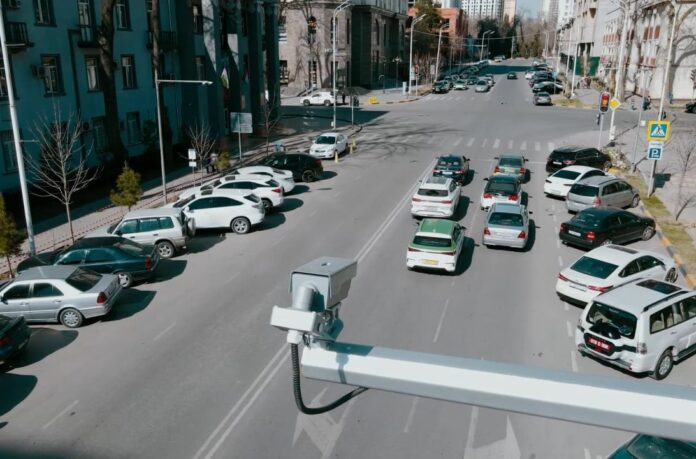
Starting March 5, Dushanbe will introduce an automated system to check whether vehicles have mandatory insurance and have passed the required technical inspection. The monitoring will be carried out using surveillance cameras and radar systems, the Dushanbe Department of the Interior Ministry reported.

If a vehicle is detected without valid insurance or technical inspection, the owner will first receive a notification granting 10 days to remedy the violation. If the requirement is not fulfilled within this period, a fine will be imposed in accordance with Article 315, Parts 1 and 2 of the Code of Administrative Offenses.

The fines are set at:

·         234 somoni — for failure to undergo mandatory technical inspection;

·         78 somoni — for driving without mandatory insurance.

City police urge drivers to obtain insurance policies and complete technical inspections on time to avoid penalties.


Costs of undergoing technical inspection

Under the Law on Road Traffic, all vehicles in Tajikistan are required to undergo mandatory technical inspection. Vehicles that fail to pass the scheduled inspection are prohibited from operating.

Before the introduction of the automated system, traffic police officers would issue warnings, direct drivers to complete the inspection, draw up a report, impose fines, and remove license plates.

Since May 18, 2025, vehicle tax rates in Tajikistan have increased significantly. During the annual inspection, a vehicle tax is collected, calculated based on engine power.

For example, for a Mercedes-Benz C-class with a 1.8-liter engine producing 156 horsepower, the tax under the current rate (9 somoni per horsepower) amounts to 1,404 somoni.

In addition to the vehicle tax, drivers must also pay for:

·         technical diagnostics — 360 somoni;

·         inspection of gas equipment (if installed) — 85 somoni;

·         exhaust emissions testing — 60 somoni;

·         insurance policy — approximately 290 somoni;

·         medical certificate for the driver — 65 somoni.

For drivers’ convenience, Asia-Plus has developed an online calculator allowing users to estimate the vehicle tax based on the car model and engine power.

Mandatory third-party liability insurance for vehicle owners has been in effect in Tajikistan since 2021. The cost of the policy ranges from two to three calculation units.

Technical inspections are carried out at licensed service centers equipped with specialized diagnostic equipment. After passing the inspection, the traffic police issue an official confirmation document.

According to the State Automobile Inspectorate (traffic police), 62 technical inspection stations operate in Tajikistan, including 13 mobile units. 

Tax receipts account for over 62% of Tajikistan’s state budget revenues in 2025

0

Tax receipts accounted for 62.1% of Tajikistan’s state budget revenue part in 2025, according to the Agency for Statistics under the President of the Republic.

The agency reported that tax receipts amounted to approximately 37.5 billion somoni last year, exceeding the revised target by 15.6%. Compared to 2024, tax collections increased by 28.6%.

The growth was primarily driven by value-added tax (VAT), income tax, and excise duties. Around 40% of total tax revenues came from VAT, nearly 29% from income taxes, and more than 4% from excise duties.

Non-tax revenues totaled about 6.4 billion somoni, accounting for 10.5% of overall budget income.

Overall, state budget revenues in 2025 exceeded 60.3 billion somoni, which is 13.2% higher than the revised plan.

Budget expenditures last year reportedly amounted to more than 57.1 billion somoni, marking a 25.6% increase compared to 2024.

Education and science received 20.5% of total spending, nearly 20% was allocated to the fuel and energy sector, 12.9% to social insurance and social protection, and 7.9% to healthcare.

State budget revenues for 2026 are projected at more than 65 billion somoni, representing a 31% increase compared to the approved 2025 figures.


STATE BUDGET REVENUES

Total Revenue: 65.0 billion somoni

Revenue Structure

·         48.4 billion somoni — tax and non-tax revenues, as well as grants to support the budget, including: 41.8 billion somoni — tax revenues; 5.4 billion somoni — non-tax revenues; and 1.17 billion somoni — grants from international financial organizations.

·         13.4 billion somoni — grants and loans for public investment projects

·         3.26 billion somoni – special funds of budgetary organizations

                                                               Source: Law of the Republic of Tajikistan “On the State Budget for 2026”


Total expenditures for 2026 are set at approximately 67 billion somoni.

Funding for key social sectors in 2026 is planned as follows:

·         Fuel and energy sector — 15 billion somoni;

·         Education — 13.7 billion somoni;

·         Healthcare — 5 billion somoni;

·         Social insurance and social protection — 8.5 billion somoni.


STATE BUDGET EXPENDITURES

Total expenditures: 67.0 billion somoni

Largest expenditure items

·         14.96 billion somoni — Fuel and Energy Sector

·         13.68 billion somoni — Education

·         8.49 billion somoni — Social Insurance

·         5.96 billion somoni — Defense and Law Enforcement Agencies

·         5.03 billion somoni — Healthcare

 Other expenditure items

·         2.52 billion somoni — Public Administration and Governance

·         2.52 billion somoni — Transport and Communications

·         2.30 billion somoni — Culture and Sports

·         2.07 billion somoni — Housing and Utilities

·         1.74 billion somoni — Agriculture, Fisheries and Hunting

·         412.2 million somoniIndustry and Construction

·         191.5 million somoni — Environmental Protection

·         17.1 million somoni — Other Expenditures

Source: Law of the Republic of Tajikistan “On the State Budget for 2026”  
President signs decree on spring conscription campaign

0

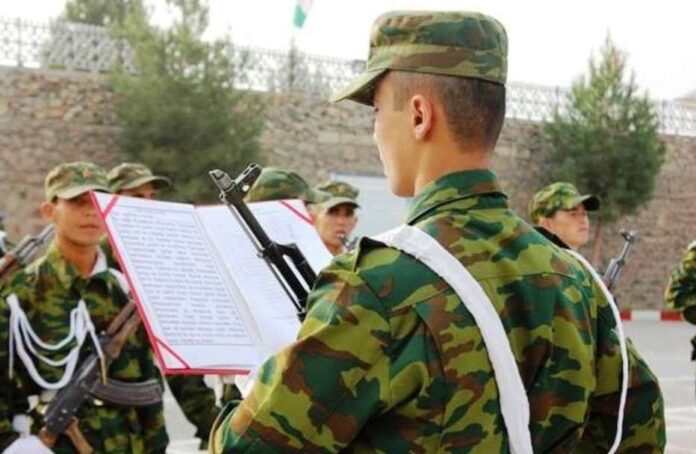
Tajik President Emomali Rahmon on February 27 signed a decree on drafting young Tajiks into the country’s armed forces from April through May 2026, the Tajik president’s official website reports. 

The draft affects able-bodied male citizens in the age bracket of 18 years old to 27 years old, who are not members of the armed forces reserve.

The same decree provides for the retirement from active duty of soldiers and sergeants whose service under conscription is over.

The Ministry of Health and Social Protection of the Population (MoHSPP) is tasked to provide specialists from medical facilities of Dushanbe to make medical examination of conscripts for the districts subordinate to the center.

Heads of cities and districts are responsible for organization of the conscription campaign, the website says.

Some sources say the usual annual conscription target in Tajikistan is some 15,000-16,000.

The two-month-long effort seeking to enlist young men aged 18-27 for the two-year compulsory military service takes place twice a year, in the spring and in the fall.

Young Tajiks can avoid or postpone military service if they are ill, studying at university, an only son, or if they have two children.

Recall, amendments have been made to the country’s law on military service. The amendments came into effect on February 4, 2021 and young men in Tajikistan who wish to forgo the military service may now do so by paying a fee to the government.  A one-month basic reserve service is organized for those who did not perform conscript service for a fee.  At the end of basic reserve service they receive military cards.

Besides, under the law on the universal military duty in new edition, graduates of universities having military department will also be drafted into the army for one year.

Only people who have done military service will be permitted to obtain employment with the government or join the army in a professional capacity.

Tajikistan’s armed forces consist of Ground Forces, Mobile Forces (paratroopers of the armed forces of Tajikistan), Air Force and Air Defense Force.

Many young men in Tajikistan try to avoid conscription.  One reason is that, as in many former Soviet countries, the Tajik Army is known for the brutal hazing of new recruits.  Potential recruits also fear being deployed to conflict zones.  Several soldiers were reported killed or wounded in recurring clashes along the Tajik-Kyrgyz border in recent years.  There are also overwhelming claims that the rich and powerful people use their clout to get their sons out of military service — leading to beliefs that conscription is only for the poor. 

To avoid the army, many conscript-aged men move to Russia during the twice-a-year drafts in the spring and fall.  Some bribe doctors and enlistment officials secure an exemption on medical grounds.

Flights between Tajikistan and Iran temporarily suspended

0

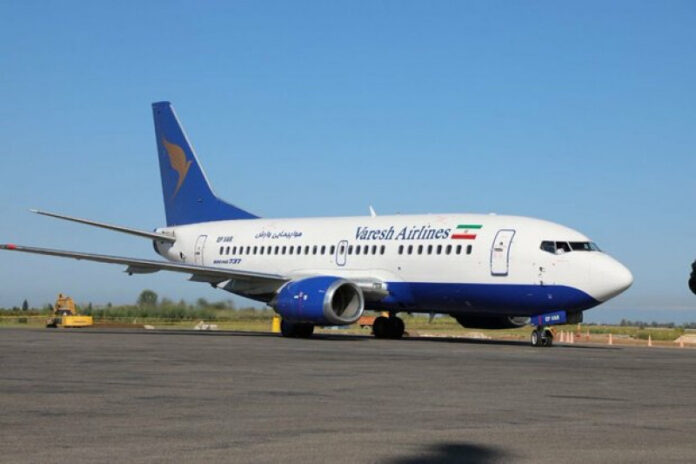
All flights between Tajikistan and Iran have been temporarily suspended amid the military operation launched by the United States and Israel against the Islamic Republic on February 28, a source in Tajikistan’s aviation sector told Asia-Plus.

According to the source, Iran closed its airspace to civilian aircraft on the morning of February 28.

As a result, a Varesh Airlines flight scheduled to depart from Tehran to Dushanbe on March 1 was canceled.

In addition, the source said that on the morning of February 28, an aircraft en route from Dushanbe to Dubai was forced to turn back mid-flight and return to the Tajik capital.

“Due to Iran’s attacks on U.S. bases and restrictions in the airspace of the United Arab Emirates, the pilots decided to turn the aircraft around and return to Dushanbe airport,” the source explained.

At the time of publication, Asia-Plus had not been able to obtain a comment from the press service of Dushanbe International Airport.

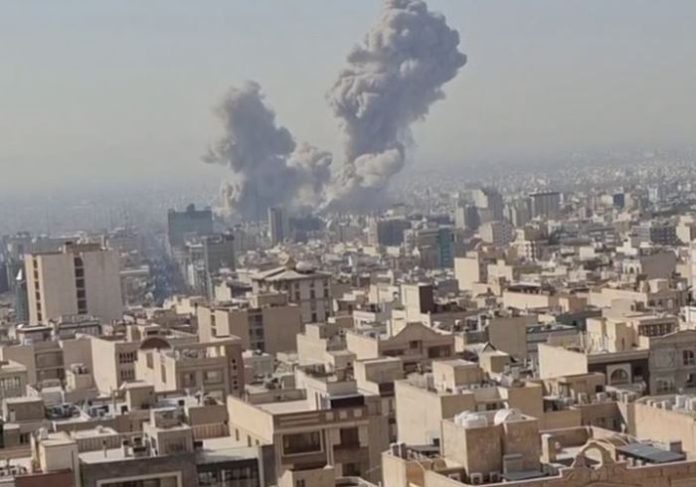
On the morning of February 28, Israel and the United States carried out missile strikes on targets in Tehran, Isfahan, and other Iranian cities. U.S. President Donald Trump announced the launch of a large-scale military operation aimed at eliminating what he described as “immediate threats from the Iranian regime” by destroying the country’s nuclear and missile capabilities.

In response, Iran launched strikes against Israel as well as U.S. military bases in several Middle Eastern countries, including Bahrain, Qatar, Kuwait, and the United Arab Emirates.

Amid the escalating conflict, airlines from many countries announced the suspension of flights in the region. Iran, Israel, and the UAE have closed their airspace.


Iran’s Embassy in Dushanbe publishes Emomali Rahmon’s condolences over the death of Ayatollah Ali Khamenei

0

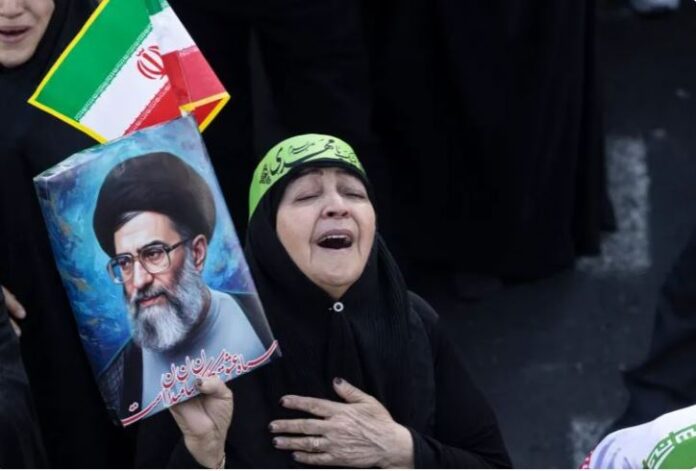
Iran’s Embassy in Dushanbe on the evening of March 1 published on its Telegram channel a message of condolence from Tajik President Emomali Rahmon following the death of Iran’s Supreme Leader, Ayatollah Ali Khamenei.

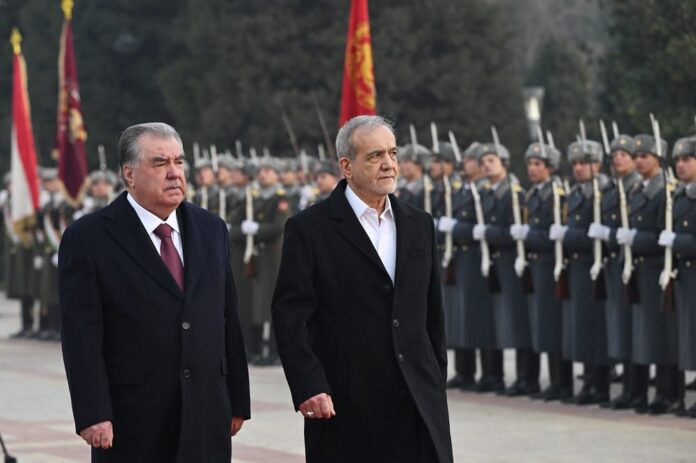
In the message addressed to Iranian President Masoud Pezeshkian, the Tajik leader said he received the news of Khamenei’s death and that of several Iranian government officials “with deep sorrow.”

“I extend my condolences to Your Excellency and the noble people of Iran on this great loss. I wish to emphasize the enduring role of Ayatollah Seyyed Ali Khamenei in the development of comprehensive and constructive relations between Tajikistan and Iran and in strengthening cooperation between our two ancient nations. In these days of mourning, I express the solidarity of the people of Tajikistan with the friendly and brotherly nation of Iran,” the letter states.

According to the embassy’s statement, Rahmon also highlighted Khamenei’s contribution to strengthening Tajik-Iranian ties and added: “In these sorrowful days, expressing the solidarity of the people of Tajikistan with the friendly and brotherly country of Iran, I pray to the Almighty for the repose of the souls of all those who perished and wish their families patience and resilience in this terrible tragedy.”

At the time of publication, the press service of the President of Tajikistan had not released the condolence message on its official website.

Earlier on March 1, Tajikistan’s Ministry of Foreign Affairs issued a statement expressing “deep concern over the unprecedented escalation of the situation in the Middle East.”

“Tajikistan proceeds from the understanding that all disputes and disagreements must be resolved exclusively through negotiations within the framework of international law and the provisions of the UN Charter. The Republic of Tajikistan once again emphasizes the need for effective and urgent measures aimed at preventing further escalation and averting a tragic development of the situation,” the statement said.

Iranian state media reported the death of Ali Khamenei on the morning of March 1 — a day after Israel and the United States carried out a missile strike on his residence in Tehran. According to Iranian sources, his daughter, son-in-law, and other relatives were also killed in the attack.

In addition, several senior military officials were reportedly killed, including Ali Shamkhani, the ayatollah’s security adviser; Mohammad Pakpour, commander of the Islamic Revolutionary Guard Corps; Defense Minister Aziz Nasirzadeh; and Chief of the General Staff Abdolrahim Mousavi.

Iran’s governing council begins work after Ayatollah Khamenei’s death

0

Iran’s governing council, established to carry out state duties following the killing of Supreme Leader Ayatollah Ali Khamenei, has officially begun its work, President Masoud Pezeshkian announced, according to Iranian media reports.

Ayatollah Alireza Arafi, member of a powerful constitutional watchdog, was appointed on Sunday to the temporary council, whose other two members are President Masoud Pezeshkian and Supreme Court Chief Justice Gholam-Hossein Mohseni-Ejei.

In a televised address, Pezeshkian reportedly said the temporary governing body had already started operating and would continue along the path set by the late leader.

“The temporary governing body has started working and with full resolve will continue following the path of our dear imam [Ayatollah Ali Khamenei],” he stated.

Ali Larijani, Secretary of Iran's Supreme National Security Council, confirmed that the council will assume the responsibilities of the supreme leader until a successor is elected in accordance with the country’s constitutional procedures.

Meanwhile, Russian news agency TASS reported today that U.S. President Donald Trump said in an interview with The New York Times that he sees three potential candidates to lead Iran in the future.

According to the publication, Trump said he has “three very good choices” in mind for who could head the Islamic Republic but declined to name them.

The New York Times also reported that Trump signaled openness to easing sanctions on Iran if the country’s new leadership proves to be a pragmatic partner, according TASS.

At the same time, the U.S. president reportedly refrained from clarifying whether Washington would support efforts to overthrow Iran’s current authorities.

“I don’t make a commitment one way or the other; it’s too early,” Trump was quoted as saying. “We have work to do and we’ve done it very well. I’d say we’re quite ahead of schedule.”


Latest developments of US-Israel war on Iran

0

Al Jazeera reported today that Iran has continued to strike US assets across the Gulf after the killing of Supreme Leader Ayatollah Ali Khamenei and up to 40 top Iranian officials.

The attacks have reportedly killed one person in Bahrain, with Iraq and Kuwait reporting more Iranian raids.

According to Al Jazeera, Israel says it is striking at the “heart of Tehran” and is launching attacks on Lebanon after Hezbollah fired a barrage of rockets at northern Israel.

Al Jazeera cited Iranian state media as saying that Israeli attacks have killed at least 20 people in Tehran’s Niloofar Square and caused damage to the Gandhi Hospital and a police building.

Iran’s retaliatory strikes on Israel have reportedly hit the cities of Tel Aviv and Jerusalem, and killed at least nine people in the central city of Beit Shemesh.

Meanwhile, media reports say ministers of the Cooperation Council for the Arab States of the Gulf (GCC) declared following an emergency meeting that Iran must immediately cease its strikes on Gulf countries, as its aggression is unjustified, 

"Despite the fact that the Council’s countries have repeatedly assured Iran that their territories will not be used as a launchpad for an attack on the Islamic Republic, the latter continues to strike the Gulf states and attack civilian infrastructure facilities. This aggression is unjustified and must be ceased immediately to restore peace and security in the region," the ministers' declaration stated. 

On February 28, the US and Israel launched a military operation against Iran. Major Iranian cities, including Tehran, have been hit. The White House justified the attack by citing alleged missile and nuclear threats from Iran.

The Islamic Revolutionary Guard Corps (IRGC), the Iranian Armed Forces’ elite unit, announced a large-scale retaliatory operation. Iran’s Supreme Leader Ali Khamenei and some other key leaders of the Islamic Republic were killed in the joint US-Israeli attack, and the country declared a 40-day mourning.

Central Asian foreign ministers meet with UK parliamentary leaders

0

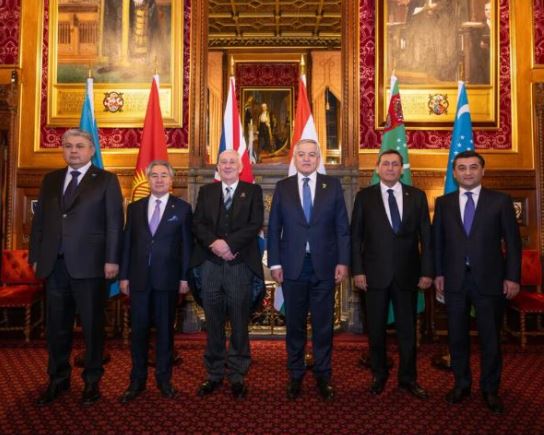
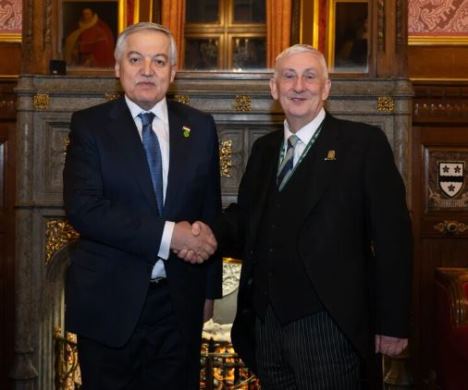
On February 25, 2026, a joint meeting was held in the United Kingdom between the foreign ministers of Central Asia and Sir Lindsay Hoyle, Speaker of the House of Commons.

The same day, a session also took place at the UK Parliament with members of the All-Party Parliamentary Group (APPG) for Central Asia, chaired by Pam Cox.

According to the Tajik Ministry of Foreign Affairs (MFA) information department, Tajikistan’s Foreign Minister, Muhriddin Sirojiddin, addressed the participants, outlining the Republic of Tajikistan’s priorities and ongoing integration efforts within Central Asia. Minister Muhriddin emphasized the crucial role of inter-parliamentary relations in expanding cooperation between the Central Asian region and the United Kingdom.

These meetings reflect a growing focus on strengthening ties and fostering deeper political and diplomatic engagement between the UK and Central Asia.