Home Blog Page 44

Central Asian foreign ministers meet with UK parliamentary leaders

0

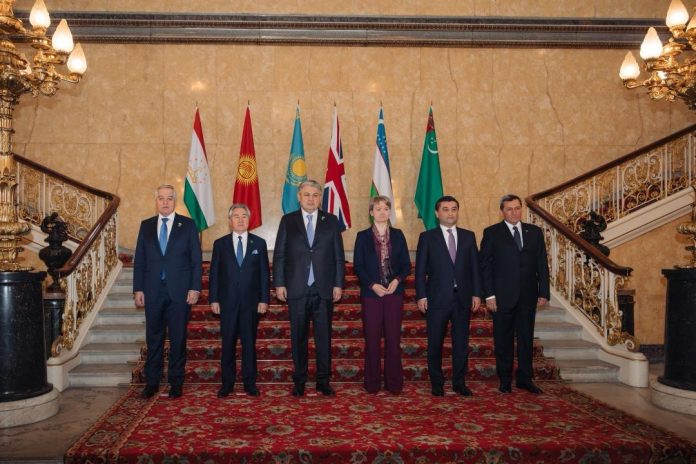
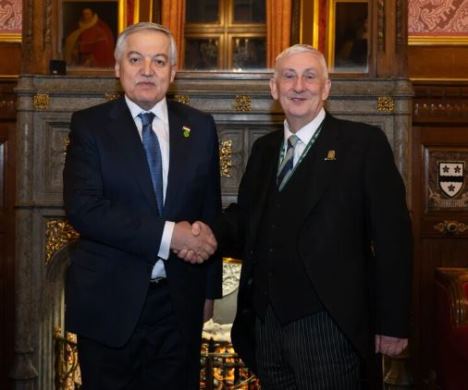
On February 25, 2026, a joint meeting was held in the United Kingdom between the foreign ministers of Central Asia and Sir Lindsay Hoyle, Speaker of the House of Commons.

The same day, a session also took place at the UK Parliament with members of the All-Party Parliamentary Group (APPG) for Central Asia, chaired by Pam Cox.

According to the Tajik Ministry of Foreign Affairs (MFA) information department, Tajikistan’s Foreign Minister, Muhriddin Sirojiddin, addressed the participants, outlining the Republic of Tajikistan’s priorities and ongoing integration efforts within Central Asia. Minister Muhriddin emphasized the crucial role of inter-parliamentary relations in expanding cooperation between the Central Asian region and the United Kingdom.

These meetings reflect a growing focus on strengthening ties and fostering deeper political and diplomatic engagement between the UK and Central Asia.


London hosts the first UK + Central Asia ministerial meeting

0

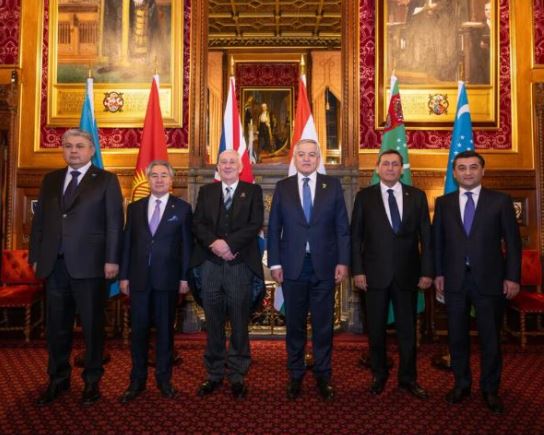
On February 26, 2026, the first meeting of the Foreign Ministers of Central Asian countries and the United Kingdom took place in London under the "C5+1" format. The delegation from Tajikistan, led by Minister of Foreign Affairs Sirojiddin Muhriddin, participated in the event, according to the Tajik Ministry of Foreign Affairs (MFA) information department.

During the meeting, the participants reportedly discussed key international and regional issues, focusing on expanding economic and trade cooperation, attracting investment, enhancing security partnerships, and addressing other areas of mutual interest.

In his address, Minister Muhriddin highlighted the positive development of Tajikistan's cooperation with the United Kingdom in recent years, particularly in the fields of economy, investment, industry, education, and science.

The top Tajik diplomat noted that the meeting underscored the region's commitment to strengthening constructive partnerships with the UK and ensuring sustainable development across Central Asia.

The discussions reportedly also emphasized the importance of collaborative efforts to combat climate change, advance water and climate initiatives, and promote intercultural dialogue.

The parties expressed satisfaction with the establishment of this new format for cooperation and agreed that future meetings will be held regularly to continue fostering collaboration and dialogue, Tajik MFA information department reported.

Kazakhstan’s Foreign Ministry went on to state that the Central Asian foreign ministers praised the CA5+UK platform as important for "structured and results-oriented" dialogue with London, adding that it has proven to be effective in facilitating discussions on regional priorities while also creating additional opportunities to promote economic initiatives and implement joint

Uzbekistan’s Kursiv Media reports that this gathering, hosted by British Foreign Secretary Yvette Cooper, marks the first time since these nations gained independence in 1991 that such a joint meeting has taken place in this format.

The summit reportedly represents a strategic pivot for the UK as it seeks to deepen ties with the rapidly growing economies of Central Asia. The British government aims to bolster regional resilience and economic growth through several key pillars:

·         Critical Minerals: Establishing new agreements to secure and diversify global supply chains.

·         “Green” Growth: Supporting projects that facilitate a transition to sustainable energy and environmental stability.

·         Education: Expanding academic cooperation and English-language programs to enhance skills and professional development.

Politico reported on February 26 that British Foreign Secretary Yvette Cooper told it in a statement that Central Asia is an important region with huge potential to boost economic growth.

WFP invites you to join its registry of suppliers of goods and services

0

The United Nations World Food Programme (WFP) in Tajikistan invites qualified suppliers of goods/services to submit an Expression of Interest (EOI) for consideration to be included in the WFP Roster of approved suppliers.

Suppliers selected through this process will be registered in WFP’s Roster and may subsequently be invited to participate in procurement processes.

WFP seeks to engage suppliers capable of providing a range of goods and services, including but not limited to the following categories:

•             Office Cleaning Services in Dushanbe, Bokhtar, Rasht, Khujand, and Khorog.

•             Toyota Vehicle maintenance services and supply of original spare parts.

•             Fuel supply across Tajikistan (Certified/Licensed Company).

•             Vehicle washing services.

•             Engineering design and author’s supervision during construction.

•             Transportation of food commodities and etc.

For the full and detailed list of the goods and services required, please refer us at [email protected]

Submission Requirements

To participate in the pre-qualification exercise, suppliers are required to submit:

•             A completed Supplier Registration Form (available upon request at [email protected])

•             All other required supporting documentation

Deadline

Expressions of Interest must be submitted no later than March 31, 2026, at 17:00 hrs (Dushanbe Time).

All documentation must be prepared in accordance with the instructions provided and sent by email to [email protected]

Important Notice

This request for EOI does not constitute a solicitation. WFP reserves the right to change or cancel this procurement process, or any of its requirements, at any time during the process. Any such action will be communicated to all participants.

For any questions or clarifications, please contact us at [email protected]

Avalanche hazard announced in Tajikistan

0

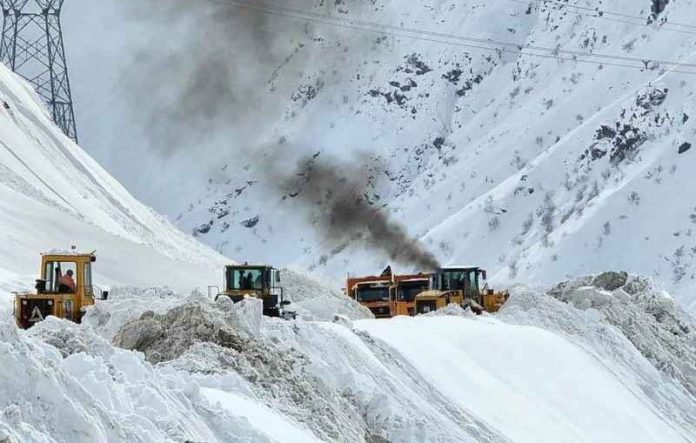
The Agency for Hydrometeorology (Hydromet) has issued a warning regarding the risk of avalanches in several regions of Tajikistan from February 27 to March 2.

The unusually warm weather in February has affected the snow cover in the mountains. According to meteorologists, temperatures throughout the month exceeded the climatic norm, increasing the risk of snow instability and avalanches.

The most dangerous conditions are expected on the Dushanbe-Khujand-Chanak highway, especially between kilometers 48-74 and 78-81. An elevated risk is also forecasted for avalanche-prone areas in the Varzob district.

In addition, the avalanche threat remains relevant for mountainous areas subordinate to the center, as well as the western part of the Gorno-Badakhshan Autonomous Region (GBAO).

Motorists are advised to avoid travel along mountain routes if possible, strictly follow safety precautions, and check road conditions in advance.

The abnormally warm February 2026 in Tajikistan has raised serious concerns among farmers. The early awakening of orchards, the risk of returning frosts, and a lack of moisture could result in crop losses and additional expenses for agricultural workers.

Traditionally, February in Tajikistan is considered the most "winter-like" month, with night frosts, sustained cold weather, and snow in the foothills and mountains. However, the picture in 2026 is different—according to meteorologists, the month has already been 1°C–2°C warmer than the climatic norm in most regions. 

U.S. and Iran hold “most serious” talks on nuclear program in Geneva

0

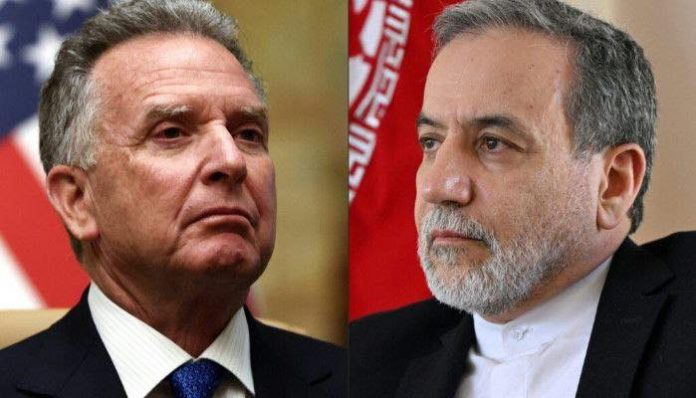
On February 26, delegations from the United States and Iran held another round of talks in Geneva regarding Iran's nuclear program. The American delegation was represented by President Donald Trump’s special envoys, Steve Witkoff and Jared Kushner, while the Iranian delegation was led by Foreign Minister Abbas Araghchi.

Following the meeting, a senior American official described the talks as "positive," Meduza reported on February 27, citing Axios. However, after the morning session, an Axios source reported that the US representatives were "disappointed." By the end of the evening session, the same senior official referred to the negotiations as "positive" without providing further details.

“Tehran presented its own draft nuclear agreement. According to an Al Jazeera source, Iran expressed willingness to temporarily freeze uranium enrichment,” Meduza said. However, the country reportedly made it clear that it would not completely abandon enrichment, dismantle nuclear facilities, or surrender its uranium stockpiles. Instead, Tehran proposed reducing the volume of low-enriched uranium under the supervision of the International Atomic Energy Agency (IAEA).

A CNN source also reported that Iran confirmed it had no plans to develop nuclear weapons. At the same time, Tehran emphasized that any agreement would require the cancellation of all US sanctions and United Nations Security Council resolutions.

Iran reiterated that its nuclear program would continue for peaceful purposes and that its nuclear facilities would not be destroyed.

Oman’s Foreign Minister, Badr al-Busaidi, served as a mediator in the talks. He stated that "significant progress" had been made and that consultations would continue after discussions in Washington and Tehran.

Abbas Araghchi described the Geneva talks as "the most serious and lengthy negotiations" between the two sides.

The negotiations took place amid ongoing tensions between the US and Iran. As Axios points out, some members of Donald Trump's circle view this Geneva round as possibly the last chance for a diplomatic resolution before further steps are taken regarding Tehran.

Over 300 scholarships for free study abroad: how to apply for the “Durakhshandagon” program

0

Applications for the presidential scholarship began on October 1 of last year and will continue until April 1 of this year.

According to the Center for International Programs, more than 400 specializations are available this year, including in fields such as medicine, biology, industry, energy, finance and economics, programming, technology, and others.

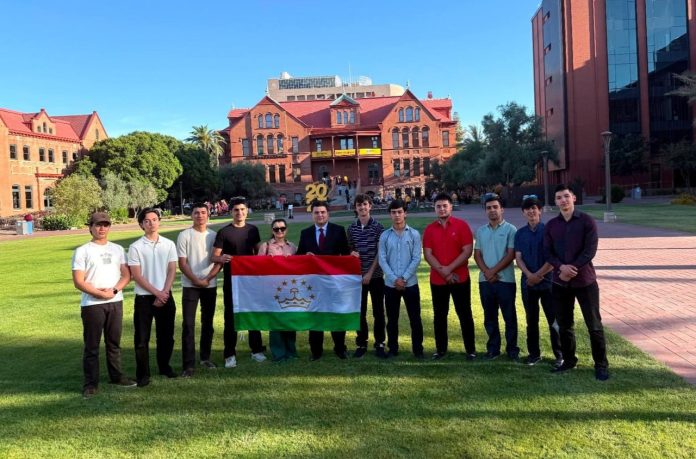
Tajik students can pursue their studies in universities in the United States, South Korea, Germany, the United Kingdom, Canada, Latvia, Cyprus, Hungary, China, Azerbaijan, and other European countries, the center reported.

In 2025, 170 presidential "Durakhshandagon" scholarships were allocated for studying abroad, of which 96 individuals were selected. Currently, 90 of them have already begun their studies at foreign universities, while 6 others are awaiting visa approval.


What documents are needed?

Representatives of the center clarified that the list of required documents may vary depending on the destination country. The basic list includes:

·         A copy of the applicant’s passport and their parents’ passports

·         A certificate of no criminal record

·         A medical certificate

·         A certificate from a narcologist

·         A certificate of mental health (from a psychiatric hospital)

·         A certificate for HIV/AIDS

·         A recommendation from the place of study, work, or relevant authorities

·         A document confirming education (report card, certificate, or diploma)

·         A receipt from "Amonatbonk" (120 somoni)

·         A foreign language proficiency certificate

·         One passport-sized photo (3×4 cm)

Applications can be submitted to the Center for International Programs at the following address: Dushanbe, Mirzo Tursunzoda Street, 47. For additional information, applicants can call: 223-23-59. Announcements about admissions to specific universities abroad are published daily on the center's Facebook page.


What is the "Durakhshandagon" scholarship?

The "Durakhshandagon" presidential scholarship is awarded to talented and gifted youth from Tajikistan for study and internships at foreign higher education institutions.

It is funded from a special fund established by the President of Tajikistan. The selection of candidates is conducted annually by the Republican Commission for the Selection and Preparation of Specialists Abroad.

The Ministry of Economic Development and Trade determines the specializations in demand for the country, although the center has not published a complete list of these areas.

This scholarship can be used for undergraduate, master’s, residency, clinical residency, doctoral, and postdoctoral studies, as well as internships. The main condition is that after completing their studies, recipients must return to Tajikistan and work in the country.


Conditions and scholarship ammount

The "Durakhshandagon" scholarship covers tuition fees, visas, medical insurance, accommodation in dormitories, travel expenses, and provides a monthly stipend of 600 USD.

According to the scholarship’s regulations, students are required to work for at least five years in the organization that sponsored them after completing their studies.
 

Fraudster posing as charity representative arrested in Dushanbe

0

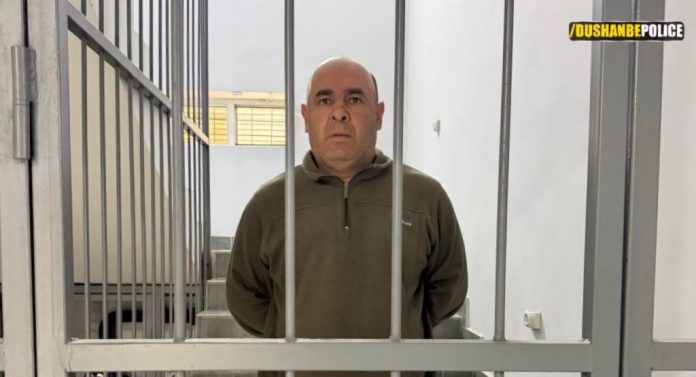
Urunbek Ibrohimov, a 50-year-old resident of the city of Hisor, has been  arrested on suspicion of committing a series of frauds, according to the Dushanbe Police Department

Investigations reportedly revealed that Ibrohimov had been posing as a representative of wealthy individuals and charitable organizations, demanding large sums of money in exchange for assistance with housing.

The investigation has uncovered four cases of fraud, with total damages exceeding 257,000 somoni. It was also revealed that Ibrohimov had previously been convicted for crimes related to fraud and document forgery, according to Dushanbe police.

Criminal proceedings have bene instituted against him under Article 247 of Tajikistan’s Criminal Code — fraud, and he is currently in custody. The preliminary investigation is ongoing.

The Dushanbe police are urging residents who may have fallen victim to Ibrohimov's scams to come forward by calling (+992) 018020202.

In a separate case, Dushanbe police earlier arrested a 24-year-old resident of Dushanbe Olimjon Sulaymonov on suspicion of a series of frauds.

Sulaymonov, who had been posing as a football coach and a representative of various football clubs, deceived trusting citizens by accepting money for services he never provided.

According to the investigation, Sulaymonov received money under the pretense of arranging placements for training at football clubs.

Criminal proceedings have been instituted against Sulaymonov under Article 247 of Tajikistan’s Criminal Code — fraud. So far, 12 incidents of fraud have been established, and the investigation is ongoing.


Tourism growth following visa-free regime between Tajikistan and Iran

0

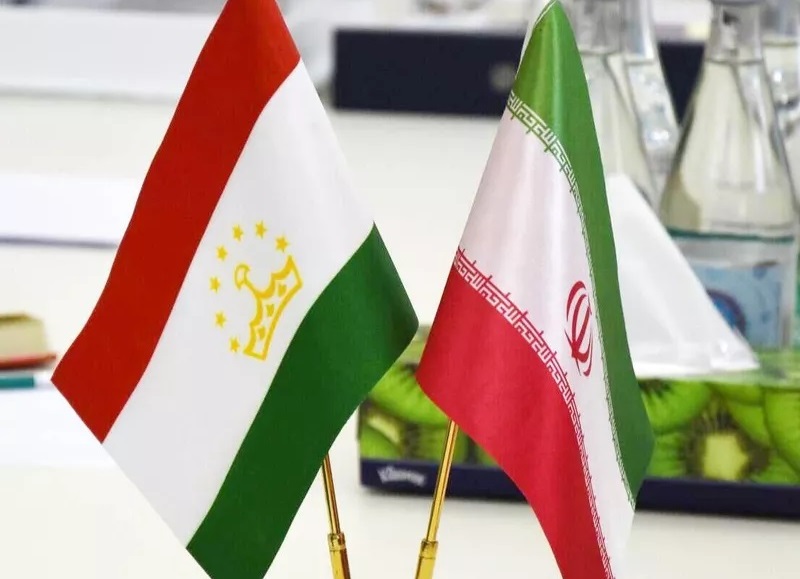
In February 2025, a decree came into effect eliminating the visa requirement for flights between Tajikistan and Iran to all cities. How has this change impacted tourism statistics?

The memorandum abolishing the visa regime between the two countries was signed during a visit by former Iranian President Ebrahim Raisi to Tajikistan in November 2023. In the summer of 2024, the necessary documents were prepared and approved by the parliaments of both nations. As a result, the visa requirement between Dushanbe and Tehran was lifted on August 10, 2024.

On February 3, 2025, the decree extending the visa-free regime to all cities took effect, allowing citizens with ordinary passports for foreign travels from both countries to stay within each other's borders without a visa for up to 30 days within a 90-day period. However, it's important to note that this visa exemption only applies to air travel. Travelers crossing land borders or using third countries still need to obtain a visa.


Impact on tourism

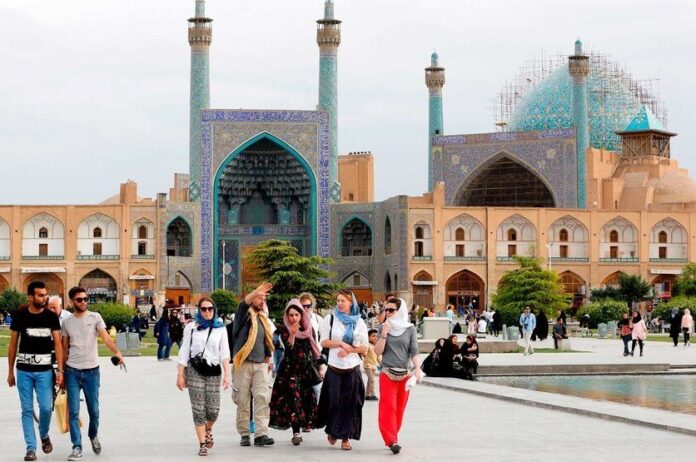
According to data provided by the Tourism Development Committee under the Government of Tajikistan, the number of Iranian tourists visiting Tajikistan saw a significant rise in 2025 compared to 2024. In 2024, 6,804 Iranian tourists visited Tajikistan, whereas in 2025, this number increased to 11,866, marking a rise of 5,062 tourists, or 74.3%. As a result, Iran ranked 8th among the top 20 countries in terms of the number of tourists arriving in Tajikistan, with Uzbekistan holding the top spot.

There was also an increase in the number of Tajik citizens traveling to Iran for tourism purposes. In 2024, 678 Tajiks visited Iran, while in 2025, the number rose to 938, a 38.35% increase, or 260 additional travelers.


Decline in airfare prices

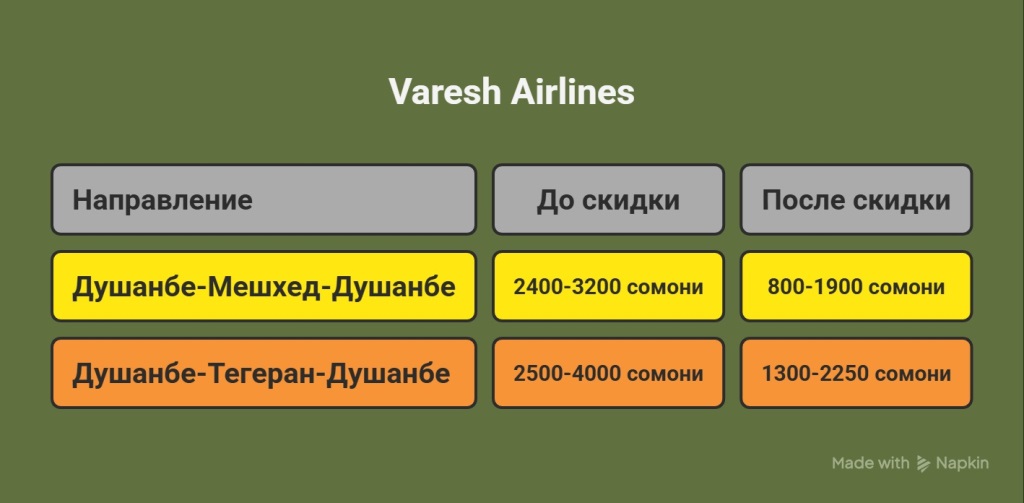
This year, it was reported that airfare prices for both domestic and international flights to Tajikistan have decreased, including flights to Iran.

The cost of tickets has fallen by 25–30%, a development that was made possible by a 40% discount on airport services granted to airlines operating in Tajikistan. Additionally, the increase in the number of flights as part of the "open skies" policy contributed to the price reductions.

Habibullo Nazarzoda, Director of the Civil Aviation Agency of Tajikistan, emphasized that these changes were instrumental in making travel more accessible and boosting tourism between Tajikistan and Iran.

Pakistan launches strikes on Kabul and Kandahar as cross-border attacks escalate

0

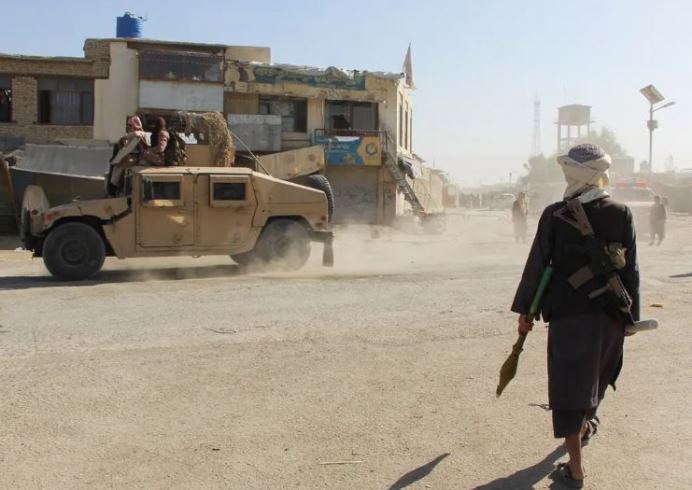
Pakistan launched airstrikes on the Afghan cities of Kabul and Kandahar early Friday morning, marking an escalation in cross-border tensions, according to Pakistani government officials cited by the BBC. In response, the Afghan Taliban initiated renewed attacks against Pakistani military positions along the shared border, a Taliban spokesperson confirmed on X, although the post has since been deleted.

Pakistani authorities described their actions as "counter strikes" in retaliation for what they called "unprovoked Afghan attacks." However, the Taliban asserted that the strikes were in response to earlier Pakistani operations, escalating a cycle of violence between the two countries. The two sides had previously agreed to a fragile ceasefire in October following deadly cross-border clashes, but recent hostilities suggest that peace remains elusive.

Residents in Kabul reported hearing loud explosions throughout the city on Friday morning, as AFP noted. Both Pakistan and Afghanistan claim to have inflicted significant losses on one another in the latest wave of fighting. In Pakistan's border regions, locals also reported hearing explosions and were advised to seek safety.

Pakistan’s government announced the deaths of two soldiers following an Afghan Taliban operation targeting military positions late Thursday. Three additional Pakistani soldiers were injured as Pakistani forces retaliated against the "unprovoked fire," according to Information Minister Attaullah Tarar.

The Taliban, on the other hand, stated that its "large-scale operation" was in direct response to strikes earlier in the week, which they claimed resulted in at least 18 casualties. Pakistan, however, insists that it was targeting alleged militant camps and hideouts.

Mawlawi Wahidullah Mohammadi, a military spokesperson for the Taliban, confirmed that the retaliatory operation began at approximately 20:00 local time (15:30 GMT) on Thursday. Taliban spokesperson Zabihullah Mujahid later claimed that the offensive had resulted in the deaths of numerous Pakistani soldiers and the capture of several military posts.

A spokesman for Pakistan’s Prime Minister Shehbaz Sharif denied these claims, stating that no Pakistani military posts had been lost. "All aggression will receive an immediate and effective response," he added.

Pakistan's government accused the Taliban of making a "miscalculation" by launching unprovoked attacks on multiple locations along the border in Pakistan's Khyber Pakhtunkhwa province, which is home to several military posts. In response, Pakistan’s security forces mounted a rapid counteroffensive.

Pakistan’s Defense Minister, Khawaja Asif, has now labeled the situation as an "open war" between Pakistan and the Afghan Taliban, as fighting continues along the border and explosions are reported in Kabul, Al-Jazeera reports, noting that Prime Minister Sharif stated that, although Pakistan has “always sought peace,” the country’s armed forces will now “firmly confront any aggression."

The border dispute between Pakistan and Afghanistan is longstanding, with the two countries sharing a 2,574-kilometer mountainous frontier. Both nations have struggled to maintain peace along this border, which has become a flashpoint for violence in recent years.

This escalation follows a brief period of relative calm after the ceasefire agreement in October 2024, but with tensions once again running high, the fragile peace between the two nations appears increasingly unstable. 

Misunderstanding of the president’s intentions: bank loans become “more expensive” in Tajikistan

0

In 2025, financial institutions in Tajikistan issued loans totaling 30.0 billion somoni (approximately $3 billion), according to the National Bank of Tajikistan (NBT). The country’s financial regulator notes that this represents a 21.1% increase compared to 2024.

Of the total loan amount, 42.6% was allocated to consumer spending. The remaining loans were distributed as follows:

·         Trade and public catering: 13.4%

·         Agriculture: 11.8%

·         Industry: 8.3%

·         Services: 7.1%

·         Mortgages: 6.1%

·         Construction: 4.5%

·         Other sectors: 6.2%

At the end of 2025, the total outstanding loan portfolio of financial institutions stood at 26.1 billion somoni, which is 22.2% higher than at the end of 2024.

The average interest rate on loans in 2025 was 22.6% in the national currency and 11.7% in foreign currency. The foreign currency rate remained unchanged compared to the previous year, while the national currency rate increased by 0.5 percentage points, compared to 22.1% in 2024.

Recall that in his address to the parliament at the end of 2024, President Emomali Rahmon instructed the relevant authorities to take measures to reduce loan interest rates. Previously, in May 2018, he had tasked authorities with determining the real cost of loans and gradually lowering the interest rates.

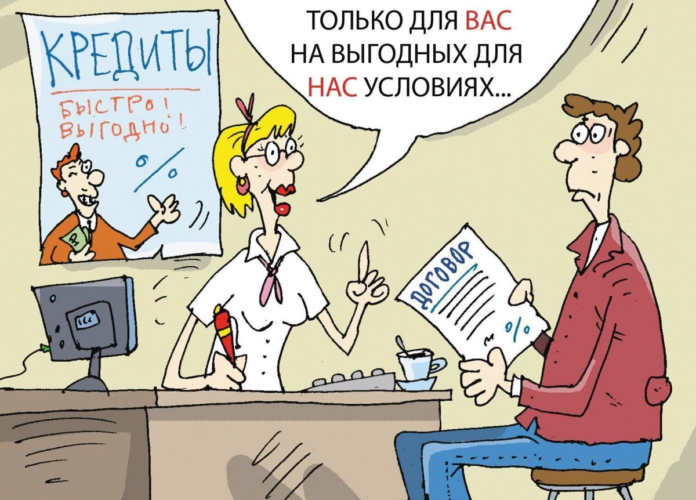
The inaccessibility of financing under favorable conditions remains a major barrier to business development. Entrepreneurs often face a lack of working capital and are forced to approach banks. However, high interest rates and difficulties with repayment often lead them to take out loans in hopes of success, but they don't always manage to repay them.

Moreover, most banks offer short-term loans, while entrepreneurs typically require long-term financing.