Home Blog Page 45

New issue of VIPzone magazine now available online

0

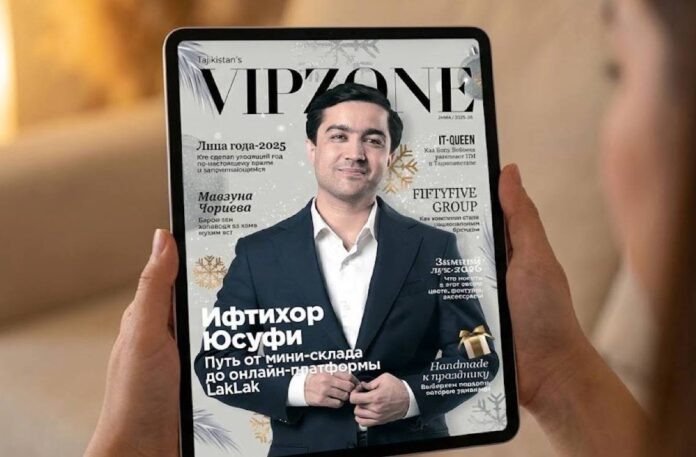
The first Tajik glossy magazine, VIPzone, is once again available in an online format, continuing its tradition. The latest issue is now live—accessible anytime, whether you're on the go, at the office, or at home. No waiting, no restrictions—just open it up and dive in.

This edition is especially rich in personalities and stories. Inside, you'll find industry leaders from the creative world, masters of jewelry art, musicians, media project creators, and bloggers who have successfully turned their personal style into a recognizable brand. These are stories about how an idea is born, how it evolves from concept to execution, and why attention to detail makes all the difference.

A significant focus of this issue is on business and scale. We showcase how major companies in the country are implementing ambitious projects, how strong teams are built, how strategic decisions are made, and what’s behind the major launches. Every project has people, risks, and responsibility at its core.

The issue also covers the cultural context—art initiatives, private projects, and new spaces that are reshaping the urban environment. We bring together those who are taking action, creating, and influencing.

This issue isn't about a season; it’s about momentum. It’s about the people who are shaping today’s lifestyle, business agenda, and cultural rhythm. And now, all these stories are available online, so you can return to them whenever you need.

State Duma approves law banning extradition of foreigners who served in Russian military

0

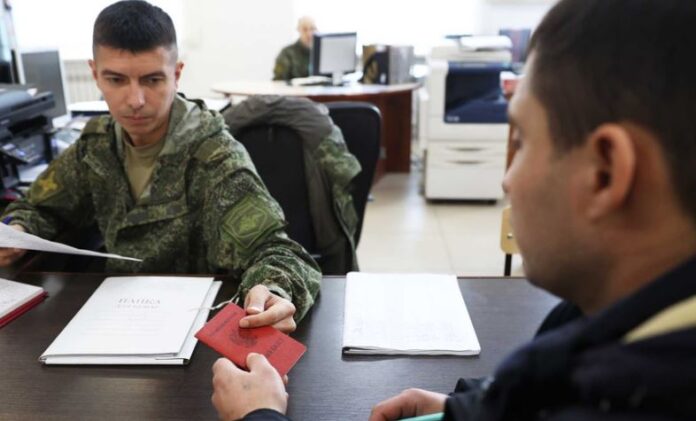
The State Duma (Russia’s lower chamber of parliament) has approved a bill in its second and third readings that will prevent the extradition of foreigners who have served in the Russian Armed Forces under contract.

The bill amends Article 464 of the Russian Criminal Procedure Code, which outlines the grounds for refusing extradition. The proposed amendment adds a provision that prohibits the extradition of foreigners who are or have been contracted military personnel in the Russian Armed Forces, Meduza reports.

The bill was submitted for consideration to the parliament on November 20, 2025, and was passed in the first reading on January 21. After final approval, it will be sent to the Federation Council and then to the president for signing.

Faridaily notes that the bill is "aimed at increasing the number of foreigners who may take part in the war against Ukraine on Russia's side."

The number of foreigners fighting in the Russian military remains unclear. Four years have passed since Russia's war in Ukraine began, and media reports have documented the presence of hundreds of people from Tajikistan in the conflict. However, the official authorities in Tajikistan state that none of their citizens have been punished for participating in the war.

Meanwhile, several individuals in other countries in the region have been convicted and sent to prison for their involvement in the war.

Tajikistan's Prosecutor-General, Habibullo Vohidzoda, explained on February 13 at a news conference in Dushanbe that Tajik citizens who also hold Russian citizenship are "obligated to fulfill military duties for Russia."

"According to Tajikistan's legislation, we are not allowed to initiate criminal proceedings against citizens who hold Russian citizenship and participated in this conflict under an agreement with Russia," said Vohidzoda.

He noted that if a person is a Tajik citizen and does not hold Russian citizenship but participates in the war against Ukraine, criminal charges will be filed. "In such cases, the provisions of the Tajik Criminal Code will apply. This is Article 401, Part 1, which covers illegal participation in armed conflicts abroad," he clarified.

The Prosecutor-General also mentioned that his office currently does not have official data on such cases. Vohidzoda made similar comments in the summer of 2025.

On January 12, Tajikistan's Interior Minister, Ramazon Rahimzoda, told reporters in Dushanbe that no Tajik citizen had been criminally prosecuted for participating in the war in Ukraine.

"We do not keep track of how many of our citizens are involved in the war in Ukraine, and we have no obligations regarding this matter," said Rahimzoda.

Over the past four years of the war, media outlets have reported thousands of Tajik nationals participating in the conflict, with some reports stating that the number of casualties among them could be in the hundreds. However, no official bodies have confirmed or denied these reports.

The latest news about the death of a Tajik national and the return of his body to his homeland appeared on February 12. The body of a 26-year-old Karomatullo Odinayev, who had gone to Russia for work and died in the war in Ukraine, was laid to rest in his native village of Basmand in the Vahdat jamoat of the Devashtich district in Sughd province.

In 2025, several other bodies of fallen Tajik nationals were brought back to Tajikistan and buried.


Why Tajikistan doesn’t process leather: response from the Ministry of Industry

0

The Asia-Plus editorial team received an official response from the Ministry of Industry and New Technologies of Tajikistan to a request sent as part of preparing the article “Why doesn't Tajikistan process leather?”. The ministry’s response came after our article was already published.

Aziz Nazar, Deputy Minister of Industry and New Technologies, answered the editorial’s questions.


Q. How many leather and footwear enterprises are officially operating in Tajikistan today? What are their real production capacities and degree of utilization?

A. There are 5 enterprises in the republic engaged in the processing of cattle and small ruminant hides, as well as 22 enterprises producing footwear. In 2025, the sector processed 639,447 animal hides, and footwear production amounted to over 880,000 pairs. However, the degree of utilization of the production capacities at leather processing enterprises remains low, averaging 30-40% of the designed capacity. The main reasons for this low utilization include outdated technological equipment, limited access to high-quality raw materials, and a lack of market demand for the products.


Q. Why, despite the annual production of 1.5-1.7 million hides, is less than 2% processed?

A. Currently, there is a low level of hide processing in the country. The main reasons for this situation include the insufficient availability of modern technologies for primary processing of hides (including conservation and sorting), the lack of large-scale leather factories with full-cycle production equipped with modern technology, and the higher profitability of raw material exports compared to organizing deep processing at the initial stage. Additionally, a significant issue is the shortage of highly skilled personnel in this industry.


Q. Why does the country remain an exporter of cheap semi-finished products while importing expensive finished goods?

A. From January to December 2025, the export of primary-processed leather amounted to 1.8 million USD. The main reasons for exporting primary-processed leather are the lack of experience in organizing full production cycles, the absence of specialized design and engineering schools, and limited access to international markets for finished products.


Q. What measures are planned to increase domestic raw material processing? What steps are being taken to change the export policy—transitioning from raw materials to finished products?

A. To increase the volume of raw material processing within the country and change the export policy, it is necessary to modernize existing facilities and build new full-cycle enterprises with modern technological equipment. In this regard, the Ministry has prepared investment projects for the development of the leather processing sector, including a project for the construction of a leather goods factory and a footwear factory. These projects have been sent to the relevant ministries and agencies for review. Separate items for establishing cooperation in this sector are included in the intergovernmental commission protocol. The realization of these initiatives will involve active attraction of direct investments.


Q. How will the Industrial Development Strategy through 2030 be implemented with regard to the leather industry?

A. The industrial development strategy for the Republic of Tajikistan through 2030, approved by the government decree on March 27, 2018, No. 159, prioritizes the processing of leather into finished products. It is planned to increase leather processing volumes to 2 million hides by 2030 through the attraction of direct investments, the creation of new production capacities with modern technological equipment, and expanding into new export markets for finished products.


Q. What is the reason for the absence of major investors in the leather production sector?

A. The main reasons for the lack of major investors are the insufficient competitiveness of the produced products in global markets and limited demand in the domestic market. Domestic manufacturers face tough competition from large producers in China, India, Pakistan, and Bangladesh, who have significant advantages in production scale and product cost.


Q. What government support measures are provided for leather industry enterprises (tax breaks, subsidies, loans)?

A. To stimulate the development of the leather industry, the government has provided benefits and preferences under the Tax Code, Customs Code, and other regulatory legal acts of the Republic of Tajikistan, aimed at creating favorable conditions for investment and production modernization.

India’s twin trade pacts with EU and US signal its rising global standing

0

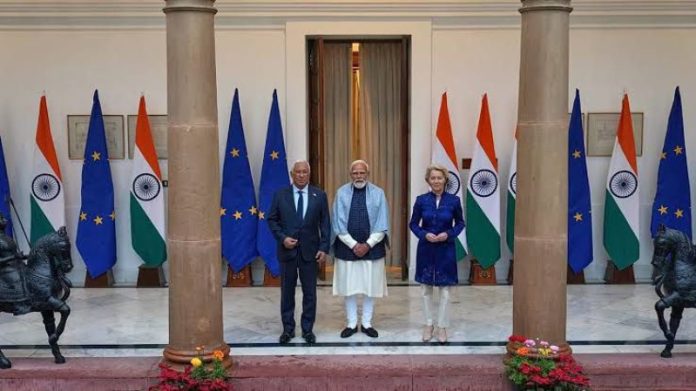
India's landmark deals with the European Union (EU) and the United States (US) within a week have underscored its importance and prominence in the global economy and geopolitics, highlighting its changing role in the multipolar, fractured world order. India has successfully drawn the EU and the US alongside Russia into its circle of strategic partners, signalling that it is no longer merely a rule-taker in the global order, but a key rule-shaping power at the centre of an emerging multipolar world.1[1]

The Indo-Europe Free Trade Agreement (FTA) deal would impact the two billion population and almost a quarter of the global GDP.[2] More importantly, it would create the world's largest free trade zone, boost business activities, while supporting the EU's 'new Europe' strategy.[3] European Council President António Costa termed the trade pact with India the 'mother of all deals', saying it would stabilise the global economy. "The deal has great value from an economic view, but perhaps more important is the message that the two largest democracies in the world are sending to the international community," Costa said.[4]

Striking trade partnership with India is set to help Europe in strengthening its economic and political weight in the global affairs, said Alberto Rizzi, Policy Fellow at the European Council on Foreign Relations. "In reality, this deal is about much more than bilateral trade. For Europe, it is the first step towards building a broader partnership with the fastest-growing G 20 economy. The deal is essential to safeguard a global multilateral trade system being torn apart by US tariffs, Chinese export restrictions, and other unilateral measures," Rizzi said.[5]

The FTA is crucial for globalisation and trade diversification as it "meaningfully" reshaped the movement of trade, investment, and supply chains, said Rituparna Majumdar, Economic Analyst with Frost & Sullivan, an American business consulting firm. "Beyond its symbolic value, the agreement promises to reshape trade architecture, bolster supply chain resilience, and recalibrate strategic alignments across Asia, Europe, and the Atlantic," Majumdar said.

According to the India-EU Trade Council, a policy-oriented organisation, the deal ensured that the era of free trade still existed amid the threats of customs duties and geopolitical tensions. "At a time when global trade is becoming increasingly protectionist and where geopolitical rivalry growing, this agreement provides an opportunity to recalibrate commercial alignment," it said."It is also an opportunity to reshape commercial architecture while building supply chain resilience across Asia, Europe and the Atlantic."[6]

Indian Prime Minister Narendra Modi said the trade pacts instilled confidence in the world that it was moving towards global stability. "The agreement with European Union gave the world confidence in global stability, and the US deal reinforced the sense of momentum, both serving as positive signals for the world," he said. "In the post-COVID world, as global instability grows, a new world order is emerging, and impartial analysis shows a clear tilt towards India.[7]

The subsequent deal with the US assured the world about global certainty, Modi said. "Global trust in India is growing. After the trade deal with the US, the world became even more confident that with stability, they can sense a speed too. This is a positive sign for the world. Big countries are very eager to have trade relations with India," he said.[8] The Indo-us pact will have a broader global impact beyond just bilateral commerce as it would influence how the global economy, production and global risks are influenced.

US Trade Representative Jamieson Greer praised the trade deal with India as it would help reshape the global supply chain. He said India's involvement would not just make the global supply chain efficient but geopolitically secure.[9] India received one of the most favourable deals, as the 18 percent tariff rate is the lowest among South Asian and Southeast Asian countries.

The Indo-Us trade agreement is beyond conventional merchandise exchanges, as it is forward-looking and rests on structural complementarity, said strategic expert and historian Saroj Kumar Rath. "Indo-US trade uniquely combines economic complementarity, technological upgrading and geopolitical convergence, making it India's most strategically consequential bilateral trade relationship today," he said.[10]


[1] https://www.hindustantimes.com/india-news/point-blank-india-eu-mega-trade-deal-a-signal-of-a-multipolar-world-101769499783680.html

[2] https://ec.europa.eu/commission/presscorner/detail/en/ac_26_253

[3] https://www.weforum.org/stories/2026/o2/india-eu-mother-of-all-trade-deals-what-to-know/


[4] https://www.euronews.com/my-europe/2026/01/28/india-trade-deal-cements-eus-voice-in-multipolar-world-costa-tells-euronews

[5] https://ecfr.eu/article/its-the-geoeconomy-stupid-why-the-eu-india-deal-matters-beyond-trade/


[6] https://eu-india.org/2026/02/06/the-eu-india-deal-is-huge-and-it-illustrates-the-changing-role-of-trade-in-a-fractured-world-order/


[7] https://www.newsonair.gov.in/india-has-emerged-as-trusted-partner-in-fast-progressing-global-order-govt-is-moving-ahead-with-vision-of-reform-perform-transform-pm-modi/


[8] https://www.financialexpress.com/india-news/pm-modis-rajya-sabha-top-quotes-world-is-confident-of-stability-after-indias-trade-deals-with-eu-us/4132355/


[9] https://economictimes.indiatimes.com/news/economy/foreign-trade/india-deal-will-reverberate-for-years-us-trade-chief-backs-delhi-as-china-alternative/articleshow/128202009.cms?from=mdr


[10] 1https://asiatimes.com/2026/02/what-the-us-india-trade-deal-really-means/


Merchants from burned bazaar in Panjakent express concerns over new shop prices

0

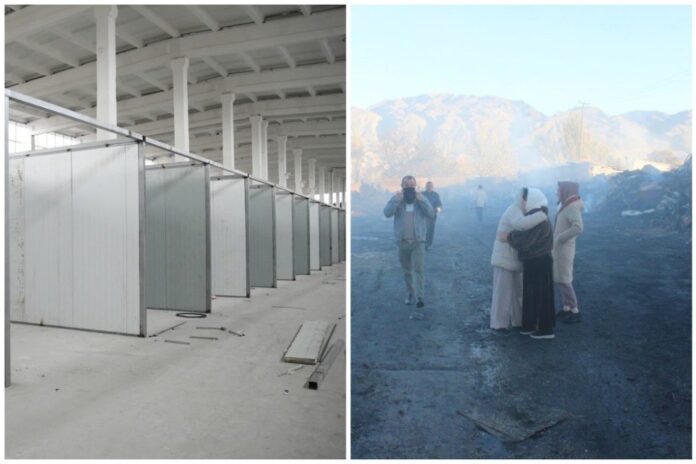
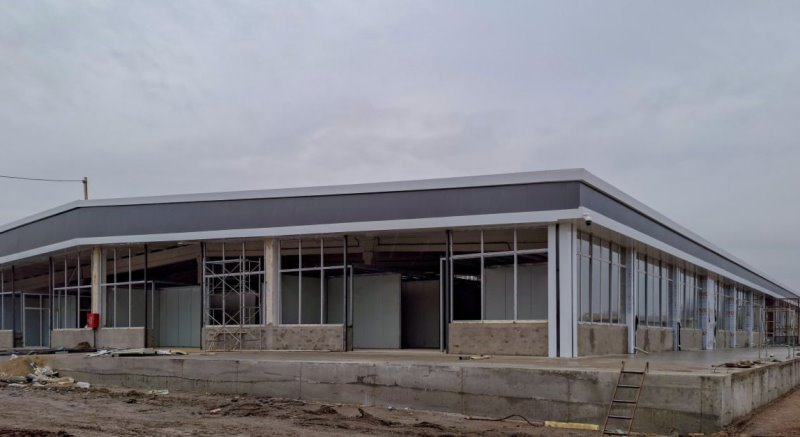
Merchants from the Guliston bazaars in the northern city of Panjakent, which was destroyed by fire last November, are expressing concerns about the prices for new shops at the bazaar under construction at a different location. They claim that the bazaar management has offered entrepreneurs, who lost their stalls in the fire, 12-square-meter shops at a price of 100,000 somoni.

The bazaar director stated that this is not the final price, and that fire-affected merchants will be eligible for discounts.

The Guliston bazaar, also known as Lattabozor, burned down in the night from November 12 to 13, 2025. The fire engulfed an area of 792 square meters, destroying 280 stalls inside the market and 20 neighboring shops.

Following the fire, Panakent authorities announced that traders would be relocated to a new bazaar and would be exempt from taxes for six months. According to the management of the new bazaar, traders have already received keys to their new stalls.

However, some traders are now complaining about the conditions at the new bazaar.


“We can’t recover such large losses”

One trader from the burned Guliston bazaar (who asked not to be named) complained to Asia-Plus: "The people responsible for the new bazaar have set the price for a 3×4-meter shop at 100,000 somoni and a monthly rent of 800 somoni, which we disagree with."

He added that for traders who were not affected by the fire, the price for the same size shop was set at 180,000 somoni, with a rent of 960 somoni.

"We don't engage in wholesale trade; we sell individual items. But the new bazaar management doesn't understand the situation of the people in Panjakent, that is why they have set such high prices. Most of the traders who were affected by the fire, including myself, have bank loans. Personally, I have lost 3 million somoni. Although we are exempt from taxes and rent for six months, we cannot recover from such large losses," he said.

Another trader, also unwilling to disclose his name, stated that he has not signed a contract with the new bazzar  owner yet, but he has been given permission to operate.

"At Guliston bazaar, I paid 200 somoni per month for rent. In my opinion, the new bazaar owners have misjudged the real situation, as the prices for shops and rent are too high. Moreover, the new bazaar is far from the city center, making it harder and longer for customers to get there," he added.


Final prices have not been set

Akbar Khursandov, the head of the new bazaar, assured that the final prices have not been determined.

"We have provided discounts to traders who were affected by the fire, and they can operate without paying rent, utilities, electricity, and other services for six months. We told them to start working, and later, based on the trade conditions, we will review the terms. The affected traders have received the keys to their shops, and some have already started repairs inside the premises," he said.

Traders interviewed by Asia-Plus confirmed that they and many other entrepreneurs have received keys to the shops at the new bazaar.

The Panjakent authorities briefly stated that traders are exempt from taxes for six months.

At the same time, traders say they have not yet decided whether to continue their businesses. "We'll start, and if sales are good, we will continue; if not, we'll close down," they say. However, in this case, they are uncertain how they will repay their bank loans.

Islamic finance standards now accessible to Russian-speaking users

0

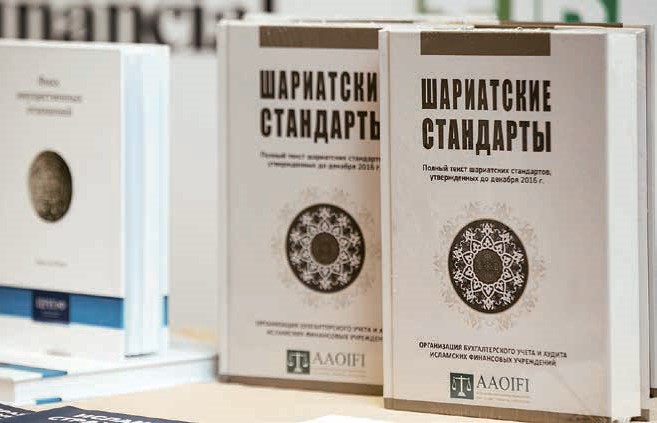
The official translation of the Shariah standards of the Accounting and Auditing Organization for Islamic Financial Institutions (AAOIFI) has been published in Russian with the support of the Eurasian Development Bank (EDB).

"This will open up new opportunities for banks, investment funds, and fintech companies in the CIS and Central Asian countries," stated an EDB press release.

The translation is seen as a key element of the global strategy for the standardization and regulation of Islamic financial products, ensuring compliance with stringent Shariah requirements.

AAOIFI is an independent international organization based in Bahrain that develops standards for the Islamic financial market, with over 200 standards currently in use across more than 50 countries.

The translated standards cover a broad range of aspects within Islamic finance, including banking operations, contracts, zakat (charitable giving), waqf (endowment funds), and debt settlement issues.

"Ongoing availability of AAOIFI’s standards in Russian bridges the gap between the international Islamic finance market and the emerging markets of the Eurasian region. We believe this step will set a benchmark model for the global market," said Omar Mustafa Ansari, Secretary-General of AAOIFI.

Experts predict significant growth in Islamic finance in the region in the coming years. According to an EDB study, Islamic banking assets in Central Asia could grow to $6.3 billion by 2033.

"This opens prospects for expanding the influence of the Islamic financial market and introducing new products that meet international standards," the press release added.

The AAOIFI standards cover key contracts in Islamic finance, collateral agreements, debt settlement, banking operations, zakat, waqf, and other critical areas.

The EDB, which supports this initiative, continues to actively promote economic integration among regional countries. To date, it has a portfolio of 326 projects with total investments amounting to $19.6 billion. Key priority sectors include transport infrastructure, green energy, digital technologies, and machine engineering.

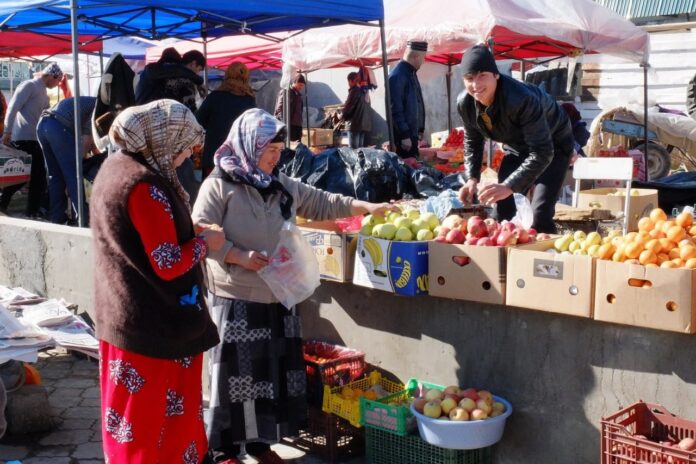
Where does the money go? Families in Tajikistan spend almost all their income on food

0

The Agency for Statistics under the President of Tajikistan has released a new report on household budgets with data for 2024, published in 2025. The report provides an in-depth look at how families in Tajikistan live, how much they earn, and where they spend their money—both in urban and rural areas.

The main takeaway from the report is clear: expenses continue to rise, and the bulk of household budgets are still spent on food.


Income increases, but so do expenses

Over the past few years, household incomes have risen significantly. In 2017, the average income per family member was 329.68 somoni per month, whereas in 2024, this figure had increased to 1,110.42 somoni—more than three times higher.

However, almost all of this income is spent on current expenses. In 2024, families spent an average of 1,108.16 somoni per month per person, leaving no room for savings.


Food: the largest expense

In 2024, food accounted for 570 somoni per month per person—more than half of all household expenses (51.3%). To put this into perspective, in 2017, food expenses were just 162 somoni, meaning they have more than tripled over the past seven years. This increase is not only due to higher incomes but also the rising cost of food.

In 2024, the breakdown of food expenses showed that the largest share went to bread and bakery products—30.9%—followed by meat and meat products at 24%. A significant portion of the budget was spent on vegetable oil (8.2%) and vegetables (7.8%). Meanwhile, fish and dining out accounted for the smallest portion of household spending.

Structure of food expenditure in 2024

1.     Bread and Bakery Products: 30.90%

o    Primary food product, staple of the diet.

2.     Meat and Meat Products: 24%

o    Important source of protein and nutrients.

3.     Vegetable Oil: 8.20%

o    Used for cooking and in salads.

4.     Vegetables and Greens: 7.80%

o    Source of vitamins, minerals, and fiber.

5.     Fruits and Berries: 5.40%

o    Source of vitamins, antioxidants, and fiber.

6.     Milk and Dairy Products: 17.20%

o    Source of calcium and protein.

7.     Others: 6.50%


Non-food goods and services

The second-largest share of the household budget went to non-food goods—clothing, footwear, household appliances, and other purchases. In 2024, families spent 35.6% of their total budget on these items, which equates to a little over 395 somoni per person per month.

Services accounted for 12.2% of household spending, or 135.6 somoni per month. The largest portion of this category went to housing and utilities—28.6% of all expenses—followed by transportation (15.3%), communications (15%), and medical services (6%).

Structure of service expenditure in 2024

1.     Housing and utility services: 28.60%

o    Expenses for communal services.

2.     Other personal services: 22.30%

o    Various personal services, not categorized separately.

3.     Passenger transport: 15.30%

o    Expenses related to transportation services.

4.     Communications services: 15%

o    Expenses for communications services.

5.     Household Services: 6.30%

o    Expenses related to domestic services.

6.     Medical treatment: 6%

o    Expenses for healthcare services.

7.     Education: 6.50%

o    Expenses for education services.


Urban vs. rural: a noticeable difference

The report highlights significant differences between urban and rural households. In 2024, the average income per person in urban areas was 1,401 somoni per month, compared to 934 somoni in rural areas. As a result, spending was also higher in cities—an average of 1,374 somoni per person compared to 937 somoni in rural areas.

Additionally, the structure of expenses differs between urban and rural households. In cities, food accounts for a higher share of spending—54%, compared to 47% in rural areas. Conversely, rural households spend a larger proportion on non-food goods—39% compared to 32% in cities.


Changes in spending over the years

Compared to 2023, the overall volume of household expenses remained almost the same in 2024. However, families increased their spending on food, while expenses on non-food goods and services slightly decreased. This may indicate that rising food prices are prompting families to adjust their budgets to prioritize basic needs.


What do people in Tajikistan eat?

On average, in 2024, each person annually consumed:

·         170 kg of bread

·         129.5 kg of vegetables

·         43.8 kg of potatoes

·         36.9 kg of fruits

·         24.8 kg of meat

·         176 eggs

Urban residents ate more meat, bread, and vegetables, while rural residents consumed slightly more milk.

This pattern reflects the ongoing shifts in consumption habits, driven by income, food prices, and regional differences in food availability.
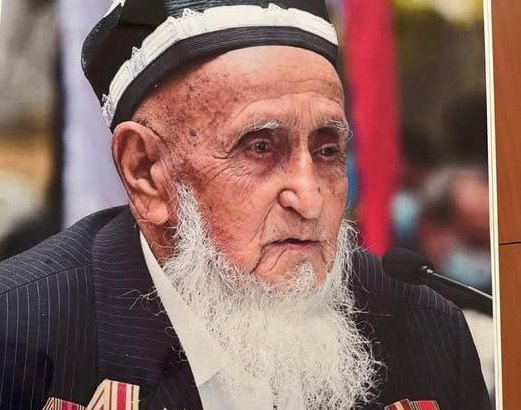
Tajikistan’s oldest veteran of the Great Patriotic War of 1941-1945, Aziz Qodirov, passes away at 104

0

Aziz Qodirov, Tajikistan’s oldest surviving veteran of the Great Patriotic War of 1941-1945, passed away on February 25 at the age of 104. His funeral took place in the Shahrinav district of the country.

The news of his death was confirmed by the district's War and Labor Veterans Council, who reported that Qodirov had been ill in recent months and receiving treatment at home.

Born in 1922 in Shahrinav, Qodirov left his job as a schoolteacher in 1939 to enlist in the army. He served on the front lines, where he was wounded multiple times. In 1943, he returned home and resumed his work in education.

With Qodirov's passing, only 12 veterans of the Great Patriotic War remain in Tajikistan.

In a statement delivered in Dushanbe’s Victory Park on May 8, 2025, President Emomali Rahmon, in particular, noted that “out of 1.5 million residents of Tajikistan at the time, approximately 300,000 were mobilized to the battlefield — that was 50 percent of the working-age population.  Over 100,000 of them gave their lives in battle, more than 40,000 went missing, and another 60,000 returned from the war with disabilities.” 

Emomali Rahmon makes key changes in leadership across various government bodies

0

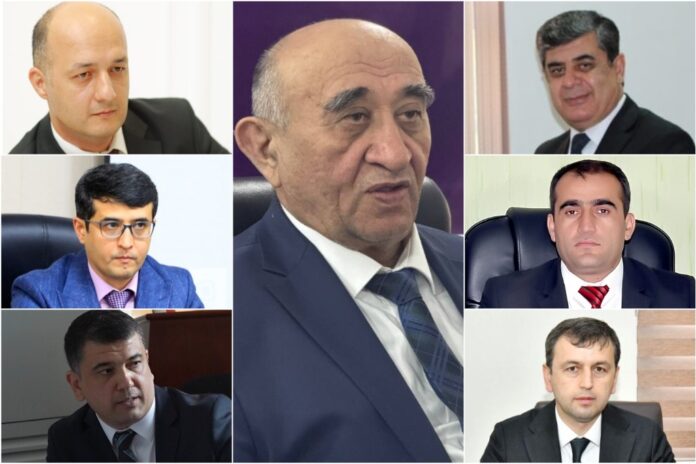
President of Tajikistan, Emomali Rahmon, who is also the Head of Government, has made several personnel changes in the leadership of key oversight, law enforcement, and other government agencies. The president’s official website says that according to decrees and resolutions signed on February 25, leadership shifts occurred in the Ministry of Justice, Ministry of Culture, the Agency for State Financial Control and Combating Corruption, the Accounts Chamber, as well as in the Prosecutor-General’s Office, security agencies, and other bodies.

In a move decided by the head of government, San'at Aso Rahim was relieved from his position as head of the State Service for Industrial Safety and Mining Supervision and has been retired. He had held the role since 2015. Rahim previously served as the CEO of JSC Hydrospecstroy, head of the hydropower project implementation group, director of the Roghun Hydroelectric Construction Directorate, head of the state energy company Barqi Tojik, and director of infrastructure development at the Executive Office of the President of Tajikistan.

His successor is Ismoil Sulton Valizoda, who had previously served as the deputy head of the Republic’s Main Geology Directorate. 

Asadullo Hakimzoda has been relieved of his duties as deputy minister of justice and appointed as the first deputy minister of justice. Notably, in January, Nigina Alizoda was moved from her role as first deputy minister of justice to become deputy minister of foreign affairs.

Sharofiddin Sharifzoda has been appointed as deputy minister of justice in place of Hakimzoda. Prior to this, Sharifzoda was the state notary at the Ministry of Justice’s Main Notary Directorate.

Faridoun Bobozoda, who had previously worked as deputy head of the Education, Culture, and Information Directorate at President’s Executive Office, has been appointed as deputy minister of culture. He succeeds Manouchehr Sharifzoda, who was appointed head of the National Theater.

By president’s decree, Soleh Zavqizoda has been relieved of his position as director of the Judges' Training Center under the Supreme Court, following his retirement. His replacement is Asomuddin Bobokhonzoda, who was previously a judge at the Supreme Court.

Baqokhoja Bobozoda has been relieved of his role as director of the Institute of Botany, Physiology, and Plant Genetics at the National Academy of Sciences of Tajikistan, due to a job change. The new appointee for this position has yet to be announced.

Additionally, President Rahmon has sent proposals to parliament to relieve Shuhrat Ahmadzoda from his role as the Chief Auditor of the Accounts Chamber of Tajikistan and appoint him as deputy chair of the chamber. Parviz Mahmadsharifzoda has been nominated to replace Ahmadzoda.

By agreement with Rahmon, several leadership changes were made in the Prosecutor-General’s Office, as well as in the prosecutors' offices of the districts of Vanj, Murgab, Hamadoni, Khovaling, Bobojon-Ghafourov, Jabbor-Rasoulov, Kuhistoni Mastchoh, and the city of Buston. The names of the new appointees were not disclosed.

Furthermore, new leadership was appointed to several branches of the State Committee for National Security (SCNS) in various cities and districts across the country, as well as to management positions in the Agency for State Financial Control and Combating Corruption in the Kulob and Rasht zones.

In a conversation with the newly appointed officials, President Rahmon emphasized the need to accelerate digitalization efforts, promote cashless transactions, support national culture, combat superstitions and crime—including corruption and the illegal drug trade—ensure judicial fairness, uphold the rule of law, and maintain strong relationships with the people.


Tajikistan’s export growth surges, while imports accelerate: what’s on top?

0

Tajikistan’s exports saw significant growth in 2025, reaching $2.5 billion, a 26% increase compared to the previous year. At the same time, imports also surged, totaling $8.3 billion. New trends are emerging in the country’s trade structure, with both exports and imports on the rise, reshaping the country’s economic landscape.


Top 7 export goods

According to the Customs Service, Tajikistan’s export volume in 2025 reached approximately $2.5 billion, marking a 26% growth from 2024.

Tajikistan’s export growth in 2025 has been driven by key categories of goods, with mineral resources and metals leading the charge.

The breakdown of export growth in percentage terms is as follows:

25.30% — Useful minerals and concentrates (mainly mineral resources)

20.50% — Ores and products made from them (metals and metal products)

8.50% — Primary aluminum (unrefined aluminum)

5.80% — Cotton fiber (raw cotton)

4.0% — Electricity (electric energy)

4.10% — Fruits and vegetables (fresh and processed agricultural products)

31.80% — Other goods (including miscellaneous and diverse export items)

The data shows that while minerals, metals, and aluminum remain the leading export categories, there is a significant contribution from agricultural products like cotton, fruits, and vegetables. The country’s overall export strategy continues to evolve as trade grows across multiple sectors.


Top 10 imported goods

In 2025, imports of goods amounted to about $8.3 billion, an increase of $1.3 billion or 18.6% compared to 2024.

Tajikistan's import landscape in 2025 has been marked by a significant increase across several key categories.

The top 10 imported goods were as follows:

1.     Refined petroleum products — $959.3 million (11.6%)

2.     Passenger cars — $685 million (8.3%)

3.     Wheat — $301 million (3.6%)

4.     Timber and wood materials — $249 million (3%)

5.     Liquefied natural gas — $239 million (2.9%)

6.     Mobile phones — $146.7 million (1.8%)

7.     Sugar — $117.5 million (1.4%)

8.     Vegetable oil — $110.2 million (1.3%)

9.     Fruits and vegetables — $102.8 million (1.2%)

10.  Aluminum oxide (alumina) — $101.8 million (1.2%)

The import data highlights a diverse range of products, with refined petroleum products and cars taking the largest shares, while food staples like wheat, sugar, and vegetables also constitute significant portions of imports. This data reveals the ongoing reliance on both energy resources and consumer goods as Tajikistan continues to expand its trade relationships.