Home Blog Page 46

Uzbekistan looks West to develop entrepreneurial spirit among youth

0

Eurasianet reports that Uzbekistan is seeking assistance from top Western academic institutions, including Harvard, Stanford, and the London School of Economics, to foster youth entrepreneurship in the Central Asian country.

It cited Sherzod Asadov, the presidential press secretary, as announcing on February 24 that those prestigious institutions would help design and implement a new program called Next Generation Entrepreneurs. The country’s Youth Affairs Agency will oversee the initiative.

The program reportedly aims to provide business management training to at least 40,000 Uzbek students. The top 1,000 participants will be eligible for low-interest loans to launch their own businesses. Additionally, an annual start-up competition will be held, with the 100 most promising projects receiving government grants to support their development.

Asadov also revealed that the program will include mentoring opportunities, where young entrepreneurs will receive guidance on business plans from industry experts, including representatives from major retail chains, according to Eurasianet.

Job creation remains a critical issue for the Uzbek government, which is working to transition the country from a raw-materials supplier to a manufacturing and high-tech hub. The country’s population is growing rapidly, with nearly 1 million new citizens added each year—double the global average. Asadov reportedly noted that currently, 600,000 young people enter the workforce annually, a number expected to rise to 1 million by 2030.

The government sees promoting entrepreneurship as a key strategy to alleviate job creation pressures. Asadov reportedly noted that in 2025, young entrepreneurs launched 15,000 new businesses, generating 50,000 jobs. He also mentioned that the government has allocated $200 million this year to support entrepreneurial activity and job creation. 

South Korean company to help establish logistics center in Kulob

0

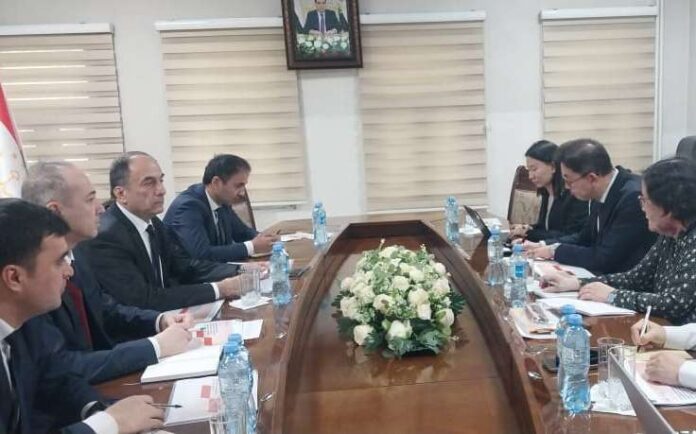
The Minister of Transport of Tajikistan, Azim Ibrohim, discussed the creation of a logistics center in the Kulob Free Economic Zone (FEZ Kulob) with Ok Dong Yoon, a representative from the South Korean company Samil PwC, the press center of the Ministry of Transport of Tajikistan reported

The report highlights that Mr. Ok Dong Yoon is the project manager for the technical and economic justification (TEO) of the logistics center to be built in FEZ Kulob.

During the meeting, the minister reportedly emphasized the importance of the logistics center, stating that this project, including the introductory project and Basic Design, is of strategic significance for the development of Tajikistan's logistics system and for enhancing the country's logistics potential.

Azim Ibrohim pointed out that the logistics center’s location, adjacent to the international highway connecting Dushanbe, Kulob, Khorog, and Kulma, provides an opportunity for the facility to become a key regional hub. Additionally, it will facilitate the transportation of goods along the multimodal corridor that connects China, Tajikistan, Uzbekistan, Turkmenistan, Iran, Turkey, and Europe.

The Ministry of Transport (MoT)’s press center also noted that Tajikistan continues the construction and modernization of its road and rail infrastructure, along with necessary supporting facilities, to position the country as a central transit hub in the region. However, without modern logistics centers and the required logistical infrastructure, the effective development of this direction would become problematic. Therefore, the planning and establishment of logistics centers is seen as an urgent and necessary step.

Ok Dong Yoon informed the minister about the current progress of the project and the upcoming stages of work.

Samil PwC (Samil PricewaterhouseCoopers or PwC Korea) is a major professional services firm in South Korea, offering audit, tax consulting, and business consulting services. It is a member firm of the global network PricewaterhouseCoopers (PwC), one of the largest international groups of companies providing audit and consulting services. Samil PwC offers a wide range of services for corporate clients, government agencies, and private companies.

International sleeper bus service launched between Tashkent and Dushanbe

0

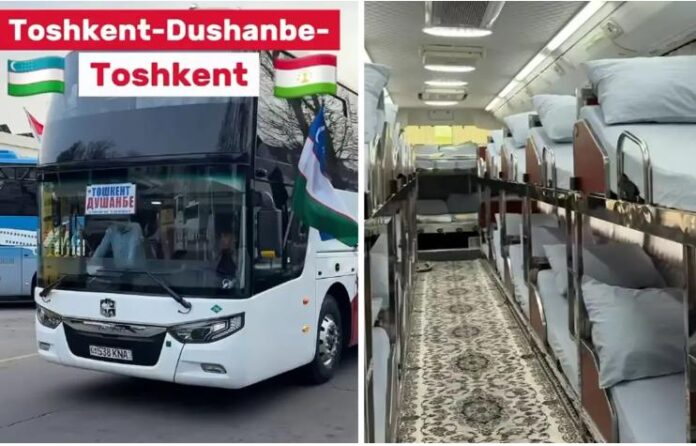
Starting from February 25, a new international sleeper bus service began operating between Tashkent, Uzbekistan, and Dushanbe, Tajikistan, according to Vaib.uz. The key feature of this service is that the bus is equipped with sleeping berths for passengers.

According to the publication, this new service will significantly simplify travel between the capitals of Uzbekistan and Tajikistan, offering more comfortable conditions for travelers.

The bus departs from the Tashkent bus terminal on Tuesdays and Fridays at 5:00 PM, while the return trip leaves from the Dushanbe bus terminal on Wednesdays and Saturdays at 1:00 PM.

The travel time is between 15 to 17 hours, with an intermediate stop in the village of Sariosiyo.

The cost of a one-way ticket is approximately 233 somoni (about 300,000 Uzbek sums).

It is reported that, depending on passenger demand, additional routes may be launched in the future.

Tajikistan Ambassador to Germany: Tajikistan plans to strengthen ties with German research institutions and universities

0

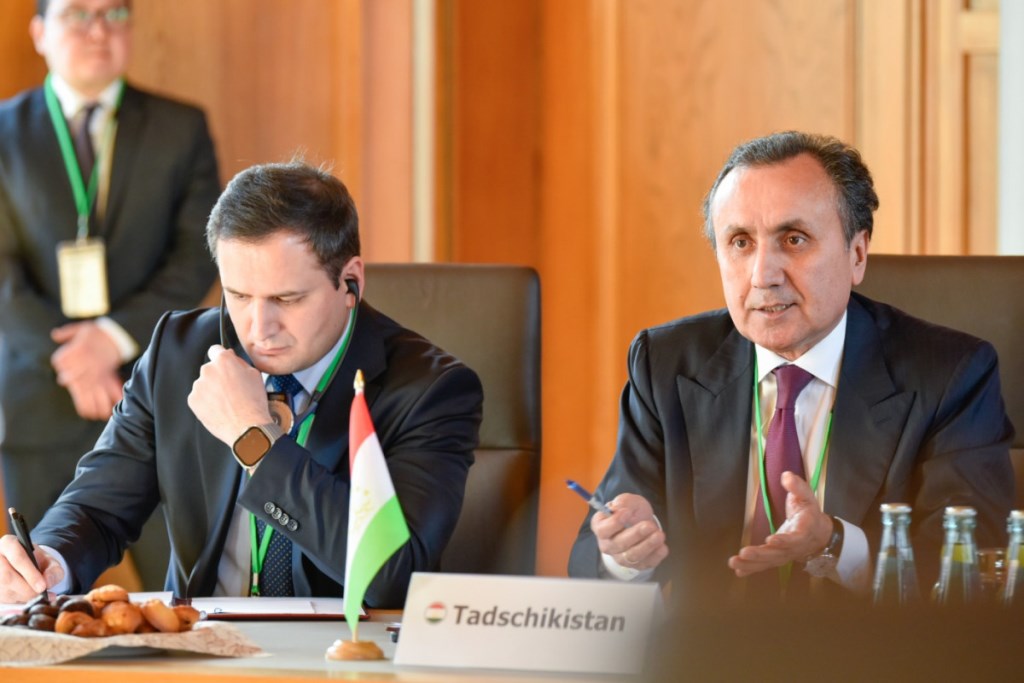
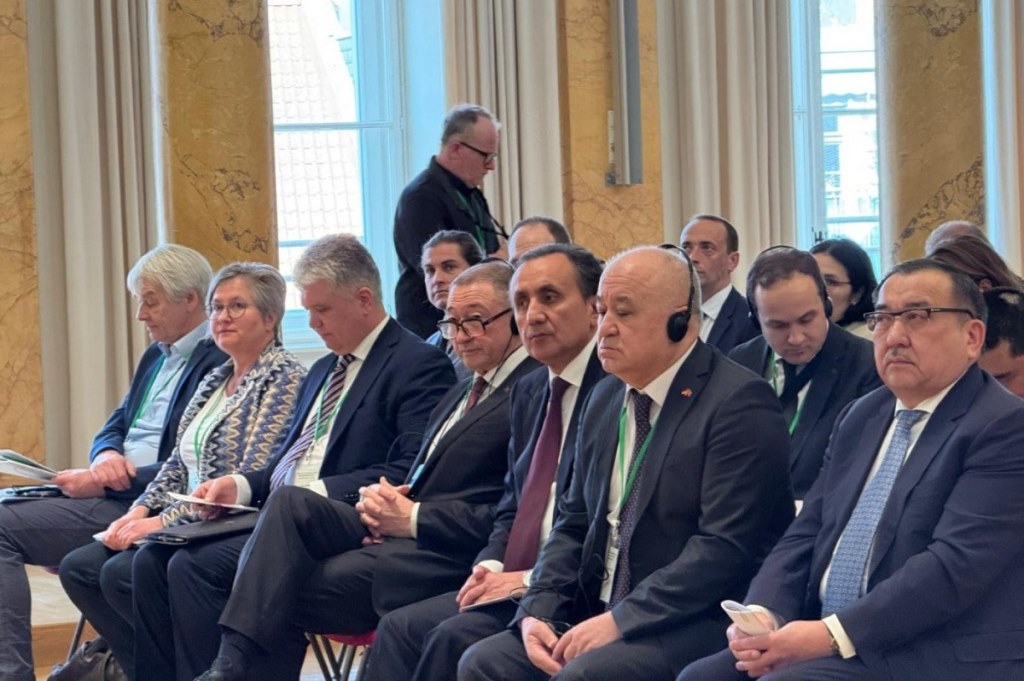
Tajikistan is ready to further strengthen its collaboration with German scientific institutions and universities in the areas of joint research projects and academic mobility. This was stated by Tajikistan’s Ambassador to Germany, Imomuddin Sattorov, at the German Forum on Science and Education in the "Central Asia – Germany" format (C5+1).

According to Tajikistan’s Embassy in Berlin, Sattorov emphasized the importance of scientific cooperation with Germany for the sustainable development of the countries in the region.

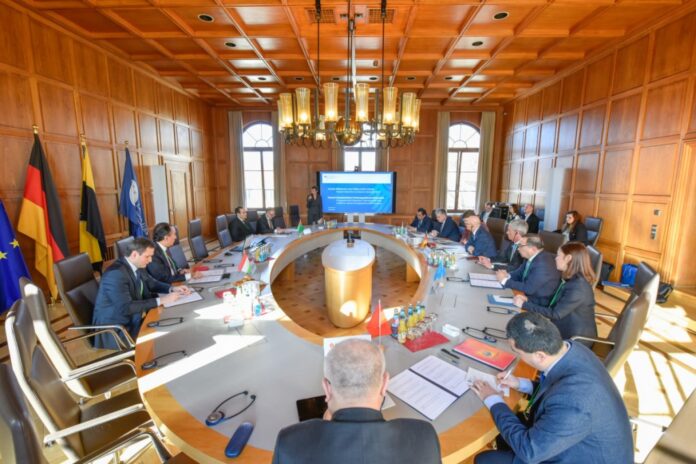
The forum, which took place from February 23 to 25 at the headquarters of the German National Academy of Sciences "Leopoldina" in Halle, marked a significant event for strengthening scientific and educational cooperation between Central Asia and Germany as part of the strategic regional partnership in the C5+1 format.

The event was organized with the support of the German Federal Ministry for Research, Technology, and Space, Martin Luther University Halle-Wittenberg, and the Central Asian Bureau for Sustainable Innovations (CASIB).

During the forum, a Joint Declaration of Intent was signed on cooperation in the fields of science, research, and innovation within the C5+1 format, between the German Federal Ministry for Research, Technology, and Space and the relevant ministries of Tajikistan, Kazakhstan, Kyrgyzstan, Turkmenistan, and Uzbekistan.


Events in the "Central Asia – Germany" Format

The German Forum on Science and Education continued a series of February events in the "Central Asia – Germany" format.

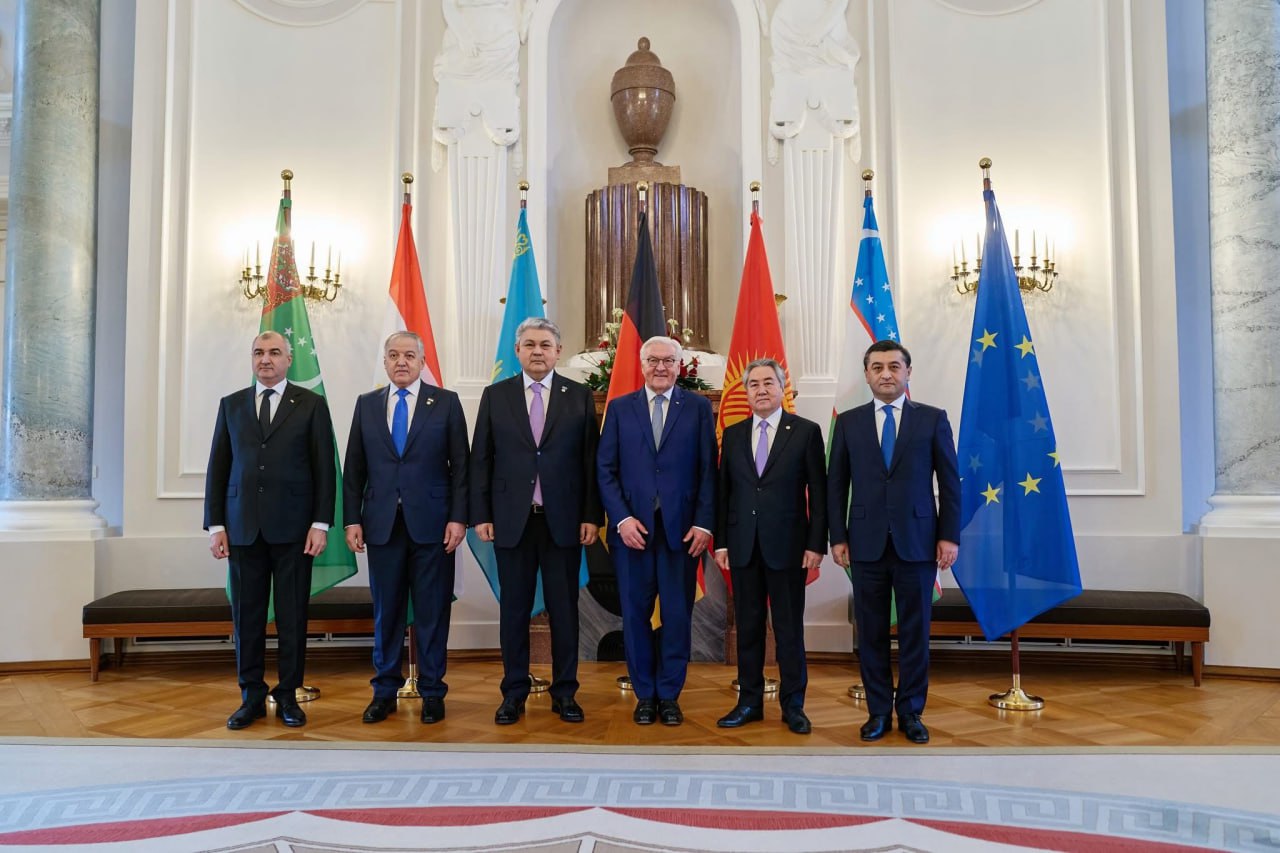
Earlier, on February 11, the first meeting of the Foreign Ministers of Central Asia and Germany under the C5+1 format took place in Berlin. The Tajik delegation was led by the Minister of Foreign Affairs of Tajikistan, Sirodjidin Muhriddin.

The ministers discussed international and regional issues, as well as the development of economic, investment, humanitarian, and migration cooperation, and security collaboration within the C5+1 format.

In his speech, Sirodjidin Muhriddin highlighted that Tajikistan and Germany are actively strengthening mutually beneficial cooperation in sectors such as economics, investment, energy, industry, education, science, and culture, with a particular focus on interpersonal relations.

During the first C5+1 ministerial meeting in Berlin, an economic roundtable was also held. The foreign ministers of Central Asia were received by German President Frank-Walter Steinmeier.

Furthermore, Sirodjidin Muhriddin held talks with the EU Special Representative for Central Asia, Eduard Stiprais, and the German Foreign Minister, Johann Wadephul. They discussed the development of bilateral relations between Tajikistan and Germany in political, economic, investment, scientific, and cultural spheres, as well as within international and regional organizations. 

Five people killed in collision between car and truck on Dushanbe-Khujand-Chanak highway

0

Five people have died in a traffic accident on the Dushanbe-Khujand-Chanak highway in the Varzob district of Tajikistan. According to the Ministry of Internal Affairs (MIA) of Tajikistan, the incident occurred on February 24 at approximately 3:30 PM.

The MIA reports that the 38-year-old driver of a Toyota Corolla Verso, Mastibek Shohnazarov, a resident of the Ayni district, was traveling from the Sughd province to Dushanbe when he veered into the oncoming lane and collided with a Volvo truck. The truck, driven by 49-year-old Zikrullo Atovuloyev from the Mastchoh district, was traveling in the opposite direction.

As a result of the crash, Mastibek Shohnazarov and four of his passengers—46-year-old Sadbarg Ashourova, 52-year-old Rahmonnazir Ashourov, 47-year-old Mehhrubon Ashourov, and 46-year-old Zavqibek Shohnazarov, all residents of the Ayni district—died at the scene.

Fatal accidents are frequent on the Dushanbe-Khujand-Chanak highway. For example, in June of last year, a serious crash occurred on the Khujand-Mastchoh section of the highway, resulting in seven fatalities and three injuries. Among the victims were five residents of the Tajik northern city of Istiklol, members of the same family, as well as two brothers from Uzbekistan. 

Tcell wins prestigious international bema! award

0

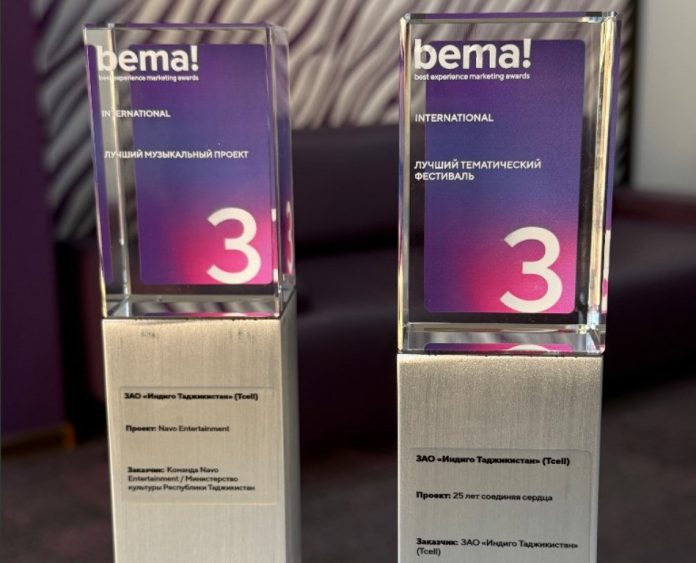
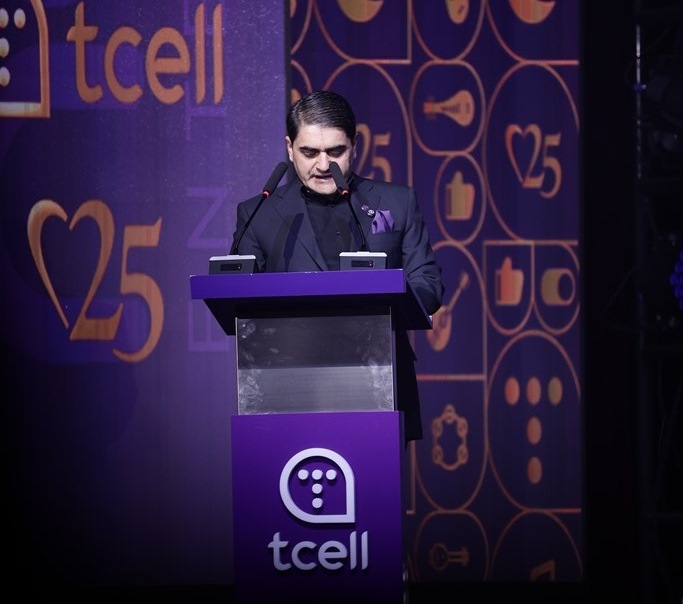
Tcell has been awarded the prestigious international bema! (Best Experience Marketing Awards) — one of the key events in the field of event marketing and integrated communications in Russia and the CIS.

Two of Tcell’s projects were highly praised by the international jury:

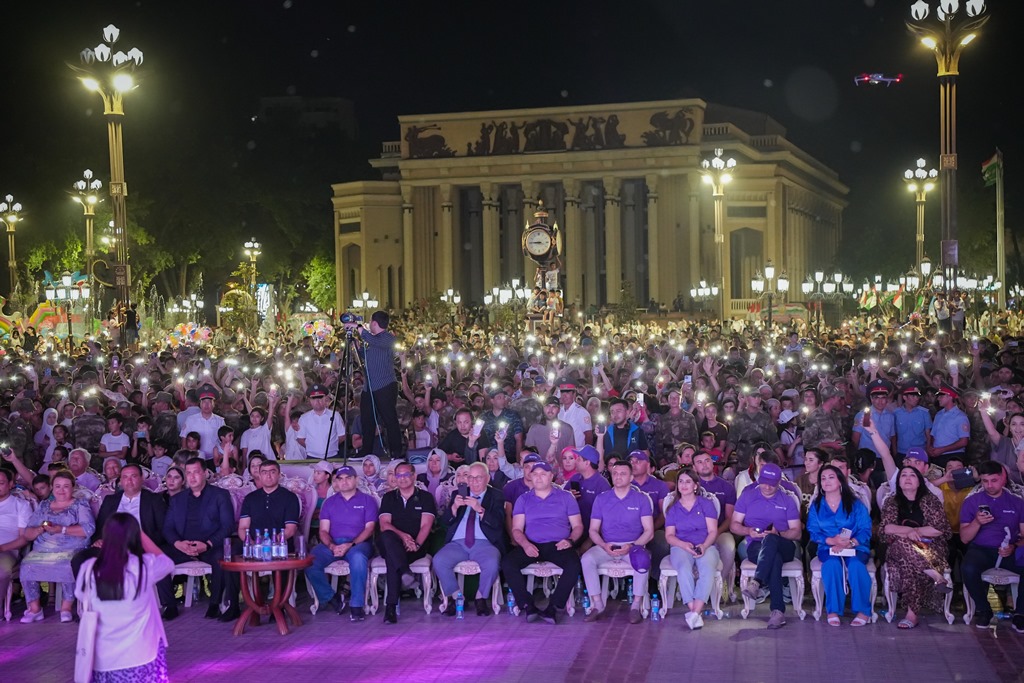
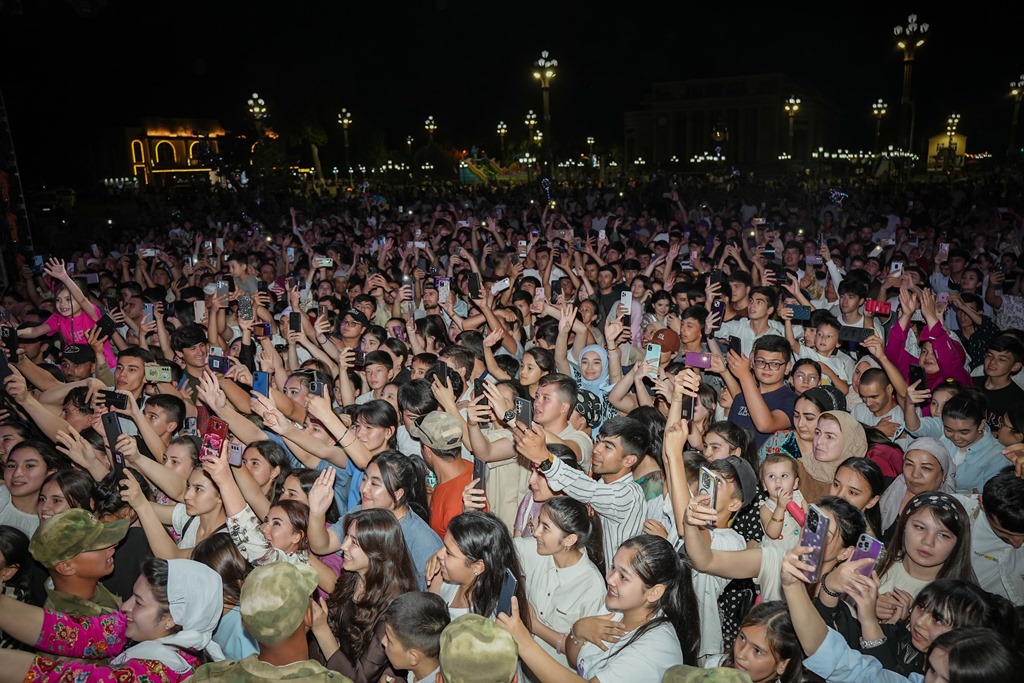
·         In the "Best Thematic Festival" category, the "25 Years of Connecting Hearts" festival, held in Khujand to celebrate the company’s 25th anniversary, emerged as the winner. The project was implemented with the support of the Chairman of the Sughd region, which highlighted its strategic and cultural importance to the area. The event's symbolism was further amplified by its venue—the Khujand Fortress. The historic walls of the fortress hosted a grand laser show (3D mapping) with a patriotic theme—visual storytelling about the formation of statehood, independence, and the cultural wealth of Tajikistan. The fusion of ancient architecture and modern technology became a vibrant metaphor for Tcell's mission: respecting the past while building the future. It wasn’t just a show; it was an emotional manifesto about the country’s strength, its traditions, and its forward-looking ambitions.

·         In the "Best Music Project" category, the launch of the Navo Entertainment platform, executed with the general support of Tcell, received recognition. The highlight of the project was the joint concert Navoi Istiklol, organized in collaboration with the Ministry of Culture of the Republic, under the banner of the Tajik/Dari language—a symbol of respect for the state language.

The bema! (Best Experience Marketing Awards) brings together the largest brands and agencies, setting industry standards and recognizing projects with deep social and cultural significance.

For Tcell, a national company with global corporate values, it is fundamentally important not only to demonstrate professional achievements on the international stage but also to contribute to the success and independence of the country, support and promote Tajikistan's rich and vibrant culture—both its historical heritage and its modern development.

The strength of a brand is measured not only by technology but also by its responsibility to the country, its culture, and its future. Tcell connects hearts—uniting history and modernity, supporting language and traditions, and creating events that become part of the new history of independent Tajikistan.


About the bema! award

The bema! (Best Experience Marketing Awards) is one of the leading international awards in the field of event marketing and integrated communications, bringing together the largest brands from Russia and the CIS.

Over the years, companies such as Yandex, Sber, T-Bank, Rosatom, VK, MTS, Alfa-Bank, and other market leaders have competed for the awards.

The projects are evaluated by an expert jury, including marketing and communications leaders from major corporations, such as representatives from VK, Alfa-Bank, MTS, and Rosatom. 

Tajikistan’s interior ministry: sorcerers and “wandering mullahs” encourage terrorism and extremism

0

On February 12, 2026, Tajikistan's Minister of Internal Affairs, Ramazon Rahimzoda, expressed concern during a press conference about the growing belief in sorcerers and fortune tellers in the country. He stated that, as of early 2026, there were over 5,000 registered sorcerers, fortune tellers, and "wandering mullahs" (likely referring to "self-taught mullahs" without proper religious education) in Tajikistan.

According to Rahimzoda, these individuals "encourage people towards terrorism and extremism" and have been placed on a special list, which was created in early 2024. The list also includes clients of these "specialists." The minister emphasized, "People continue to believe in witchcraft and magic. Sorcerers and wandering mullahs are leading people towards terrorism and extremism."

Rahimzoda expressed concern that Tajik citizens are going into debt to perform Umrah (a smaller pilgrimage to Mecca), while still believing in magic and fortune-telling. He noted that 7,500 people went to Umrah in 2025 alone.

However, the minister did not specify what punishment had been imposed on the registered sorcerers and fortune tellers.


Punishments for sorcerers, fortune tellers, and their clients

In April 2024, the Ministry of Internal Affairs announced that it was compiling a list of sorcerers, mullahs, and individuals involved in illegal religious teaching. Later, in August of the same year, the Ministry declared that anyone seeking the services of sorcerers and fortune tellers would be summoned by the authorities, and their personal information, including photographs, would be entered into the Ministry's database.

For those who profit from deceiving people, such as fortune tellers and sorcerers, punishment can include compulsory labor for up to six months. According to changes made to Article 482 of the Administrative Code of Tajikistan on June 21, 2025, those engaged in fortune-telling and witchcraft can face a fine of 80 to 100 calculation units or administrative arrest for 10 to 15 days. As of 2026, one calculation unit is equivalent to 78 somoni.

Additionally, a new article, Article 240(1), was added to the Criminal Code. It states that if these actions are repeated within a year of an administrative penalty, criminal charges will be filed. Sorcerers and fortune tellers could face fines ranging from 1,500 to 2,000 calculation units (112,500 to 150,000 somoni) or imprisonment for one to two years.

It is important to note that the operation to detain sorcerers, fortune tellers, and magicians has been ongoing for two years and is becoming increasingly active. Nearly every information program by the Ministry of Internal Affairs reports on these arrests, with operations continuing in various regions of the country.


The public's reliance on sorcerers and fortune tellers

Behrouz Sattorov, the chief imam-khatib of the Sari Osiyo mosque in Dushanbe, previously explained in an Asia-Plus talk show that, despite prohibitive measures, many Tajiks are still willing to take risks by visiting sorcerers and fortune tellers. They seek connections to the supernatural, good luck, relief from the evil eye, jobs, love, or even healing.

He emphasized that magic and witchcraft are among the gravest sins in Islam, leading to significant disbelief. "But people still go to fortune tellers and sorcerers, which shows weakness in faith and a lack of sufficient religious and modern knowledge."

Rustam Azizi, a religious expert, pointed out that most people turn to sorcerers and fortune tellers due to problems in their lives, such as health issues, family troubles, or business difficulties. They pursue this path due to a low level of both scientific and religious worldview.

Instead of, for example, seeking help from psychologists, people ask sorcerers for assistance. However, Azizi notes that people in Tajikistan do not trust psychologists: "Our psychology school, from the Soviet era, approaches psychological issues from a physiological perspective."

Psychologist Mahmoudshoh Kabirov noted that there is now a special system in Tajikistan's medical field dedicated to psychological needs, and the media should help raise awareness about this. "Even mullahs who exorcise jinns are coming to psychologists. They know we diagnose and determine the person's condition and show them the right path."

Umarjon Emomali, an official with the Ministry of Internal Affairs, also stated that in order to reduce the practice of visiting fortune tellers, the country needs psychologists: "They can help people understand that nothing can be done with a knife, needle, or horseshoe."

Journalist Saidehson Soliyev believes that people often turn to sorcerers because they are sometimes mistakenly called "mullahs" by the public. "Although this is not true, someone might mistakenly call them that once, and others, believing it, go to them because mullahs are generally trusted by the people."


Islamic views on witchcraft and fortune telling

According to Islamic teachings, witchcraft is considered a satanic practice and is strictly forbidden. Fortune telling and attempts to predict the future are also not encouraged. This is considered sinful for both those who try to learn about their future and those who assist them.

"Though this is not the case, some people mistakenly call them that, and others, believing it, go to them," explains Soliyev. "After all, in the public’s perception, mullahs are trusted." 

Tajikistan is building road infrastructure worth nearly $1.2 billion

0

The Ministry of Transport (MoT) of Tajikistan is currently implementing 11 investment projects totaling $1.17 billion, according to a MoT.  

An official source within the MoT says five of these projects, worth $570.9 million, are in progress, while six completed projects, with a total investment of $602.2 million, are in their warranty period.

Construction work has reportedly begun in 2025 on several major roads, including the Dushanbe-Guliston road (49 km), Guliston-Farkhor road (29.6 km), and the reconstruction of the third section of the Obigarm-Nourobod road.

Last year, 243.5 km of roads, 30 bridges, 5 tunnels, 6 avalanche galleries, and other transportation infrastructure were commissioned.

The source also notes that in June of the previous year, several significant infrastructure projects were completed in the Gorno-Badakhshan Autonomous Region (GBAO), including a 93 km section of the Dushanbe-Khorog-Kulma highway, a 16 km road from the administrative center of Vanj district to the Dushanbe-Khorog-Kulma highway, as well as avalanche galleries and bridges.

In August 2025, an important project in the Rasht Valley (eastern Tajikistan) was completed: the 75 km Obigarm-Nourobod road, which includes three tunnels and 11 bridges.

In November of the previous year, several road sections in Sughd province were commissioned, including the "Dehmoy — Bobojon-Ghafourov," "Bobojon-Ghafourov — Khistevarz," and "Kuchchak-Konibodom" roads, with a total length of 40 km.

One of the government’s strategic goals is to overcome the country's communication isolation. To achieve this, according to the Ministry of Transport, since independence and up until 2025, 2,407.8 km of roads, 274 bridges, 2 three-level and 2 two-level intersections, and 7 transport tunnels have been reconstructed and repaired.

In total, 58 projects in the transport sector have been implemented in the country over this period, with a total value of over $2.2 billion.

Rustam Yatimov ranked sixth in Asia and the most expensive goalkeeper in Central Asia

0

Transfermarkt has updated the market values of players, and a new ranking of the continent's most expensive goalkeepers has emerged. The top 20 is dominated by representatives from Japan, Australia, and the Middle East, but particular attention is drawn to the sixth spot, which is occupied by Tajik goalkeeper Rustam Yatimov. The Rostov player is valued at €1.80 million and is now part of the elite in Asian football at his position.


Top 5: Japanese dominance and European leagues

In first place is Japanese goalkeeper Zion Suzuki (23), playing for Parma, with a market value of €20.00 million. Second is Leo Kokubo (25, Japan, Sint-Truiden), valued at €4.00 million. The third spot goes to another Japanese goalkeeper, Yohei Takaoka (29, Vancouver Whitecaps), worth €3.50 million.

Fourth place is occupied by Emil Audero (29, Indonesia/Italy, Cremonense) with a value of €3.20 million. Rounding out the top five are Keisuke Osako (26, Japan, Sanfrecce Hiroshima) and Australian Mathew Ryan (33, Levante), both valued at €2.00 million.


Yatimov among the continent’s elite

Rustam Yatimov (27, Tajikistan/Russia, Rostov) takes sixth place, valued at €1.80 million. Following him are Tomoki Hayakawa (26, Japan, Kashima Antlers), Uzbek Abdulvohid Nematov (24, Nasaf Qarshi), and Japanese Kosuke Tani (25, Matsumoto Yamaga), all with a value of €1.50 million. In eighth place is Australian Joe Gauci (25, Port Vale) at €1.40 million, while ninth is Ryo Suke Kojima (29, Japan, Kashiwa Reysol) at €1.20 million. Tenth place is shared by Taishi Brandon Nozawa (23, Japan, Antwerp) and South Korea’s Son Bom-Gyun (28, Jeonbuk Hyundai Motors), both valued at €1.00 million.

Other players in the rankings include Australian Patrick Beach (22, Melbourne City), Japanese Konosuke Nishikawa (23, Mito Hollyhock), and Daia Maekawa (31, Japan, Vissel Kobe), all valued at €900,000. UAE’s Hamad Al-Mekbaali (22, Shabab Al-Ahli Dubai) and Mishaal Barsham (28, Qatar/Sudan, Al-Sadd Doha) are both valued at €800,000.


Yatimov: the most expensive goalkeeper in Central Asia

Rustam Boborahimovich Yatimov was born on July 13, 1998, in Nizhny Novgorod. He currently plays as a goalkeeper for Rostov and the Tajikistan national team. His father is Tajik, and his mother is Russian.

Yatimov began his football career at Volga-SDYUSHOR-8. After the bankruptcy of Volga, he moved to Istiqlol, where he became a six-time Tajikistan champion and a four-time winner of the Tajik Cup and Supercup. In June 2024, he transferred to Rostov, making his Russian Premier League debut on July 20, 2024, against CSKA Moscow. His  contract with the club runs until June 30, 2029.

Yatimov debuted for the Tajikistan national team on June 7, 2019, in a match against Afghanistan. As of December 2025, he has played 40 official matches for the national team. In 2022, he was named "Goalkeeper of the Year" in Tajikistan, and in 2023, he was named the "Best Footballer of Tajikistan." In 2025, he was named the best goalkeeper and the best player in the Russian Cup, marking a historic achievement for Tajik football.

With a market value of €1.80 million, Yatimov ranks sixth among all goalkeepers in Asia and remains the most expensive goalkeeper in Central Asia, cementing his place among the continent's elite.

Human trafficking scheme uncovered in Tajikistan, involving women for prostitution in Moscow

0

A 45-year-old woman from the Kushoniyon district in Tajikistan’s Khatlon province has been arrested in connection with a human trafficking case. The Interior Ministry’s official website says criminal proceedings have been instituted against her under Article 130 of Tajikistan’s Criminal Code — human trafficking; an investigation is underway.

According to the investigation, in 2023, the woman, along with her 28-year-old accomplice, was involved in recruiting young women for prostitution in Moscow. The women were promised "improved social status" and better living conditions.

Law enforcement authorities discovered that the women had rented rooms in a hotel near the Seligerskaya metro station in Moscow, where the women were intended to be accommodated. In August 2023, the suspect met with a 24-year-old woman from the city of Bokhtar, the capital of Khatlon province, and offered her the same opportunity to move to Russia under similar terms.

Other details of the case have not been disclosed by the authorities, and the investigation is ongoing.

It is worth noting that last year, Tajikistan recorded 177 cases of human trafficking, including 10 cases of child trafficking. According to the authorities, 56 criminal cases have been initiated in connection with these crimes, involving 73 individuals, 8 of which concern trafficking minors. Investigations are still underway in two of the cases, while the rest have been sent to court for further proceedings.

In the U.S. government's annual report "Trafficking in Persons – 2025," it was mentioned that 57 human trafficking cases were initiated in Tajikistan in 2024, three fewer than in 2023. The report noted that Tajikistan's efforts still fall short of minimum international standards, but the government is taking steps to reduce the scale of the crime.

According to the report, 272 human trafficking victims were identified in Tajikistan in 2024, with 238 subjected to forced labor and 34 to sexual exploitation.