Home Blog Page 47

Alif and Mastercard offer 10% cashback for payments via Google Pay

0

Alif and Mastercard have launched a special offer for active Mastercard cardholders from Alif and Google Pay. From February 19 to April 15, Mastercard cardholders from Alif can earn 10% cashback when making purchases through Google Pay.

The cashback is credited automatically the next day, and the most active customer will have a chance to attend the UEFA Champions League Final in Budapest!


How it works

To participate, pay with your smartphone or smartwatch in stores, cafes, gas stations, and other locations worldwide that accept contactless payments. The key is to link your Mastercard from Alif to the Google Pay service.

Cashback limits per cardholder:

·         Up to 100 somoni per transaction

·         Up to 500 somoni per month

·         Up to 1,000 somoni for the entire promotion period

Only payments of at least 10 somoni are eligible for cashback.


Conditions for winning the grand prize

At the end of the promotion, the most active Mastercard cardholder—who makes the most payments at different merchants using Google Pay—will win a grand prize: a trip for two to the UEFA Champions League Final in Budapest.

If there is a tie in the number of merchants, the total amount of purchases will be the tiebreaker.

The grand prize Includes:

·         Two CAT 1 tickets to the final match

·         Accommodation for two in a four-star hotel in central Budapest

·         A welcome gift from Mastercard and UEFA

Please note that flight tickets and visa processing are not included in the grand prize.


How to link your card to Google Pay

Linking your card takes just a few minutes. You'll need an Android smartphone with NFC support, your Mastercard from Alif, and the Alif app. A detailed guide is available on the bank's website: https://alif.tj/googlepay10. 

If you don’t have a Mastercard yet, you can order one directly in the Alif app under the "Cards" section. Alternatively, you can also get a free Mastercard Digital card directly in the Alif app if you've already completed the identification process at Alif's offices..

Alif and Mastercard are offering users not only a modern way to pay but also significant rewards: 10% guaranteed cashback and a chance to attend the UEFA Champions League Final—a great reason to switch to contactless smartphone payments. 

Amonatbonk begins re-registration of all cardholders

0

Tajikistan’s State Savings Bank, Amonatbonk, has launched a re-registration process for all of its cardholders. This re-registration is mandatory and will run until the end of March this year, though it may be extended if necessary.

According to a statement from the bank, each client will receive an SMS notification, and if they fail to visit the bank within 30 days of receiving the message, their card services will be temporarily suspended. Once the client contacts the bank and completes the re-registration, their card will be reactivated.

Given the large number of clients, the bank expects the registration process to last until the end of the first quarter of this year. Amonatbonk stated that this measure aims to "ensure financial security for clients, improve transaction transparency, and reduce fraud risks."

Registration can be done through a dedicated mobile app at 75 bank branches and 547 customer service centers of Amonatbonk. Clients, regardless of where they live or where they received their card, can visit any branch or service center for re-registration.


What needs to be done

The re-registration process involves the following steps:

·         Cardholders must visit any Amonatbonk branch with their passport and card.

·         A bank employee will enter the card information and client’s mobile phone number into the app.

·         A photograph of the card, passport, and a selfie of the client holding their passport will be taken.

For citizens with disabilities or those who cannot visit the bank in person, bank staff will visit clients at their residence to complete the re-registration process.

In Tajikistan, salaries for public sector employees, pensions, and social benefits are paid through Amonatbonk cards.

It is worth noting that earlier, the Social Insurance and Pension Agency of the country announced that pensioners must undergo re-registration. Now, pensioners are also required to complete the re-registration process with Amonatbonk to receive their pensions.

The bank explained that the re-registration of pensioners aims to ensure that "the pension card is in the hands of the actual cardholder (the pensioner) and that access to it by third parties is restricted." 

Western leaders call for continued support for Ukraine and increased pressure on Russia

0

On the fourth anniversary of Russia's full-scale invasion of Ukraine, leaders of the G7 countries, including the United States, reaffirmed their unwavering support for Kyiv. In a joint statement issued on February 24, they pledged to continue assisting Ukraine in defending its territorial integrity, sovereignty, independence, and freedom.


Support for US peace initiatives

The G7 countries also expressed their backing for the peace process initiated by US President Biden and efforts to organize direct negotiations between Ukraine and Russia. The statement emphasized that Europe's leading role in this process, with involvement from other partners, is crucial. The leaders reiterated that a war-ending agreement could only be reached through direct dialogue between Ukraine and Russia. They also confirmed their willingness to provide Kyiv with reliable and effective security guarantees within the framework of the "Coalition of the Willing."

The G7 also welcomed efforts to support Ukraine through the winter months, as Russia intensifies its attacks on Ukraine's energy infrastructure.


First joint statement after Trump's return

This is the first joint statement by the G7 since Donald Trump's return to the White House, as noted by France, which is currently holding the G7 presidency, Deutsche Welle (DW) reported. The statement also highlights the countries' intention to cooperate on nuclear safety, including with the European Bank for Reconstruction and Development (EBRD) and Ukraine, to secure funding for protective infrastructure at the Chernobyl Nuclear Power Plant and prevent potential radiation risks for Europe.

Additionally, the G7 supported initiatives for the immediate, safe, and unconditional return of Ukrainian children.

The G7 consists of the United States, Canada, Italy, Japan, the United Kingdom, Germany, and France. France, Germany, and the United Kingdom also issued a separate statement reaffirming their commitment to achieving a just and lasting peace in Ukraine.


"Coalition of the Willing" supports Ukraine

More than 30 leaders from the "Coalition of the Willing" confirmed their "full and unwavering" support for Ukraine in its fight for sovereignty, territorial integrity, and the security of Europe. The meeting took place on February 24, partly online, at the initiative of UK Prime Minister Keir Starmer, French President Emmanuel Macron, and German Chancellor Friedrich Merz.

In Kyiv, for a face-to-face meeting with Ukrainian President Volodymyr Zelensky, European Commission President Ursula von der Leyen, European Council President Antonio Costa, and leaders from Northern Europe, the Baltics, and Croatia participated. According to the UK government website, over 30 heads of state and government attended the event.

The Northern European and Baltic countries pledged to provide Ukraine with military aid amounting to €12.5 billion this year. Ukrainian President Zelensky announced this after a meeting with these countries' leaders, as reported by the BBC News’ Russian Service. "We appreciate the willingness of Northern European and Baltic countries to continue supporting Ukraine: at least €12.5 billion in defense assistance this year and no less than €918 million for strengthening energy resilience," Zelensky wrote on social media after the summit in Kyiv.

European Commission President Ursula von der Leyen announced the EU's intention to provide Ukraine with a €90 billion loan despite Hungary's veto and to prepare the 20th sanctions package against Russia. Budapest has previously warned that it would block both the financial aid allocation and the new sanctions package unless the transit of oil via the Druzhba pipeline is resumed.

The Ukrainian side reported that the pipeline, which supplies Russian oil to Hungary and Slovakia, was damaged in Russian strikes on January 27.


UN General Assembly adopts resolution supporting peace in Ukraine

On February 24, the UN General Assembly adopted a resolution calling for an immediate, complete, and unconditional ceasefire between Russia and Ukraine, reports the BBC News’ Russian Service from New York. The resolution, titled "Support for a Sustainable Peace in Ukraine," was passed with the support of 107 countries. Twelve countries voted against, including Russia and Belarus, while 51, including the United States, abstained.

Countries voting against the resolution included Burkina Faso, Burundi, Cuba, North Korea, Eritrea, Iran, Mali, Nicaragua, Niger, and Sudan.


Uzbekistan’s space ambitions: can the country become a space power?

0

In the 21st century, space exploration has expanded beyond just a few superpowers. According to the United Nations Office for Outer Space Affairs, while only around 60 countries had their own space missions in 2010, by 2023–2024, this number had exceeded 90.

Rocket launches have reportedly become cheaper, technologies more compact, and access to orbital data more widespread. Satellite information is now crucial for agriculture, water management, telecommunications, and cartography. As a result, the development of the space industry is increasingly seen not just as a matter of status and prestige, but as a tool for technological independence and control over critical infrastructure.

Uzbekistan has been developing its space sector since 2019, and today the focus is on specific projects and deadlines. But is the country ready to ensure their successful implementation? This question is examined by Fergana.

On February 16, 2026, a statement appeared on the President of Uzbekistan’s website detailing plans to launch the country’s first national scientific satellite, Mirzo Ulughbek, into orbit in 2028. The 6U CubeSat, a compact satellite, is expected to be used for both scientific and applied tasks. The announcement also mentioned preparations for the first Uzbek cosmonaut, with a planned flight lasting 10 to 14 days.

"This will not just be a symbolic step, but a manifestation of our country’s scientific potential, the ambitions of our youth, and national pride," commented President Shavkat Mirziyoyev.

Unlike previous years when space ambitions were described only in vague terms, recent announcements have been more specific—such as the satellite’s format, the planned launch year, and the duration of the manned mission. However, the official text does not mention the budget, sources of funding, or project partners, leaving key questions unanswered.

Earlier projections estimated that the development and launch of the first national satellite could cost between $50 million and $100 million. The situation is complicated further by the fact that rocket launches are booked years in advance, and Uzbekistan currently lacks its own launch operator.


The era of Janibekov

Discussions of space exploration in Uzbekistan often begin with the mention of Vladimir Janibekov, a native of the Bostanlyk district. Janibekov completed five spaceflights, spent a total of 145 days, 15 hours, and 56 minutes in space, and made two spacewalks. This is one of the most impressive cumulative records among his peers.

In Tashkent, a bust of Janibekov stands, and his name is regularly mentioned in official speeches. However, for many years, this admiration did not translate into significant action, despite Uzbekistan’s potential to develop its own space industry.

During the Soviet era, the Uzbek Soviet Socialist Republic housed numerous enterprises involved in aerospace technology. For example, the Tashkent Aviation Production Association (TAPOICH) produced specialized Il-76 MDK aircraft for astronaut training in zero-gravity conditions from 1977 to 1987, training over 100 specialists for space flights.

Meanwhile, the Tashkent Design Bureau of Machine Engineering developed instruments for lunar and Venus exploration. In 1969, it designed a soil-sampling device for the Luna 24 mission, which successfully drilled over two meters deep on the Moon and brought back lunar soil samples—one of the rare instances when an Uzbek-made device contributed to an interplanetary mission.

After the collapse of the Soviet Union, most of these high-tech facilities were closed or restructured. By the mid-2000s, TAPOICH ceased producing aviation and space equipment, and the design bureau was also shut down. By 2019, when the Uzbekcosmos agency was founded, Uzbekistan had little remaining infrastructure for assembling, testing, or preparing satellites or other space apparatuses.

"Over the last 25 years, Uzbekistan has lost all of its aerospace achievements," lamented Ibrohim Abdurahmonov, the Minister for Innovative Development at the time.


A new beginning

Since the establishment of Uzbekcosmos in 2019, the country has been taking gradual steps toward building its space sector. A national space development program was created, which aims to train specialists, create infrastructure for satellite assembly, and use remote sensing data for economic, environmental, and urban planning tasks. However, tangible results were slow to materialize. It wasn't until 2024 that Uzbekcosmos began assembling and testing its first CubeSat satellite and started regular satellite monitoring of the country’s territory.

Due to the lack of its own research satellites, the agency has been utilizing foreign space platforms and commercial remote sensing services for imagery. The data is used to monitor illegal mining, unapproved construction, and other land use violations, with the processed information passed on to relevant state bodies, including ministries of ecology, agriculture, water resources, and the Prosecutor-General’s Office.

In 2024, Uzbekistan entered into negotiations with SpaceX and the British company Surrey Satellite Technology regarding satellite launches and technical support for its space program.


The global context: what can Uzbekistan learn?

In the last decade, many developing countries have launched their own national space programs. Some have focused on spending money, others on leveraging knowledge, and some have combined both approaches.

For example, Algeria represents a militarized approach to space, focusing on satellite technologies for national security and defense, relying heavily on China for launch services and technology. In contrast, Vietnam has built a long-term strategy, investing in national engineering expertise and infrastructure. Malaysia, after years of politically motivated space missions, has shifted focus to developing its own scientific talent.

The Philippines offers an interesting case, too. Like Uzbekistan, it started from scratch but has managed to build a solid space policy, with its own agency and successful satellite projects, such as the Diwata series.

The United Arab Emirates, with its substantial financial resources, jumped several stages, advancing directly to interplanetary missions like the Hope probe to Mars, which has significantly contributed to global research on the Martian atmosphere.


What’s next for Uzbekistan?

Drawing from these experiences, we can identify four models of space development:

·         State Operators (Algeria): Focus on purchasing ready-made satellites and using them for defense and resource monitoring.

·         State Integrators (Vietnam): Focus on technology transfer and building national satellite assembly and testing centers.

·         Academic Hubs (Malaysia): Stimulate university-led satellite projects and engineer training on a low budget.

·         Strategic Innovators (UAE): Focus on a bold, breakthrough goal (e.g., Mars) and build a strong, globally competitive brand.

The Philippines falls between the second and third models, and Uzbekistan appears to be following a similar path to that of Vietnam and the Philippines. The country benefits from its Soviet-era technological heritage and a growing base of trained engineers. However, one key challenge remains: maintaining momentum and overcoming potential political shifts that could derail progress.

The first satellite launch in 2028 seems promising, but much depends on the consistency and discipline with which the country executes its space strategy. While there are significant hurdles ahead, Uzbekistan’s gradual approach, reliance on international partnerships, and existing talent pool provide a solid foundation for success in the years to come.


Russian military losses in Ukraine war reportedly exceed 200,000, reports confirm

0

Over four years of full-scale invasion, at least 200,186 Russian soldiers have died in the war against Ukraine, according to an investigation by the BBC’s Russian Service, Mediazona, and a team of volunteers.

In 2025, the official death toll for Russian servicemen stood at 49,935. Although this figure is lower than the 2024 toll, which, according to publicly available data, was at least 83,706 soldiers and officers, journalists note that the actual losses may be much higher. Some reports estimate that the true number of casualties could exceed 90,000, as tens of thousands of death reports have yet to be included in the official statistics, Meduza reports.

"To date, there has been a 40% increase in the number of published obituaries in 2025 compared to the previous year. With a high degree of certainty, it can be said that despite a series of diplomatic talks and negotiations for a possible peace, 2025 is set to be the deadliest year for the Russian military," the article states.

Mediazona further reports that 122,700 of the fallen soldiers came from urban areas, while 57,200 were from rural regions. Large cities and million-strong metropolises were "virtually untouched by the war": two-thirds of the casualties were residents of towns with populations under 100,000 people.

The regions with the highest absolute number of casualties are Bashkortostan (7,700), Tatarstan (6,800), and Sverdlovsk Oblast (6,300). Among larger regions, Tuva leads in casualties per capita, with 476 deaths per 100,000 residents, followed by Buryatia (400), Zabaykalsky Krai (362), and the Altai Republic (316).

A detailed analysis by the BBC’s Russian Service reveals that individuals from small towns and villages are more likely to sign contracts with the military. These areas suffer from a lack of stable, well-paying jobs, and local authorities' recruitment efforts are often more aggressive than in larger cities. The distribution of casualties across regions suggests a clear pattern: higher poverty levels correlate with higher losses.

A demographer, who wished to remain anonymous, analyzed the data from BBC and Mediazona and pointed out that the regions with the highest death tolls largely overlap with those that have low life expectancies.

"In other words, people from regions where the likelihood of dying a violent death is already high are more likely to go to war. The expert suggests that it may no longer be just poverty driving people to sign contracts, but a lack of prospects, the feeling that there is nothing more to lose," the publication concludes.


Warm February: how abnormal weather threatens crop yields in Tajikistan

0

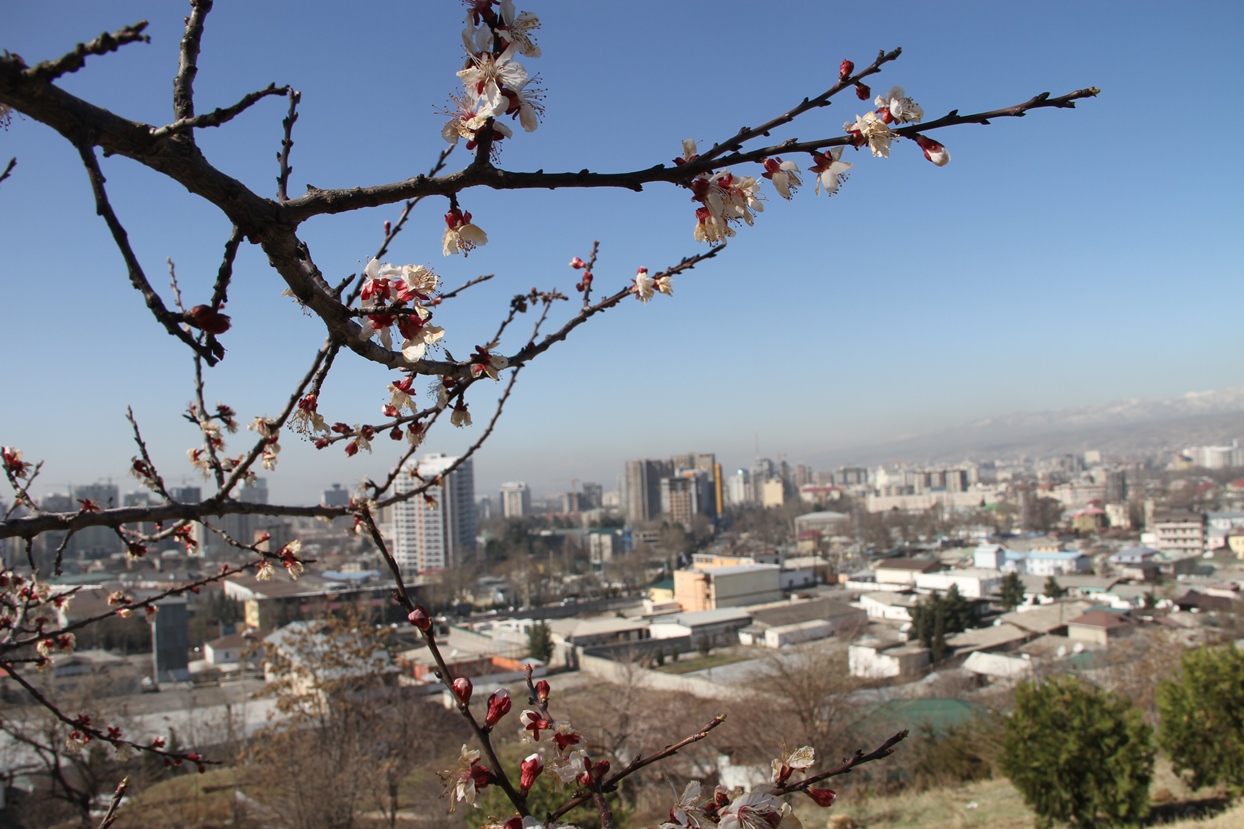
Tajikistan’s unusually warm February 2026 is causing concern among farmers. Early blooming of orchards, the risk of return frosts, and a lack of moisture could result in crop losses and additional costs for farmers.

Typically, February in Tajikistan is the coldest month, with night frosts, steady cooling, and snow in the foothills and mountains. However, this year, temperatures are about 1°C -2°C above the usual average in most regions. For agriculture, early warmth is more of a risk than a benefit, as it often brings sudden temperature shifts, rain instead of snow, and strong winds and fog.

According to the Hydrometeorology Agency (Hydromet), precipitation levels are within or slightly above normal in February. However, in the Khatlon province and valley areas subordinate to the center, the average temperature is above the climatic norm.

In Sughd and Gorno-Badakhshan Autonomous Region (GBAO), temperatures are near the norm, with the exception of the eastern GBAO, where low night temperatures have been observed.


"If frost hits, the harvest will be lost"

Farmers and gardeners are most concerned about the early warmth, which prompts plants to awaken, followed by a sudden cold snap that could damage flowers, buds, and young shoots. If there’s no snow, and frost arrives during the growing season, farmers fear the crop will be lost.

Snow cover serves as a protective "blanket" for fields and orchards, helping to protect winter crops, conserve soil moisture, and prevent the freezing of root systems. When warm weather arrives without snow, plants begin to grow prematurely, but there is less moisture in the soil to support their development.

Certain crops, like apricots, peaches, almonds, and grapes, are especially vulnerable to sudden temperature fluctuations. If temperatures drop below freezing in late February or early March, blooming trees may lose their blossoms. This would impact not only individual farms but also market prices, as reduced fruit supply inevitably leads to higher prices.

Farmers recall previous years when return frosts destroyed months of hard work. As a result, this warm February is not seen as a welcome sign of spring, but as a potential warning of another challenge ahead.


Recommendations for coping with warm February

Experts emphasize that there is no universal solution to the instability caused by changing weather patterns. Instead, a combination of measures can help reduce potential damage.

Agricultural scientist Qurbonali Partoyev recommends that farmers, especially those working on irrigated land, carry out winter irrigation. This helps preserve moisture in the soil and reduces the activity of pests that survive in larger numbers during a warm winter.

Farmers are also increasingly using mulching, covering the soil with organic materials to retain moisture and stabilize ground temperature. This is especially important when there is no snow cover to provide protection.

Orchardists are preparing for possible return frosts by discussing methods to protect sensitive crops, such as using plastic covers, smoke, or even local heating in orchards where feasible. Based on past experiences, many understand that even brief temperature drops can cause significant damage.

Equally important is closely monitoring weather forecasts. Farmers try to stay updated on warnings about cold fronts, wind intensification, and precipitation, so they can respond in time and minimize risks.


Warm February: not always good weather

For city dwellers, abnormal warmth might feel like an early spring, a chance to take off hats and enjoy sunny days. However, for farmers, the February thaw means anxious waiting. Any deviation from the usual seasonal pattern can lead to potential financial losses.

The more winter resembles early spring, the more frequent the concerns about unpredictability. When spring-like warmth in February is followed by frost, wind, and wet snow, the consequences can last throughout the year.

Therefore, the warm February in Tajikistan this year raises more caution and concern than joy in rural areas.

Uzbekistan aims to cut manual labor in cotton harvesting to 30%

0

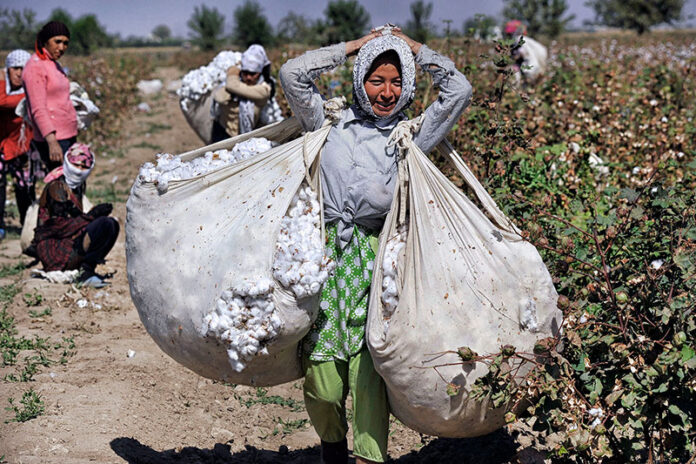
Uzbekistan plans to increase the share of automated cotton harvesting to 70% this year. To achieve this goal, the country intends to acquire 800 cotton-picking machines, as well as 6,000 seeders, tractors, and combines. The Uzbek president’s official website says that according to a briefing to President Shavkat Mirziyoyev on the development of agriculture, in total, around 10,000 units of agricultural machinery will be purchased in 2026, raising the fleet to 292,000 machines.

Currently, the level of mechanization in agriculture stands at 81%. In recent years, Uzbekistan has purchased 1,756 cotton-picking machines, increasing the proportion of machine-harvested cotton to 52%. Last year, 2.1 million tons of cotton were harvested using automated machines, reducing manual labor by 1.8 times, Ferghana reports.

To support farmers in acquiring new equipment, Uzbekistan will attract $400 million from international financial institutions. Tractors and combines will be available on a 10-year lease at 18% interest in local currency, with the first two years interest-free. The government will subsidize 8% of the interest rate.

The president also discussed the development of Uzbekistan's agricultural machinery industry. Experts recommend increasing production volumes fivefold and localizing production tenfold within three years. In the current year, the plan is to produce up to 6,000 units of agricultural machinery, with localization of self-propelled machinery reaching 30-35% and for attachment equipment 60-65% by 2028.

Support measures for the Tashkent Tractor Plant were presented, but further details were not disclosed.

The meeting also highlighted the collaboration between banks and farmers, as well as the implementation of modern digital technologies. In 2025, Agrobank reportedly allocated 1.6 trillion soums ($131.6 million) for agricultural machinery purchases, with plans to increase this to 3.9 trillion soums ($321 million) in 2026. Thanks to automation, the loan approval process will be reduced from three days to three hours.

Agro-service zones will be established in each region of Uzbekistan, offering farmers a range of services, including soil monitoring, seedling delivery, and agronomy consultations. Additionally, the bank plans to launch pilot projects using artificial intelligence in livestock farming, horticulture, and water resource management, along with creating a venture company with a capital of 100 billion soums ($8.2 million) to finance agricultural startups.

Turkish low-cost carrier Pegasus to launch Istanbul-Dushanbe flights

0

Pegasus Airlines, the Turkish low-cost carrier, will begin direct flights between Istanbul and Dushanbe, the capital of Tajikistan, starting April 6. Turizm Ajansi reported this, citing an official statement from the airline. The airline announced the new route in a statement, marking an important expansion of its network into Central Asia.

The decision to launch the new route is significant for both tourism and business travel. Direct flights will make travel between Turkey and Tajikistan faster and more convenient. The new service is expected to offer a major advantage for passengers visiting the region for leisure or business. The airline also highlighted Dushanbe’s natural beauty and cultural attractions in its announcement.


New route details

Pegasus Airlines stated, “Starting April 6, we will begin flights from Istanbul to Dushanbe, the capital of Tajikistan. Dushanbe, located at the foot of the Pamir Mountains, with its spacious streets, lush green parks, and unique architecture, is ready to be discovered.”

The new Istanbul-Dushanbe route will offer a convenient option for business travelers looking to access Central Asia’s growing markets, as well as for tourists wanting to explore the region. The direct flights are expected to shorten travel time and complement the airline’s recent expansion efforts in international routes.


Ticket sales open

Following the announcement of the new routes, tickets have gone on sale, with prices starting at €109.99 for the Istanbul-Sabiha Gökçen to Dushanbe flight. Ticket prices may fluctuate due to seasonal promotions and demand.

The competitive starting price is expected to generate high demand for this route in the near future. With growing interest in Central Asia destinations, particularly as the summer season approaches, high occupancy rates are anticipated. Passengers are advised to book tickets in advance to secure the best fares.


Impact on tourism and trade

The launch of direct flights to Dushanbe is reportedly not only significant for tourism but also for strengthening economic and cultural ties between Turkey and Tajikistan. Dushanbe is regarded as a key regional hub with its wide boulevards, parks, and distinct urban architecture.

Experts believe the new flights will boost mutual tourism and create fresh business opportunities. The Istanbul-Dushanbe route could have a positive long-term impact on trade relations between the two countries. Pegasus Airlines’ expansion into Central Asia is seen as a key step in its growth strategy.

It is worth noting that Turkish Airlines and Somon Air also operate flights on the same route.

Pegasus Airlines (BİST: PGSUS), sometimes stylized as Flypgs, is a Turkish low-cost airline headquartered in the Kurtköy area of  Pendik, Turkiye, with bases at several Turkish airports.

Tajikistan’s Beshai Palangon Reserve faces potential water crisis

0

In November 2025, the International Union for Conservation of Nature (IUCN) released a report on the status of Tajikistan's Beshai Palangon (Tiger Ravine) Reserve, a UNESCO World Heritage site. The report highlighted significant risks to the reserve, particularly related to water management, external economic pressures, and climate change.

What is the current situation at one of the country's most valuable natural sites?

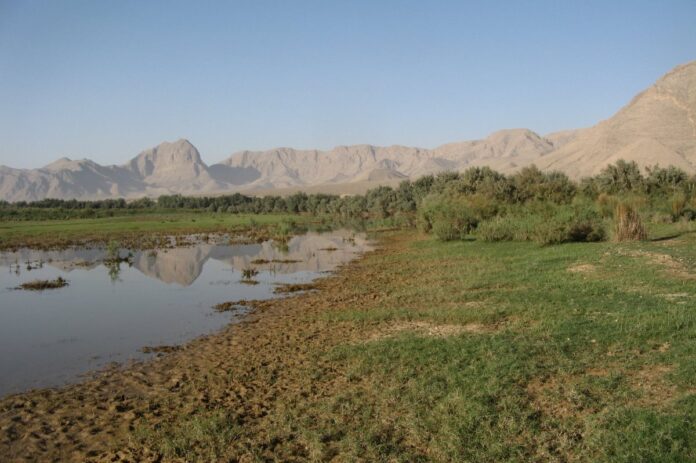
The IUCN report assesses the state of the Beshai Palangon Reserve as "alarming," with the greatest threat identified as disruptions to the water regime. Experts emphasize that due to the regulation of the Vakhsh River's flow through reservoirs and the redistribution of water for agriculture, the natural seasonal floods that once nourished the tugay forests (a form of riparian forest or woodland associated with fluvial and floodplain areas in arid climates) have nearly disappeared. As a result, the ecosystem is now heavily dependent on surface and drainage groundwater, which is insufficient to maintain the moist forests and biodiversity.

According to the IUCN, around a third of Vakhsh River water is used for irrigation, and a significant portion of the remaining water contains wastewater with high chemical levels, degrading the water quality in the reserve.

However, national agencies have a different view.


Stable conditions, but risks remain

The Committee for Environmental Protection assesses the current condition of the reserve as stable. While acknowledging the ecosystem's vulnerability, the committee noted that it is directly affected by the water regime of the Vakhsh River, as well as external economic activities and climatic factors. According to the Hydrometeorology Agency (Hydromet), the average annual water flow of the Vakhsh River in 2025 was 468 cubic meters per second, which is 89% of the average long-term figure.

The Committee emphasized that these changes remain within acceptable limits and, based on expert assessments, are not having a negative impact on the ecosystem or the tugay forests.

"Water quality monitoring was conducted across 47 chemical indicators. Only two pollutants (sulfates and nitrites) slightly exceeded established norms. All other indicators are within acceptable values. To date, the reserve has not experienced water shortages, mass fish deaths, or complete drying of lakes," the Committee reported.

Regarding the international assessment, the agency's representatives believe it largely relies on data from 2017-2019 and does not reflect the recent changes and measures taken in the past few years.

What Has Changed

The Committee highlights that management of the reserve has become more systematic. In 2023, a Wetland Management Plan for 2024-2028 was developed.

"The main goal of the plan is to ensure the conservation of the reserve’s natural ecosystems and protect the natural resources of its wetlands," the environmental agency stated.

Before its development, a comprehensive scientific study of the reserve's condition was conducted in collaboration with the National Academy of Sciences. The research focused on the impact of climate factors, the status of ichthyofauna, entomofauna, and flora. Modern monitoring methods, including drone technology, are now being employed in the reserve. Additionally, the presence of a black stork nesting site was recently recorded.

Since the reserve's inclusion in the UNESCO World Heritage list, the monitoring system has been strengthened. One observation point has already been commissioned, and a second one is nearing completion.


Life in the Reserve today

Currently, 35 government inspectors work within the reserve. Each is assigned a specific area to monitor on an ongoing basis.

"In recent years, due to increased control, illegal logging, poaching, and violations of the reserve's regime have significantly decreased," the Committee emphasized.

A special focus is placed on water management. In 2025, over 20 kilometers of internal channels and collectors were cleaned. According to experts, this has improved water exchange in the lakes and the overall ecological health of the area.

To enhance control and operational work, the reserve has been provided with heavy machinery, camera traps, GPS devices, and specialized equipment.

A nursery for reforestation is being established in the buffer zone. As part of a state greening program, saxaul and locust trees, which provide feed for animals, are being planted annually until 2040.

In addition, a program to support local populations, including the installation of irrigation pipelines and the creation of intensive orchards, is being implemented in partnership with international organizations.


The biggest problem: the canal

Experts monitoring the reserve for many years argue that a significant ecological problem was caused by a specific economic activity — the bypass canal along the northern border of the reserve.

The 13-kilometer canal, which has not been cleaned since the dissolution of the Soviet Union, was overflowing, and all the water from nearby settlements and agricultural fields flowed into it. This water, containing chemicals, was then diverted into the reserve via groundwater and drainage channels.

"This uncontrolled runoff changed the water balance of the area. Previously, the system received mostly clean groundwater from the Vakhsh River, but then water from agricultural fields and settlements brought in silt, chemicals, and waste," explains Gharibmamad Gharibmamadov, senior researcher at the Institute of Zoology and Parasitology of the National Academy of Sciences.

According to him, this unmanaged runoff significantly altered the reserve’s water balance. Where clean groundwater once flowed, silt from agricultural fields and chemicals began to accumulate, filling the lakes and raising water levels. The surrounding forests and land began turning into marshes, and reed beds started to overgrow.

The excessive influx of water from agricultural fields not only silts up the lakes but also alters the habitat for animals. The flooding of the tugay forests made certain areas unsuitable for species such as the Bukhara deer, pheasants, and others. During spring floods, muddy water exacerbated the siltation process.

The situation began to improve only in the past two years. "A year and a half ago, cleaning of the canal started. Now it’s been cleared, and the situation is much better. This canal is crucial for the reserve," Gharibmamadov emphasizes.

In 2024, machinery including excavators, loaders, and trucks were acquired for the cleaning process. On the cleared land, marshes are being drained, reed beds are shrinking, and tree species such as jigda or Russian olive (Elaeagnus angustifolia) and multi-branched crested willow are gradually recovering.

However, Gharibmamadov warns that the impact has lasted for decades, and quick changes should not be expected. "When such factors affect an area for a long time, the composition of the fauna and flora changes. Natural restoration may take from five to ten years," he concludes.


Additional Problem: settlement growth and waste

Another significant factor influencing the reserve’s condition is the encroachment of settlements along its border and the accumulation of household waste along the northern boundary.

Monitoring data shows that household waste is polluting the riverbank over a 13.2-kilometer stretch of the reserve, mostly near settlements. This waste primarily consists of glass, plastic, and other packaging discarded by local residents.

Experts highlight that this waste is contaminating the riverbank and adjacent drainage channels, worsening the ecological situation within the reserve. "Previously, especially during the rainy season, the flow from the uncleaned canal would wash all of this deeper into the reserve. In some places, it was hard to even tell it was a canal — it looked like just a flat land," Gharibmamadov explains.

As settlements continue to expand, the burden on the reserve increases. Monitoring regularly reports an increase in illegally organized dumps along the boundary. According to experts, these dumps are not only an aesthetic issue but also a point of contact between wild and domestic animals, increasing the risk of dangerous infectious diseases spreading, which can have serious consequences.

In the future, additional pressure may come from the expansion of agricultural and water management activities, settlement growth, and industrial activity near the reserve.


About the Beshai Palangon Reserve

The Beshai Palangon Reserve was established on November 4, 1938, as Tajikistan’s first state nature reserve. Its area is 49,700 hectares, of which 21,400 hectares are wetlands.

The reserve is home to over 30 rare species of animals, including the Bukhara deer, gazelles, striped hyenas, Central Asian monitor lizards, and Amu Darya shovelnoses. Each year, more than 50 species of birds winter in the reserve.

Over 24,000 hectares of the reserve are covered by tugay forests — a rare ecosystem that has survived in Central Asia.

In 2023, the Beshai Palangon reserve was included in the UNESCO World Heritage List as part of the "Beshai Palangon Tugay Forests" site.


Private company in Tajikistan to invest $5 Million in post automation

0

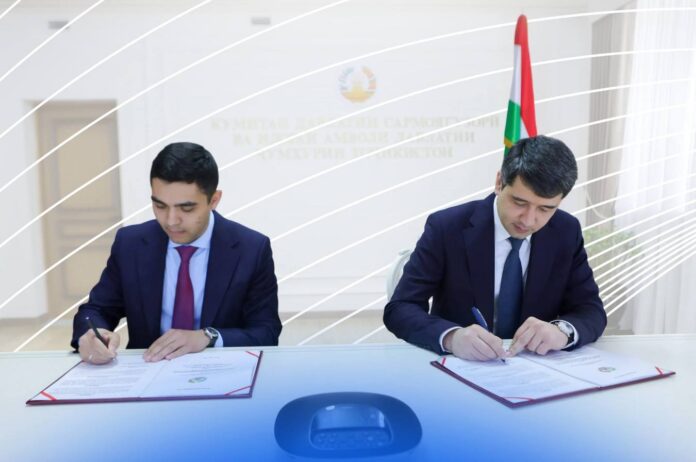
The Communications Service under the Government of Tajikistan and the private company Service and Technology LLC have signed a public-private partnership agreement in Dushanbe to implement the Development of Tajikistan’s Postal System project. The document was signed on February 23.

The communications service agency’s press center says the total investment for the project amounts to $5 million, with the full financing provided by the private partner, Service and Technology LLC.

The goal of the project is to introduce modern automation for the processing and monitoring of postal shipments, improve service quality, and ensure compliance with international standards.

"The project will also enhance logistics services and order fulfillment, creating new opportunities for the development of e-commerce and the expansion of digital services. This initiative will contribute to strengthening communication infrastructure and the sustainable development of the national economy," the Communications Service stated.

It is expected that the project’s implementation will create over 150 new jobs, with more than 500 postal sector employees involved in the updated processes.