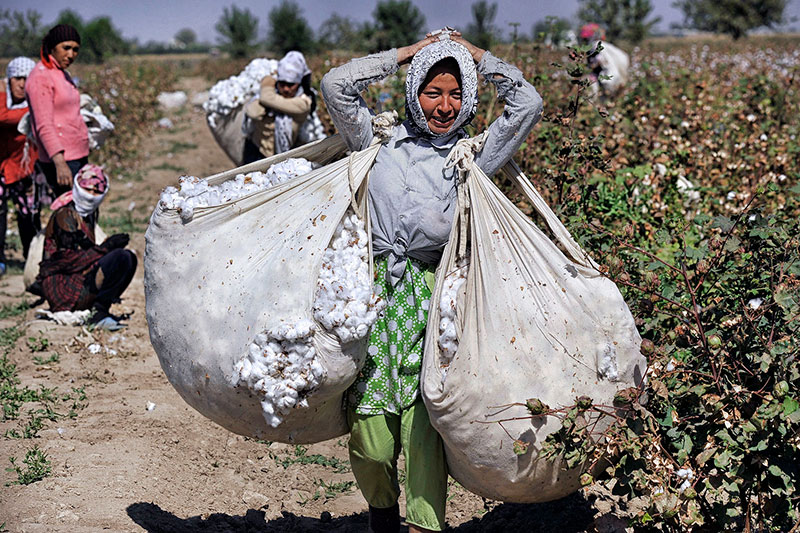
Uzbekistan plans to increase the share of automated cotton harvesting to 70% this year. To achieve this goal, the country intends to acquire 800 cotton-picking machines, as well as 6,000 seeders, tractors, and combines. The Uzbek president’s official website says that according to a briefing to President Shavkat Mirziyoyev on the development of agriculture, in total, around 10,000 units of agricultural machinery will be purchased in 2026, raising the fleet to 292,000 machines.
Currently, the level of mechanization in agriculture stands at 81%. In recent years, Uzbekistan has purchased 1,756 cotton-picking machines, increasing the proportion of machine-harvested cotton to 52%. Last year, 2.1 million tons of cotton were harvested using automated machines, reducing manual labor by 1.8 times, Ferghana reports.
To support farmers in acquiring new equipment, Uzbekistan will attract $400 million from international financial institutions. Tractors and combines will be available on a 10-year lease at 18% interest in local currency, with the first two years interest-free. The government will subsidize 8% of the interest rate.
The president also discussed the development of Uzbekistan's agricultural machinery industry. Experts recommend increasing production volumes fivefold and localizing production tenfold within three years. In the current year, the plan is to produce up to 6,000 units of agricultural machinery, with localization of self-propelled machinery reaching 30-35% and for attachment equipment 60-65% by 2028.
Support measures for the Tashkent Tractor Plant were presented, but further details were not disclosed.
The meeting also highlighted the collaboration between banks and farmers, as well as the implementation of modern digital technologies. In 2025, Agrobank reportedly allocated 1.6 trillion soums ($131.6 million) for agricultural machinery purchases, with plans to increase this to 3.9 trillion soums ($321 million) in 2026. Thanks to automation, the loan approval process will be reduced from three days to three hours.
Agro-service zones will be established in each region of Uzbekistan, offering farmers a range of services, including soil monitoring, seedling delivery, and agronomy consultations. Additionally, the bank plans to launch pilot projects using artificial intelligence in livestock farming, horticulture, and water resource management, along with creating a venture company with a capital of 100 billion soums ($8.2 million) to finance agricultural startups.