Tajikistan’s unusually warm February 2026 is causing concern among farmers. Early blooming of orchards, the risk of return frosts, and a lack of moisture could result in crop losses and additional costs for farmers.
Typically, February in Tajikistan is the coldest month, with night frosts, steady cooling, and snow in the foothills and mountains. However, this year, temperatures are about 1°C -2°C above the usual average in most regions. For agriculture, early warmth is more of a risk than a benefit, as it often brings sudden temperature shifts, rain instead of snow, and strong winds and fog.
According to the Hydrometeorology Agency (Hydromet), precipitation levels are within or slightly above normal in February. However, in the Khatlon province and valley areas subordinate to the center, the average temperature is above the climatic norm.
In Sughd and Gorno-Badakhshan Autonomous Region (GBAO), temperatures are near the norm, with the exception of the eastern GBAO, where low night temperatures have been observed.
"If frost hits, the harvest will be lost"
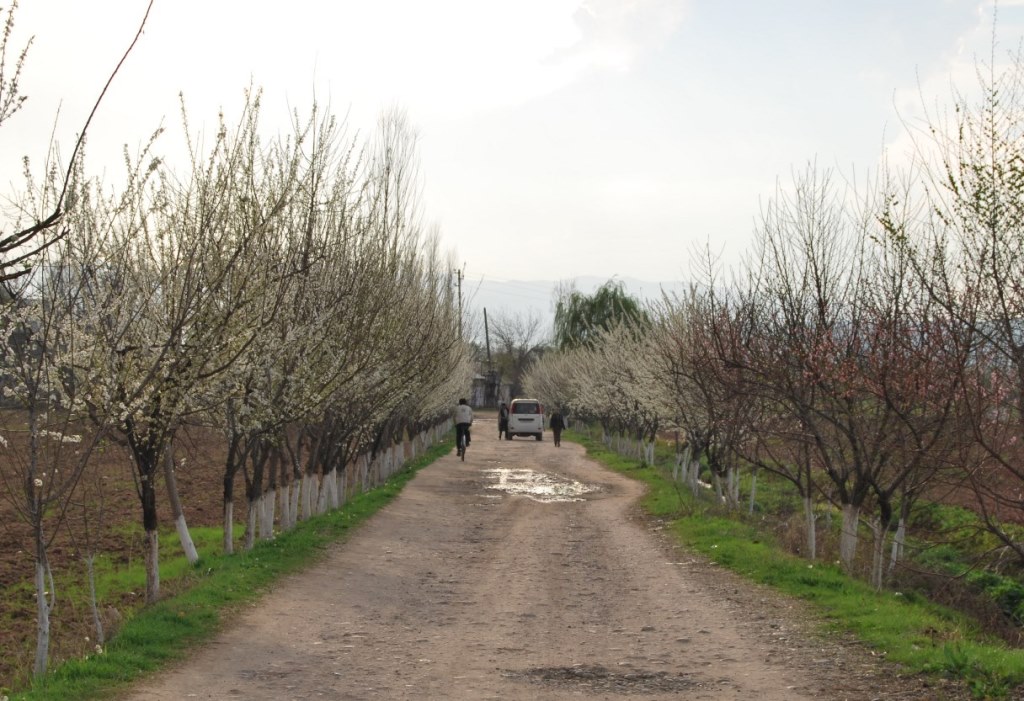
Farmers and gardeners are most concerned about the early warmth, which prompts plants to awaken, followed by a sudden cold snap that could damage flowers, buds, and young shoots. If there’s no snow, and frost arrives during the growing season, farmers fear the crop will be lost.
Snow cover serves as a protective "blanket" for fields and orchards, helping to protect winter crops, conserve soil moisture, and prevent the freezing of root systems. When warm weather arrives without snow, plants begin to grow prematurely, but there is less moisture in the soil to support their development.
Certain crops, like apricots, peaches, almonds, and grapes, are especially vulnerable to sudden temperature fluctuations. If temperatures drop below freezing in late February or early March, blooming trees may lose their blossoms. This would impact not only individual farms but also market prices, as reduced fruit supply inevitably leads to higher prices.
Farmers recall previous years when return frosts destroyed months of hard work. As a result, this warm February is not seen as a welcome sign of spring, but as a potential warning of another challenge ahead.
Recommendations for coping with warm February
Experts emphasize that there is no universal solution to the instability caused by changing weather patterns. Instead, a combination of measures can help reduce potential damage.
Agricultural scientist Qurbonali Partoyev recommends that farmers, especially those working on irrigated land, carry out winter irrigation. This helps preserve moisture in the soil and reduces the activity of pests that survive in larger numbers during a warm winter.
Farmers are also increasingly using mulching, covering the soil with organic materials to retain moisture and stabilize ground temperature. This is especially important when there is no snow cover to provide protection.
Orchardists are preparing for possible return frosts by discussing methods to protect sensitive crops, such as using plastic covers, smoke, or even local heating in orchards where feasible. Based on past experiences, many understand that even brief temperature drops can cause significant damage.
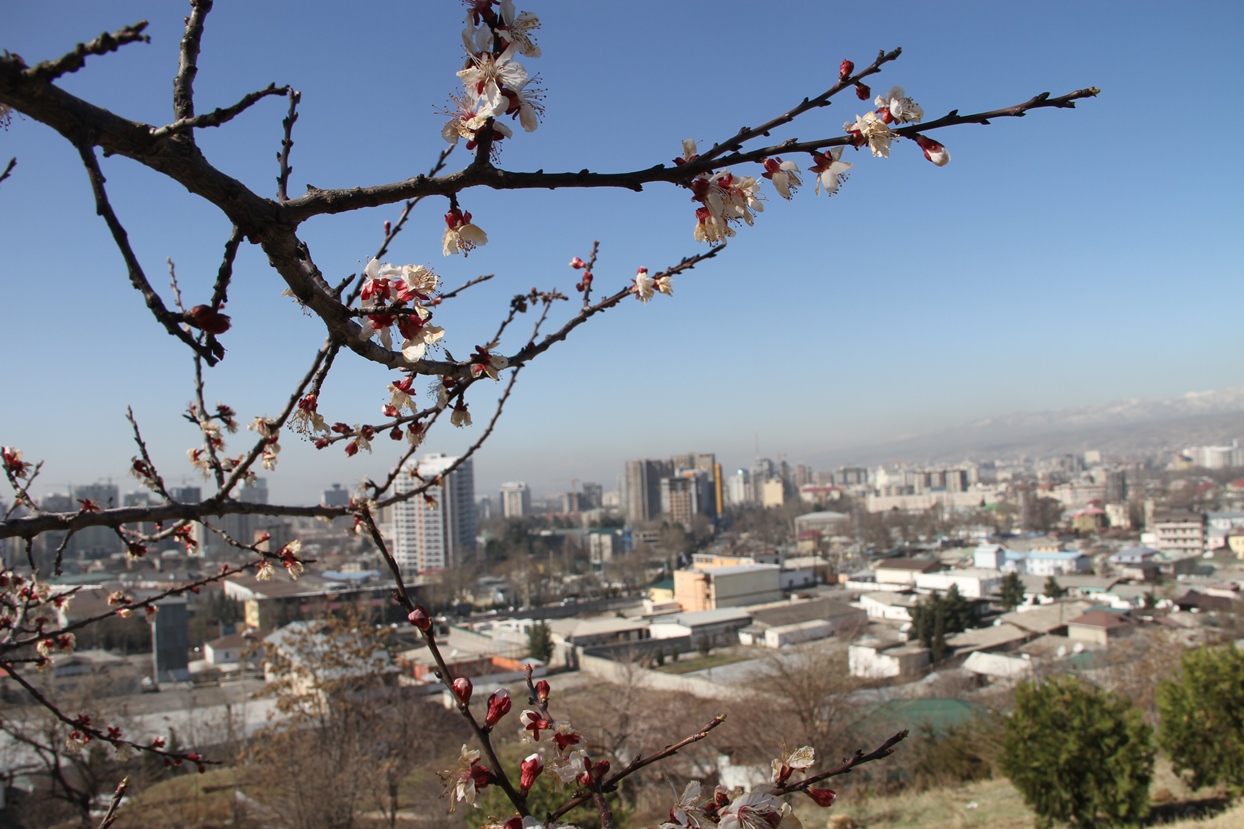
Equally important is closely monitoring weather forecasts. Farmers try to stay updated on warnings about cold fronts, wind intensification, and precipitation, so they can respond in time and minimize risks.
Warm February: not always good weather
For city dwellers, abnormal warmth might feel like an early spring, a chance to take off hats and enjoy sunny days. However, for farmers, the February thaw means anxious waiting. Any deviation from the usual seasonal pattern can lead to potential financial losses.
The more winter resembles early spring, the more frequent the concerns about unpredictability. When spring-like warmth in February is followed by frost, wind, and wet snow, the consequences can last throughout the year.
Therefore, the warm February in Tajikistan this year raises more caution and concern than joy in rural areas.