Home Blog Page 48

Tajikistan’s anticorruption agency explains the removal of Jaloliddin-Balkh district judge

0

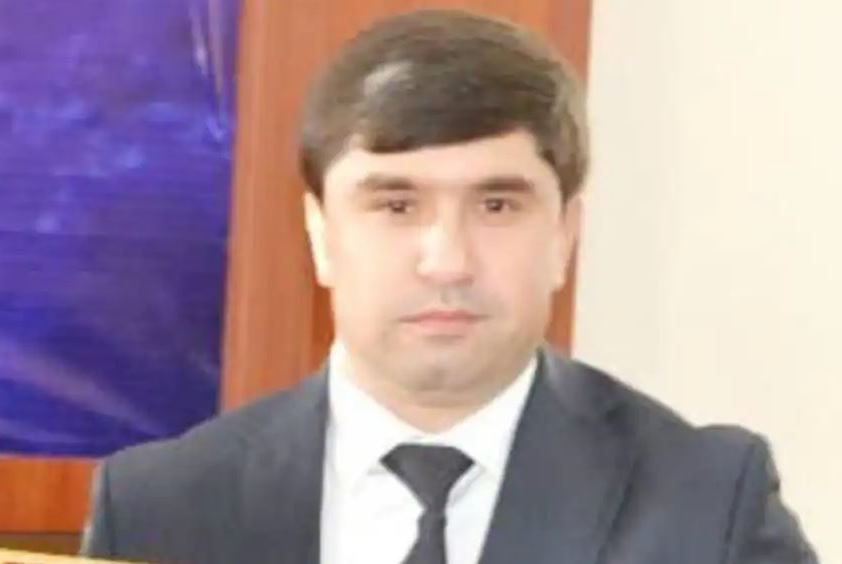
Samandar Qalandar, the former judge of the Jaloliddin-Balkhi district in Khatlon province, who was dismissed from his post in December 2025, is accused of accepting a bribe of 75,000 somoni.

The press center of the Agency for State Financial Control and Combating Corruption under the President says that while serving in his official capacity, Judge Qalandar demanded money in exchange for mitigating the sentence of defendant N.D.S.

"In his office in October 2025, Samandar Qalandar first received 50,000 somoni from the defendant, and later another 25,000 somoni for imposing a relatively lenient sentence. He was detained by anticorruption agency officers at the scene of the crime," the anticorruption agency's statement said.

As a result, criminal proceedings were instituted against Qalandar under Article 319 (3) of Tajikistan’s Penal Cede — receiving a bribe.

The case has already moved to a court for consideration. Under this charge, the former judge faces imprisonment for a period of 5 to 10 years, with a ban on holding certain positions or engaging in specific activities for 3 to 5 years after serving his sentence.

The opinions of Qalandar himself and his family regarding the accusations have not been made public.

On December 17, 2025, President Emomali Rahmon signed a decree dismissing Samandar Qalandar from his position, citing "conduct unbecoming of a judge that tarnishes the honor and dignity of the judiciary." Qalandar had held the position since March 2025.

In addition to Qalandar, the same decree also removed Firdavs Huseinzoda, a judge from the Sughd regional court, and Nozim Davlatzoda, a judge from the Baljuvon district court in Khatlon province, for similar reasons.

Joint Statement on the marking of four years since the start of Russia’s full-scale invasion of Ukraine

0

A Joint Statement on the marking of four years since the start of Russia’s full-scale invasion of Ukraine on 24 February 2022 was released today.  The Delegation of the European Union to Tajikistan and the Embassy of Ukraine in Dushanbe jointly invited Tajik authorities, Tajikistan-based diplomats, the Ukrainian diaspora and international partners on 24 February 2026, to honor the resilience of the people of Ukraine and express the solidarity of the international community with their fight Russian aggression. The Embassies of France, Germany and the United Kingdom in Dushanbe associated themselves with this Joint Statement.

“While the day marks four years since Russia’s unprovoked and unjustified full-scale invasion of Ukraine on 24 February 2022, the war of aggression started in 2014, when Russia temporarily occupied the Ukraine’s Crimea peninsula and invaded Ukraine’s Eastern regions of Donetsk and Luhansk,” says the statement.

“Sovereignty and territorial integrity are the cornerstones of international order; Russia wages a neo-colonial war against a sovereign member of the international community. Russia proved that it cannot be trusted. It violates international law, including the UN Charter while being a permanent member of the UN Security Council. It completely disregards its own legal obligations, international or bilateral agreements and clear commitments it made to respect Ukrainian sovereignty, independence and territorial integrity, whenever it wants to push its interest. Russia has proven repeatedly that it does not hesitate to use military force to achieve its objectives disregarding international law, including the UN Charter. The Russian invasion is a blatant violation of international law, a direct threat to peace and security, far beyond Europe, and an unacceptable challenge to economic stability, energy, and food security. Russia’s attack on February 2022 intended to destroy the Ukrainian state within days. Ukraine is still standing and fighting back. Despite overwhelming Russian pressure, Ukraine managed to slow down Russian advances almost to a halt. Even under permanent drone and missile attacks, Ukrainians remain resilient and continue to rebuild, reform and invest in their future.

“Since the start of intense diplomatic efforts by US President Trump in 2025, Russia has taken a clear path of escalation: adhering to its maximalist positions, increasing its attacks against civilians across Ukraine, weaponizing energy needs by mercilessly attacking energy and transport infrastructure during the winter, and intentionally violating of the airspace of EU Member State by Russian drones and airplanes and intensifying the use of other hybrid warfare methods against EU Member States. No one wants peace more than Ukraine. Ukraine must be a full participant in any discussions regarding its future, ensuring its sovereignty and voice are central to the process. It is up to Ukraine to make decisions on the acceptable parameters for peace and its territory. 2 There can be no decision on Ukraine and on Europe without Ukraine and Europe’s engagement. Only a comprehensive, just and lasting peace for Ukraine based on the principles of the UN Charter can be the basis for restoration of the international security and is a necessary condition for a strong transatlantic security. A peaceful Ukraine can be an innovative powerhouse, a security provider and a reliable partner for energy and food security, for Central Asian countries, including Tajikistan.

“The EU will continue supporting Ukraine, including on security guarantees, so that it is in the strongest position possible – before, during and after any ceasefire. This includes political, financial, humanitarian, military, and diplomatic support. The EU will also continue and increase its firm and coordinated pressure on Russia until Russia stops its war.” 

Tajikistan advances in implementing social entrepreneurship law

0

To fully implement the "Social Entrepreneurship Law," a working group has been formed and is actively operating under the State Committee on Investment and State-owned Property Management of Tajikistan (GosKomInvest).

An official source within the GosKomInvest says the group consists of representatives from ministries, local consultants, development partners, the private sector, and social entrepreneurship organizations.

It is worth noting that by government’s decree dated May 1, 2025, the GosKomInvest was appointed as the authorized state body for social entrepreneurship. The Committee is tasked with ensuring the implementation of state policy in this field, improving the social entrepreneurship climate, conducting research and monitoring, offering recommendations for the development of social entrepreneurship, and carrying out other responsibilities outlined in the law.

The Committee highlighted that, in accordance with the law, drafts of secondary legislation have already been prepared, including a draft government decree on "Approving Methods for Evaluating the Impact of Social Entrepreneurship."

The source emphasized that the working group has developed a Methodology for Assessing the Impact of Social Entrepreneurship. The primary goal is to provide a realistic assessment of the activities of social entrepreneurship entities in solving social issues, achieving sustainable development goals, and assessing the effectiveness of state support measures and other types of assistance.

“The Methodology for Evaluating the Impact of Social Entrepreneurship is one of the key factors for the successful development of this sector in the country, helping to increase the effectiveness of social entrepreneurship initiatives while ensuring control over achieving the priority strategic goals in socio-economic policy as defined by the state,” the source said.

Furthermore, to ensure the law's effective operation, the working group has reportedly prepared drafts of a Roadmap and Action Plan, which are currently under coordination with relevant ministries and agencies. The Tax Committee has also prepared a draft "Procedure for Maintaining the Register of Social Entrepreneurship Entities."


What the law encompasses

The "Social Entrepreneurship Law" was adopted on January 2, 2025. It was developed "to improve the standard of living for the population, provide assistance to vulnerable groups, and address social issues by creating a favorable economic climate for social entrepreneurship in the country."

The authorities believe that social support for the population is not only about providing financial and material assistance to vulnerable groups but also about creating favorable conditions for restoring their labor capabilities and economic integration. They also see the economic engagement of this category of citizens as a means of partially compensating for increased budget expenditures through tax revenues from their economic activities, which will help achieve further financial stability and self-sufficiency.

Authorities expect that the law will "create legal conditions to overcome social imbalances in the labor market, ensure fair, inclusive treatment in the exercise of socio-economic and other rights of vulnerable groups, and thereby guarantee sustainable improvement in their lives and welfare."

According to the law, social entrepreneurship entities include individual entrepreneurs and legal entities engaged in social entrepreneurship activities and recognized as social enterprises or social entrepreneurs.

The law defines vulnerable groups as:

·         People with disabilities and others with limited abilities, including children with disabilities;

·         Orphaned minors, children left without parental care, graduates of orphanages (up to 23 years old), and minors in socially dangerous environments;

·         Pensioners and individuals with less than two years until retirement, elderly people partially or completely unable to care for themselves, and individuals living alone, including elderly couples;

·         People in difficult life situations who need temporary shelter or urgent social services;

·         Low-income citizens, single-parent families with minor children, families with more than five minor children, individuals who have lost their breadwinner and lack income sources;

·         Veterans of the Great Patriotic War of 1941-1945 and equivalent persons (and their spouses);

·         People affected by technological disasters (including those at the Chernobyl nuclear power plant and other areas of radioactive contamination), victims of emergencies, and military conflicts;

·         Victims of any form of violence, including human trafficking, labor, or sexual exploitation;

·         Single minor mothers with young children and single minor pregnant women;

·         Refugees and internally displaced persons, as well as families of migrant workers who have lost material support;

·         Homeless individuals and those released from penal institutions or compulsory treatment facilities.


What is social entrepreneurship?

Social entrepreneurship refers to business activities aimed at supporting socially vulnerable groups and providing goods, services, or works with social purposes.

The subjects of social entrepreneurship are individual entrepreneurs and legal entities engaged in such activities and recognized as social enterprises or social entrepreneurs.

It typically involves small or medium-sized businesses that aim not only for profit but also to support certain categories of citizens or achieve socially beneficial goals. These goals may include addressing social problems such as:

·         Assisting people with disabilities;

·         Addressing educational and environmental issues;

·         Solving other social problems.

The key difference between social enterprises and non-profit organizations is that the former solve social issues through business activities. They generate financial profit, while charities and other non-profit organizations do not.

Over 500 complaints filed against Kyrgyzstan’s GKNB employees after Tashiyev’s resignation

0

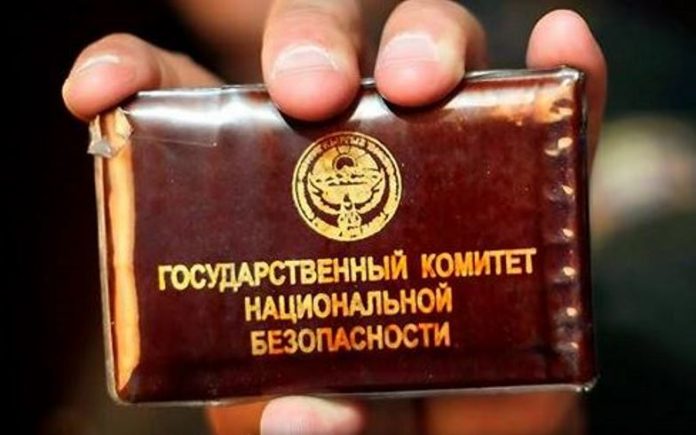
Following the resignation of Kamchybek Tashiyev, the former head of Kyrgyzstan’s State Committee for National Security (GKNB), and several other officials from the agency, more than 500 complaints have been filed with the prosecution, Kaktus.media reports, citing sources within law enforcement agencies.

The complaints have been submitted by business representatives and government officials at various levels. The complainants accuse GKNB employees of alleged abuse of power and misconduct during their tenure.

Earlier, on February 16, former member of the Jogorku Kenesh (Kyrgyzstan’s unicameral parliament), Iskhak Masaliyev, proposed revisiting high-profile criminal cases initiated over the past five years. According to Fergana, Masaliyev suggested forming an interdepartmental commission to review these cases. He stated that the results of such a review might be surprising, but emphasized that this move would be essential for both the society and the president.

However, the GKNB did not support the creation of such a commission, citing constitutional norms. In an official statement, the agency stressed that judicial decisions, including verdicts, could only be reviewed by courts in accordance with established procedures. The statement also clarified that the prosecutor’s office is responsible for overseeing the legality of investigations.

The GKNB added that the proposal to create a commission to review criminal cases contradicts constitutional principles, as the law prohibits interference with the activities of investigative and judicial bodies.

At the same time, the GKNB announced that, by president’s order, a comprehensive reform is underway within the agency. The reform covers almost all areas and methods of operation and aims to enhance intelligence and counterintelligence capabilities, combat terrorism and extremism, fight corruption and organized crime, and ensure the country's informational and economic security. The agency emphasized that it operates strictly within the legal framework, ensuring the rights and freedoms of citizens as guaranteed by the Constitution.

Meanwhile, President Sadyr Japarov revealed plans to establish an Investigative Committee that will report directly to the head of state. He explained that, in the current system, the heads of the Ministry of Internal Affairs and GKNB have the ability to influence the initiation of criminal cases by pushing for their registration based on operational officers' initiatives.

According to Japarov, in both the Interior Ministry and GKNB, operational-search activities and investigations fall under the jurisdiction of a single leader. He provided an example, saying, “For instance, an officer presents case materials that are, let’s say, unjust – for example, someone is being set up for imprisonment. When the case is handed over to an investigator, he might say, ‘This case won’t stand in court,’ and refuse to take it. Then the minister calls the investigator and orders him to accept the case and initiate a criminal investigation. The investigator has no choice but to comply.”

On February 10, 2026, President Japarov signed a decree relieving Kamchybek Tashiyev of his position as Vice Prime Minister and Head of the GKNB. The new head of the agency is one of Tashiyev’s deputies, Jumgalbek Shabdanbekov. Other deputy heads of the GKNB were also dismissed.

Simultaneously, structural changes began: the Border Guard Service was removed from the GKNB and the State Guard Service under the President of Kyrgyzstan was established based on the 9th service of the GKNB. 

Court sentences school teacher from Levakant to compulsory labor for slapping student

0

A court in the city of Levakant, Khatlon province has delivered a verdict in the case of Farhod Nazarov, a teacher charged with slapping an 11th-grade student. The court sentenced Nazarov to compulsory labor without stripping him of the right to hold certain positions.

According to the Levakant City Court, the case was overseen by the court's chairman, Farhod Abdullozoda, and the verdict was issued on February 16.

"Farhod Nazarov has been sentenced under Article 174 of Tajikistan’s Criminal Code, 'Failure to Fulfill Duties in Educating and Raising Minors,' to 200 hours of compulsory labor. He will not be deprived of his right to hold specific positions or engage in certain activities. He will be required to work no more than three hours per day," the court spokesperson stated.

The court also confirmed that Nazarov had been ill and was treated in the neurology department of the Kushoniyon district hospital, which led to the suspension of proceedings from December 4, 2025, to February 13, 2026.

The source added, "Currently, his health is good."

Nazarov has not appealed the court's decision. His views on the verdict remain unknown, as attempts by Asia-Plus to contact him for comment were unsuccessful.

In a conversation with Asia-Plus, Safar Qurbonnazarov, the principal of School No. 4 in the village of Bokhturobod, which is subordinate to Levakant, confirmed that Nazarov is no longer employed at the institution but refrained from offering further details.

The incident that led to Nazarov's legal troubles occurred on September 6 of the previous year, when a conflict arose between the teacher and 11th-grade student Mehmed Bozorov. At the time, Nazarov explained to Asia-Plus that Bozorov had been disruptive in class and was not listening to his instructions, which led him to slap the student in response.

Following the incident, Bozorov filed a complaint, and the Levakant prosecutor's office initiated a criminal case. In October 2025, the case moved to a court. 

The case sparked a significant public outcry. Many public figures voiced their support for the teacher, and the Ministry of Education and Science of Tajikistan expressed its backing as well.

Conflicts between teachers and students in Tajik schools have been a subject of public discussion before. Last year, at least three similar incidents were reported in the media—one in the city of Bokhtar, the capital of Khalton province, and two in Khatlon’s Khovaling district.

Packages, batons, and electric shocks: how Central Asia investigates torture — and why it persists

0

Reports of ill-treatment of detainees, pressure during interrogations, and ineffective investigations into torture allegations have become routine across Central Asia. Despite legal bans, torture is still used in the region, human rights defenders say, as a tool for extracting “quick” confessions, humiliating detainees, and intimidating society.

Complaints of abuse behind bars are rarely investigated, and even fewer cases reach court. Observers note recurring patterns: opaque investigations, pressure on victims and their families, limited access to independent forensic expertise, and only sporadic convictions — even in high-profile cases. Azattyk Asia examines why torture remains a region-wide problem.


Tajikistan: “taken alive — returned as a body”

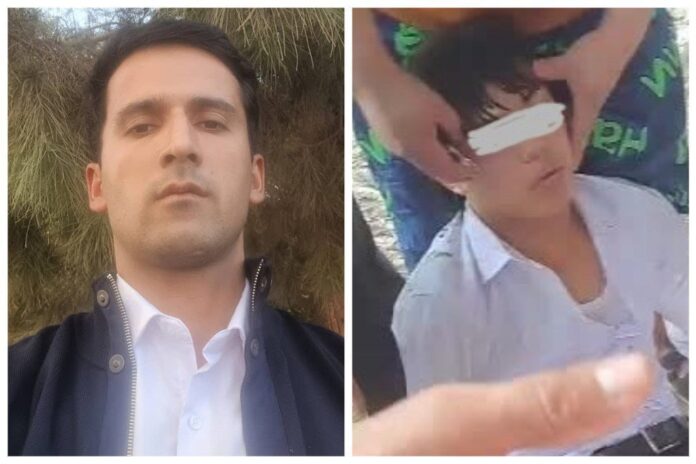
On January 8, police officers from Dushanbe detained 36-year-old Maqsoudjon Saidov at a hotel in Kulob and transported him to the capital. Four days later, his relatives were handed his body.

The Dushanbe prosecutor’s office opened a criminal case against two officers from the Sino-2 police department, suspected of using torture and exceeding their authority.

A source told Radio Ozodi that burns were found on Saidov’s toes, likely from an electric shock device. A friend of the deceased said that before the body was released, Dushanbe police officials assured the family that those responsible had been detained and would be punished. The same source claims the family was asked not to publicize Saidov’s death and not to file complaints.

Saidov’s case comes two years after another widely publicized incident in Kulob. In January 2023, Abduqahhor Roziqov died inside a police building, sparking mass protests. Authorities urged relatives not to take to the streets and promised accountability. Later, a court found three police officers guilty of torture and sentenced each to 14 years in prison. Human rights defenders say such convictions remain the exception rather than the rule.

International organizations have long criticized Tajik authorities over reports of torture and ill-treatment. UN bodies have repeatedly stated that torture is used to obtain confessions and that courts accept such statements despite Tajikistan’s laws and international obligations.


“Code of silence” and a lack of public data

Human rights groups say there is little publicly available official data on torture in Tajikistan. The ombudsman’s website has not posted figures for 2025; its 2024 report mentions only one complaint, stating that the “likelihood of torture was not confirmed.”

According to Gulchehra Kholmatova of Tajikistan’s Civil Society Coalition Against Torture and Impunity, the coalition received 21 complaints in 2025 — all involving the interior ministry. The reports described unlawful detention, beatings, electric shocks, psychological pressure and threats, coercion into confessions, denial of access to lawyers, and denial of medical care.

Kholmatova argues the issue is systemic: “The legal framework is relatively progressive, yet torture and ill-treatment persist, especially during detention and interrogations.” She says many complaints never reach court due to difficulties obtaining evidence, lack of independence in forensic examinations, pressure on victims, and a “code of silence” within some law enforcement structures. Rights defenders also point to the absence of an independent preventive mechanism, an independent forensic service, and a comprehensive rehabilitation system for victims.


Kyrgyzstan: accounts of a “torture room” in a security service basement

In 2025, Kyrgyzstan was increasingly cited in reports of torture and ill-treatment. Freedom for Eurasia documented testimonies from people detained for critical online speech. They alleged torture in a basement area of the new State Committee for National Security (GKNB) building in Bishkek, describing a large windowless room with soundproofing.

Victims reported the use of electric shock devices, plastic batons, suffocation bags, and large containers of water used for partial drowning. They said detainees were later forced, while in severe physical and psychological condition, to record “apology” videos.

Rights defenders link rising risks to weakened preventive oversight, noting that the National Center for the Prevention of Torture reportedly lost its independent role after functions were transferred to the ombudsman.

Officials present a different picture. Kyrgyzstan’s Interior Ministry said it had recorded no torture cases in 2023–2025. Deputy Prosecutor General Umutkan Konkubayeva told parliament that 43 torture complaints were filed in 2025, but only one criminal case was opened. Some lawmakers, citing UN data, questioned the reliability of those figures.


Kazakhstan: a verdict “disappears,” cases are reheard

Torture also remains a concern in Kazakhstan. In summer 2025, the Ulytau regional court reported the conviction of three police officers for torturing Kairat Makhatov from Zhanaarka district. Case materials said he was beaten in a police station; an expert examination found fractures to five ribs. A jury sentenced the officers to five years in prison.

Soon after, the court’s announcement reportedly disappeared from its website. It later emerged that the decision had been overturned and the case sent for retrial. In December 2025, a different court panel acquitted all three “due to the absence of a crime event,” released them, and recognized their right to rehabilitation and compensation.

The issue of impunity is further underscored by the aftermath of “Bloody January.” Officially, six of the 238 people who died during the January events were tortured to death after detention. While about 50 security officers were convicted for torture and other abuses, rights defenders argue the number is disproportionately low compared to the scale of alleged violations.


Uzbekistan: convictions exist, but accountability is selective

Uzbek authorities periodically report convictions in torture cases, but rights defenders argue accountability is selective. In May 2025, a court found three officers in Tashkent’s Yangihayot district guilty of forcing confessions in a drug case, including by suffocation with plastic bags, the use of an electric shock device, and threats.

At the same time, rights defenders say there has been no adequate response to allegations of torture involving Karakalpak activist Dauletmurat Tazhimuratov, convicted over the 2022 protests. His lawyer reported severe ill-treatment in prison, but, according to the article, authorities have not issued a public response.

Another widely discussed case involved Gulirano Kosimova, a school principal in Ferghana region who said she was beaten and humiliated by police officers. In December 2025, the article says, only two district police leaders received real prison terms, while other alleged participants avoided responsibility.


Why torture continues

Leila Nazgul Seyitbek, head of the Vienna-based Freedom for Eurasia, says torture across Central Asia is systemic. She cites closed institutions, high risks of reprisals against complainants and lawyers, insufficient independence of investigators and courts, and internal incentives such as clearance-rate targets, pressure from superiors, and politically motivated cases.

She also points to practical factors: lack of guaranteed timely access to lawyers and doctors, weak injury documentation, dependence of forensic services, and restricted independent monitoring of temporary detention facilities and pretrial jails.


“Publicity as a way to save lives”

All Central Asian states legally prohibit torture and declare adherence to international obligations. Yet rights defenders stress that bans are ineffective without inevitable punishment, independent investigations, and effective protection mechanisms.

Seyitbek argues that international attention and public scrutiny can sometimes reduce violence and help protect detainees in specific cases. However, she warns that cosmetic reforms, closed institutions, pressure on civil society, and the lack of an independent judiciary severely limit meaningful change.

“Laws banning torture exist across Central Asia. But without enforcement and independent oversight, they remain formalities and do not protect victims,” the human rights defender concludes. 

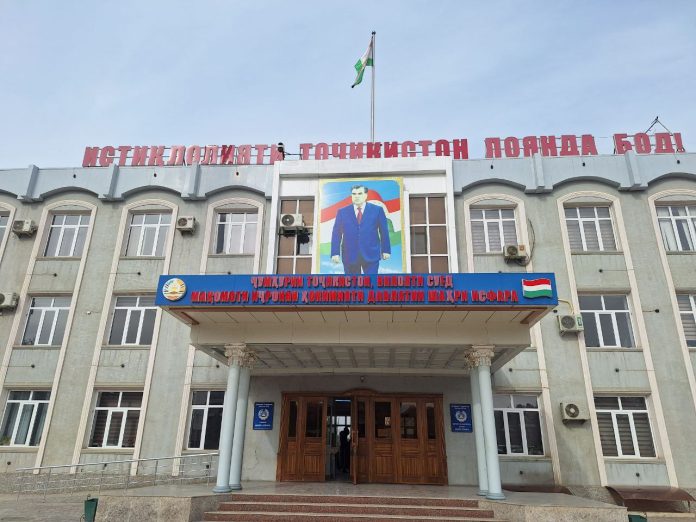
Former chief of Isfara mayor’s office fined 52,500 somoni in fraud case

0

A court in northern the city of Isfara has found Firdavs Abduraufzoda, the former chief of staff of the city mayor’s office, guilty of fraud and fined him 52,500 somoni. The information was provided to Asia-Plus by the Agency for State Financial Control and Combating Corruption’s office in Sughd province.

According to investigators, while working at the Isfara mayor’s office — including in the position of chief of staff — Abduraufzoda caused significant financial damage to several residents. In two separate cases, he allegedly received more than 526,000 somoni in exchange for promising to facilitate the appointment of his acquaintance, Rahimjon Ismonov, as head of the city’s land management department and to involve him in construction projects.

Additionally, authorities say he fraudulently obtained more than 400,000 somoni from three other residents under the pretext of allocating land plots. The funds were allegedly misappropriated.

Criminal proceedings were instituted under Article 247 (Parts 3 and 4) of Tajikistan’s Criminal Code (“Fraud”). The verdict was issued on December 16 last year but became publicly known only recently.

The anticorruption agency stated that the former official has fully compensated for the damages. His position regarding the verdict has not been disclosed. The Isfara mayor’s office confirmed that Abduraufzoda left his post in September of last year.

Anti-corruption officials note that corruption among public servants remains a serious issue. According to the head of the regional department, 83 corruption-related crimes were identified in 2025 within city and district administrations and their subordinate bodies in Sughd region.

Earlier this month, the mayor of Isfara reported the detention of the head of the city’s land resources department, Muhammad Bobozoda, on suspicion of bribery. The investigation is ongoing.

One-third of electricity debts in Tajikistan recognized as fictitious

0

Nearly one-third of household electricity debt accumulated in previous years in Tajikistan has been declared unjustified and written off. Energy authorities are currently reviewing the remaining portion.

According to Open Joint-Stock Company (OJSC) Power Distribution Networks (PDN), total household electricity debt stood at 1.739 billion somoni at the beginning of 2025. By early 2026, it had decreased by 33.2% — or 577 million somoni — to 1.162 billion somoni.

The company stated that the written-off amount had been artificially inflated and represented accounting overstatements. These entries were removed from financial records. The review of the remaining debt continues, and any additional unjustified charges will also be canceled.

Consumers with correctly recorded debts must repay them, although installment plans are available. During the verification process, households listed as debtors for past years will not be disconnected. Disconnections apply only to current unpaid bills.

As of January 1, current arrears amounted to just over 25 million somoni — about 1% of the total electricity supplied to households in 2025.


Sector reform and investigations

The Power Distribution Networks company was established in 2021 following energy sector restructuring. It handles electricity distribution and billing, while Barqi Tojik focuses on generation.

In 2023, the company reported discovering “non-existent consumers” in its billing system used to mask electricity losses. At the time, total accumulated debt reached 3.7 billion somoni, more than 40% attributed to households.

Officials say recent reforms — including a new billing system, relocation of meters outside homes, SMS notifications, and stricter penalties for tampering — have significantly reduced current household debt.


Presidential remarks and criminal cases

In his December 2025 address to parliament, President Emomali Rahmon accused certain energy sector employees of artificially inflating household debt. He stated that after introducing the new billing system, payment rates were found to be close to 100%.

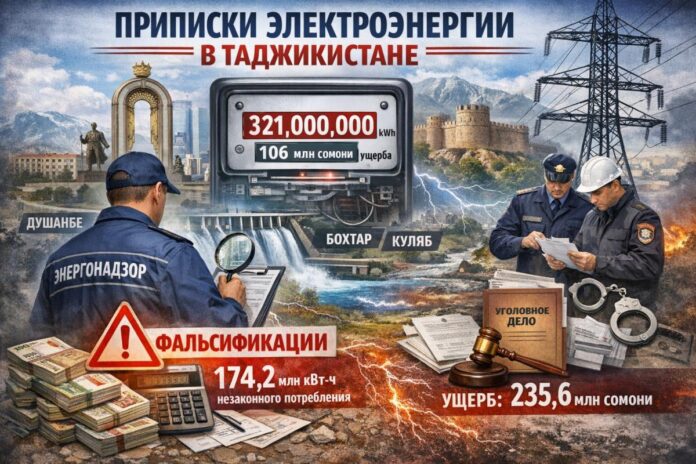
In 2025, 125 employees were dismissed and prosecuted. Authorities identified over 321 million kWh in false entries worth 106 million somoni. Administrative cases were filed against 406 employees, and more than 130 criminal cases were launched.


Financial results and loss reduction

In 2025, PDN supplied over 16.8 billion kWh worth more than 7.1 billion somoni. Actual collections totaled about 6.5 billion somoni, with shortfalls largely attributed to budget institutions and major industrial consumers.

Total outstanding debt across all categories exceeded 3.6 billion somoni ($380+ million) as of January 1, 2026.


Major electricity debtors in Tajikistan as of January 1, 2026

(with account of previous years' debt)

Total debt: 3 billion 634.8 million somoni (approximately $390 million)

·         Residential customers: 1.2 million somoni

·         TALCO (Tajik Aluminum Company): 823.8 million somoni

·         Irrigation Agency’s pump stations: 279.7 million somoni

·         Waterworks: 126.8 million somoni

·         Federally paid institutions: 111.7 million somoni

·         OJSC NBO Roghun: 97.5 million somoni

·         Other consumers: more than 1 billion somoni


At the same time, electricity distribution losses fell from 19.2% to 15.6%, which the company attributes to smart meter installations and network modernization.

Experts say increased transparency and continued reforms could strengthen public trust and improve the financial stability of the energy sector. 

Racing driver Bezhan Abdulloyev awarded Medal “For Courage and Valor”

0

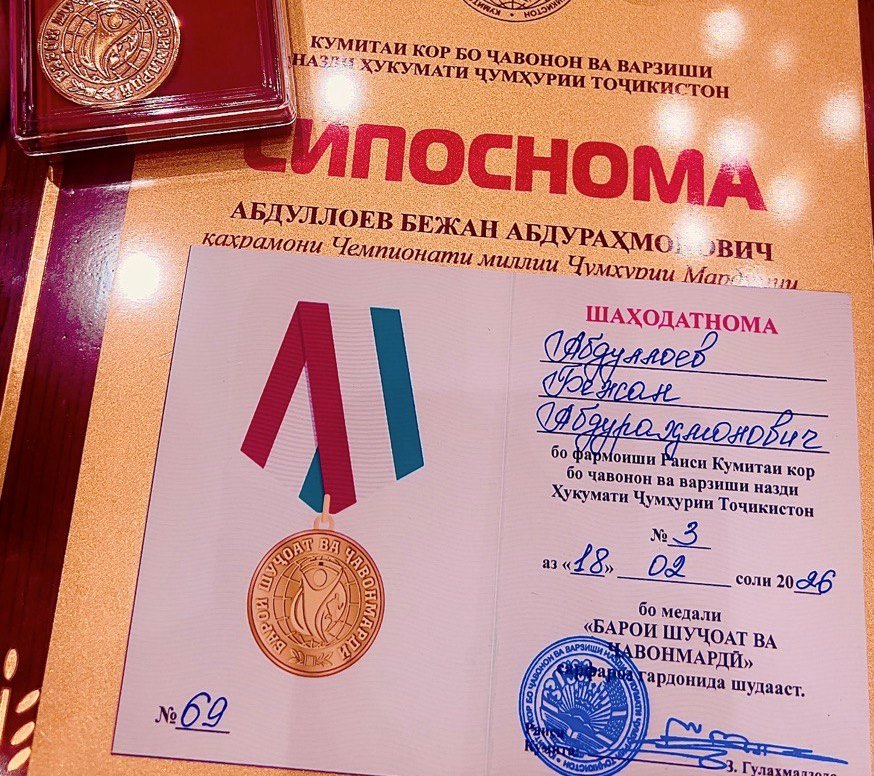
A ceremony honoring the country’s top athletes of 2025 was held in Dushanbe on February 18. Among the award recipients was racing driver Bezhan Abdulloyev, who received the state medal “For Courage and Valor” along with a certificate of appreciation.

According to the athlete, the award is both a great honor and a significant responsibility.

“It is important for me to represent my country in one of the most challenging and prestigious sports — Formula racing. I feel the support of the state and the people,” Abdulloyev said.

The driver was unable to attend the ceremony as he is currently undergoing preseason training. The award was accepted on his behalf by his father.

Abdulloyev noted that motorsport remains one of the most expensive sports disciplines, requiring substantial investment in car preparation, logistics, technical support, and participation in training camps and competitions. In such circumstances, moral and organizational support is no less important than athletic motivation.

He expressed hope that greater attention will be given to the development of sports in Tajikistan, including disciplines that may not yet be widespread but contribute to the country’s international image.

According to Abdulloyev every success on the international stage enhances Tajikistan’s global recognition and demonstrates that the country’s athletes can compete not only in traditionally strong sports but also in new arenas.

He emphasized that the award marks not a final achievement but another milestone in his career.

On February 27, Abdulloyev will begin test sessions in the Formula 4 series in China. He also continues to receive invitations from international teams.

During the ceremony, 67 medalists of international competitions were awarded the President of the Republic of Tajikistan’s prize, totaling 2.04 million so

Childukhtaron, salt caves and a Buddhist temple: a journey through Tajikistan’s Khatlon province

0

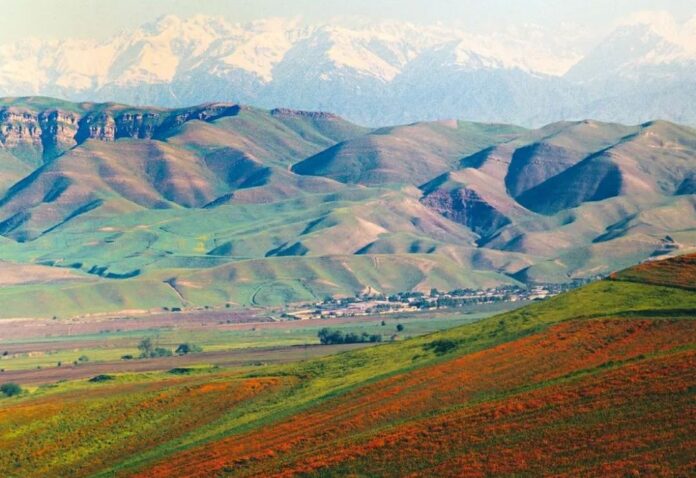
Khatlon province is Tajikistan’s most densely populated region, where mountain ranges gradually give way to broad, fertile valleys. Unlike the country’s high-altitude areas, it has a well-developed highway network, allowing travelers to design a convenient circular route without retracing their steps back to Dushanbe.

Here are the region’s most remarkable destinations — from medieval fortresses to sacred springs.


Nurek: a giant dam and turquoise waters

Just 70 kilometers from Dushanbe lies Nurek, home to the monumental Nurek Hydropower Plant. Its 300-meter earth-fill dam was once the tallest in the world and remains one of the most impressive engineering structures in Central Asia.
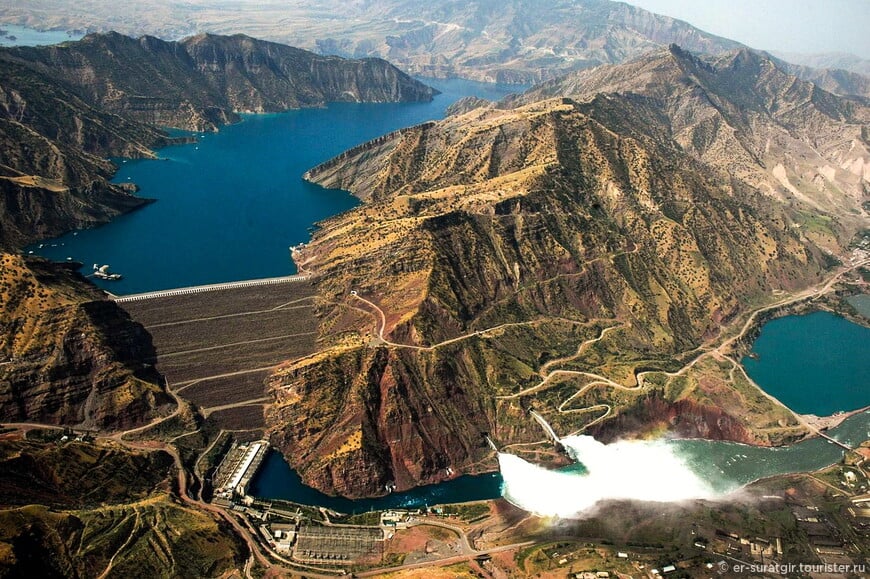
From observation points, visitors can admire the turquoise waters of the Nurek Reservoir.

The “Puli Sangin” recreation area offers hotels, swimming pools, and riverside activities.


Hulbuk: capital of medieval Khuttal

Continuing south through Danghara, travelers reach Vose District. In the village of Mehrobod lies the archaeological complex of Hulbuk — one of the most significant testimonies to the region’s former grandeur. From the 9th to the 12th centuries, this site served as the capital of the flourishing province of Khuttal. Today, that legacy is reflected in the large-scale reconstruction of the medieval fortress and the ruler’s palace.
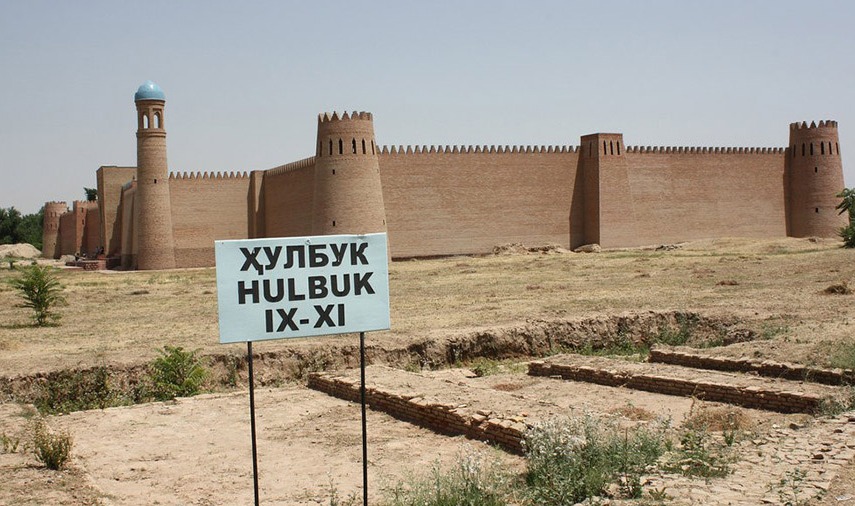
Beneath the massive baked-brick walls lie the cultural layers of the ancient city, featuring advanced infrastructure for its time, including water supply systems and even underfloor heating. A visit to the citadel is best combined with a stop at the local museum-reserve, where the finest discoveries are displayed — from intricately carved ganj (decorative plaster) to fragments of ancient ceramics and wall paintings.

Hulbuk is an ideal place to experience the spirit of the early Middle Ages and to appreciate the scale of a civilization that flourished in these arid valleys more than a thousand years ago.


Kulob: 2,700 years of history

Just a 30-minute drive from Hulbuk lies Kulob — one of Tajikistan’s oldest cities, which officially celebrated its 2,700th anniversary. The city’s main landmark is the memorial complex of Mir Sayyid Ali Hamadoni.
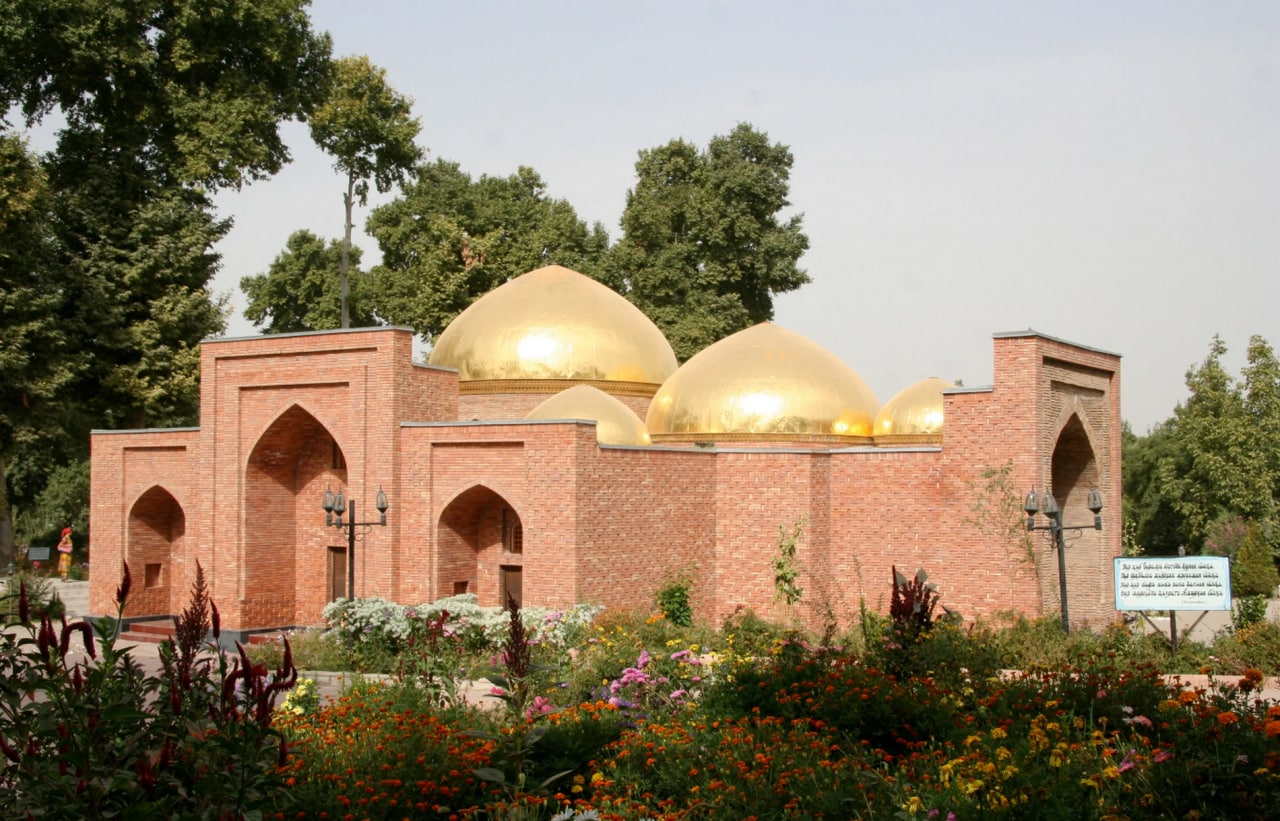
This prominent 14th-century philosopher and poet is revered far beyond the country’s borders, and his portrait is familiar to anyone who has held a 10-somoni banknote. The mausoleum’s restrained architecture and shaded courtyard create an atmosphere of profound tranquility.

Kulob is also notable for its medieval madrasahs. More broadly, Khatlon is a land of pilgrimage routes: it is home to the revered shrines of Sultan Uvaisi Qarani and Hazrati Sultan (Khovaling), the mausoleum of Zainalobiddin (Dousty district), and the famous Khoja Mashad complex (Shahritous district).


Khoja-Mumin salt mountain

Just 25 kilometers from Kulob rises a natural landmark that seems like a set from a fantasy film. Khoja-Mumin is a colossal mountain composed almost entirely of pure salt — deposits that astonished Marco Polo in the 13th century. The great traveler wrote that the salt here would “suffice for the whole world until the end of time.”
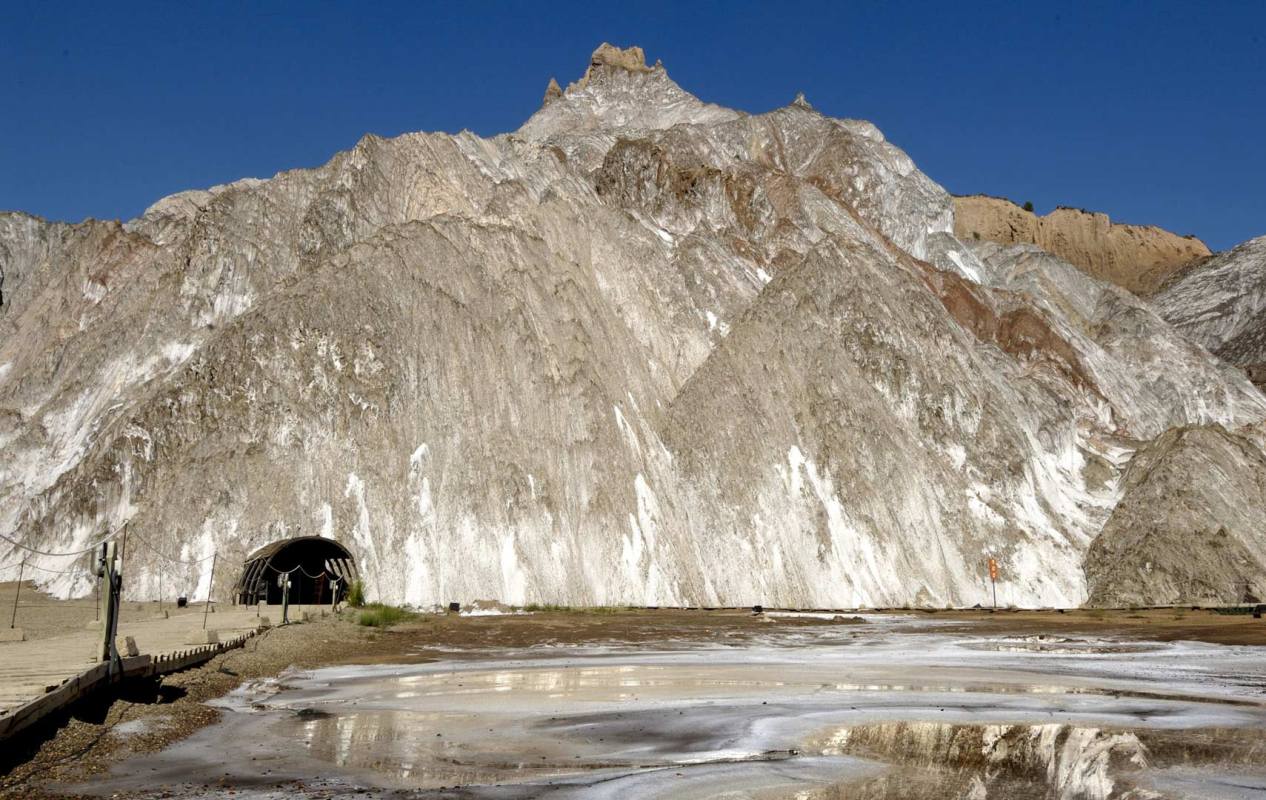
The mountain’s slopes shimmer in shades of pink and white under the sun and are carved with unusual caves and towering salt formations. Remarkably, fresh springs emerge at the summit of this salt giant, sustaining grasses and trees and making the mountain a unique ecological phenomenon.


Sari-Khosor and the fortress of Baljuvon

Further along the route lies the Sari-Khosor Natural Park in Baljuvon district — one of the most picturesque corners of Tajikistan, where nature has preserved its pristine wild beauty.

The main attraction here is the waterfall of the same name. Streams of water plunge from a height of more than 50 meters, crashing against the rocks and filling the air with a fine mist.
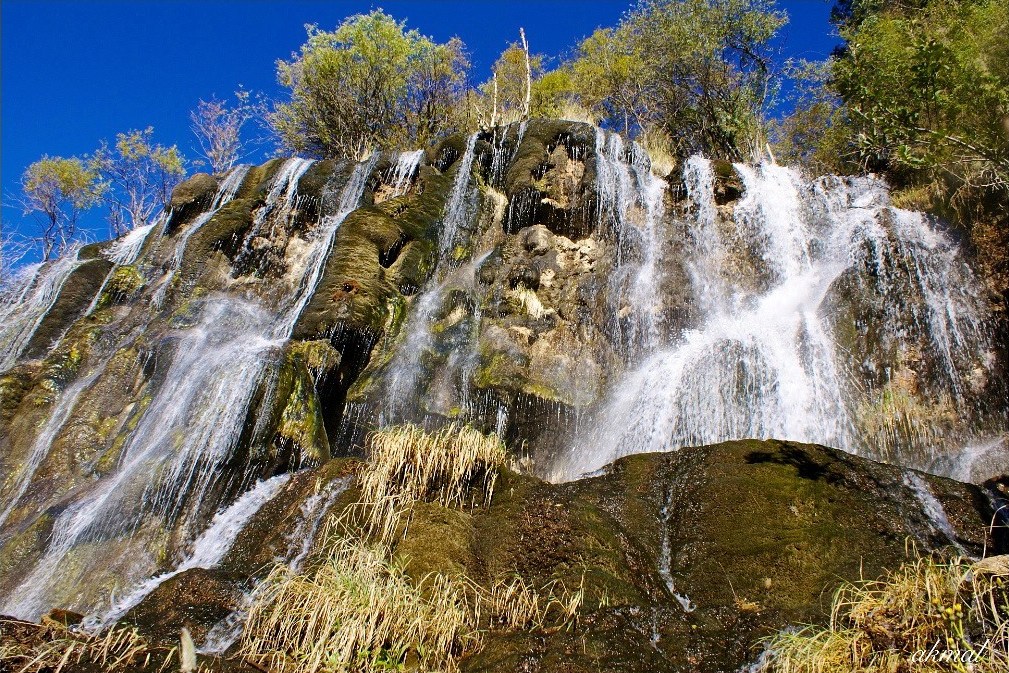
Baljuvon district is also notable for its history. The surviving fragments of the 18th-century Miri Baljuvon Fortress, once the residence of a local bek (ruler), recall the time when this area served as an important strategic outpost on the southern borders of the Bukhara Emirate.

Although time has taken its toll on many of the fortifications, the remaining walls and foundations allow visitors to imagine how this stronghold once looked. It is a destination for those who enjoy thoughtful exploration and wish to see Khatlon not only as an agricultural plain, but also as a strategic mountain crossroads.


Childukhtaron: a legend frozen in stone

In Muminobod district lies one of Khatlon’s most striking natural wonders — the Childukhtaron Valley (Forty Maidens).

Rock formations resembling female silhouettes preserve a legend of loyalty and courage: according to local lore, forty young women turned to stone to avoid falling into the hands of their enemies.
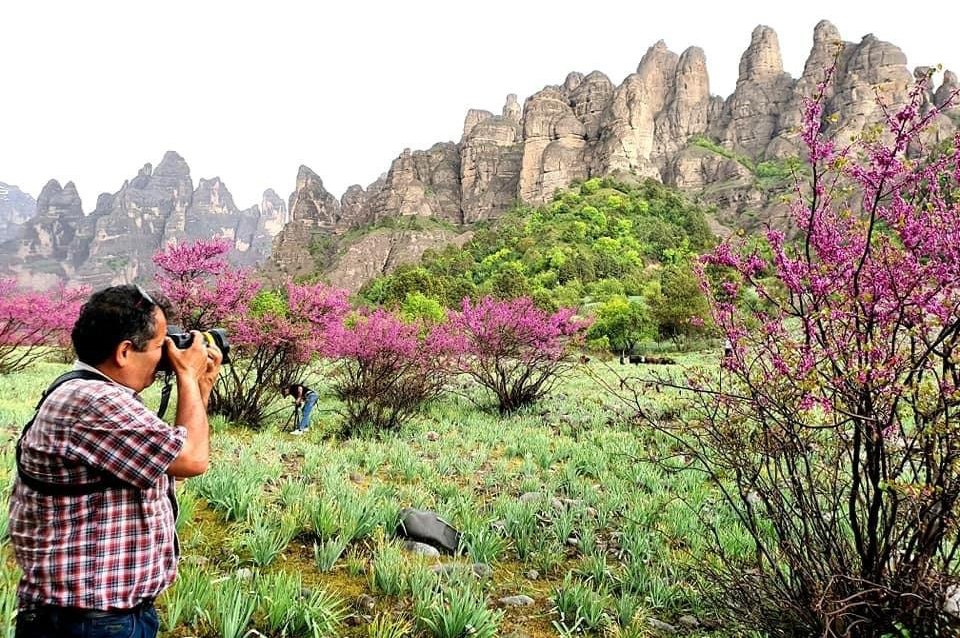
Childukhtaron attracts visitors not only with its mystique, but also with breathtaking landscapes and rare flora. The site can be reached independently by off-road vehicle or as part of organized tours, which often include tastings of traditional cuisine in the open air.

Travel agencies (for example, Go Travel Tajikistan) offer ready-made programs that typically include air-conditioned transport, guide services, and a true gastronomic experience featuring the local dish oshi burida, homemade chapoti flatbread, fresh dugob (a yogurt-based drink), and seasonal fruits.

For those wishing to greet the sunrise here, an affordable guesthouse operates nearby. The valley is also an ideal camping destination — so bringing a tent and sleeping bag is highly recommended.
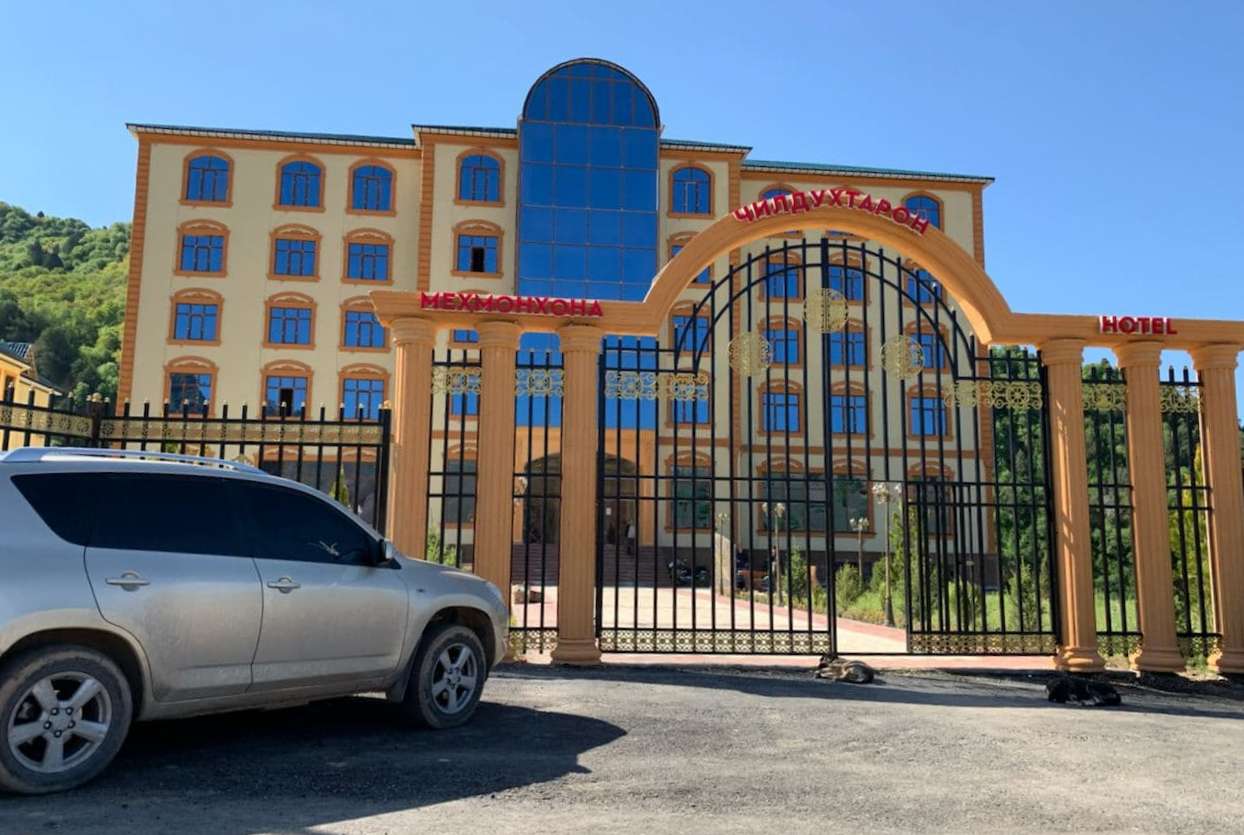
Important: If you are planning a picnic at the foot of the “Forty Maidens,” be sure to bring trash bags with you. The beauty of this place is fragile, and it is essential to leave it as clean as you found it.


Dashti-Jum Nature Reserve

Located in Shamsiddin-Shohin district, the Dashti-Jum Nature Reserve is a destination for those ready to trade their car for hiking boots. The reserve preserves the pristine landscape of the southern mountains, where silence is broken only by the whistle of the wind and the rush of mountain rivers.

Amid steep slopes and deep gorges lies one of the world’s last refuges of the markhor (the spiral-horned wild goat). Spotting this majestic animal with its corkscrew-shaped horns in its natural habitat is a rare stroke of luck for photographers and wildlife enthusiasts. In Dashti-Jum, photo safaris can be arranged for visitors interested in observing wildlife.
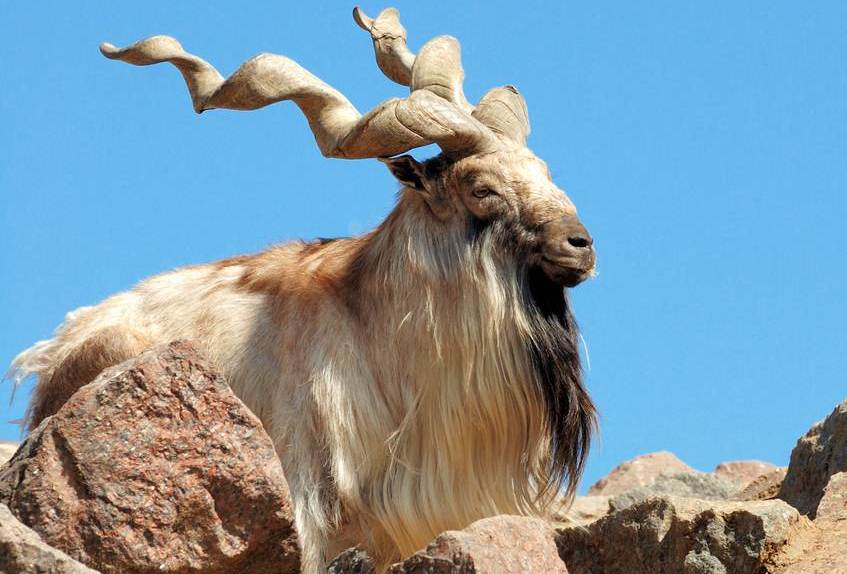
Important: A visit to the Dashti-Jum Reserve requires prior coordination with the reserve’s administration and an authorized guide.


Takht-i Sangin: the Temple of the Oxus at the confluence of great rivers

In the far south of Khatlon province, in Qubodiyon district, lies the archaeological site of Takht-i Sangin (“Stone Throne”) — one of the most important monuments of antiquity in the region. The site stands as a living witness to the era of Alexander the Great and the Greco-Bactrian Kingdom. It is located at a unique geographical point where the Vakhsh and Panj rivers merge to form the Amu Darya, just half a kilometer from the border with Afghanistan.
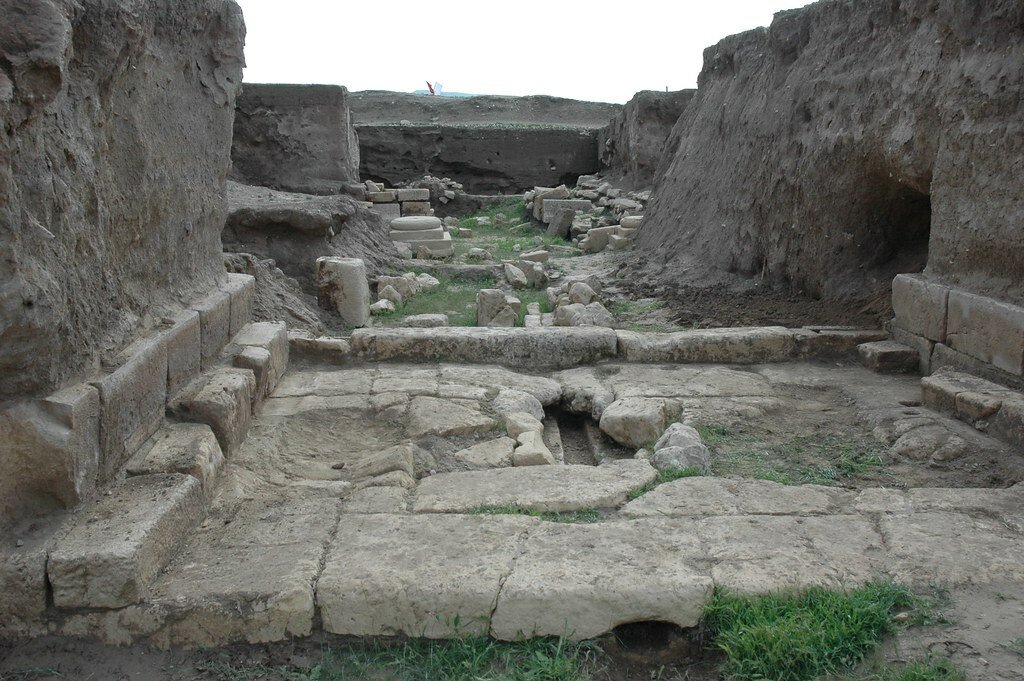
Dating back to the 4th century BCE, the settlement is renowned for the Temple of the Oxus and the legendary “Oxus Treasure,” many of whose artifacts are now housed in the British Museum. Although the treasures themselves have left these walls, the atmosphere of the site and the scale of the open-air excavations leave a powerful impression on every visitor.


“Beshai Palangon”: the planet’s last tugay forests

Situated between the Vakhsh and Panj rivers, the Beshai Palangon (Tiger Ravine) Nature Reserve is a place that completely reshapes one’s perception of Tajikistan’s natural landscape. Here survive some of the last untouched tugay forests (a form of riparian forest or woodland associated with fluvial and floodplain areas in arid climates) on the planet — true “jungles” of Central Asia.

The reserve received its name in the 1930s, when the Turanian tiger still roamed the area. Its tracks were last recorded in the mid-1950s. Although the tiger has disappeared, the ecosystem of the “besha” (ravine) remains globally unique. Today, the main inhabitants are Bukhara deer, whose population here remains stable. Among the dense vegetation, visitors may also encounter striped hyenas, jackals, jungle cats, and rare pheasants.
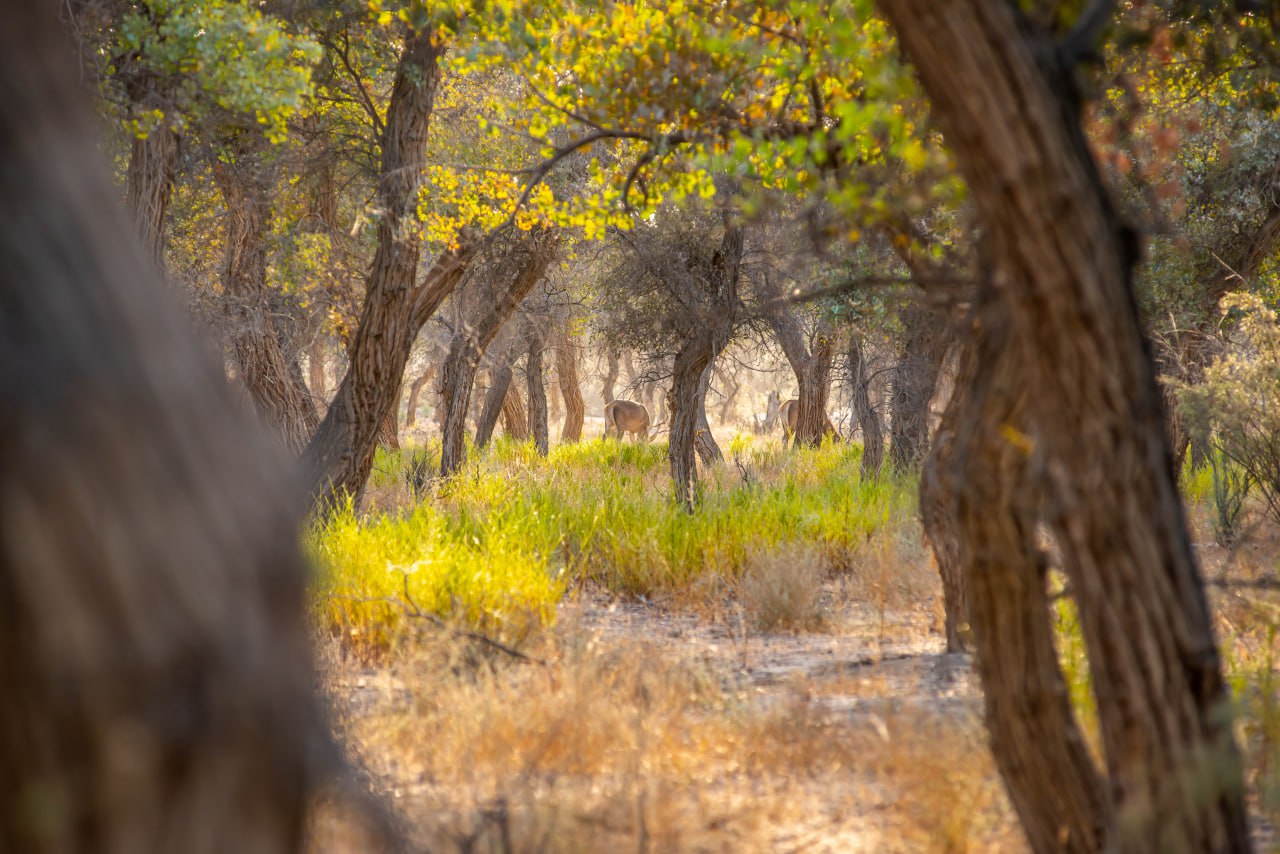
Important: Like Dashti-Jum, Beshai Palangon is a strictly protected nature reserve, and visits must be coordinated in advance with its administration. The best time to visit is in spring or autumn, when the heat subsides and wildlife becomes more active.


Chiluchorchashma: Forty-Four Springs in the Desert

About 230 kilometers from Dushanbe, in Khatlon’s Shahritus District, lies the natural phenomenon of Chiluchorchashma (“Forty-Four Springs”). Imagine driving through the sun-scorched Beshkent Valley and suddenly discovering, amid the sands, a place where 44 crystal-clear springs burst from the ground.
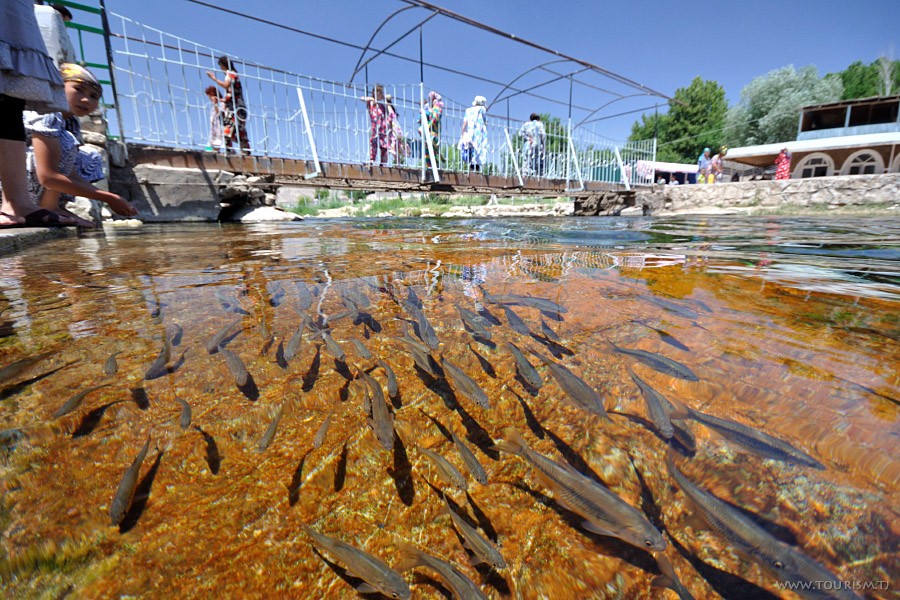
The waters merge into transparent streams, forming a channel up to 15 meters wide, where marinka genus and trout fish glide slowly — fishing them is strictly prohibited. It is believed that each spring has its own healing properties, helping with various ailments.

The site is closely associated with Islamic legends about Caliph Ali and his companion Bobo Qambar, whose mausoleum is located nearby. Today, Chiluchorchashma is a landscaped recreation area where visitors can wash off the dust of the road in the healing waters and enjoy a meal in the shade of trees while watching the flowing water and fish.


Ajina-Teppa: a Buddhist legacy

On the way back to Dushanbe, in the direction of the city of Bokhtar, it is worth visiting the 6th–8th century Buddhist monastery of Ajina-Teppa (“Hill of the Demons”). This archaeological site of global significance is where the famous 12-meter statue of the “Buddha in Nirvana” was discovered in 1966. Although the original sculpture is now housed in the National Museum of Antiquities in Dushanbe, walking along the outlines of the ancient sanctuary walls and monastic cells allows visitors to connect with the era of the Great Silk Road.
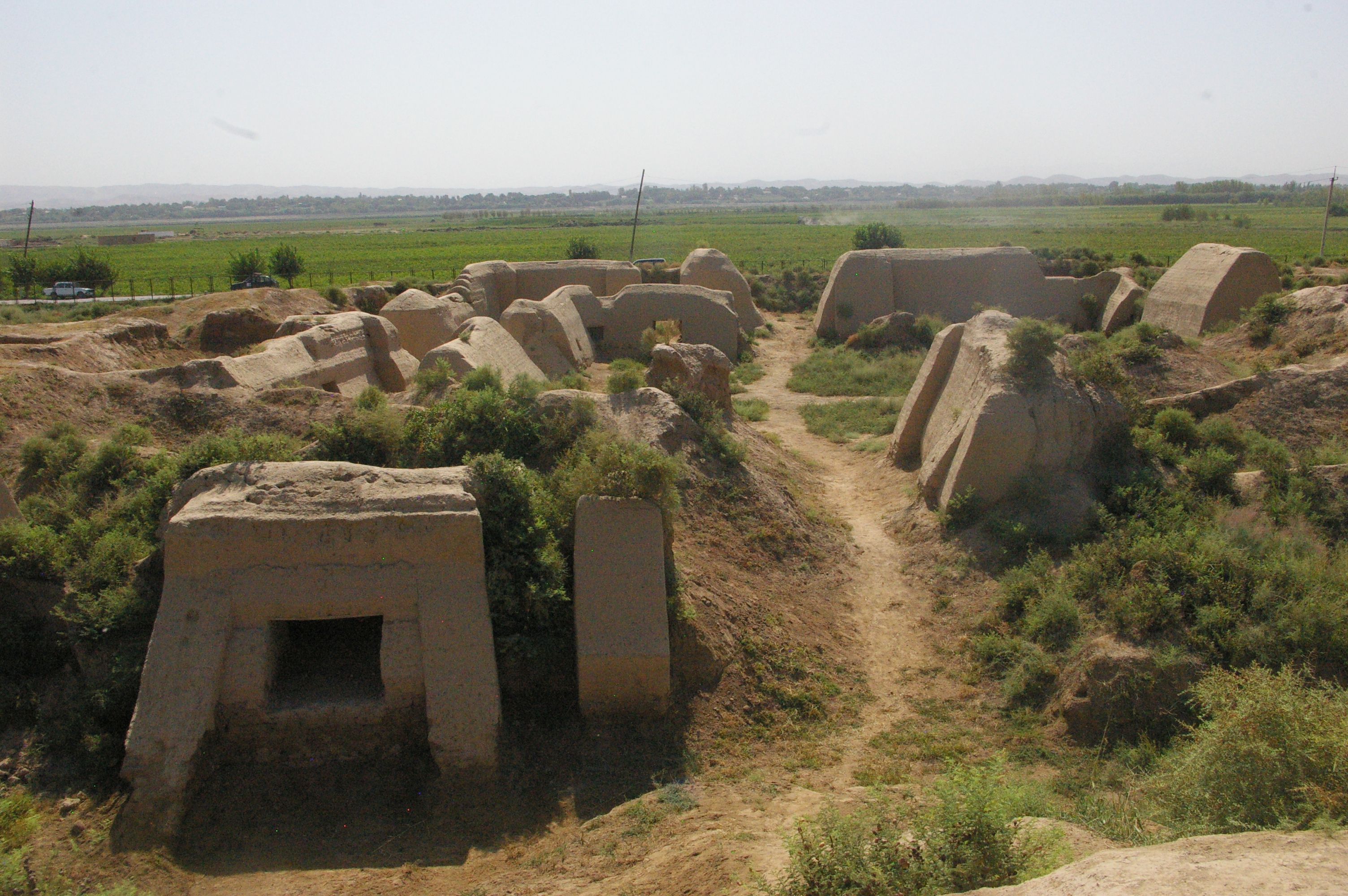
After exploring the monastery, travelers can stop in Bokhtar itself — a modern and dynamic city with wide avenues and cosy parks. From here, returning to the capital is easy: a high-quality highway leads directly north from Bokhtar. Just a couple of hours on the road — and you are back in Dushanbe.

Beyond ancient ruins and nature parks, Khatlon also offers excellent wellness opportunities. The sanatoriums “Toskala” and “Sino” in Vose District, as well as “Obi Shifo” in Temurmalik District, are well known for their healing mineral waters.

For those seeking a comfortable nature retreat, the tourist village of Munk near the district center of Khovaling is an excellent option. Visitors can choose accommodation to suit any preference — from traditional clay houses to a modern capsule hotel. Active recreation includes buggy and quad-bike rides through scenic surroundings. Contact phone: +992 877111555.

If you wish to explore the mysteries of the cosmos, head to Danghara district. It is home to the international Sanglokh Astronomical Observatory, recognized as one of the world’s best locations for observing celestial bodies.

Professional travel companies can help organize your journey across the region:

·         “Central Asia Expedition” (“Ekspeditsiyai Osiyoi Markazī”), tel. +992 937533838, 555887171

·         “Morkhur,” tel. +992 988345955

·         “Navranga,” tel. +992 988009109

·         “M. Bukhori,” tel. +992 988009109

·         “Safari Dashti-Jum” — tours in the Dashti-Jum reserve, tel. +992 905222229

Khatlon is a region of contrasts. Silent nature reserves stand alongside sun-scorched steppes, ruins of ancient civilizations neighbor modern hydropower plants. Its distinctive landscapes and the sincere hospitality of its people make any journey here unforgettable. Whatever route you choose, Khatlon will undoubtedly find a way to surprise you.