Home Blog Page 49

Emomali Rahmon stresses the need to further strengthen the country’s defense capability

0

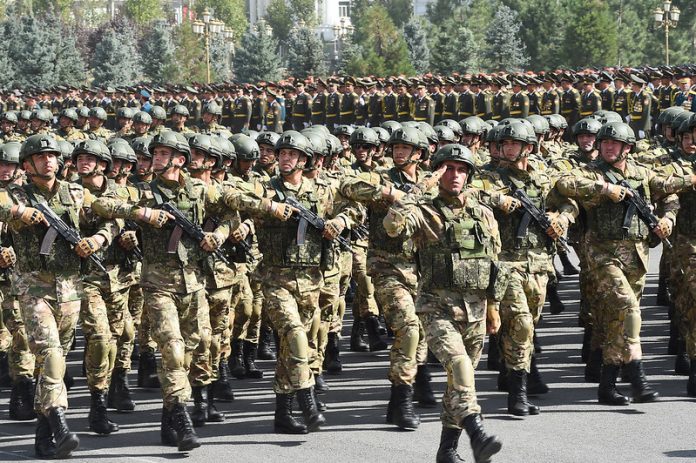
President of Tajikistan Emomali Rahmon congratulated military personnel on the 33rd anniversary of the establishment of the country’s Armed Forces, the president’s official website reported.

In his address, the head of state noted that the Armed Forces represent one of the key pillars of modern Tajik statehood and serve as a reliable guarantor of the country’s independence and freedom.

According to the president, members of the military, along with law enforcement officers, are fulfilling their duties with dignity, ensuring the protection of state borders, maintaining stability and public order, and safeguarding citizens’ security.

Rahmon recalled that during the tragic years of the imposed civil war in the early 1990s, the country’s leadership recognized the vital necessity of creating its own capable Armed Forces. Despite serious economic and financial difficulties, the National Army was formed, and the first military parade was held on February 23, 1993.

The president emphasized that Tajikistan’s Armed Forces were established and strengthened under challenging conditions, gaining combat experience and building professionalism. In subsequent years, the army, together with other military and law enforcement structures, repeatedly demonstrated loyalty to their oath, courage, and dedication in ensuring state security and protecting the people.

Rahmon expressed gratitude to military personnel and law enforcement officers for their devoted service, stressing that the state and the nation will never forget the sacrifices of officers and soldiers who gave their lives to restore constitutional order, defend the country’s borders, and strengthen peace and stability.

The president also pointed to the complex and tense situation in the region and the world, highlighting growing threats of terrorism, extremism, cybercrime, and other forms of transnational crime. In this context, he underscored the need to further strengthen the country’s defense capability, enhance personnel training, master modern technologies, and improve the professional skills of service members.

In conclusion, Emomali Rahmon expressed confidence that the Armed Forces would continue to carry out their mission with honor, ensuring national security and peaceful life for the people, and wished all service members and veterans good health, prosperity, and resilience.

Two more vendors arrested in Dushanbe for inflating meat prices during Ramadan

0

A court in Dushanbe’s Shohmansour district  has sentenced two vendors to five days of administrative detention for selling meat at inflated prices during the holy month of Ramadan.

The Dushanbe Police Department says that despite prior official warnings about maintaining stable prices during Ramadan, traders Umed Rajabov and Faizullo Jalilov “deliberately sold meat at inflated prices for financial gain.”

The authorities did not disclose the exact prices at which the meat was sold or specify the legal article under which the court issued its ruling.

The city police once again urged entrepreneurs to refrain from artificially increasing prices and to act in good faith. Officials warned that appropriate measures would be taken in case of violations, although specific legal grounds were not cited.

Earlier, on February 18, the Dushanbe police had called on business owners to avoid unjustified price hikes for food products during Ramadan. The authorities emphasized that Ramadan is a time of compassion and good deeds, and that artificial price increases contradict moral and spiritual values.

Meat is classified as a socially significant product, meaning the state has the authority to regulate trade markups or set maximum retail prices.

Exceeding these limits may constitute a violation of pricing regulations and can result in liability under Article 555 of Tajikistan’s Code of Administrative Offenses.

Additionally, consumer fraud constitutes a separate legal violation under Article 627 of the Code. Such violations include short-weighing customers, misrepresenting prices, imposing hidden charges, or selling lower-quality goods under the guise of premium products.


What Articles 555 and 627 of the Administrative Code provide

Article 555 of Tajikistan’s Code of Administrative Offenses establishes liability for violations of state pricing regulations. It provides for fines ranging from 5 to 10 calculation indictors (estimates) for individuals, from 10 to 20 for officials, and from 50 to 100 for legal entities.

Article 627 regulates liability for consumer fraud. Penalties under this article range from 3 to 5 calculation indicators for individuals, from 5 to 10 for officials, and from 20 to 40 for legal entities. 

Uzbek janitor in St. Petersburg catches boy who fell from seventh floor

0

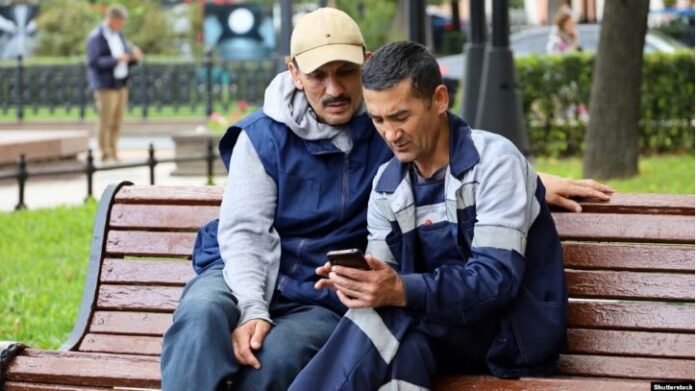
On February 22, a janitor in St. Petersburg saved a six-year-old boy who fell from a seventh-floor window of a residential building. RIA Novosti reported the incident, citing emergency services.

According to the agency, the tragedy was averted thanks to the man’s quick reaction — he managed to catch the child and soften the impact with his own body. After being examined, the boy was hospitalized with injuries.

The rescuer turned out to be a labor migrant from Uzbekistan named Khayrullo. Witnesses said that after noticing the child falling, he ran into the courtyard, positioned himself beneath the windows, and managed to catch the boy.

According to the Telegram channel Mash, the man himself sustained injuries and may have suffered broken ribs and an arm injury. His exact condition has not yet been officially confirmed.

It was later reported that the boy’s mother was at home at the time of the incident but was in another room. The apartment windows were not equipped with special safety locks.

A neighbor was the first to raise the alarm after noticing the child in an open window and calling for help. The janitor held the boy tightly to cushion the fall and then carried him to the building’s concierge. By that time, an ambulance had already arrived at the scene.


The “Trump Route”: The Trans-Caspian Corridor and implications for Tajikistan

0

Tajik political scientist Muhammad Shamsuddinov has shared his reflections on the TRIPP project and its prospects for the Central Asian region.  According to him, the growing momentum behind the TRIPP (Trump Route for International Peace and Prosperity) project and the broader development of the Trans-Caspian transport corridor reflect a shifting balance of power in Central Eurasia. Against the backdrop of U.S.–China rivalry, sanctions pressure on Russia, and increasing rapprochement between Central Asian and South Caucasus states, new regional logistics architecture is taking shape. For Tajikistan, this transformation presents both opportunities and significant risks — including the danger of being sidelined from major transit routes.


Geopolitical shifts and a new Eurasian logistics landscape

Over the past three to five years, Eurasia has undergone substantial geopolitical and geoeconomic shifts that have accelerated the search for alternative transport corridors, including the Trans-Caspian route.

Intensifying competition between the United States and China has prompted both sides to diversify supply chains. Rising tensions in the Indo-Pacific region have encouraged Beijing to seek alternative overland routes across Eurasia, where Central Asia and the South Caucasus are gaining strategic importance. Meanwhile, China’s dominance in critical minerals has pushed Washington to look for alternative sources and supply chains.

Central Asia has thus become increasingly significant in U.S. strategic calculations, including efforts to contain China’s influence. Russia’s war in Ukraine — through whose territory a substantial share of Eurasian cargo traditionally flows — has further heightened interest in alternative routes that bypass Russian infrastructure.

Central Asian states are also striving to strengthen their international agency, intensifying engagement with Western partners. Kazakhstan and Uzbekistan, in particular, have stepped up diplomatic outreach to Washington. Western countries, for their part, have shown growing willingness to expand cooperation.


The South Caucasus: a window of opportunity

Important changes are also unfolding in the South Caucasus. The nearly three-decade-long Armenian–Azerbaijani conflict has moved toward resolution. On August 8, 2025, a peace declaration was signed in Washington with U.S. mediation.

One of the key contentious issues — the status of Armenia’s Syunik region (the so-called Zangezur corridor) — was addressed through the TRIPP project, which envisions a transport link connecting Azerbaijan with its exclave of Nakhichevan via Armenian territory.

Under the agreement, the United States obtained exclusive development rights for a 43-kilometer section along Armenia’s southern border for 99 years, with subsequent subleasing to an international consortium. TRIPP includes the construction of railways, highways, oil and gas pipelines, and digital infrastructure. The project is expected to become fully operational by 2030.

In the long term, TRIPP is intended to form part of the broader Middle Corridor linking China, Central Asia, the Caspian Sea, the South Caucasus, and Europe.


Potential regional impact

If implemented, the Trans-Caspian route could significantly reshape Eurasian trade patterns. It would offer an alternative to the Northern Corridor and the Trans-Siberian Railway, reducing reliance on Russian territory.

For China, the corridor could serve as a strategically important channel to Western markets. Western countries, in turn, would gain more diversified and secure access to the resources of Central Asia and the South Caucasus.

For the countries of both regions, the corridor presents opportunities to enhance economic sovereignty, diversify trade, and overcome geographic isolation.


Tajikistan: between opportunity and risk

From a logistics standpoint, Tajikistan faces structural constraints. The country is landlocked, 93% mountainous, and has limited transport infrastructure. Its economy remains heavily import-dependent, with imports accounting for roughly three-quarters of total foreign trade.

Strategic documents, including the National Development Strategy to 2030, emphasize the goal of overcoming the country’s “transport deadlock” and integrating into international transport networks. However, Tajikistan’s actual integration into major regional corridors remains limited.

Another challenge is that the Central Asian segment of the Middle Corridor currently runs primarily through Kazakhstan. While Uzbekistan and Turkmenistan are seeking to connect to the project, Kyrgyzstan and Tajikistan remain largely outside its main routes.

Without deeper regional transport connectivity and economic integration, joining the Trans-Caspian network will be difficult. At the same time, closer integration between Central Asia and the South Caucasus could create a large, integrated market attractive to international investors.

For Tajikistan, participation in these processes aligns with long-term national interests. Achieving this, however, will require infrastructure modernization, proactive diplomacy, and coordination with neighboring states to avoid being left on the margins of Eurasia’s emerging transport architecture. 
Patents under review: Russian authorities propose new restrictions for migrants and their children

0

A draft law introducing additional restrictions for foreign workers and their families has been submitted for consideration to the State Duma (Russia’s lower chamber of parliament). The document has been published in the parliament’s electronic database, RBC reports.

The initiative proposes banning the issuance and renewal of work patents for foreign nationals whose income falls below the officially established subsistence minimum. The restriction would apply if a migrant’s total income is lower than the subsistence level calculated for the worker and each dependent residing in Russia, averaged over each month of the reporting period.

The bill also regulates the stay of minor children of foreign workers. Under the proposal, children would be allowed to remain in Russia only for the duration of their parent’s work permit and provided that a fixed advance personal income tax (PIT) payment is made — both for the worker and for each child.

Upon reaching the age of 18, such individuals would have one month to leave Russia or apply for their own work authorization.

The draft law further stipulates that that tax authorities will automatically transmit information on migrants’ income to Russia’s Interior Ministry for three, six, nine, and twelve months of the calendar year.

A work patent is a document that allows a foreign national to work legally in Russia. It is mandatory for citizens of countries with a visa-free entry regime, including Tajikistan. An exception applies to member states of the Eurasian Economic Union — Armenia, Belarus, Kazakhstan, and Kyrgyzstan — whose citizens are entitled to work in Russia on the same terms as Russian nationals.

Earlier in February, Russia’s Interior Ministry proposed introducing direct liability for general contractors who employ migrants without valid permits and patents in construction projects. The proposed penalties include fines of up to 800,000 rubles for a first violation and up to 2.5 million rubles for a repeated offense. Currently, legislation does not hold general contractors accountable if unauthorized foreign workers are formally employed through subcontractors.

Unscrupulous developers in Tajikistan: authorities tighten oversight

0

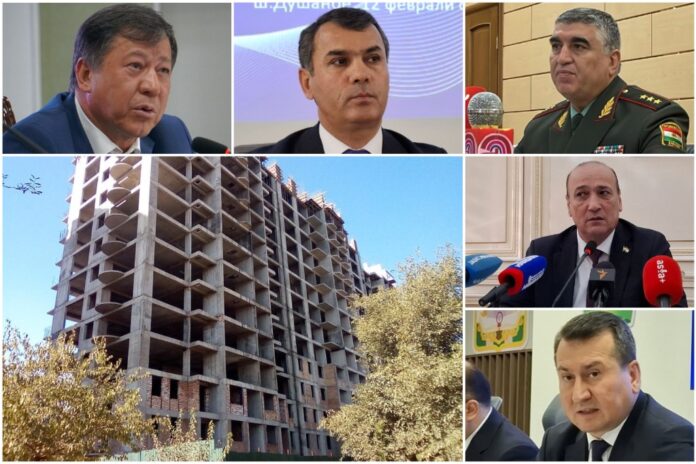
The issue of unscrupulous property developers has once again come into focus in Tajikistan. At a series of press conferences held in early 2026, several government agencies disclosed data on fraud cases in the housing sector, revealed details of investigations, and outlined measures aimed at protecting citizens.


Hundreds of complaints and dozens of criminal cases

On February 12, Interior Minister Ramazon Rahimzoda reported that 112 crimes related to fraud by construction companies and their intermediaries were registered in 2025. In most cases, developers sold the same apartment to multiple buyers.

According to the minister, more than 250 citizens filed collective complaints with the Interior Ministry in December 2025 and the first ten days of January 2026 alone.

Rahimzoda urged citizens to exercise caution by verifying construction permits and signing contracts in the presence of a lawyer. He also noted that the Dushanbe mayor’s office has developed a special program containing data on all construction projects, their permits, and developers.

The following day, the Prosecutor-General’s Office addressed the issue. Prosecutor-General Habibullo Vohidzoda acknowledged that cases involving multiple sales of the same apartment and unilateral contract terminations continue to generate public dissatisfaction. As a result of inspections, 308 administrative and 37 criminal cases were initiated.


More than 400 cases in court

Supreme Court Chairman Rustam Mirzozoda stated that in 2025, courts across the country received 421 cases involving disputes between citizens and construction companies.

Of these, 106 lawsuits were filed by citizens seeking refunds or resolution of other issues. By the end of the year, 58 cases had been satisfied, 37 were terminated by mutual agreement, and 11 remain under consideration.

Construction companies, in turn, filed 315 lawsuits against citizens, mainly concerning relocation and financial settlements. Of these, 114 were satisfied, 188 were terminated by agreement of the parties, and 13 remain pending.


Municipal oversight and new measures

Dushanbe city officials also acknowledged the problem. Deputy Mayor Bakhtiyor Sharifi described the practice of selling one apartment to several buyers as “unscrupulous” and said the matter is under the personal supervision of the mayor.

As a preventive measure, authorities plan to install QR codes on all high-rise buildings in the capital. These codes will allow residents to access information about the developer and the legal status of the project.

Companies found guilty of fraudulent practices will gradually be excluded from cooperation with municipal authorities, Sharifi added.

Earlier, the head of the Committee for Architecture and Construction, Nizom Mirzozoda, advised citizens to notarize purchase agreements to ensure legal validity and prevent multiple sales of the same property. However, he noted that many companies avoid notarization.


High-profile cases and systemic violations

Problems in the construction sector frequently attract public attention. In 2025, law enforcement authorities reported the detention of executives from several companies, including “Salmon-Inshoot,” “Sokhtmon Palace,” and LLC “Jamol-Basir.” In one case, a company director allegedly sold a single apartment to three to seven buyers, defrauding more than 160 people.

According to the Committee for Architecture and Construction, 7,331 violations were identified in the activities of 1,288 construction companies in 2025. Total fines amounted to 547,350 somoni. In 72 cases, companies began construction without undergoing mandatory state expert review.

Despite stricter construction requirements introduced in Dushanbe about four years ago, the sector’s systemic problems remain unresolved. 

Number of individual entrepreneurs on the rise in Tajikistan

0

The number of registered businesses and individual entrepreneurs in Tajikistan has increased, according to the Agency for Statistics under the President of Tajikistan.

As of the beginning of the current year, approximately 387,000 business entities were operating in the country.

Of this total, nearly 42,000 are legal entities (companies), while around 345,000 are individual entrepreneurs.

Compared to the beginning of 2025, the number of companies rose by 1,100, whereas the number of individual entrepreneurs increased by 14,600. The overall growth was therefore primarily driven by the expansion of small and individual businesses.

The share of individual entrepreneurs in the overall structure of business entities continues to grow at a more noticeable pace than that of legal entities.

Regionally, the Sughd region leads in the number of operating companies, while the Gorno-Badakhshan Autonomous Region (GBAO) records the lowest number of registered entities.


Share of active legal entities by region as of January 1, 2026

Regions and shares:

·         Sughd Province — 27.5%

·         Dushanbe — 26.9%

·         Khatlon Province — 25.9%

·         Districts Subordinate to the Center (RRP) — 15.0%

·         Gorno-Badakhshan Autonomous Region (GBAO) — 4.7%


As of the beginning of the year, about 345,000 individual entrepreneurs were operating in the country. Over the past year, their number increased by 4.4%. The most significant growth was observed among dehqon (private farming) households and entrepreneurs operating under the patent-based taxation system.


Share of Active Individual Entrepreneurs as of January 1, 2026, (%)

Categories and shares:

·         Certificate (General Registration Certificate) — 11.5%

·         Patent — 16.5%

·         Dehqon (private farming) households — 52.7%

·         Certificate with special conditions — 19.3%

Tajikistan’s Organ Transplant Center denies reports of illegal surgeries at Istiqlol clinic in Dushanbe

0

Authorities in Tajikistan have denied reports alleging that illegal organ transplant surgeries were carried out at the Istiqlol clinic in Dushanbe.

Earlier, Uzbekistan’s Ministry of Internal Affairs announced the detention of suspects in Tashkent accused of organizing the illegal trade of human organs and claimed that the surgeries had been performed in Tajikistan.

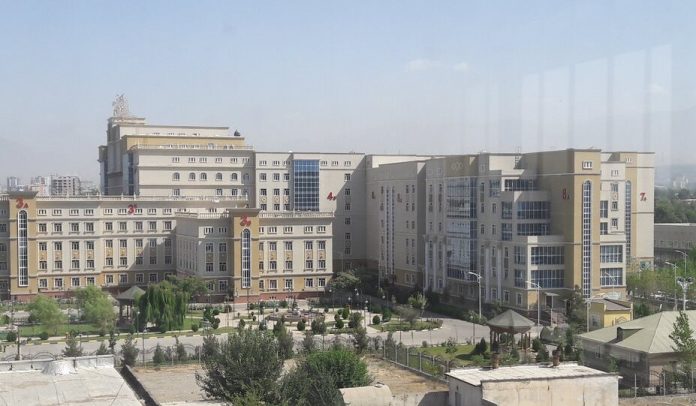
The State Institution “National Scientific Center for Organ and Tissue Transplantation,” located in the building of the Istiqlol State Institution, stated that such claims do not correspond to reality.

The Center’s director, Saidmahmud Ismoilzoda, emphasized that all transplant procedures are conducted strictly in accordance with the legislation of the Republic of Tajikistan. According to him, regardless of citizenship or place of residence, patients and their relatives are required to comply with established legal norms.

The Center explained that the transplantation process includes mandatory verification of documents confirming family relations, medical examinations of both donor and recipient, psychological assessment of the donor to ensure voluntariness, review of materials by a medical commission, and obtaining written consent from both parties.

All documentation is submitted to the Ethical Commission on Organ and Tissue Transplantation under the Ministry of Health and Social Protection of the Population of Tajikistan. Only after receiving the Commission’s approval are kidney or liver transplant surgeries performed. If any violations or concerns arise, preparation for the surgery is suspended until all circumstances are clarified.

Ismoilzoda noted that all stages of diagnosis and decision-making are documented, and medical personnel act strictly within the scope of their authority.


Statement by Uzbekistan’s interior ministry

On February 18, Uzbekistan’s Ministry of Internal Affairs reported the detention in Tashkent of individuals suspected of organizing illegal organ trafficking. According to the ministry, a previously convicted man and his wife allegedly arranged illegal kidney transplant surgeries at the Istiqlol clinic in Tajikistan.

The Uzbek authorities stated that the suspects posted videos on social media featuring seriously ill individuals, including children, announcing fundraising campaigns that were allegedly used for personal gain. They also reportedly searched for “clients” through Telegram, Instagram, and YouTube.

A criminal case has been initiated under Part 2 of Article 133¹ of Uzbekistan’s Criminal Code (“Purchase and sale of human organs and/or tissues committed by a group of persons”). The suspects have been placed in pre-trial detention, and the investigation is ongoing.

As of the time of publication, Tajikistan’s law enforcement authorities had not issued a public response to the statement made by the Uzbek side.


Who can become a donor in Tajikistan

In Tajikistan, organ transplantation is regulated by the Law “On Transplantation,” which primarily permits organ donation from close relatives. Although the country’s legislation allows for posthumous donation, this practice has not yet become widespread.

In February 2025, Tajikistan’s Minister of Health, Jamoliddin Abdullozoda, stated that the country has the technical capacity to perform heart, pancreas, and intestinal transplant surgeries. However, further development in this field is constrained by an insufficient donor base.

Currently, transplant operations are mainly performed at the National Scientific Center for Organ and Tissue Transplantation in Dushanbe, as well as at a similar specialized center in Danghara.


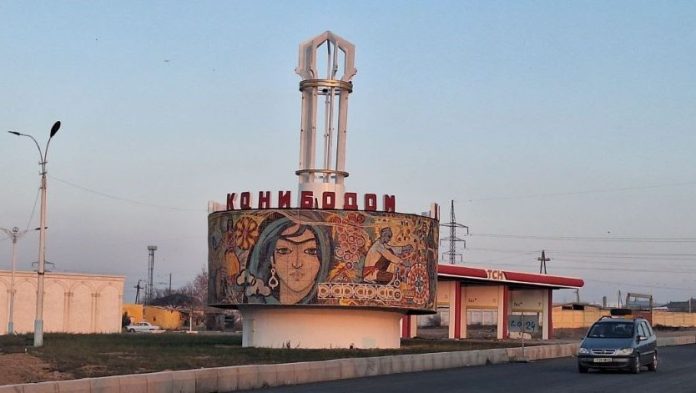
Deputy mayor of Konibodom fined for illegal land distribution but retains position

0

The Deputy Mayor of Konibodom, Bahovaddin Bahovaddinzoda, has been fined 52,500 somoni for unlawfully distributing plots of land to 22 citizens. Despite the fine, he remains in office. The fine was announced by the Agency for State Financial Control and Combating Corruption’s office in Sughd province.

According to the agency, Bahovaddinzoda falsified documents in February 2023 to illegally allocate 512 square meters of land. The land was given to 22 residents of Konibodom without proper review or approval from the city commission. Instead, Bahovaddinzoda bypassed the required procedures and sent the documents directly to a higher commission, which approved the land allocations.

As a result of this incident, Bahovaddinzoda and another individual, N. Nozimzoda—whose role and identity remain unclear—have been charged with three criminal offenses under the Tajik Criminal Code: Abuse of Official Authority (Article 314, Part 1), Illegal Land Allocation (Article 338, Part 2, Subsections b and c), and Official Forgery (Article 323).

In October, the Konibodom court fined Bahovaddinzoda 52,500 somoni, while Nozimzoda received a fine of 45,000 somoni. The views of the convicted individuals on the court's decision have not been made public. However, the Konibodom administration confirmed to Asia-Plus that Bahovaddinzoda continues to hold his position, though the question of his dismissal is under review.

Safar Salimzoda, head of the anticorruption agency’s office in Sughd province, announced at a news conference on February 16 that in 2025, 83 corruption-related crimes involving 28 individuals were uncovered in local government bodies across the region.

In a related development, the former mayor of Konibodom, Abdusalom Tukhtasunzoda, was convicted of bribery and fraud after serving four years in office. He was sentenced to 12 years in prison. Several former officials from the city were also arrested at the same time, though their specific charges and sentences remain unknown.

It is also noteworthy that in 2024, a special investigative group was formed to look into a series of high-profile and mysterious murders in Konibodom. Between March and December 2024, 23 people, members of seven families, were killed. The Tajik Prosecutor-General’s Office reported in December 2024 that the crimes were solved and four suspects were arrested.

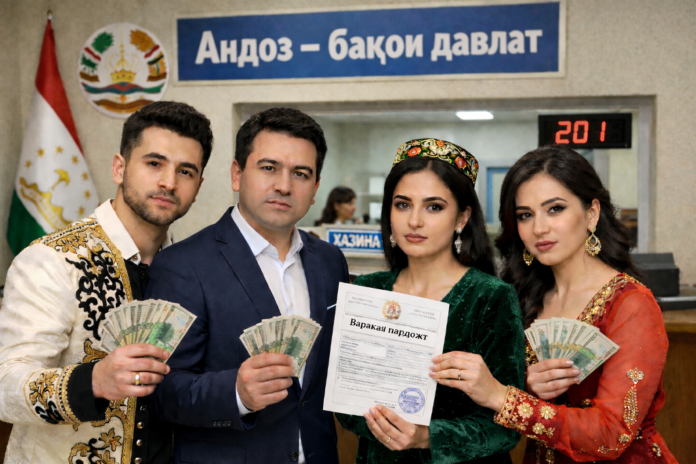
Over 700 artistes in Tajikistan owe more than 660,000 somoni in taxes

0

As of January 1, 2026, a total of 701 artistes in Tajikistan have accumulated a tax debt of 665,100 somoni, according to the country's Tax Committee. These debts, some of which date back several years, represent a significant financial burden on the country's creative sector.

Compared to the previous year, the number of debtors has decreased by 32, and the total amount of debt has dropped by 65,500 somoni. In January 2026 alone, 148,200 somoni were recovered from 32 artists, and efforts to clear the remaining debt continue.


Who’s in the debt list?

The list of debtors includes a range of artists from different sectors:

·         330 dancers, musicians, and event hosts, with a total debt of 236,200 somoni

·         71 singers, owing 227,200 somoni

·         185 photographers and videographers, with a debt of 87,400 somoni

·         115 entrepreneurs who provide cars and event decor, with a total debt of 114,300 somoni

The Tax Committee has not disclosed the names of specific individuals on the list. However, in previous reports, notable names such as Sanggali Mirzoyev and Gholibjon Yusupov have been mentioned.


Highest debts in Dushanbe

Regionally, the largest tax debts are concentrated in the capital:

·         Dushanbe: 296,500 somoni

·         Sughd Province: 188,700 somoni

·         Khatlon Province: 105,100 somoni

·         Districts Subordinate to the Center: 59,200 somoni

·         Gorno-Badakhshan Autonomous Region (GBAO): 3,000 somoni

One of the reasons for the delayed payments, according to the Tax Committee, is the frequent touring and participation of artists in cultural events. As reported in the department's newspaper "Boju Khiroj," some performers "forget their obligations" during travel, leading to the accumulation of debt.


How many artistes are officially registered?

As of January 1, 2026, there are 1,618 registered artists in Tajikistan. Of these, 1,586 work under special conditions, and 32 are registered under the simplified tax system. The registered artistes include:

·         176 singers

·         750 performers, musicians, and dancers

·         449 photographers and videographers

·         214 entrepreneurs who provide cars and event services

In 2025, 397 new artists registered, including 79 in Dushanbe, 211 in Sughd, 61 in Khatlon, 11 in GBAO, and 35 in the Districts Subordinate to the Center.

For the year 2025, a total of 4.97 million somoni in taxes were levied on artists, of which 4.8997 million somoni have already been paid into the state budget.

This data highlights the significant role that the creative sector plays in the country’s economy, while also underscoring the challenges artists face in keeping up with their tax obligations.