Home Blog Page 69

Tajik citizens to gain access to employment opportunities in Japan and Benelux countries

0

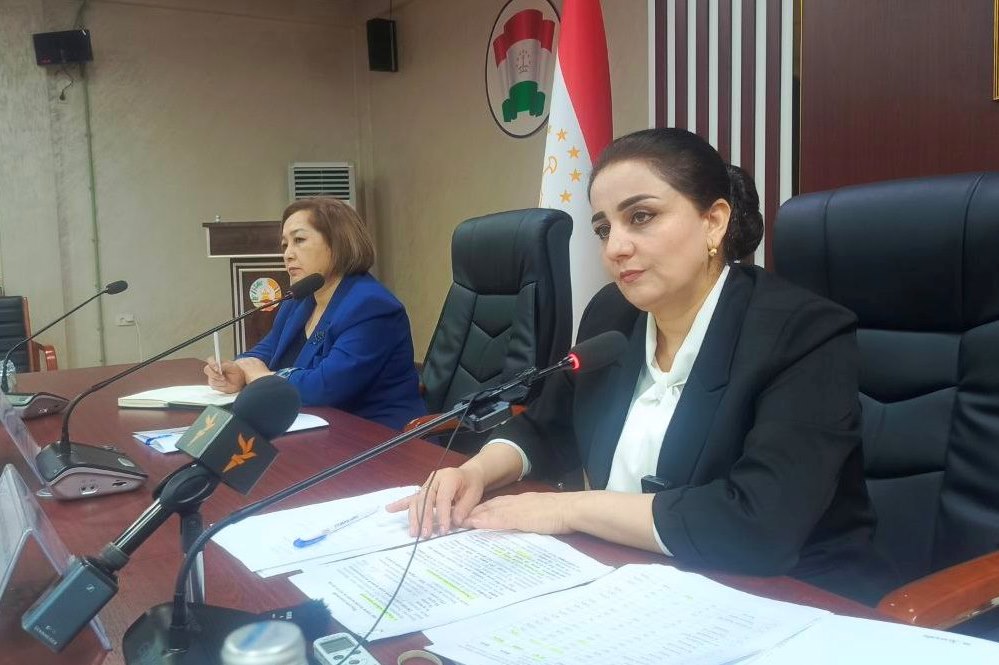
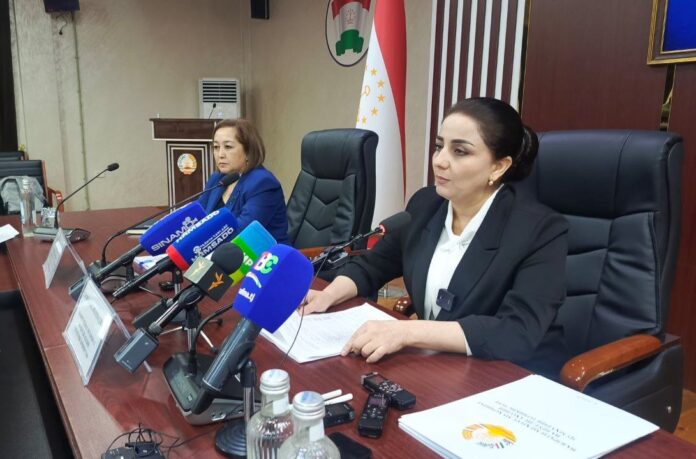
The authorities of Tajikistan have stepped up efforts to diversify labor migration destinations by expanding cooperation with a number of European and Asian countries. This was announced by the Minister of Labor, Migration and Employment of the Population, Ms. Soleha Kholmuhammadzoda, at a news conference held on February 3 to summarize the ministry’s performance in 2025.

According to the minister, a memorandum of cooperation was signed in November 2025 between the Ministry of Internal Affairs of Tajikistan, the Ministry of Labor, Migration and Employment of the Population, and relevant institutions of the Kingdom of Belgium. The document is currently undergoing internal approval procedures.

The memorandum reportedly provides for employment opportunities for Tajik citizens in the Benelux countries — Belgium, the Netherlands, and Luxembourg — in such sectors as agriculture, construction, social services, and healthcare.

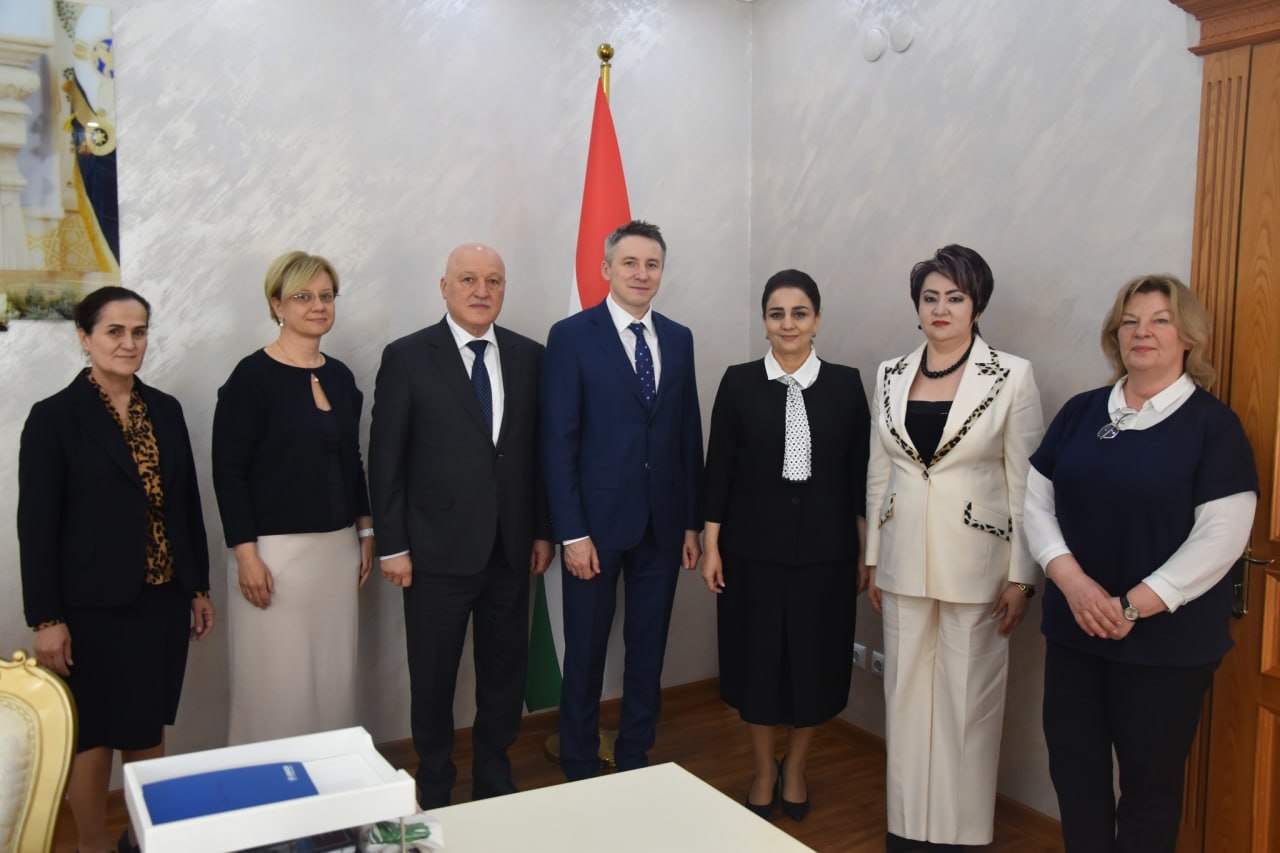
At the same time, efforts are underway to expand labor migration to Japan. Within the framework of a memorandum of understanding with the Japanese side, the Ministry of Labor established a working group and developed a mechanism for employing foreign nationals under the status of “Specified Skilled Worker.” The relevant documents have been submitted to the Embassy of Tajikistan in Japan for publication on the website of the Japan International Training Cooperation Organization (JITCO).

In addition, the State Institution “Agency for Overseas Employment” has prepared a draft agreement with Japanese employers. As a result of these arrangements, 10 citizens of Tajikistan have already secured jobs in Japan.

Cooperation with countries in the Middle East and East Asia is also continuing. Through collaboration with employers in the State of Qatar, more than 500 Tajik citizens have been employed with the assistance of the ministry’s specialized agencies.

The minister also highlighted the development of partnerships with the Republic of Korea. In 2025, the Korean side allocated 800 quotas for labor migrants from Tajikistan. Following vocational training and successful completion of the EPS-TOPIK exam, 21 candidates were employed through the Korean job portal, while documentation is currently being processed for another 12 individuals.

In conclusion, Ms. Kholmuhammadzoda noted that Tajikistan also has labor migration agreements in place with the United Kingdom, Germany, and several other countries.
280,000 jobs created in Tajikistan in 2025 — Ministry of Labor

0

In 2025, approximately 280,000 jobs were created, restored, and put into operation in Tajikistan, although only about a quarter of them are permanent. This was announced by the Minister of Labor, Migration and Employment of the Population, Ms. Soleha Kholmuhammadzoda, at a news conference summarizing the ministry’s performance.

Citing data from the Agency for Statistics under the President of Tajikistan, the minister noted that 74,000 jobs, or 26.2% of the total, are classified as permanent. Around 50,000 temporary jobs and 152,200 seasonal jobs were created, with seasonal employment accounting for more than half of all new positions.

According to Kholmuhammadzoda, this employment structure indicates the continued dependence of the labor market on seasonal and temporary work, primarily in agriculture and the service sector.

At the same time, a significant number of jobs were created through state support for entrepreneurial initiatives among unemployed citizens. Financial assistance was provided to establish production activities, trade, and service provision, contributing to the development of self-employment and the creation of new income sources.

In addition, 2025 saw increased demand for labor in industry, construction, and tourism. These sectors were identified as priorities in assessing employers’ needs and developing vocational training programs.

“Today, domestic companies are offering jobs with wage levels comparable to those abroad,” the minister said.

She emphasized that despite positive trends, increasing the share of stable and permanent jobs remains one of the key objectives of the government’s employment policy.

During the reporting period, employment authorities held 929 job fairs involving more than 10,000 enterprises and organizations. Employers submitted over 15,000 vacancies, which were offered to unemployed citizens.

According to official data, implementation of the State Program for Promoting Employment of the Population of the Republic of Tajikistan for 2023–2027 reached 113.4% in 2025. A total of 148,000 citizens used the services of labor and employment agencies during the year.

Tajik labor minister outlines key mechanisms for protecting labor migrants

0

On February 3, Tajikistan’s Minister of Labor, Migration and Employment of the Population, Ms. Soleha Kholmuhammadzoda, outlined key mechanisms for protecting labor migrants that have proven effective in practice, speaking at a press conference.

According to the minister, the protection of the rights and legitimate interests of Tajik citizens working abroad is now carried out comprehensively at all stages of the migration process — before departure, during their stay overseas, and after their return home.


Legal employment as a core safeguard

One of the most effective protection tools, Kholmuhammadzoda noted, remains organized recruitment and legal employment. This mechanism allows all necessary documents to be prepared in advance, medical examinations to be completed, professional qualifications and language skills to be confirmed, and significantly reduces the risks of illegal employment and labor exploitation.

She reported that in 2025, 30 licensed entities engaged in overseas labor recruitment sent 35,747 citizens of Tajikistan abroad through organized channels — an increase of 18,805 people compared to 2024. Of these, 21,669 were employed abroad through the structures of the Ministry.


New agreements with Russia

The minister recalled that in 2025, a Protocol amending intergovernmental agreements between Tajikistan and the Russian Federation was signed to strengthen the protection of labor migrants’ rights. The document addresses organized recruitment and the legal status of migration authorities’ representative offices.

According to her, the protocol aims to regulate labor migration, train qualified personnel in line with the needs of the Russian labor market, and provide Tajik citizens with legal and safe jobs.

The signing of the protocol made it possible to move a significant portion of document-processing procedures — including medical examinations, fingerprinting, and verification of knowledge of the Russian language, history, and legislation — to Tajikistan prior to departure.


Assistance for migrants in Russia

Kholmuhammadzoda emphasized that the representative office of Tajikistan’s Ministry of Labor, Migration and Employment in Russia plays an important role in protecting citizens’ rights abroad. The office provides legal, advisory, and informational assistance and actively cooperates with Russian authorities, employers, public organizations, and the Tajik diaspora.

Over the past year alone, tens of thousands of appeals were reviewed by the representative office. Assistance was provided in overturning deportation decisions, lifting entry bans, and recovering unpaid wages. In addition, more than 12,000 Tajik citizens residing in Russia were assisted in finding employment.


Prevention and awareness-raising

The minister described preventive and informational work as a key element of migrant protection. Even before departure, citizens receive guidance on the rules of stay in destination countries, migration and labor legislation requirements, as well as personal, sanitary, and legal safety measures.

This work continues after migrants return home, aiming to prevent repeated violations of migration laws and to support social and labor reintegration.

During the reporting period, the Ministry’s representative office in Russia held 77 meetings with law enforcement bodies and international organizations, 205 meetings with labor migrants, and 441 virtual meetings and consultations with Tajik community organizations.


Support for returning and deported migrants

Ensuring employment for returning and deported labor migrants remains a priority. During the reporting period, 55,088 people were employed through job-placement companies, including 16,200 deported and repatriated migrants. Of these, 2,565 were employed at facilities of the Roghun Hydropower Plant.

According to the minister, 4,595 returning migrants applied to labor and employment agencies. As a result, more than 1,000 people found jobs, while others received vocational training and counseling. Overall, more than 28.6 thousand returning and deported migrants were covered by various employment and social support measures.


Employment opportunities at home

Concluding her remarks, Kholmuhammadzoda stressed that creating opportunities for decent employment within the country is an essential component of migrant protection. To this end, vocational training courses, skills-upgrading programs, and job fairs are regularly organized, enabling citizens to engage directly with employers.

She noted that this comprehensive policy not only protects labor migrants abroad but also contributes to sustainable employment and social stability within Tajikistan.

Tajikistan’s grand mufti proposes establishing a Waqf Authority to regulate charity

0

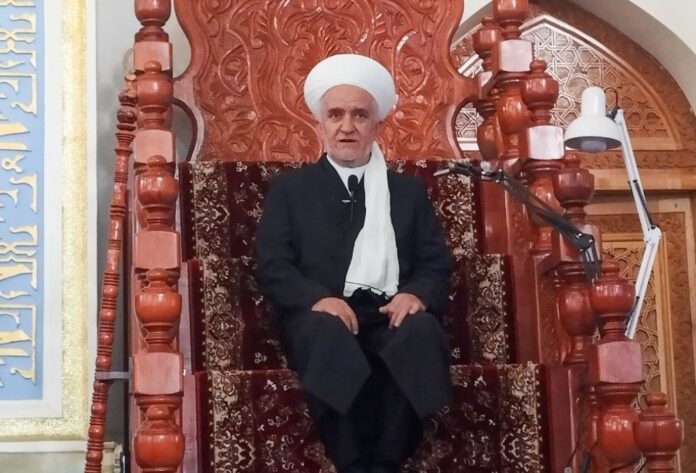
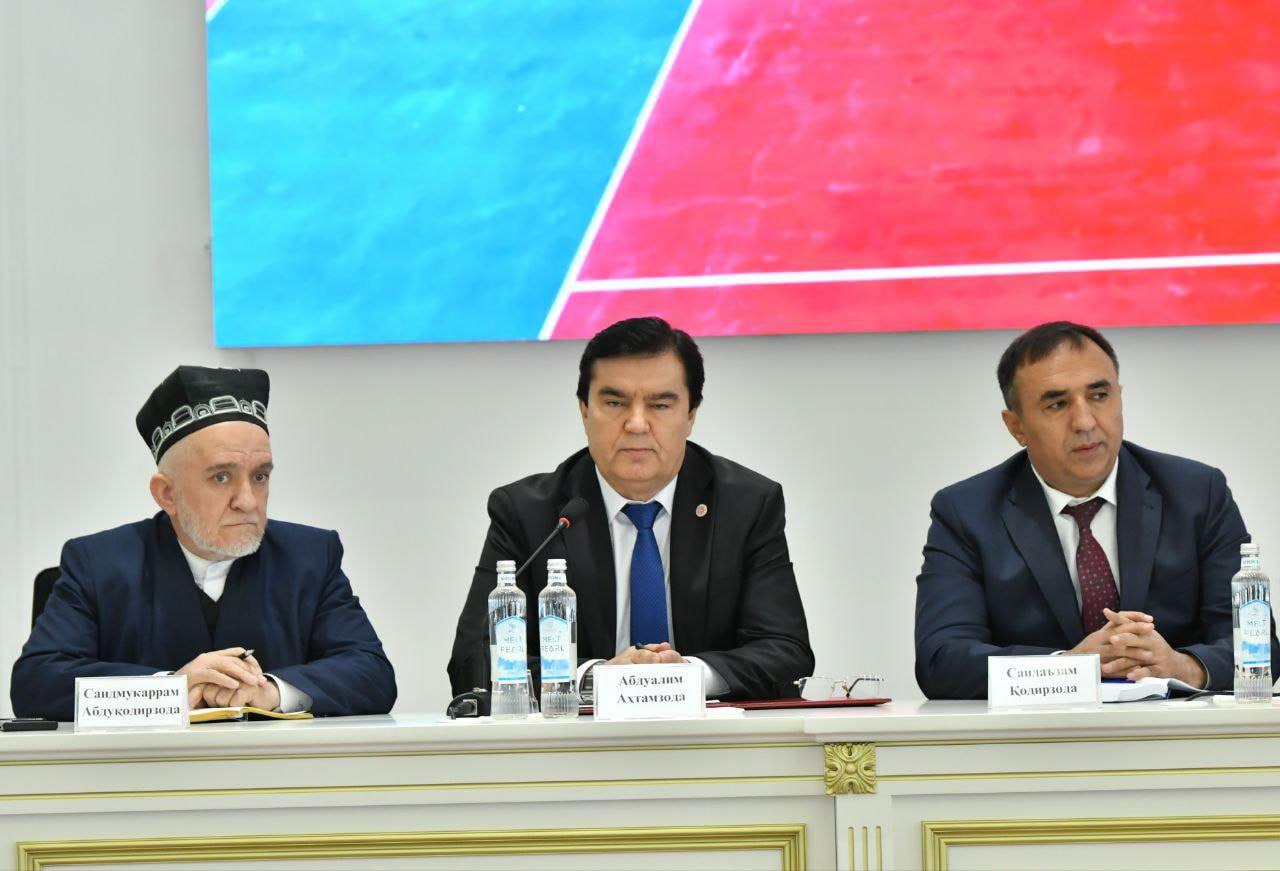
Tajikistan’s Mufti and Chairman of the Council of Ulema (Shuroi Ulamo — Tajikistan’s highest Islamic institution), Saidmukarram Abdulqodirzoda, has proposed the establishment of a Waqf Authority to organize and oversee charitable activities carried out by citizens.

He made the proposal on February 2 during a news conference held by the Committee for Religious Affairs. According to the mufti, similar institutions operate in most Islamic countries as well as in a number of non-Islamic states.

“Before the October Revolution of 1917, a waqf administration already existed in our country. It would be good if something similar were created today,” Abdulqodirzoda said.

A waqf refers to property donated for charitable purposes for the benefit of society. According to the mufti, a specialized authority could ensure the preservation of such assets and monitor their proper use and fair distribution.

Abdulqodirzoda stressed that every Muslim should understand which charitable acts bring lasting merit and how long that merit endures. He noted that, “unfortunately, sadaqa jariya has been forgotten among our people,” referring to a form of charity whose benefits continue over time.

He explained that the merit of sadaqa jariya remains as long as the donated asset continues to be used. As an example, he cited the construction of schools or orphanages, noting that the donor continues to receive spiritual merit as long as children study or live there.

In his view, a Waqf Authority should be established in coordination with relevant state bodiesso that citizens’ charitable activities become more systematic and large-scale.

At the same time, he did not specify whether the proposed body would operate under the Council of Ulema, the Committee for Religious Affairs, or function as an independent institution.

Currently, two institutions related to Islam operate in Tajikistan: the Council of Ulema and the Center for Islamic Studies. The Council of Ulema deals with issues of Sharia and the issuance of religious fatwas, while the Center for Islamic Studies under the President examines religious processes and monitors ideological security.

Waqf is an Islamic, inalienable charitable endowment where a person (waqif) permanently dedicates assets—such as land, buildings, or cash—for religious, pious, or social purposes. Once established, the property cannot be sold, inherited, or transferred, with its benefits (usufruct) used for public welfare like schools, hospitals, or mosques. 

Only two settlements renamed in Tajikistan in 2025

0
photo_2026-01-30_19-35-54

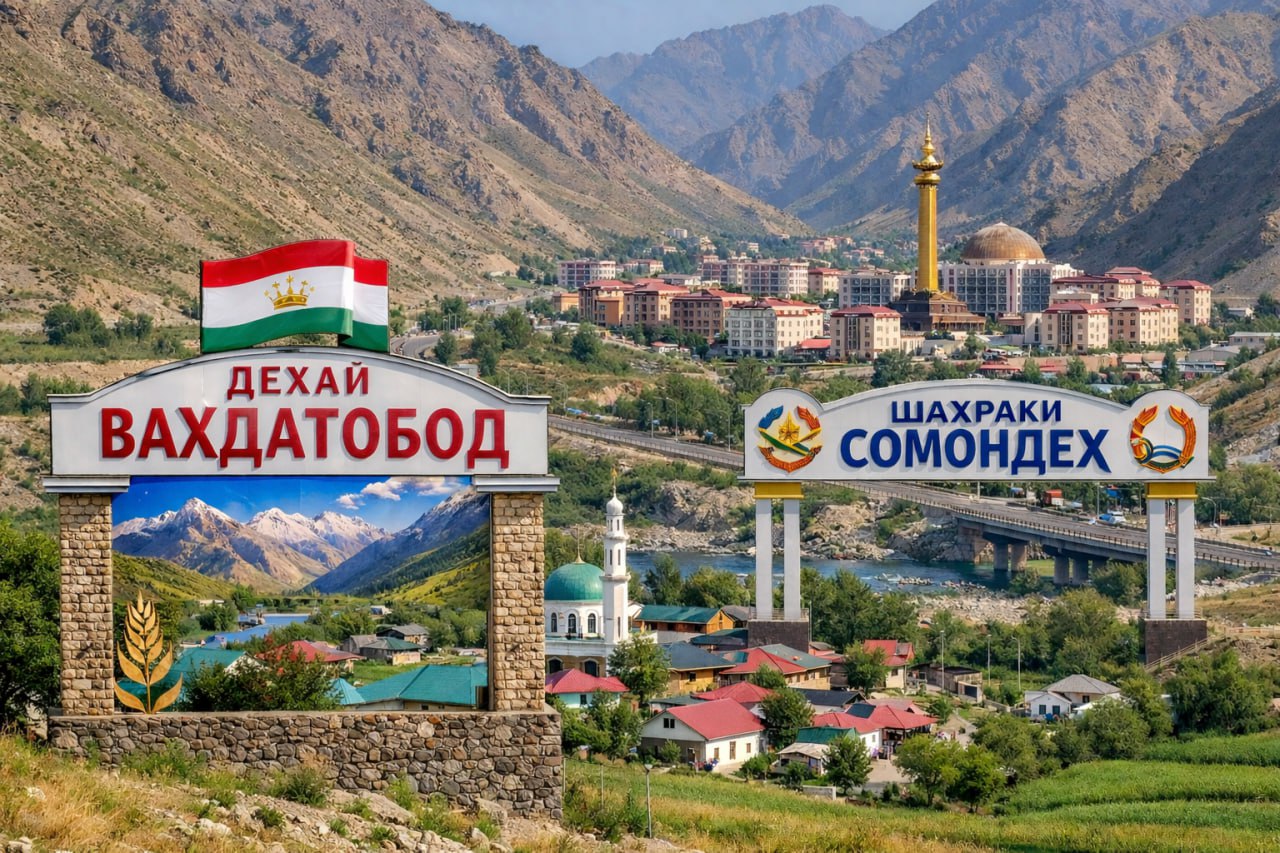
In 2025, the names of only two settlements were changed in Tajikistan. This was announced on January 27 at a news conference by Abbos Anoushervon, Head of the Coordination Department of the Committee for the Development of Local Territories.

According to him, by decision of the government and with the approval of the Majlisi Milli (Tajikistan’s upper chamber of parliament), one mahalla (a mahalla in Tajikistan is a traditional neighborhood community or residential quarter, serving as a foundational, self-governing unit in cities and villages) and one village were granted new administrative status, which also led to changes in their names. In particular, the settlement of Dashti Hashtsar in Ayni district was transformed into a village and renamed Vahdatobod. In addition, the village of Tavildara was upgraded to an urban-type settlement and renamed Somondeh.

Abbos Anoushervon also stated that in 2026, following government instructions, three more sites are planned to be renamed: two mahallas in the districts of Qubodiyon and Roudaki, as well as one historical heritage in Vanj district. He did not specify which names would be changed or what new names would be assigned.

In previous years, however, the renaming process in the country was carried out on a much larger scale. In 2024 alone, more than 500 villages were renamed in Tajikistan. Their former names were of Russian or Turkic origin or were associated with figures from the Soviet era. According to the authorities, they were replaced with “Tajik names.”

Later, more than 170 additional settlement names deemed “non-standard” were also changed. In particular, names such as Urtaqishloq, Kattasarqamysh and Kangeli were replaced with Miyondeh, Nayiston and Zarnisor.

Over the past three years, many settlements retaining names from the Soviet period have also been renamed, including “Kommunist,” “Kommunizm,” “Leninobod,” “Oktyabr,” “Pravda,” “Kirov,” “Gorky,” and “Pushkin,” as well as names linked to ethnic groups such as “Tajikobod,” “Uzbekobod,” “Kyrgyzobod,” and “Kazakhobod.”

For example, in Jaloliddini-Balkhi district, the village of Kommunist was renamed Ganjobod, while in Panj district the village of Kommunizm became Barzgaron. In Shahritous district, the village of Leninobod was renamed Somoniyon; in Abdurahmoni-Jomi district, Rohi Lenini became Piruzon; and in Danghara district, the village of Dangarai Bolo was renamed Rahmoniyon.

Mine action as a humanitarian challenge in Azerbaijan

0
Mine

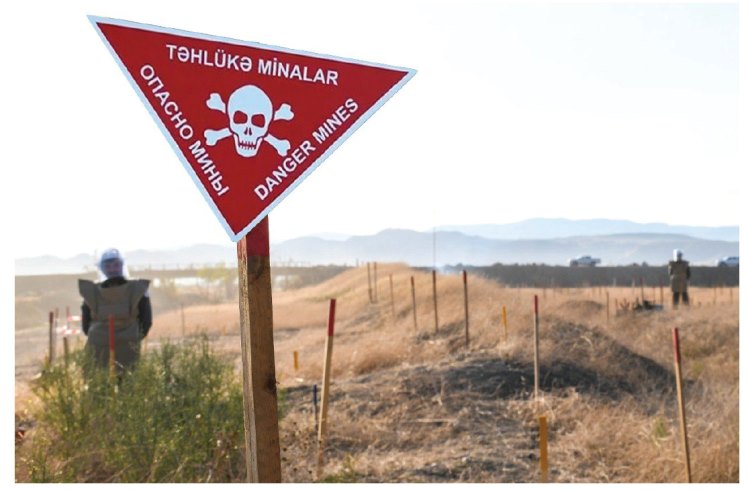
Mine action in Azerbaijan represents one of the most significant humanitarian demining efforts in the South Caucasus region. Decades of armed conflict, particularly related to the Karabakh conflict, have left large areas of the country contaminated with landmines and unexploded ordnance (UXO). These explosive remnants of war continue to pose serious risks to civilian life, hinder economic development, and delay the safe return of internally displaced persons (IDPs).

At least 60 states, including Azerbaijan, are still contaminated with landmines. Every year landmines lead to the death and injury of thousands of people, in some cases even after a conflict has been resolved.

Azerbaijan is among the countries most affected by landmine contamination. Large portions of the formerly occupied territories, including Karabakh and East Zangezur, are affected by anti-personnel mines, anti-tank mines, and other explosive hazards. Mine contamination has impacted agricultural land, residential areas, roads, and critical infrastructure. As a result, thousands of civilians have been killed or injured since the early 1990s, with casualties continuing even after the cessation of large-scale hostilities.

Humanitarian demining remains one of Azerbaijan’s key priorities in its state policy, mobilizing all available domestic resources to mitigate the mine danger. However, Azerbaijan considers international political and practical support crucial in preventing the humanitarian impacts of mines.

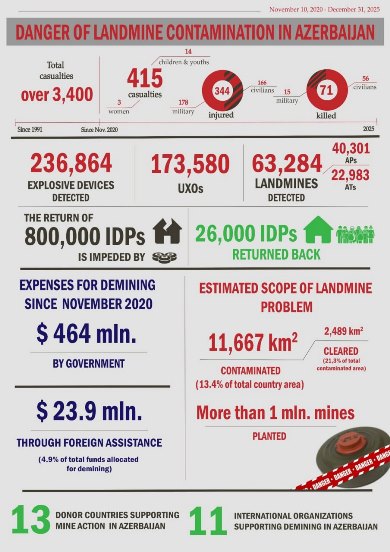
Azerbaijan is among the most heavily mine-contaminated countries globally. The latest survey indicates that total contaminated area in the liberated territories of Azerbaijan stands at approximately 11,667 square kilometres. This area constitutes more than 13.4% of the country's total territory of 86,600 square kilometres. More than 1 million landmines and an unknown number of ERW contamination in these territories pose severe risks to civilians and hinder socio-economic development.

From the end of war in 2020 until 31 December 2025, 253 landmine explosion incidents occurred, resulting in 415 victims, including children and women, underscoring the urgent need for mine clearance and victim assistance. Over the last 30 years, the cumulative toll of landmine victims in Azerbaijan has exceeded 3,400.

The end of war in 2020 marked the beginning of an extensive humanitarian demining in Azerbaijan to restore safety in the liberated territories, facilitating the reconstruction of these areas and the safe return of former internally displaced persons (IDPs). Foreign assistance has accounted for only 4.9% of the resources dedicated to demining. This is notably low, both in light of the gravity of demining challenges Azerbaijan confronts and when compared to the level of contributions typically made by the international donor community to similar issues elsewhere.

One of the main obstacles to effective mine action in Azerbaijan is the lack of accurate historical minefield maps. In many cases, mine locations are unknown or only partially documented, increasing the danger and time required for clearance. Additionally, mountainous landscapes and harsh weather conditions complicate operations.

Humanitarian demining is among the top priorities of Azerbaijan’s state policies. Today, the primary body in charge of humanitarian demining in Azerbaijan is the Mine Action Agency of the Republic of Azerbaijan – ANAMA.

Mine action is also resource-intensive, requiring sustained financial, technical, and human capacity. Azerbaijan continues to call for greater international cooperation and support to accelerate clearance efforts.

The Republic of Azerbaijan is implementing humanitarian demining at its own expense. Adequate political and practical support from the international community for mitigating humanitarian consequences of mines and demining the affected areas are of utmost significance.

The Government of Azerbaijan provides assistance for the care and rehabilitation, social and economic reintegration of mine victims and for mine risk education programs. Assistance is provided to meet the immediate and long-term needs of EO survivors, their families and persons with disabilities. Assistance includes, but is not limited to, emergency and continuing medical care; physical rehabilitation; psychosocial support and social inclusion; and laws and public policies that promote effective treatment, care and protection for all disabled citizens.

Azerbaijan sides would appreciate practical assistance for demining efforts of Azerbaijan. Given Azerbaijan's relatively developed institutional capacity and training frameworks, the most critical form of assistance needed at this juncture is direct financial donations to amplify the scope of operations.

Mine action in Azerbaijan is essential for protecting civilians, restoring safe living conditions, and supporting the country’s post-conflict development. Although important progress has been achieved, continued efforts and international cooperation are necessary to fully address the landmine problem and ensure a safe future for affected communities.

Moscow Metro introduces selective checks of passengers’ mobile phone

0
142853-768x432

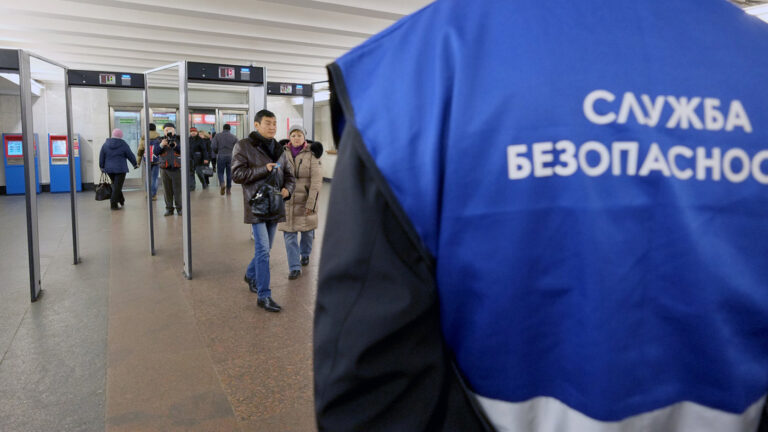
Passengers in the Moscow Metro may now be subject to selective inspections of their mobile phones as part of additional security measures, according to the Moscow Metro, cited by the Moscow news agency.

Metro officials said the checks will be carried out on a selective basis and are intended to enhance passenger safety. At the same time, all passengers are still required to undergo standard screening through metal detector gates.

According to the metro’s press service, the new measure is based on Order No. 34 issued by Russia’s Ministry of Transport on February 4, 2025. The document allows for the inspection of electronic devices by switching them on and confirming their operability. However, the procedures for conducting such checks, as well as clarification on who is authorized to carry them out — metro security staff or police officers — have not been publicly specified.

Earlier, authorities in St. Petersburg announced the introduction of similar security measures. The city’s Vice Governor Kirill Polyakov said at the time that security in the metro system was being tightened and urged passengers to treat the requirements of metro staff with understanding.

At the same time, in the summer of 2025, Sergei Boyarsky, head of the State Duma (Russia’s lower chamber of parliament) Committee on Information Policy, emphasized that police officers and traffic police are not authorized to stop citizens and inspect their smartphones for prohibited content.


Barqi Tojik promises additional hours of electricity supply during the holy month of Ramadan

0

Electricity supply to the population of Tajikistan will be improved during the Islamic holy month of Ramadan, which begins on February 18 this year, Barqi Tojik (state-run power generation company) CEO Mahmadumar Asozoda told reporters in Dushanbe on February 3.

However, he noted that it is too early to specify how much the current power supply restrictions will be eased. According to Asozoda, the volume of additional electricity supply will depend on the water level in the Nurek Reservoir and the inflow of water into the Vakhsh River.

He added that the additional hours of electricity supply for households, proposed by the government, will be determined and officially announced at a later date.

As of February 3, the water level in the Nurek Reservoir, which powers the Nurek Hydropower Plant (HPP), reportedly stood at just over 885 meters above sea level, which is 65 centimeters higher than during the same period last year. Water inflow into the Vakhsh River currently exceeds long-term average levels, Asozoda said.

The maximum operating level of the Nurek Reservoir is 910 meters above sea level, while the minimum is 857 meters. As a result, the usable water level stood at about 28 meters at the beginning of February.

Electricity supply restrictions have been in place in Tajikistan since the last ten days of September. The situation worsened significantly in late November, when additional limitations on power access were introduced.

At that time, the Electricity Distribution Networks company instructed its regional branches to implement a number of measures, including disconnecting first-category industrial and non-industrial consumers with capacity of up to 5 kW (excluding Dushanbe), suspending electricity supply to budget-funded organizations and state enterprises from 6:00 p.m. until the start of the next working day, and switching off non-strategic street lighting.

In addition, during restriction hours, smart meters were gradually disconnected from the billing system, while electric vehicle charging stations were shut down between 6:00 p.m. and 10:00 p.m.

Currently, residents of most regions of the country — excluding larger cities and the Gorno-Badakhshan Autonomous Region — receive electricity for an average of six to eight hours per day.

Last week, Minister of Energy and Water Resources Daler Juma also said that during Ramadan the electricity supply schedule for the population would be fully observed and, where possible, extended.

Tcell receives government recognition for tax compliance

0
1

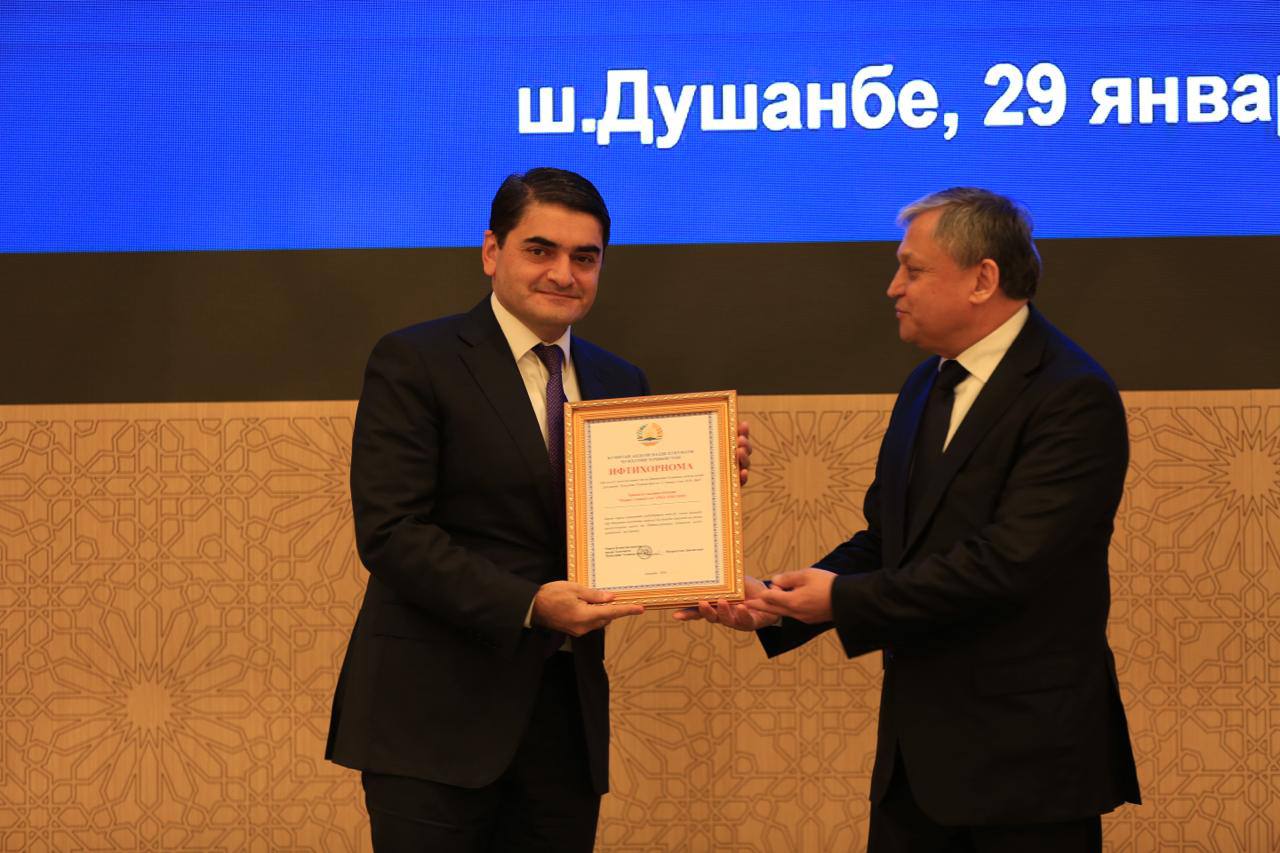
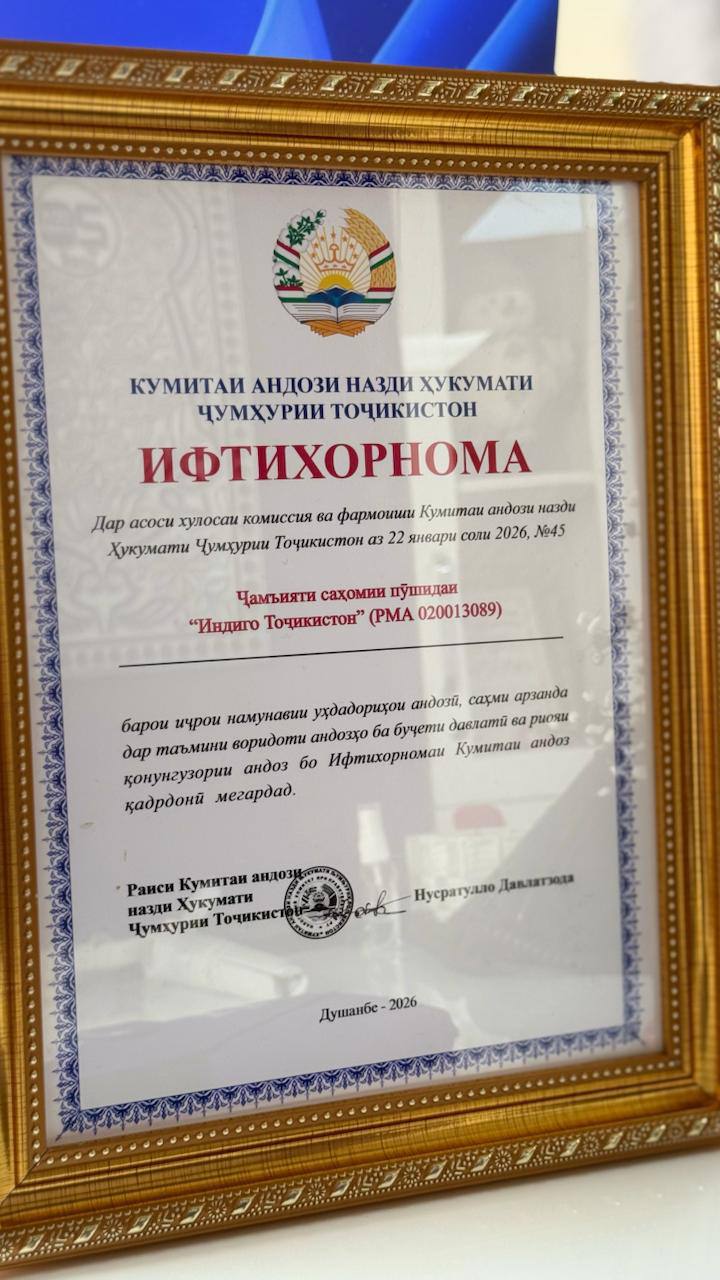
Tcell has been awarded a Certificate of Honor by the Tax Committee of Tajikistan in recognition of its exemplary compliance with tax legislation, financial transparency, and significant contribution to the formation of the state budget, says press release issued by Tcell.

The award ceremony was held at the Crowne Plaza Hotel. The recognition was granted based on the conclusion of the relevant state commission and formalized by Resolution No. 45 dated January 22, 2026, which identified CJSC Indigo Tajikistan (Tcell) as a model responsible taxpayer and a reliable participant in the country’s economic development.

This award confirms the company’s consistent commitment to tax legislation requirements, its high level of financial discipline, and its contribution to strengthening public finances, particularly during a period of active digital transformation and large-scale infrastructure investments in the republic.

“This recognition reflects our long-term commitment to the principles of transparency, responsibility, and integrity — not only as a telecommunications operator, but also as a corporate citizen deeply integrated into the country’s economic and social fabric,” said Tcell Chief Executive Officer Ozodkhon Davlatshoyev.

“For us, this high assessment is especially significant given that in his two most recent Addresses to the nation, President Emomali Rahmon emphasized the critically important role of transparency and fiscal discipline — particularly the full and timely replenishment of the state budget — for the country’s sustainable development.

We are proud that our work has been recognized as a practical contribution to the implementation of these national priorities. We view tax discipline not merely as an obligation, but as an investment in Tajikistan’s future — in the development of public services, infrastructure, education, and digital inclusion.”

As one of the country’s leading technology and telecommunications operators, Tcell continues to invest actively in network modernization, the development of digital services, human capital, and expanded access to modern technologies, while maintaining the highest standards of corporate governance and financial responsibility.

The company expressed its appreciation to the Tax Committee and reaffirmed its commitment to sustainable growth, ethical business practices, and strategic partnership with the state in support of the development of Tajikistan’s digital economy.


Tajikistan raises tariffs for drinking water and communal services

0
photo_2026-02-03_09-52-02

Tariffs for drinking water, waste removal, and a number of other communal services have been increased in Tajikistan as of January 1 this year. Rates for households rose by 15%, while tariffs for businesses increased by 30%, Chairman of the country’s Committee for Housing and Communal Services Jamshed Tabarzoda said at a press conference on February 2.

According to Tabarzoda, the tariff revision is primarily aimed at improving the quality of communal services, modernizing engineering infrastructure, and ensuring the sustainable operation of housing and utilities enterprises.


Water supply and sewerage tariffs

Under the new decision, the price of one cubic meter of drinking water for households equipped with water meters has been set at 1.50 somoni. Sewerage services are charged at 0.76 somoni per cubic meter.

Based on a standard consumption rate of 5.4 cubic meters per person per month, expenses amount to:

·         8.10 somoni for drinking water;

·         12.20 somoni for water services including sewerage for households without water meters.

The calculation is based on an average daily water consumption of 180 liters per person.

For budget-funded organizations, the tariff has been set at 3.15 somoni per cubic meter, while self-financing and private enterprises will pay 5.43 somoni.


Regional tariff differences

Utility tariffs vary by region. According to data from the Committee for Housing and Communal Services, the following price ranges have been established.

Drinking water:

·         households — from 1.40 to 1.82 somoni per m³;

·         budget-funded organizations — from 2.26 to 3.90 somoni;

·         businesses and organizations — from 4.52 to 7.25 somoni.

Sewerage services:

·         households — from 0.76 to 0.99 somoni per m³;

·         federally-funded institutions — from 1.64 to 2.05 somoni per m³;

·         businesses and organizations — from 2.83 to 3.38 somoni per m³.


Solid waste removal

The average tariff for solid household waste removal has been set at 4.74 somoni. In particular:

·         household waste removal — 6.83 somoni per m³;

·         waste removal by KAMAZ truck — 35.65 somoni per m³;

·         sanitary cleaning of areas — 1.13 somoni per m²;

·         maintenance of housing stock — 0.17 somoni per m².

An additional fee of 0.80 somoni is charged for each extra kilometer if the transportation distance exceeds the established norm.


Where the new tariffs apply

The new tariffs are being applied in more than 45 cities and districts across the country, including Bokhtar, Kulob, Konibodom, Istaravshan, Panjakent, Vahdat, Tursunzoda, Hisor, Nurek, Rasht, Isfara, Murgab, Darvoz, Rushan, Shugnan, Roshtqala, Varzob, Yovon, Farkhor, Khuroson, Danghara, and others.

It is noted that not all local housing and communal services enterprises are subordinated to the national Committee. In some regions, tariffs are approved by local authorities, taking into account regional specifics and the technical condition of infrastructure.


Situation in Dushanbe

In Dushanbe, water supply and sewerage tariffs were increased earlier, effective September 1 last year.

Under the current rates:

·         households with water meters pay 2.60 somoni per m³ (previously 2.26);

·         federally-funded institutions  — 3.59 somoni per m³ (previously 2.77);

·         commercial organizations — 9.10 somoni per m³ (previously 4.28).

For consumers without water meters, the monthly charge per person is set at:

·         28.07 somoni in apartment buildings (previously 10.61);

·         23.39 somoni in private houses with water supply and sewerage (previously 7.10);

·         7.41 somoni for homes using public street water columns (previously 4.94).