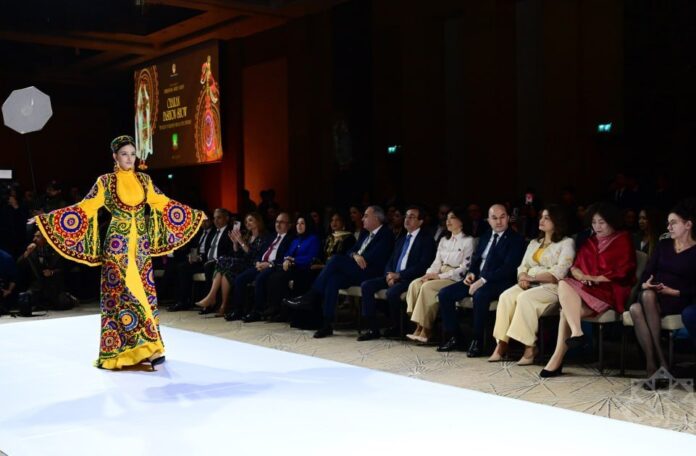
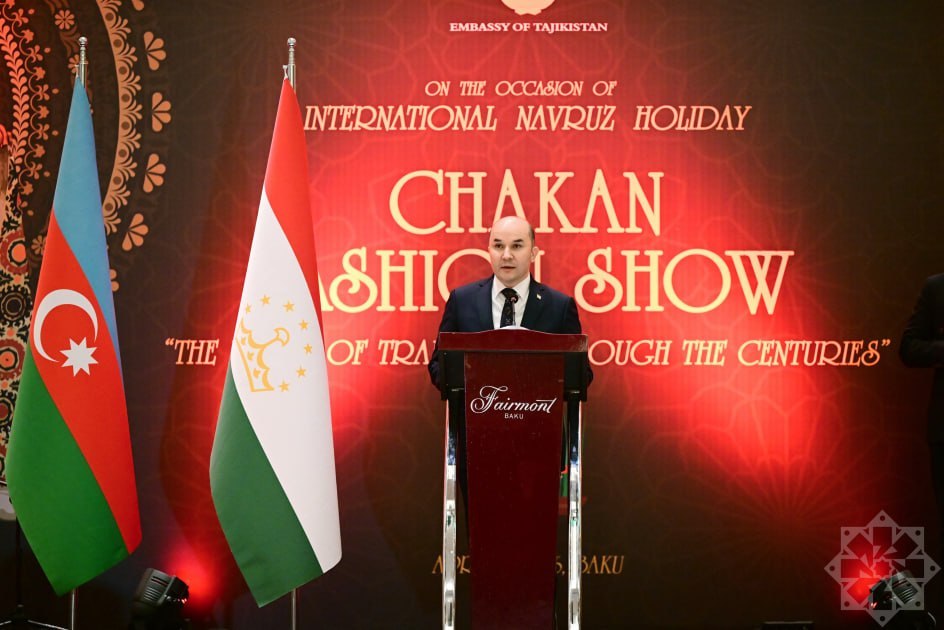
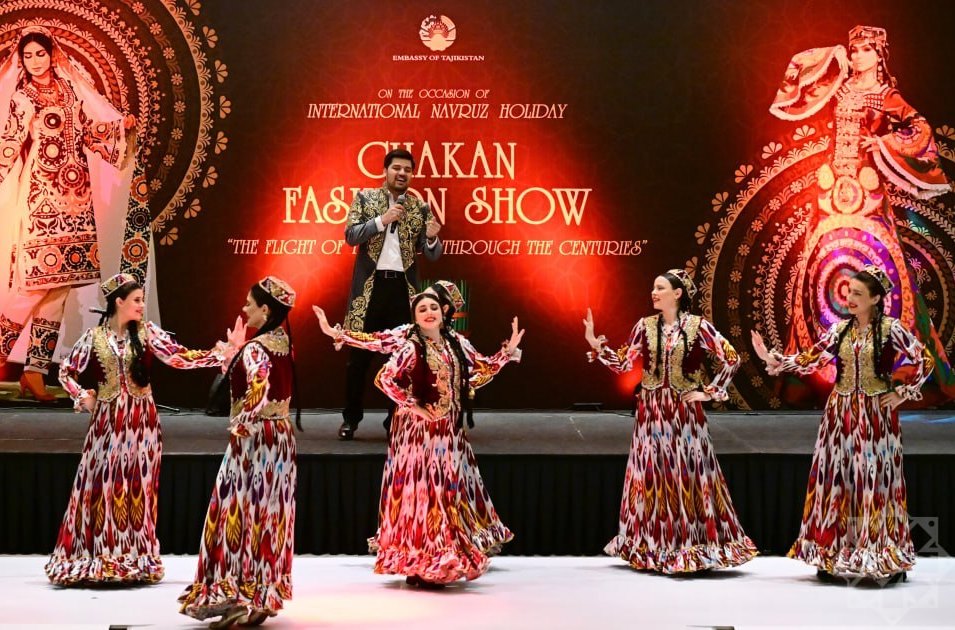
A cultural event “Chakan Fashion Show: Heritage of Traditions Through the Ages” dedicated to the International Navruz holiday was held in Baku. This was reported to “Asia-Plus” by the Committee for Tourism Development under the Government of Tajikistan.
At the event, Tajik designers Khurshed Sattorov, Vays Asoev, and Sulhiya Gulomova presented their collections “Chakan,” “Nuri Badakhshon,” and “Navoi Khuroson,” which demonstrated high craftsmanship and the unique artistic heritage of Tajik culture.
In his speech, the Ambassador of Tajikistan to Azerbaijan Ilhom Abdurakhmon noted that the International Navruz holiday, being a rich spiritual and cultural heritage of humanity, unites the peoples of Tajikistan, Azerbaijan, and other neighboring countries. Navruz symbolizes the beginning of spring and the rebirth of nature, calling for friendship, creation, and solidarity among peoples.
As part of the event, a festive table was set for guests, decorated according to ancient Tajik traditions, including seven types of dishes and sweets — “haft sin” and “haft shin,” symbolizing abundance and well-being. The musical program was adorned with performances by talented Tajik artists such as Jahongir Zaripov and Khurshed Ibragimov, whose songs were well received by the Azerbaijani audience. Songs by the People’s Artist of Azerbaijan Gulyanag Mamedova and dances performed by the dance groups of the Baku Choreography Academy and Khazar University were also part of the event program.
The cultural event was attended by guests from diplomatic missions and international organizations, officials, representatives of ministries and departments, members of the National Assembly, cultural figures, as well as compatriots and Tajik students studying at universities in Azerbaijan.
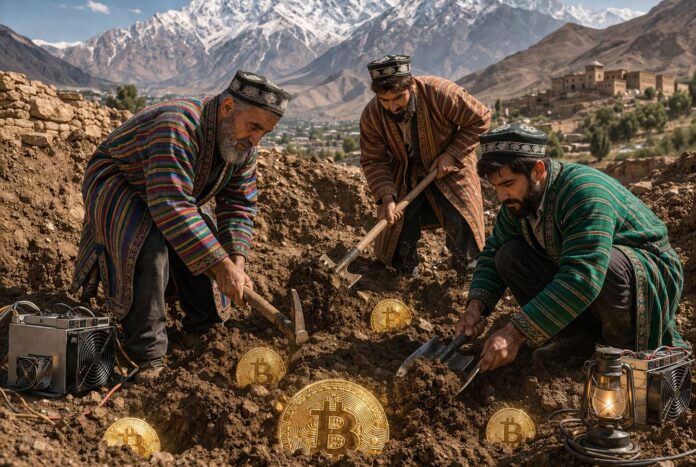
Russia introduces strict regulation of the crypto market. This could affect not only the country itself but the entire region.
What is changing and why is it important for Tajikistan?
Starting July 1, 2026, Russia seriously tackles cryptocurrencies. A law comes into effect aimed at bringing order to the market, which until now has been fraught with many gray schemes and minimal control.
The main goal is to stop “ignoring” the crypto market and bring it under state rules. Authorities openly say: it is about combating fraud, money laundering, and tax evasion, writes the National Banking Journal.
Under the new rules, there will be no more free crypto-wildness. Only those who have received permission will be able to operate. Trading is to be done through licensed exchanges, assets stored through special depositories, and exchanges made through companies from the official registry. Everything else is gradually being squeezed out of the market.
What exactly is changing?
Cryptocurrency is recognized as property — like stocks or other assets. This provides protection for owners but does not make it full-fledged money: paying with crypto within Russia is still not allowed. However, it is permitted to use it in foreign trade.
Not every cryptocurrency will be listed on exchanges. Essentially, it is only about the largest ones — like Bitcoin and Ether. Smaller projects are likely to remain on the sidelines.
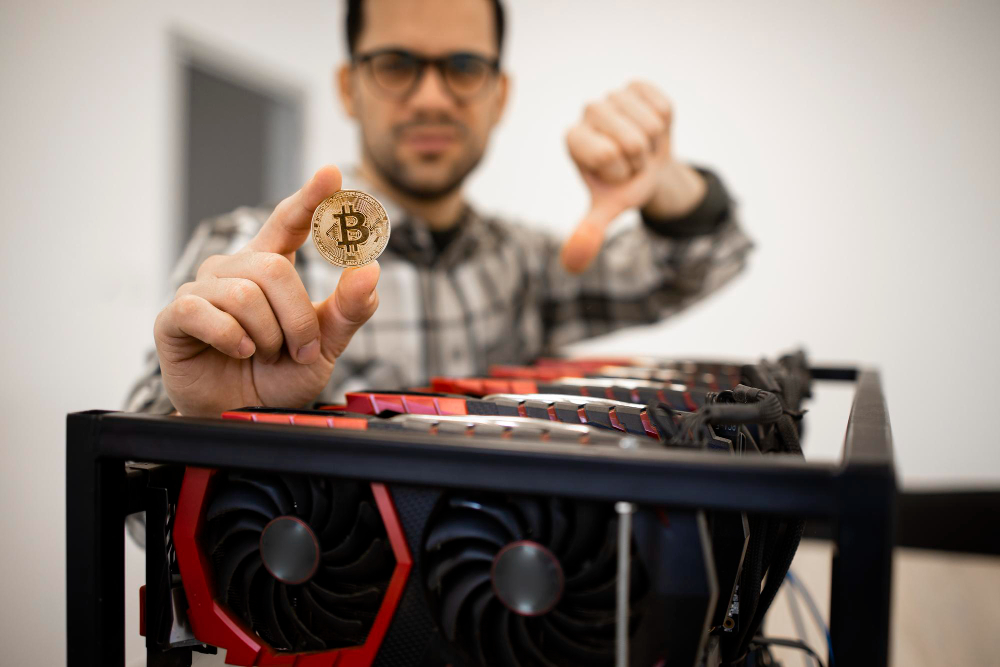
Mining will be legalized but with conditions: registration is required, adherence to electricity limits, and no criminal record for certain articles. Illegal mining will result in criminal liability. Tax control is also being strengthened: Russians will be required to report foreign crypto wallets.
Overall, the model becomes simple: cryptocurrency is allowed, but only within strict rules and under state control.
Why is this important for Tajikistan?
The Russian cryptocurrency market is one of the largest in the region, and any changes in its regulation inevitably impact neighboring countries.
This is especially important for Tajikistan. A significant portion of its citizens work in Russia and send money home. If cryptocurrencies are used as an alternative method of remittance, new restrictions could affect these flows.
Moreover, with stricter rules, some operations might move to countries with more lenient regulations.
Cryptocurrencies in Tajikistan: without rules, but with demand
In Tajikistan, cryptocurrencies remain in a “gray zone,” with no corresponding legislation in place.
The National Bank warns about the risks and does not recognize cryptocurrencies as a means of payment. Banks are prohibited from working with them, so there are no official mechanisms for buying and selling within the country.
Nevertheless, cryptocurrencies are used. People turn to foreign platforms and informal channels — especially for remittances. This can be more convenient but involves high risks.
Regarding mining (cryptocurrency extraction), there is a certain potential: the republic has significant energy resources (in the summer period), which theoretically makes it attractive for this.
But in practice, the lack of regulation and electricity restrictions make this sector unstable. There are no clear conditions for business, and therefore, no certainty for investments.
Ignoring the crypto market given global trends is becoming increasingly difficult, and it seems that the authorities of Tajikistan will have to legitimize this market.
What is important to know about cryptocurrency?
Cryptocurrency is not money in the traditional sense, but a digital asset similar to gold or stocks: its price can rise and fall. It is not an official currency, and its value is determined by supply and demand.
Unlike regular money, which is issued and regulated by the state, cryptocurrency operates on blockchain technology and has no single management center. Therefore, it does not guarantee stability and is considered a high-risk asset.
Purchasing cryptocurrency is done at one’s own risk — there is no state protection like there is for bank deposits. At the same time, crypto is not something negative but a new technology. It is used for international transfers and investments, but it does not replace national currencies, which remain under state control.
Among its advantages are independence from countries and banks, the ability for quick transfers without intermediaries, accessibility via the internet, and transaction transparency.
The main point: cryptocurrency is a tool with the potential for high returns and simultaneously high risks.
How cryptocurrencies are regulated in different countries worldwide
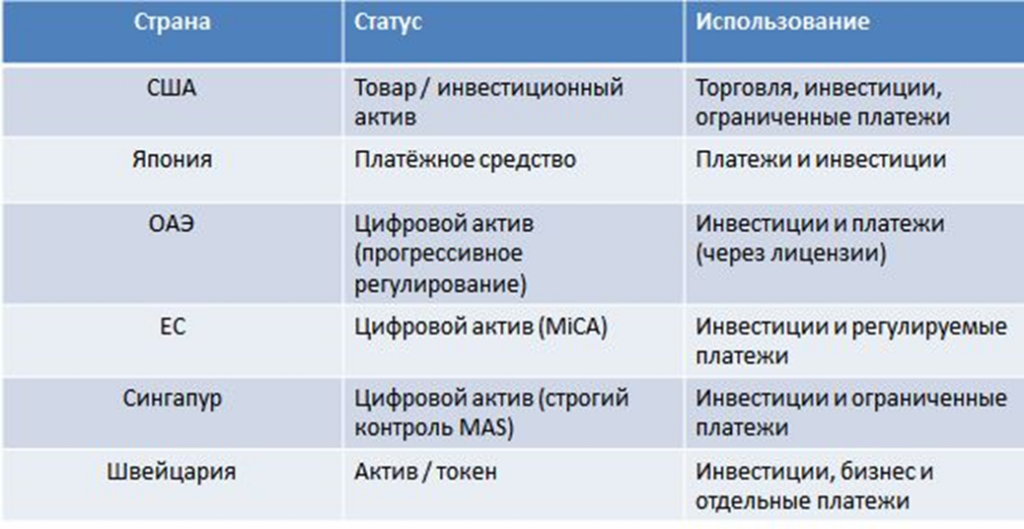
Countries’ approaches vary:
USA (commodity / asset)
In the USA, cryptocurrency is mainly considered a commodity or investment asset and is used primarily for storing value and trading, with limited application in payments.
Japan (means of payment)
In Japan, cryptocurrency is officially recognized as a means of payment and can be legally used for settlements alongside investment applications.
UAE (progressive regulation)
In the UAE, cryptocurrency is regulated as a digital asset and can be used as an investment tool and means of payment within a licensed and controlled environment.
EU
In the EU, cryptocurrency is regulated as a digital asset with unified rules (MiCA) and can be used for investments and limited payments with strict compliance to regulatory requirements.
Singapore (controlled payments)
In Singapore, cryptocurrency is regulated as a digital asset, allowed for investments and limited payments under strict regulatory control (MAS).
Switzerland (crypto-friendly model)
In Switzerland, cryptocurrency is regulated as an asset (token) with clear legal classification and is widely used for investments, business, and certain payments.
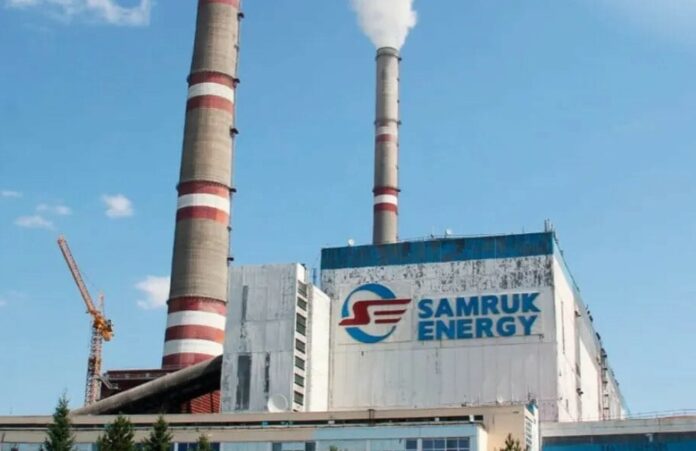
Russia will not participate in the construction of three combined heat and power plants (CHP) in Kazakhstan. The projects in the cities of Kokshetau, Semey, and Ust-Kamenogorsk will be implemented by a Kazakh-Singaporean consortium. This was announced by Kazakhstan’s Vice Minister of Energy, Sungat Yessimkhanov, at a government briefing, reports Tengrinews.kz.
According to the Vice Minister, contracts for the construction of CHPs in Semey and Ust-Kamenogorsk have already been signed, and work on the projects will begin soon. It is expected that the active phase of work will commence in May 2026 — orders for the main equipment will be placed, and engineering surveys and site preparations will begin. The delivery of key equipment is planned for the third quarter of 2027, and the stations are expected to be commissioned in the fourth quarter of 2029.
The CHP project in Kokshetau is in the preparation stage. Work on laying communications and constructing access roads has already been completed. The development of project-estimate documentation is ongoing, and the construction of the administrative building will start in 2026. The project also plans to increase the thermal capacity of the station from 520 to 820 gigacalories, and corresponding changes have been made to the contract with the contractor. The commissioning of the CHP in Kokshetau is scheduled for the first quarter of 2029.
Yessimkhanov noted that all three projects will be implemented using modern technologies, including “clean coal” and elements of artificial intelligence. The contracts stipulate that the contractors will be Kazakh-Singaporean companies with experience and access to advanced technologies. The Vice Minister emphasized that the projects are important for the country, and the responsibility for their implementation falls on those who take on the obligations for construction.
The construction cost of the CHP in Kokshetau is estimated at 350 billion tenge, while the construction of the CHPs in Semey and Ust-Kamenogorsk will cost approximately 400 billion tenge each. The Vice Minister also clarified that these projects will not be directly financed from the state budget. The companies undertaking their construction will independently raise the necessary funds, and the state will start disbursing funds only after the facilities are commissioned, allowing the contractors to repay loans.
Russia’s participation remained in question
Initially, the projects for the construction of these CHPs in Kokshetau, Semey, and Ust-Kamenogorsk were planned to be implemented with Russia’s participation. Negotiations with the Russian side on this matter had been ongoing since November 2023, when Kazakhstan’s Deputy Prime Minister Serik Zhumangarin announced the intention to sign a cooperation agreement between the countries. However, the timelines and terms for implementing the projects were revised several times, and Russia’s participation remained in question.
In November 2024, a bill was passed for the ratification of an agreement involving Russia in design, equipment supply, and financing through concessional loans. However, in May 2025, the Kazakh side began to consider the possibility of changing the investor amid funding issues, including the provision of export financing for the projects. This decision was not related to sanctions, but was due to the need for a stable source of financing.
By October 2025, a decision on Russia’s participation in the projects had still not been made. At that time, Kazakh officials stated that the projects would continue to be prepared, but the financing issue remained unresolved. In December of the same year, a final decision was made: the CHP in Kokshetau would be built without Russia’s involvement, and the two other projects — in Semey and Ust-Kamenogorsk — would also fully transition to Kazakh and international (Singaporean) financing.
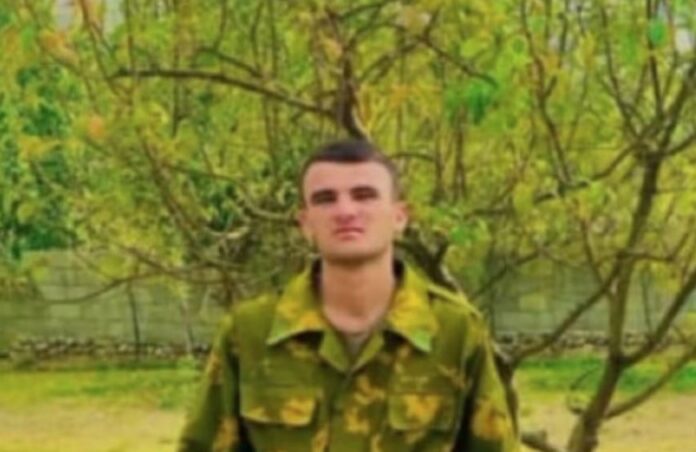
The military prosecutor of Kulob has found the Tajikistan border officer Yusuf Mirzoev guilty in the death of soldier Shohdil Jurazoda and demanded a sentence of 11 years in prison.
Yusuf Mirzoev, who is currently in custody, was the head of the “Shokhon” border post on the Tajik-Afghan border. Shohdil Jurazoda, aged 20, served there and went missing in December 2025. A month and a half later, his body was found in the Panj River.
A source in the Khatlon Border Forces anonymously told Radio Ozodi on April 7 that “Mirzoev’s verdict is likely to be announced in the coming days.”
The case is being investigated under part 3 of article 391 (abuse of power or official position, resulting in death through negligence). The penalty under this article ranges from 8 to 12 years in prison.
Mehrufruz Jurazoda, Shohdil’s sister, confirmed this information to Ozodi and stated that the cause of her brother’s death was likely extortion and mistreatment by Yusuf Mirzoev.
“Some soldiers testified that my brother paid the post commander 1000 somoni for leave. When the commander did not respond, Shohdil asked several times to return the money. After that, he was harassed and forced to work hard. This is what it ultimately led to,” she said.
Attempts by the radio to obtain an official comment on the details of Shohdil Jurazoda’s death have so far been unsuccessful. The position of Yusuf Mirzoev, his family, or his lawyer is also unknown.
Shohdil Jurazoda was drafted into the army in April 2025 from Panjakent and had served for eight months at the time of his disappearance. On December 8, 2025, he went to the river with his comrades to fetch water. After that, he asked his friends to return to the post, promising to catch up with them later, but he never returned.
His body was only found in January 2026 on Afghan territory. The authorities informed the relatives that he had committed suicide. However, the family did not believe this and appealed to the authorities to investigate the cause of his death.
Tajikistan will be connected to the CIS Geoportal, a unified digital platform of spatial data, within the next two years. This was announced at the 109th meeting of the CIS Economic Council in Moscow.
The meeting was chaired by the First Deputy Prime Minister of Tajikistan, Hakim Kholikzoda, with the participation of the Secretary General of the CIS, Sergey Lebedev, as stated in a report on the CIS Executive Committee portal..
According to the head of Rosreestr, Oleg Skufinsky, several countries, including Tajikistan, will be gradually connected to the CIS Geoportal in 2026–2027. This will provide access to open spatial data, reference information, and digital services in a unified system.
The CIS Geoportal was put into operation in 2026. It already hosts data from Russia and Belarus.
The platform features 48 basic thematic layers and about 15 million objects, with the number of users exceeding 20,000.
In the first phase, Belarus, Kyrgyzstan, and Russia gained access to the data.
The connection of Tajikistan and other countries in the region will be the next stage in the project’s development.
According to Skufinsky, the geoinformation platform includes a unified electronic cartographic base that merges official maps of the states. Special attention is given to practical services. In particular, the platform will allow users to plot tourist routes considering points of interest and to obtain information on real estate for implementing investment projects.
Moreover, the services “I am a Student” and “I am a Worker” are available, which can be useful for Tajikistani citizens when choosing education and employment opportunities.
In the future, the creation of a CIS Digital Atlas is planned based on the Geoportal, which will be used for educational, scientific, and economic purposes, including the development of tourism and attracting investments.
Meeting participants noted that concluding interagency agreements for populating the platform with data remains an important task. This also applies to Tajikistan, which is participating in the project.
It is also reported that within the program, 689 specialists from CIS countries, including Tajikistan, have already been trained in the fields of geodesy, cartography, cadastre, and geoinformation technologies.
During the meeting, the necessity of developing a new Interstate Cooperation Program until 2030, with a prospect until 2036, was emphasized.
Additionally, representatives from CIS countries are invited to participate in the first international scientific and technical conference and exhibition in the field of geodesy, cartography, and spatial data, which will be held this fall in Russia.
The assassination of a leader in Iran at the beginning of the war did not lead to the sudden collapse of the state system as many had expected. This is because a structure has formed in this country where power is increasingly concentrated in the hands of the military, and the decision-making center has shifted towards the security forces.
The current regime in Iran is built as an independent network so that if one of its parts suffers, others can continue their work without central leadership.
Let’s see who governs Iran today.
The Supreme National Security Council and the Defense Council of the country play a key role in coordinating defense and intelligence affairs.
Officially, Mojtaba Khamenei, the son of the deceased leader, was appointed as the new head and took control of the armed forces and key institutions. However, in practice, the extent of his real power remains unclear, as he has not appeared at public events since his appointment. According to the latest data, the new supreme leader of Iran is unconscious and unable to participate in decision-making by the Iranian leadership.
This situation has led to important managerial and military decisions being made by a broader circle of commanders and officials.
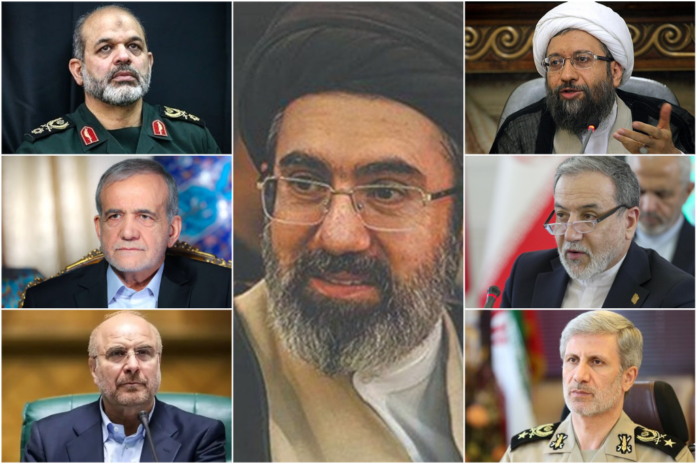
Among influential figures, Mohammad Baqer Ghalibaf acts as a mediator between the military, clergy, and security forces. International media report that his role is currently even greater than that of the country’s president, Masoud Pezeshkian.
The role of the commander of the Islamic Revolutionary Guard Corps (IRGC) and other high-ranking military commanders is also significant in governing the country.
The Islamic Revolutionary Guard Corps (IRGC) has always been a pillar of the regime, but during the war, its influence has increased even more. This organization, overseeing missile programs and overseas operations, now has a decisive say in strategic decisions regarding the war. The influence of the IRGC is exercised not through one person, but through an extensive network of high-ranking officers and like-minded politicians present throughout the state apparatus.
Other key figures shaping hidden processes include: Gholam Mohsen Ejei, Ahmad Vahidi, Ali Abdollahi, Ismail Qaani, and Ahmadreza Radan.
The role of President Masoud Pezeshkian and Foreign Minister Abbas Araghchi, although not as visible in strategic military decisions, is nevertheless important in the governance of the state and foreign policy.
So far, Iran has tried to minimize the damage from the US and Israeli strikes by appointing numerous successors for each high-ranking position. Despite several key figures being killed during the war, the military structure has maintained control of the country by replacing the deceased with new people.
The biggest blow to the regime was the assassination of Ali Khamenei. At the end of March, Alireza Tangsiri, the commander of the IRGC navy, was killed, with the latest high-ranking victim being the Head of the Intelligence Directorate of the Revolutionary Guard Majid Khademi.
See below who was killed and who took their positions.
To prevent a power vacuum, the country’s Defense Council was created, which took on the responsibility of centralized military decision-making after the elimination of key figures.
Overall, Iran has shifted from a centralized system to a management model where the main force is considered to be the IRGC, making the major decisions.
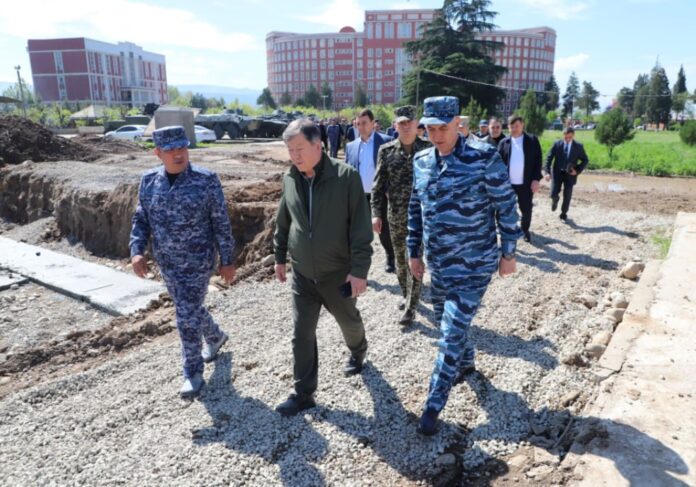
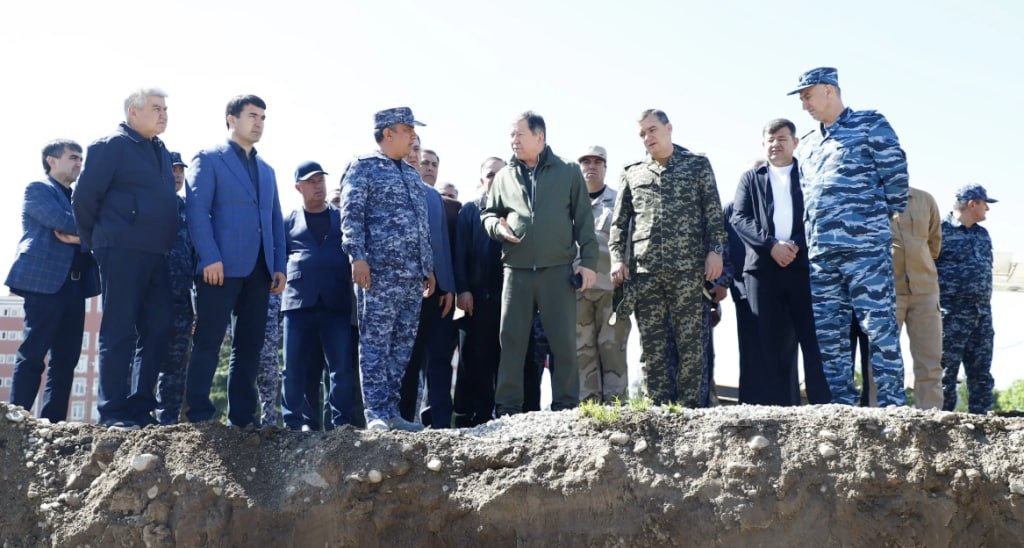
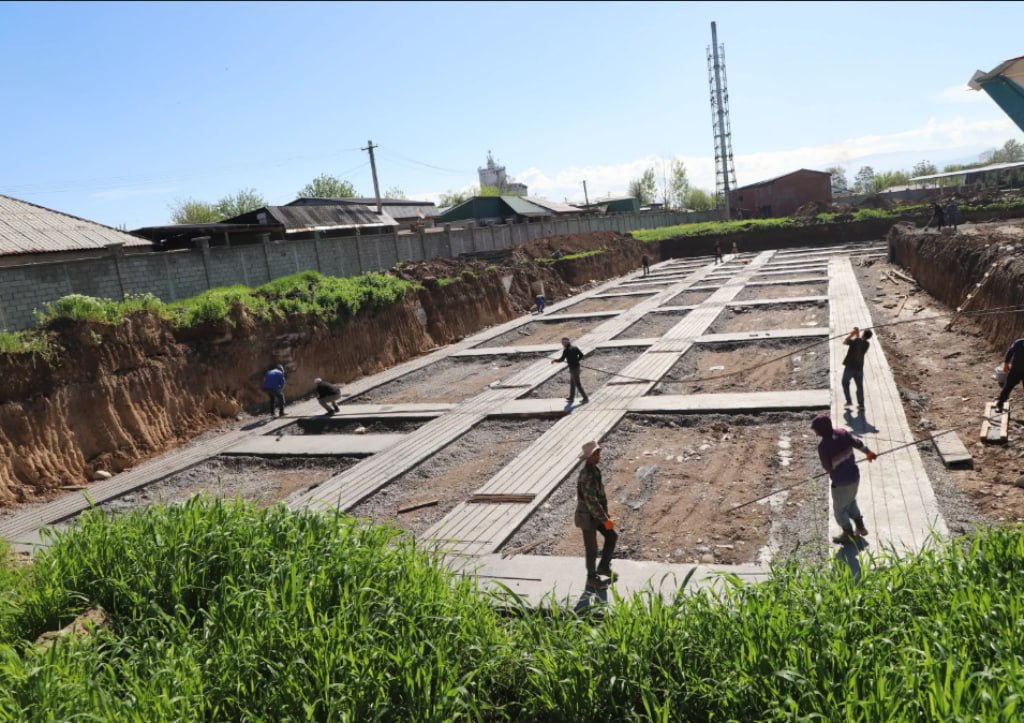
The Minister of Internal Affairs of Tajikistan, Ramazon Rahimzoda, visited the construction site of the “Durakhshandagon” lyceum under the Ministry of Internal Affairs, which is being built in the capital.
The minister noted that the lyceum will be an important contribution to the 35th anniversary of Tajikistan’s independence and a foundation for training specialists for the internal affairs bodies.
The “Durakhshandagon” lyceum under the Ministry of Internal Affairs will include 28 classrooms, an assembly hall, a sports hall, a library, a canteen, and other necessary facilities.
It is designed for 640 students, and the lyceum’s dormitory will consist of four floors with 11 rooms on each floor, fully equipped for student accommodation.
It is worth noting that the construction of the “Durakhshandagon” lyceum, which will be under the jurisdiction of the Ministry of Internal Affairs of Tajikistan, began on March 14. The new educational institution is being built on the territory of the Academy of the Ministry of Internal Affairs in Dushanbe.
The lyceum will consist of two three-story buildings and is designed to educate 640 students in one shift. The educational complex will include 28 classrooms, an assembly hall, a sports hall, a library, a canteen, and a dormitory.
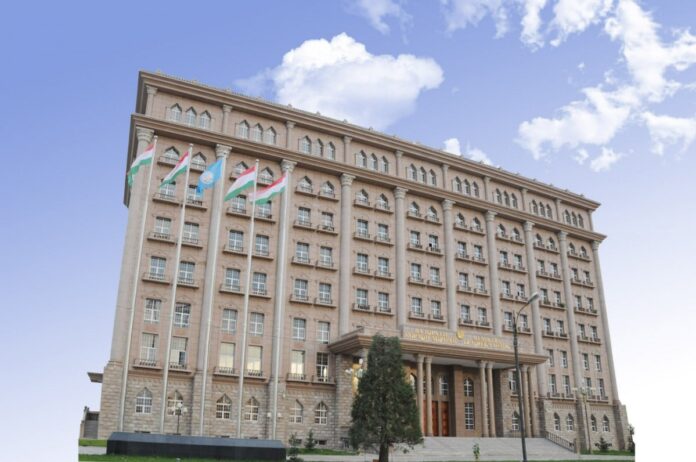
The Ministry of Foreign Affairs of Tajikistan issued a statement welcoming the two-week ceasefire agreement between Iran and the United States, which was announced on the morning of April 8.
In its statement, the foreign policy department expressed hope that the negotiations between the conflicting parties, planned for the coming days, would lead to the establishment of lasting and comprehensive peace in the Middle East.
“We believe that there is no military solution to this conflict, and its continuation will only further exacerbate the already complex situation in the Middle East and cause serious harm to all the countries in the region,” the statement from the Ministry of Foreign Affairs of Tajikistan said.
Tajikistan called on the conflicting parties to refrain from the use of military force and to employ political and diplomatic means based on the fundamental norms of international law and the UN Charter.
It is worth noting that after 39 days of war in the Middle East, which began with an attack by the US and Israel on Iran, Washington and Tehran reached an agreement on a two-week ceasefire on the morning of April 8.
The agreement on the truce was announced just hours before the expiration of Trump’s ultimatum, which threatened to “destroy Iranian civilization.” The ultimatum was set to expire at 01:00 GMT on April 8.
Tehran presented Washington with 10 demands and promised to open the Strait of Hormuz.
Read more about these demands in our article – click here.
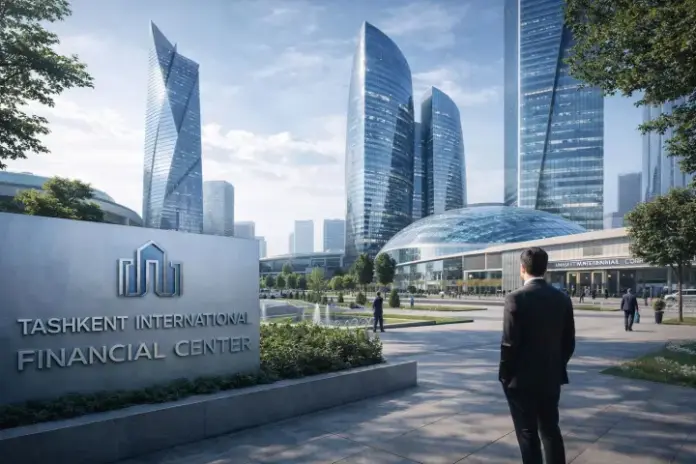
At the end of March 2026, the creation of the Tashkent International Financial Center (TIFC) was officially launched in Uzbekistan. The center is being established as a special financial jurisdiction with a separate regulatory regime aimed at attracting international capital and developing financial services.
On March 25, the President of Uzbekistan, Shavkat Mirziyoyev, became acquainted with a presentation on the creation of the Tashkent International Financial Center, the launch of the International Center for Digital Technologies, and the implementation of Islamic finance mechanisms in the banking system. This was reported by the press service of the head of state.
It is expected that within the framework of the TIFC, there will be its own system for regulating financial markets, as well as a specialized commercial court and arbitration based on common law norms (similar to existing centers in Dubai and Astana). This should increase the predictability and protection of investors’ rights in cross-border transactions, reports everyday.uz.
Uzbekistan’s Goals and Regional Context
For Uzbekistan, the creation of such a center is part of a long-term strategy: to strengthen Tashkent’s position as a financial hub of Central Asia, diversify funding sources, and expand the range of financial instruments (from traditional banking services to capital markets, Islamic and “green” financing, and digital assets).
The presence of several competing or complementary financial platforms in the region (Astana, Tashkent, and potentially other cities) changes the geography of capital flows.
It is easier for investors to work with a jurisdiction where a clear legal and judicial infrastructure is in place, procedures are standardized, and familiar international law operates.
Potential Effects for Tajikistan
For Tajikistan, the Tashkent center may have both indirect and direct impact. Indirectly — through increased investment activity in the region, and the growing interest of international financial institutions and private funds in Central Asia as a whole. Directly — through the participation of Tajik companies and banks in transactions structured via the TIFC.
The proximity of Tashkent and close economic ties between the two countries make the new center a potentially convenient platform for attracting capital to infrastructure, energy, transport, and digital projects involving Tajik partners. For a number of issuers and banks, using the regional hub may be cheaper and organizationally simpler than accessing more distant international platforms.
Opportunities for Business and Financial Sector of Tajikistan
For large and medium-sized businesses in Tajikistan, the TIFC theoretically opens several directions: placement of debt instruments (bonds, syndicated loans), participation in private equity funds and project financing, and working with Islamic and sustainable (ESG) financial instruments. This could become an alternative channel for attracting “long-term” resources.
For banks and fintech companies, new products and partnerships are of interest: cross-border payment solutions, services for servicing migration and trade flows, and joint digital platforms. The presence of a separate court and arbitration based on common law simplifies the structuring of complex deals and dispute resolution, which can be critical for cross-border projects involving Tajik companies.
Challenges and Tasks for Dushanbe
The emergence of a major financial hub in a neighboring country simultaneously intensifies competition for capital and sets a benchmark for the quality of the regulatory environment. For Dushanbe, this means the need to continue reforms related to improving the investment climate, digitalizing government services for businesses, and developing domestic financial markets.
Much will depend on whether Tajikistan can build a pragmatic model of interaction with the TIFC: using its tools and infrastructure without losing the potential for developing its own financial sector. In the optimal scenario, the Tashkent center becomes an additional channel for access to capital and expertise for the Tajik economy, rather than just a point of attraction for competing projects.
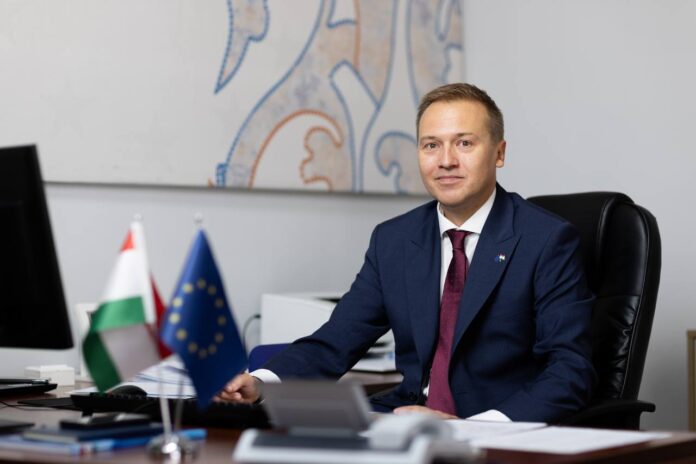
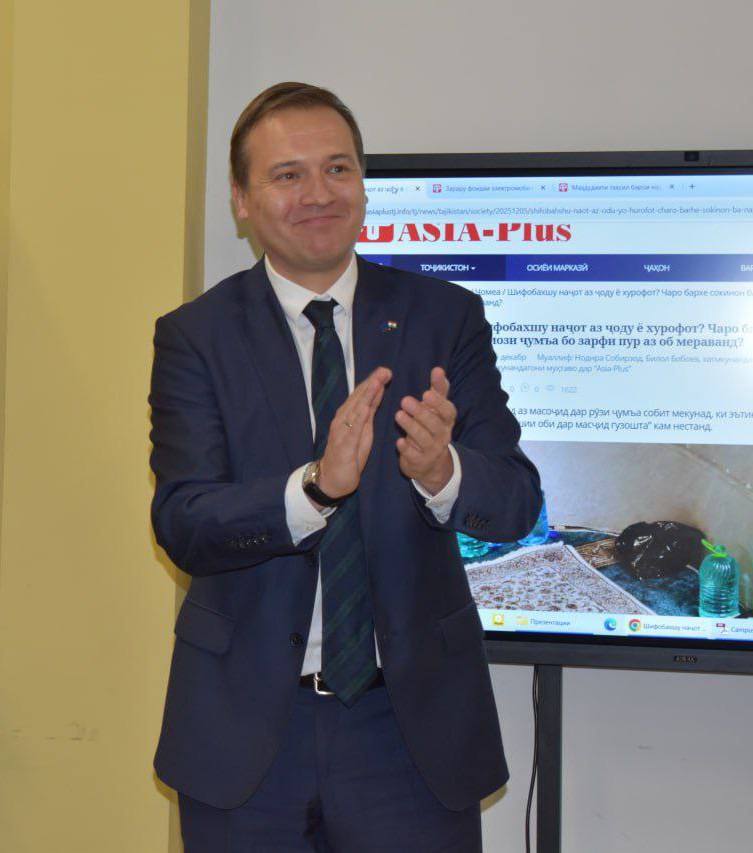
The European Union Ambassador to Tajikistan, Radoslaw Darski, congratulated the Asia-Plus media group team on their 30th anniversary on behalf of the European Union.
“Since its inception, Asia-Plus has played a key role in providing citizens with reliable information, fostering open dialogue, and promoting transparency. These are the cornerstones of any thriving society, and these values are supported by the European Union in its longstanding partnership with Tajikistan.
The European Union Delegation in Tajikistan has been following the work of Asia-Plus since the very first days of our presence in the country.
When our Delegation was established in 2003, the daily news bulletins of Asia-Plus quickly became one of our most reliable sources of information about events in Tajikistan. Over time, this relationship has grown into a genuine partnership based on our shared commitment to open and responsible communication.
Together we have implemented many innovative and inspiring projects. The Eurotour radio program introduced listeners to the culture, people, and diversity of the European Union and its member states. Meanwhile, the special European Union supplements in the Asia-Plus newspaper regularly inform readers about how the European Union supports rural development, education, healthcare, job creation, and sustainable growth in Tajikistan.
Our collaboration has also addressed some of today’s most serious global challenges, particularly the fight against disinformation. With EU support, Asia-Plus has been conducting training courses for young bloggers and journalists for many years, helping to nurture a new generation of media professionals who adhere to the principles of accuracy, balance, and ethical reporting.
Equally important are the recent efforts to strengthen dialogue between government institutions and the media. An initiative launched by the Ministry of Foreign Affairs and supported by the European Union, with Asia-Plus as the implementation partner, promotes the building of trust, increased transparency, and constructive interaction between state representatives and journalists.
Since the media group’s anniversary coincides slightly ahead of World Press Freedom Day 2026, we should once again emphasize the importance of protecting independent and professional journalism, adhering to ethical standards, and especially the ethical use of artificial intelligence, which increasingly influences the production and dissemination of information.
At a time when accurate information and open communication are more important than ever, Asia-Plus continues to make a tangible contribution. The European Union is proud to support the media community in Tajikistan in upholding freedom of expression, access to information, and the open exchange of ideas, benefiting everyone.
Once again, congratulations to the Asia-Plus team on 30 years of dedicated service to society. We wish you continued success in informing, inspiring, and uniting the people of Tajikistan for many more years to come.”