Home Blog Page 81

44 Uzbek citizens deported from the United States this month

0
a12bc75c52150255e4016d58dab3017f_XL

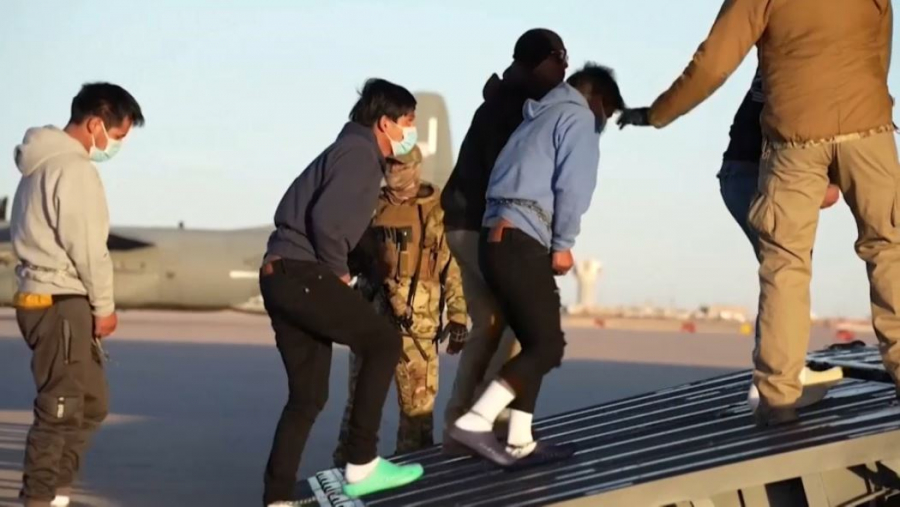
On the evening of January 21, a chartered flight carrying Uzbek citizens deported from the United States arrived in Tashkent.

Gazeta.uz reports that according to a statement by the spokesperson for the Ministry of Foreign Affairs of Uzbekistan, Ahror Burhonov, 44 individuals who had been staying illegally in the United States were returned to their homeland.

Burhonov noted that the flight was organized in cooperation with relevant U.S. agencies to ensure the safe and timely return of the citizens.

He emphasized that the cooperation on protecting the rights of Uzbeks abroad and their repatriation continues.

In a comment to Gazeta.uz from the U.S. Embassy in Tashkent, it was stated: "As demonstrated by today’s actions, the United States is unwavering in its commitment to ending illegal immigration and strengthening the security of its borders. We reaffirm our deep appreciation for the strong partnership and close cooperation with Uzbekistan in support of this priority."

According to aviation services, the flight was operated on a Boeing 767-300 aircraft by the American charter airline Omni Air International, which had previously conducted a similar flight in October.

The plane departed on January 20 from El Paso, Texas, with several intermediate stops in Portsmouth, New Hampshire, Bucharest, and Yerevan. The flight arrived in Tashkent at 19:21 local time.


Uzbek national sentenced to life in prison for murder of Russian general

0

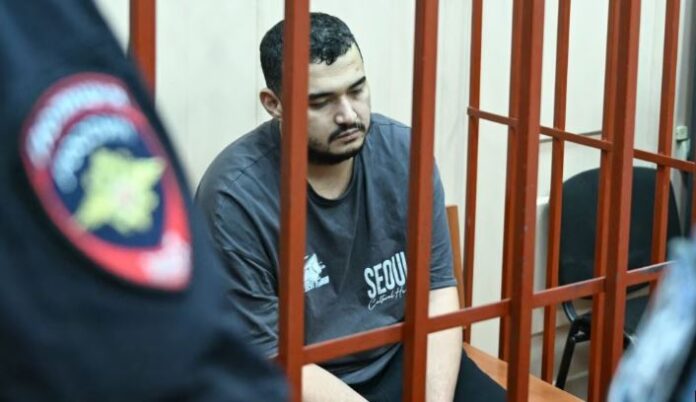
The Second Western District Military Court in Moscow has sentenced Uzbek national Ahmadjon Kurbanov to life imprisonment for the murder of Lieutenant-General Igor Kirillov, head of Russia’s Radiation, Chemical and Biological Protection Troops.

The crime was committed in December 2024. According to RBC, the defendant fully admitted his guilt in organizing a terrorist attack that resulted in the deaths of the senior Russian officer and his aide.

In addition to the life sentence, the court imposed a fine of 1 million rubles (approximately $13,000).

Three other defendants were convicted in the same criminal case. All received lengthy prison terms and smaller fines. Robert Safaryan, a native of Azerbaijan, whom investigators believe was involved in delivering the explosive device to the perpetrator, was sentenced to 25 years in prison. Batukhan Tochiyev and Ramazan Padiyev, natives of Ingushetia who rented housing to Kurbanov, received 22 and 18 years in prison, respectively.

During the trial, Kurbanov cooperated with investigators and fully admitted his guilt. The other convicted defendants denied involvement in the crime. Tochiyev and Padiyev stated that they had only rented out an apartment, while Safaryan insisted that he was unaware of the contents of the package handed over to Kurbanov.

Charges against Kurbanov were brought in late December 2024. He was accused under three articles of Russia’s Criminal Code: Article 205 (Part 3) — terrorist act; Article 222.1 (4) — illegal trafficking in explosive devices; and Article 223.1 (3) — illegal manufacture of explosive devices.

Lieutenant-General Igor Kirillov and his aide, Major Ilya Polikarpov, were killed on the morning of December 17, 2024, when an electric scooter left near the entrance of a residential building exploded. The suspect was detained later that day in Balashikha, in the Moscow region. He was identified as 29-year-old Uzbek citizen Ahmadjon Alijon ughli Kurbonov.

During questioning, the man claimed he had been recruited by Ukrainian intelligence services. According to him, he was promised $100,000 and assistance with relocating permanently to one of the European Union countries in exchange for carrying out the attack.


Eggs, fruit and meat: Tajikistan’s top agricultural products in 2025

0
photo_2026-01-21_16-38-21

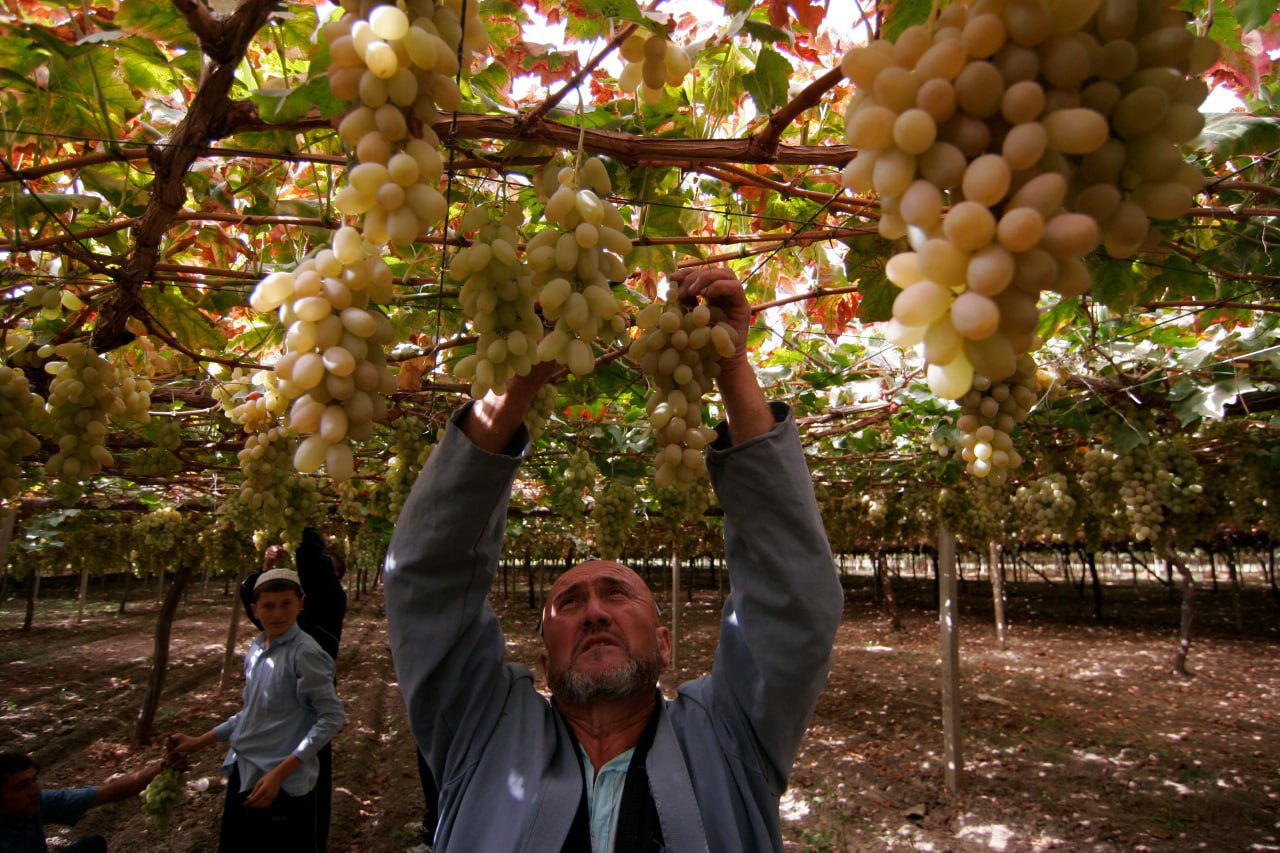
According to the Ministry of Agriculture of Tajikistan, the total volume of agricultural production in the country reached 84.7 billion somoni in 2025, marking a 9.5% increase compared to the same period last year.

Crop production rose by 9.9% to 56.6 billion somoni, while livestock production increased by 8.5%, reaching 28.1 billion somoni.

The most significant growth in 2025 was recorded in the production of grapes, fruit, meat and eggs, indicating positive trends in key segments of the country’s agricultural sector.


Agricultural production in Tajikistan (2024–2025)

Product

    Unit

  2024

  2025

Grapes

thousand tons

  289.8

  346.1

Fruit

thousand tons

  822.7

  954.3

Eggs

million units

  1,266.1

  1,419.3

Melons and gourds

thousand tons

  1,144.5

  1,254.4

Meat

thousand tons

  416.1

  454.3

Potatoes

thousand tons

  1,264.2

  1,332.5

Milk

thousand tons

  1,177.3

  1,206.7

Vegetables

thousand tons

  3,298.7

  3,377.9


Below production growth in percentages:

Growth of Agricultural Production (2024–2025)

Grapes  (thousand tons): +19.4%

Fruit       (thousand tons): +16.0%

Eggs     (million units): +12.1%

Melons

and gourds (thousand tons): +9.6%

Meat      (thousand tons): +9.2%

Potatoes      (thousand tons): +5.4%

Milk      (thousand tons): +2.5%

Vegetables   (thousand tons): +2.4%

EBRD to allocate €10 million for electric buses in Khatlon province

0

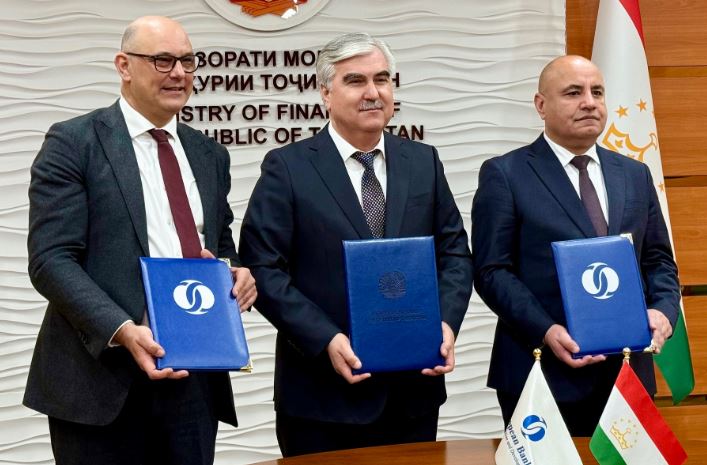
The European Bank for Reconstruction and Development (EBRD) will allocate €10 million for the purchase of electric buses and the construction of parking infrastructure in Tajikistan’s Khatlon province.

The agreement was signed in Dushanbe on January 20 by Tajikistan’s Minister of Finance Faiziddin Qahhorzoda and the EBRD’s Resident Representative in Tajikistan, Holger Wiefel.

The total cost of the project amounts to €10 million, including a €6.4 million loan and a €3.6 million grant.

The project aims to procure electric buses and related equipment, build parking facilities, and improve the quality and environmental sustainability of public transport in the Khatlon region.

The timeline for the procurement of the buses and their launch on regular routes has not yet been specified. However, according to Bokhtar city mayor Abdulmajid Muminzoda, the project may involve the purchase of 47 electric buses, a figure he mentioned earlier at a press conference.

He also noted that the existing bus fleet is expected to be used for intercity routes in the future.

Dushanbe–Chanak highway closed due to 23 avalanches

0

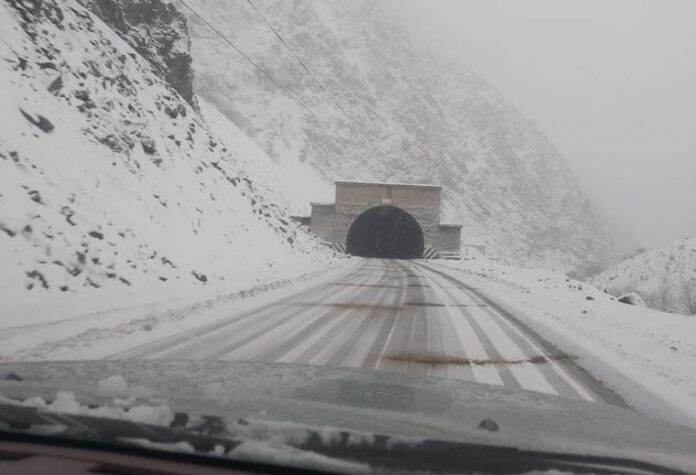
The Branch of Innovative Road Solutions (IRS) in Tajikistan, which operates the toll on the Dushanbe-Chanak highway, reports that traffic on the Dushanbe–Chanak highway was suspended on Wednesday evening after 23 avalanches struck a section of the road between the 60th and 73rd kilometers in the Varzob district. 

The decision to temporarily close the road was made to ensure the safety of drivers and passengers. Vehicles caught in the avalanche zone were evacuated to safe areas with the assistance of road services.

All necessary equipment has been mobilized at the site, and road-clearing operations are currently underway. The timeframe for reopening the highway has not yet been announced.

Road authorities report that due to heavy and prolonged snowfall, snow cover on some sections of the highway has reached up to 35 centimeters. Drivers and passengers are strongly urged to refrain from traveling along this route until an official announcement on the reopening of the road is made.

The Agency for Hydrometeorology (Hydromet) has issued a warning about increased avalanche risk over the next two days. Avalanches are expected on January 22–23 along the Dushanbe–Chanak highway (sections 48–74 km and 80–81 km), as well as in avalanche-prone areas of Maikhoura and Zideh in the Varzob district, in certain districts subordinate to the center (RRP), and in the western part of the Gorno-Badakhshan Autonomous Region (GBAO).


Snowfall and freezing temperatures

On January 22, precipitation, including heavy snowfall in some areas, is expected across the entire country, the Hydromet reports. In valley and foothill areas, air temperatures are forecast to drop by 8–10 degrees Celsius.

Snowfall is expected in districts under republican subordination, in Dushanbe and its surroundings, on mountain passes, and in the Khatlon and Sughd provinces. In some areas, visibility may be reduced to as little as 50 meters, with icy conditions, snowdrifts, and difficult road conditions.

Meteorologists also warn of heavy snow, blizzards, and dense fog on mountain passes and highways. After precipitation ends and skies partially clear on January 24, nighttime temperatures in most valley and foothill areas are expected to fall to −8°C to −13°C, while daytime temperatures will range from −3°C to +2°C. Icy conditions are expected to persist.

Tajikistan increases car imports from Georgia by 568%

0
photo_2026-01-21_16-15-08

Tajikistan has risen to tenth place among Georgia's largest export destinations, with export volumes reaching $179 million, a 431% increase, and car reexports soaring by 568%.

According to Bizzone.info, a site focused on Georgia’s economy and business news, Tajikistan recorded the highest growth among Georgia's export markets in 2025. Following Kyrgyzstan, Kazakhstan, and Uzbekistan, Tajikistan has become another Central Asian country to join the top ten export markets, with a 2.5% share.

Despite an increase in car reexports from Georgia to Central Asia following the start of the Russia-Ukraine war in 2022, exports to Tajikistan remained modest in 2023 and 2024. However, in 2025, cars accounted for 90% of all Georgian exports to Tajikistan, driving the significant growth in Georgian exports.

In total, 7,592 cars were sold in 2025, amounting to $162.29 million, marking a 6.5-fold increase. While car exports to Tajikistan have been ongoing in previous years, the shipments have skyrocketed by 568% this year.

Other goods exported to Tajikistan make up a small portion of the total exports. The top five include passenger cars worth $162.2 million (7,592 units), packaged pharmaceuticals worth $4.8 million (165 tons), cyanides worth $2.8 million (1,045 tons), lemonades worth $1.3 million (934,344 liters), and still mineral water worth $1.3 million (1,333,231 liters).

Meanwhile, Georgia imports minimal-value goods from Tajikistan, totaling $996,000 in 2025. Key imports include peanuts and other nuts worth $778,000, second-hand clothing worth $103,000, and packaged pharmaceutical products worth $42,000.


Why digital assets are increasingly impacting financial everyday life

0

Digital assets are no longer seen as a novelty by many. Today, half of the population is curious about cryptocurrency, blockchain, tokens, or decentralized storage. However, behind the trading platforms lies a complex set of factors: regulation, taxation, risks, and security.


How cryptocurrency platforms are regulated

While cryptocurrency itself is not considered legal tender in most places, many countries classify digital assets as property or financial products. This means that platforms where tokens are exchanged, sold, or stored must comply with regulations on anti-money laundering (AML), user identification (KYC), and disclosure.

In Australia, for example, all digital exchanges must register with a government agency responsible for financial transaction transparency. Lawmakers are also preparing amendments to regulate asset storage and the issuance of tokens as financial products.

For users, this means they should pay attention not only to fees or interface convenience but also to the platform's legal framework: its registration with regulators, certifications, and customer fund protection policies. One example is that an exchange in Australia has long been registered as a Digital Currency Exchange and complies with regulatory requirements.


Taxes and owner rights

Often, cryptocurrency owners don't immediately realize that any exchange, sale, or even use of tokens for purchasing goods can trigger tax obligations. In Australia, digital assets are treated as property, and profits from transactions are taxed (capital gains tax). Even using cryptocurrency outside an exchange doesn't exempt users from keeping records.

Regulatory bodies are tasked not only with overseeing exchanges but also with collecting and verifying personal data of account holders, transaction details, and identifying cases of non-compliance. AML/CTF rules require keeping records and reporting large transactions or suspicious activities.


What to expect in the coming years

The cryptocurrency and digital asset sector is evolving faster than legislation can keep up. New laws and regulations are increasingly being introduced to fill gaps, such as:

·         Expanding AML obligations to include wallet providers and platforms, not just exchanges.

·         Clarifying criteria for which tokens are considered financial products and require licenses.

·         Strengthening information requirements for platforms to provide users, including details about risks, costs, and transaction terms.

These measures aim to create a more transparent environment but make the market more complex for newcomers.


How to choose a platform for cryptocurrency operations

When selecting a platform for trading or storing digital assets, consider the following:

·         Registration and compliance with regulatory requirements: licenses, registration with AML bodies, ISO certifications.

·         Clear security policies: two-factor authentication, cold storage, insurance.

·         Fee structure (exchange, withdrawal, deposit), asset liquidity, and user reviews.

One example is Coinspot, an exchange registered in Australia, which complies with AML/CTF requirements, uses KYC procedures, and offers a wide selection of digital assets.

Overall, digital assets are gradually becoming part of everyday finance. They open new opportunities but also carry responsibility—legal, tax-related, and personal. Caution, understanding of one's rights and obligations, and attention to detail will help users navigate these innovations safely and with a clear understanding of how they work. 

Uzbekistan plans mirror economic measures against Tajikistan

0

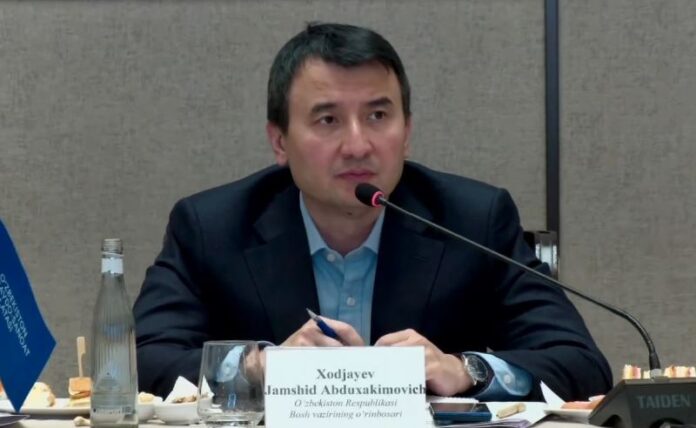
Tashkent is considering implementing mirror economic measures in response to actions by Dushanbe that effectively block the export of Uzbek construction materials to Tajikistan, according to Uzbek Deputy Prime Minister Jamshid Khojayev. He made the statement during a meeting with businessmen and diplomats on January 17.

Khojayev explained that Uzbekistan is facing growing barriers imposed by Tajikistan that complicate the export of Uzbek building materials. “We are having issues with Tajikistan. We export our products to this market, but even when we provide a full set of documents, our products are processed under a 'reserve scheme' for customs clearance. This results in a 15% price increase for our goods in the Tajik market,” he said.

The “reserve scheme” is a special process where goods, including those exported from Uzbekistan to Tajikistan, undergo additional checks or processing, increasing both the time and cost of clearance. This may involve extra steps, such as verifying documents, confirming product value, and stricter inspections to meet local standards. As a result, the prices of goods rise by 15%, creating additional barriers for exporters and reducing their competitiveness.

Khojayev warned that if such restrictions continue, Uzbekistan is ready to impose mirror measures against Tajikistan.


The situation

Iljos Rahimov, acting head of the Uzpromstroy Materials Association, explained to knews.kg that since December 1, 2025, Tajikistan introduced an additional charge of $450 per ton for Uzbek ceramic tiles, with the basic customs value set at $300 per ton. As a result, the total cost of supplies has skyrocketed, effectively blocking exports.

Rahimov noted that the Uzbek side had already appealed directly to Tajikistan's authorities to review these measures, but no decision had been made after two months. He emphasized that businesses are now counting on more active involvement from the government and diplomatic channels. While earlier, a shipment of goods cost around $2,000, now its price could reach $12,000, significantly increasing export expenses and creating difficulties for Uzbek entrepreneurs and manufacturers.


Trade and high customs duties on Tajik cement

A bilateral trade between Uzbekistan and Tajikistan reportedly reached $589.6 million in 2025, up from $413.3 million in 2024. Tajikistan is an active importer of building and industrial materials from Uzbekistan. Key imports include glass, iron products, and steel profiles, as well as air conditioning and refrigeration units.

The ceramic tiles, which have become the subject of the dispute, accounted for over $4 million in imports to Tajikistan.

Tajikistan also exports various goods to Uzbekistan, including copper ores ($28.47 million), zinc ores ($75.13 million), precious metal ores, coal, polypropylene polymers, cotton fiber, aluminum, and aluminum products.

It’s also worth noting that since November 5, 2024, Uzbekistan significantly increased customs duties on cement imported from Tajikistan, raising the fee from $35 to $300 per ton. This decision caused a halt in cement supplies from Tajikistan to Uzbekistan, raising concerns among Tajik exporters, who believe the increase in fees was the result of a collusion among local cement manufacturers in Uzbekistan.

According to the Tajik Ministry of Industry and New Technologies, cement supplies to Uzbekistan fell to 260,200 tons in 2024, down from 342,000 tons the previous year.

Mass fight among teenagers prevented in Dushanbe

0

Dushanbe police have successfully prevented a mass brawl among teenagers, seizing knives from the group involved, according to the city’s Police Department.

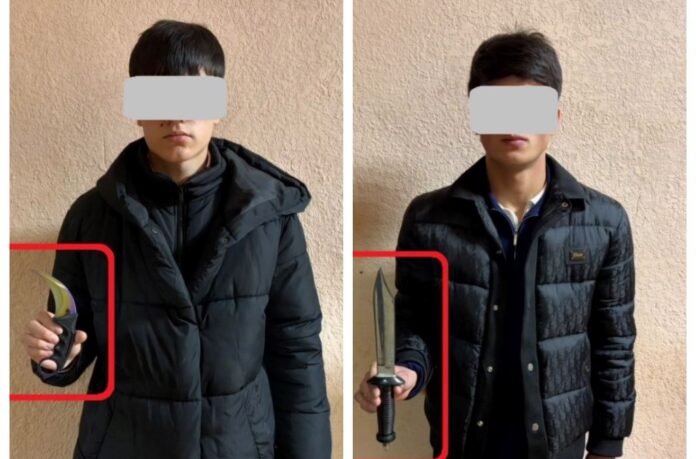
On the night of January 19, a group of minors, armed with knives, gathered on Sadriddin Ayni Street with the intention of starting a fight. Officers from the Shohmansour police station arrived at the scene and detained six minors. During a personal search, two knives of different types were found and confiscated from the detained individuals, the Dushanbe Police Department reported.

Administrative protocols were drawn up against the parents of the detained minors under Article 90 of the Code of Administrative Offenses of Tajikistan, which pertains to the failure of parents or legal guardians to fulfill their duties in raising and supporting their children. Preventive talks have been held with the parents.

The Ministry of Internal Affairs is urging parents to increase supervision of their children’s behavior and not leave them without proper care.

Previously in Tajikistan, conflicts between minors involving cold weapons have led to tragic outcomes. In November 2025, a confrontation between two teenage groups in Dushanbe’s Firdavsi district resulted in the death of a 16-year-old schoolboy, and another teenager sustained serious injuries. Those involved were detained, and an investigation is ongoing.

Additionally, on January 11 of this year, a violent altercation between teen groups in Kulob led to the fatal stabbing of a 15-year-old MMA fighter Muhammadali Sadulloyev. 

The secrets of the Blue Fortress Glacier: How the Pamirs help us understand climate change

0

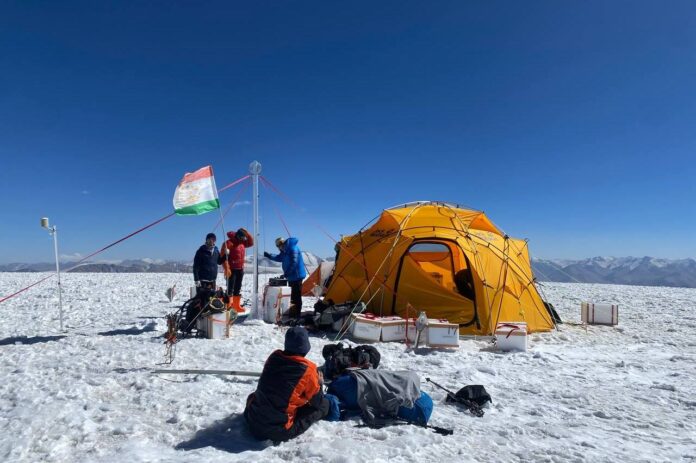
This autumn, an international scientific expedition in Tajikistan concluded its work in the Murgab district of the Gorno-Badakhshan Autonomous Region (GBAO), a study that has already been hailed as one of the most significant for understanding the glaciers of the region.

The focus of the research was Glacier No. 3 in the Khovar-Kul basin, known today as Qal’ai Kabud (Blue Fortress). Previously, this glacier was referred to as the ice cap of Kon-Chukurbashi, formed on the peak of the same name, which rises 5,811 meters above sea level.

The expedition took place in harsh high-altitude conditions, ranging from 4,200 meters to nearly 5,800 meters. Even in September and October, temperatures here can drop to -10 to -15 degrees Celsius, while strong winds and the thin air make any work physically challenging.

Nazrialo Sheralizoda, Director of the Center for Glacier Studies at the National Academy of Sciences of Tajikistan, explained that the choice of this glacier was deliberate. “Our key task was to find a glacier least affected by degradation. Only in such conditions can we obtain the most accurate and reliable climate data from the past,” he said.

According to Sheralizoda, based on long-term observations and previous expeditions, Glacier No. 3 in the Khovar-Kul basin was found to be the most suitable for drilling operations. “Located at altitudes from 5,100 to 5,811 meters, this glacier has relatively slow melting rates and is even in a phase of relative growth. This rare phenomenon is part of what’s known as the 'Pamir-Karakoram anomaly,'” he noted.

The expedition included around 20 researchers from Tajikistan, Russia, China, Switzerland, Japan, France, Germany, Canada, the United States, and other countries. The main fieldwork took place from mid-September to early October 2025.


30,000 years of climate data

Jovidon Davlatov, a junior researcher at the Center for Glacier Studies, recalls the difficult journey to the research site. "The expedition started on September 15. From the village of Khovarkul (formerly called Karakul) to the base camp was about 35 kilometers. The camp was located at 4,200 meters above sea level, where we prepared for the main work. The peak of Qal’ai Kabud (formerly Chukur-Konbashi) reaches nearly 5,800 meters. It’s situated on the Sarykol Range, close to the border with China," he shared.

All the equipment, including drilling rigs, tools, and ice storage containers, had to be manually transported by the team. "The weather was harsh. In the camp, it was -10°C, and on the peak, it was -15°C, with constant winds. Drilling under these conditions was extremely difficult. We worked for five days straight," Davlatov added.

As a result, two boreholes were drilled, each more than 110 meters deep, extracting ice cores — cylinders of ice containing vital data on atmospheric composition, precipitation, and climate from past millennia.

“These samples are of exceptional scientific value,” Sheralizoda emphasized. "They allow us to reconstruct climate changes, including periods of cooling and sharp climate fluctuations, and to understand how the cryosphere developed in high-altitude conditions."

Laboratory analysis of these cores will help scientists predict the future of glaciers and assess risks to the region’s water resources. The data will also serve as a foundation for developing measures to adapt to climate change and ensure water security.

Researchers have previously reported that the Kon-Chukurbashi ice cap is a rare natural anomaly. Despite global warming, this glacier continues to grow, while most glaciers worldwide are rapidly shrinking. Studies suggest that the extracted ice cores may contain up to 30,000 years of climate data.

One of the samples was sent to the Low Temperature Research Institute at Hokkaido University in Japan for analysis, aimed at understanding the glacier’s stability. Another core was transferred to the Ice Memory international foundation and sent for long-term storage in Antarctica, as Tajikistan's contribution to preserving the planet's "climate memory."

The secrets of the Blue Fortress Glacier: How the Pamirs help us understand climate change


What about other glaciers?

The results of the expedition have been highly praised by international partners, who commended the professionalism of Tajik scientists, strict adherence to international field research standards, and the complexity of the work conducted in extreme high-altitude conditions.

"The work done on the Khovar-Kul glacier clearly demonstrates that Tajikistan is not just participating, but taking an active role in global cryosphere research," Sheralizoda emphasized.

Discussing the situation in the region more broadly, Khusrav Kabutov, Head of the Glaciology and Glacier Monitoring Department, noted that the Qal'ai Kabud glacier is an exception rather than the rule for the Khovar-Kul basin.

"In the Khovar-Kul basin, the picture is uneven. Some glaciers are relatively stable, but most are shrinking. We observe particularly significant changes in a number of smaller and medium-sized glaciers," he explained.

Kabutov also pointed out that the most concerning situation is with the Zulmart glacier, which also belongs to the Khovar-Kul basin. "Our observations show that the melting rate of the Zulmart glacier has increased approximately tenfold in recent years. This is a very serious indicator. The glacier is rapidly losing mass, its structure is changing, and its area is shrinking," he noted.

He explained that these processes are directly linked to changing climate conditions — rising average annual temperatures and shifts in precipitation patterns.

Against this backdrop, the resilience of the Qal’ai Kabud glacier is of particular scientific interest.