Home Blog Page 82

MISiS Branch and Confucius Institute at TNU sign cooperation agreement for Chinese language studies

0

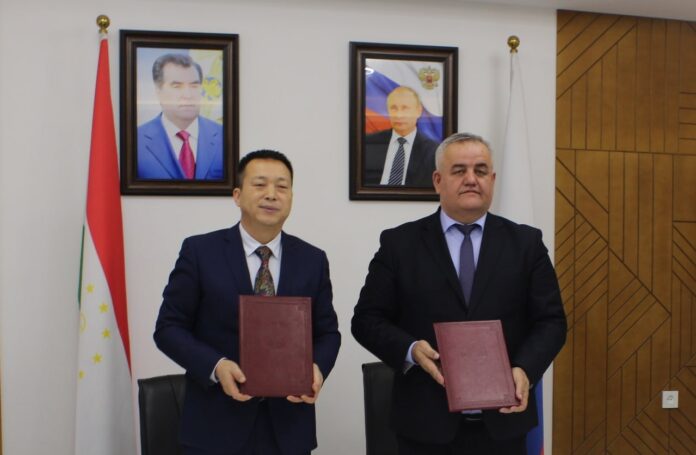
A cooperation agreement was signed between the Confucius Institute at Tajik National University (TNU) and the Dushanbe Branch of the National University of Science and Technology MISiS (Moscow Institute of Steel and Alloys) in Dushanbe on January 20. The agreement focuses on the study of the Chinese language.

The document was inked by Muminjon Jourayev, Director of the MISiS Branch in Dushanbe, and Sun Jin, Director of the Confucius Institute at TNU.

According to MISiS, the agreement comes in response to Tajikistan President Emomali Rahmon’s recent address, emphasizing the need to create conditions for learning foreign languages. The agreement aims to promote the "specialization + Chinese language" model, fostering stronger ties between Tajikistan and China.

The deal is designed to enhance the exchange and cooperation in education and culture, with a focus on advancing Chinese language teaching in the country’s higher education institutions. It also aims to support the quality of education and develop youth in the spirit of friendship and mutual understanding.

The agreement outlines that all educational and cultural activities under the agreement will be conducted on a non-commercial basis while strictly adhering to the country’s laws. The Confucius Institute will be responsible for providing scientific and methodological support, while also actively facilitating further collaboration between MISiS and universities in China.

Tajikistan’s economy grows by 8.4% in 2025: what’s driving the growth?

0

Tajikistan’s economy expanded by 8.4% in 2025, reaching nearly 177 billion somoni (over $19 billion), according to the Agency for Statistics under the President of Tajikistan. This marks the continuation of strong economic growth, consistent with the previous year’s growth rate.

In Central Asia, Tajikistan ranks second in terms of GDP growth, behind Kyrgyzstan, which saw a 11.1% growth in 2025. Uzbekistan's real GDP growth for the same year stood at 7.7%, Kazakhstan at 6.5%, and Turkmenistan at 6.3% for the first 11 months of 2025.

This follows a period of steady recovery since the pandemic-induced slowdown in 2020, when growth dropped to 4.5%. Over the last five years, official data shows Tajikistan's economy growing at strong rates: 9.2% in 2021, 8.0% in 2022, 8.3% in 2023, and 8.4% in both 2024 and 2025.

Tajik President Emomali Rahmon highlighted in his address to a meeting of both chambers of parliament that the country’s GDP has grown 3.4 times over the last decade, with an average annual growth rate of 7.6%.


What’s fueling the growth?

As in previous years, the government attributes the country’s robust growth to positive trends in key sectors such as agriculture, industry, and construction. However, independent economists emphasize that much of the growth is not driven by domestic production expansion or labor productivity improvements, but rather by external income sources and consumption.

International experts also point to a rise in consumption as a key factor, fueled by a significant increase in remittances from abroad. These remittances help families purchase essential goods and invest in improving living conditions. A significant portion of these incomes is spent on basic household needs, with food, healthcare, and housing repairs being the largest expenditures for families.

Official statistics show the contribution of key sectors to Tajikistan’s GDP in 2025 as follows:

·         Agriculture, forestry, and fishing: 21.9%

·         Wholesale and retail trade; auto repair; hotels and restaurants: 16.5%

·         Industry: 16.2%

·         Net taxes on products: 10.3%

·         Transport and storage; information and communication: 9.0%

·         Construction: 7.1%

·         Other service sectors: 19.0%

The contribution of these sectors to the 8.4% GDP growth was broken down as follows:

·         Agriculture, forestry, and fishing: 2.1 percentage points

·         Industry: 1.0 percentage points

·         Wholesale and retail trade; auto repair; hotels and restaurants: 2.6 percentage points

·         Net taxes on products: 0.8 percentage points

·         Transport and storage; information and communication: 0.8 percentage points

·         Construction: 0.7 percentage points

·         Other service sectors: 0.4 percentage points

In summary, while Tajikistan’s economy continues to grow at a steady pace, external factors like remittances are playing an increasingly important role in driving consumption, which in turn supports overall economic expansion. 


ADB to support floating solar systems in Tajikistan

0

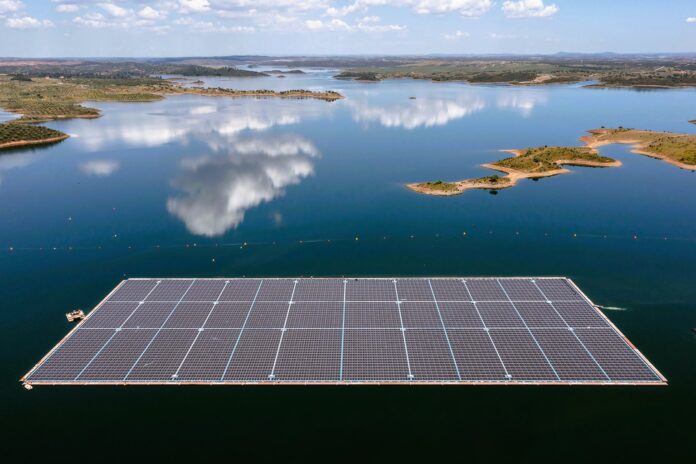
The Asian Development Bank (ADB) has approved a $1 million technical assistance grant to support the Government of Tajikistan in developing floating solar photovoltaic (FPV) systems. 

“This innovative initiative is about making the most of what Tajikistan has—sun and water,” said ADB Country Director for Tajikistan Ko Sakamoto. “It’s a smart step toward a future where everyone has reliable energy year-round, without harming the environment.”

With 93% of Tajikistan covered by mountains, flat land is scarce and mostly used for agriculture and housing, making ground-mounted solar projects costly. By contrast, the country’s reservoirs offer ideal sunlit surfaces and existing infrastructure, making floating solar panels a practical and efficient way to generate clean energy. 

The technical assistance will screen up to five reservoirs for FPV potential and prepare a detailed study for a utility-scale FPV system to be built at one of the assessed sites. 

The technical assistance will also strengthen local capacity and knowledge on floating solar technology. Government officials and energy professionals will gain hands-on experience through study tours, expert meetings, and regional knowledge exchanges. It will also upgrade the financial management system of Barki Tojik, the state-owned power generation company, to improve efficiency and transparency.

Tajikistan joined ADB in 1998. The partnership has delivered tangible results for the people of Tajikistan—from upgrading critical transport links such as the Obigarm–Nurobod, Dushanbe–Bokhtar, Ayni–Panjakent, Dushanbe–Tursunzade, and Vose–Khovaling roads, to modernizing key irrigation and water supply systems and building hospitals and schools. ADB has also supported the construction of power transmission lines and electricity substations, the reconnection of the country’s electrical grid to the Central Asian power network, and the rehabilitation of major hydropower plants like Nurek and Golovnaya.

ADB is a leading multilateral development bank supporting inclusive, resilient, and sustainable growth across Asia and the Pacific. Working with its members and partners to solve complex challenges together, ADB harnesses innovative financial tools and strategic partnerships to transform lives, build quality infrastructure, and safeguard our planet. Founded in 1966, ADB is owned by 69 members—50 from the region.


China expands investments and business in Central Asia

0
Kazakh

Chinese entities are significantly increasing their investments in Central Asia, focusing on joint ventures, acquisitions, and infrastructure projects. Eurasianet notes that China now accounts for more than a quarter of all foreign companies or joint ventures operating in this Central Asian state.


China-Central Asia cooperation on water and agriculture

A delegation from the China-Central Asia Cooperation Center for Desertification Prevention and Control visited Uzbekistan, Kazakhstan, Tajikistan, and Kyrgyzstan to explore joint water management and agricultural efficiency projects. The Center, established by a decree from President Xi Jinping, will organize training seminars in both China and Central Asia. Additionally, China’s Weinan Vocational and Technical College has hosted workshops showcasing advanced agricultural technologies, with over 300 farmers participating in training over the past three years.


Kazakhstan: mining, trade, and transport

Kazakhstan is a key target for Chinese investment, particularly in its mining sector. Zhejiang Mining Heavy Industry Co. has signed a deal to acquire JV Alaigyr LLP for 29.15 billion Kazakh tenge ($57 million). The company holds mining rights to a major silver and lead field. A consortium of Chinese firms has also purchased Spetzpostavka Absolute for $1.8 million, which holds rights to tungsten and uranium deposits in Kazakhstan’s Jambyl region.

Kazakhstan is facing rising car prices, with expected double-digit increases in 2026 due to higher VAT, recycling fees, and stricter import/export regulations. In response, China’s Chery brand plans to introduce affordable C8 crossovers to the market.

Bilateral trade and transport between Kazakhstan and China are expanding. Despite delays, railroad traffic grew by 11% in 2025, totaling 35.6 million tons, and talks are underway to address bottlenecks, particularly intermodal container traffic via the Trans-Caspian International Transport Route.


Uzbekistan: infrastructure and trade growth

Uzbekistan has seen explosive growth in Chinese-Uzbek joint ventures, rising from 2,337 in 2023 to 5,044 in 2025, making China the largest foreign investor in the country. Cargo traffic through the Middle Corridor has also doubled, reaching over 1 million tons in 2025. The Directorate of Tashkent’s Industrial Zones and China’s Shihezi Development Zone have signed agreements to establish a joint logistics and exhibition center to boost trade.


Kyrgyzstan: investments and infrastructure projects

China’s investments in Kyrgyzstan reached $2.1 billion by the end of 2025, with major projects like the Kambarata-2 hydropower plant progressing on schedule. China accounted for just three of 112 violations recorded during border inspections of agricultural imports. Kyrgyzstan is also expecting a visit from Chinese President Xi Jinping in 2026 for bilateral meetings.


Tajikistan: infrastructure delays and educational collaboration

In Tajikistan, construction of the Qalai-Khumb — Vanj section of the Dushanbe-Khorog-Kulma highway has been delayed for the second consecutive month due to security concerns along the Tajik-Afghan border. This follows the tragic deaths of five Chinese laborers in attacks by militants on the Afghan side of the border in November.

Meanwhile, Tajikistan is increasing its educational collaboration with China. Representatives from Tajik State Pedagogical University and China’s Vocational and Technical Institute of the Defense Industry of Shaanxi Province met to discuss expanding scientific and educational cooperation, reflecting a broader trend of educational exchanges between the two nations.


Turkmenistan: new business opportunities

In Turkmenistan, preparations are underway for a Turkmen-Chinese business forum and exhibition in April 2026. Ashgabat has also received 194 Chinese-made vehicles for municipal services, marking a significant step in expanding China’s presence in the country’s infrastructure.

As China continues to strengthen its influence across Central Asia, these initiatives reflect the growing economic, educational, and cultural cooperation in the region, positioning it as a key player in China’s Belt and Road initiative.


Tajikistan plans to introduce mandatory health insurance after 2030

0

Tajikistan's Ministry of Health and Social Protection of the Population (MoHSPP) has announced that the implementation of a mandatory health insurance (MHI) system will be postponed until after 2030.  


Development of MHI system

An official source within a MoHSPP says the ministry has developed several draft regulatory documents addressing key aspects of the MHI system. These include guidelines for paying insurance premiums, the basic MHI program, and regulations regarding the Mandatory Health Insurance Fund. These drafts are currently under review and coordination with other government ministries and agencies.

The introduction of the law "On Health Insurance in the Republic of Tajikistan" has been postponed to a period after 2030. This decision is based on objective circumstances, and at present, the MHI system is still in the preparation stage.


Insurance costs and additional payments

The source clarified that the cost of mandatory health insurance for citizens will be determined by the government. Under the MHI system, citizens will be provided with free medical services and medications listed in an approved list. Government support for low-income families will be provided from the state budget.

The quality of medical services within the MHI system will be monitored by the Ministry of Health and Social Protection. The effectiveness of service delivery will be overseen by the State Medical and Social Supervision Service. The list of services covered by the MHI system will be approved in coordination with the Antimonopoly Agency.

High-tech medical services will likely require additional payment.


Why was the introduction of MHI delayed?

The "On Health Insurance in the Republic of Tajikistan" law was passed in Tajikistan in June 2008. However, at that time, the parliament decided to postpone its implementation until 2010. But even after two years, no decision had been made.

At the end of 2022, lawmakers postponed the law’s implementation for the fifth time. During a parliamentary session, then-first Deputy Minister of Health and Social Protection, Ghafour Muhsinzoda, explained that, according to a report by the interdepartmental working group, the country had not yet created the conditions necessary for a full transition to a health insurance system.

Muhsinzoda noted that the introduction of MHI needed to account for economic, financial, and organizational requirements. He also explained that, according to the Ministry of Finance, "if insurance premiums were paid from the existing social tax rate, there was a risk of reducing revenues to the social insurance and pension budget, which could lead to the state failing to meet its social obligations to the population."

He also pointed out that international experience showed that in order to introduce mandatory health insurance, the necessary amount for the healthcare sector should be at least 4-6% of GDP. At that time, this figure in Tajikistan was 2.8%, with 80-90% of local budgets allocated for salaries.

For reference, the draft state budget for 2026 allocates 5.03 billion somonis for healthcare, which is approximately 2.5% of the country's GDP. 

A native of Tajikistan arrested after killing of 18-Year-old guy n in Elektrostal, Moscow region

0

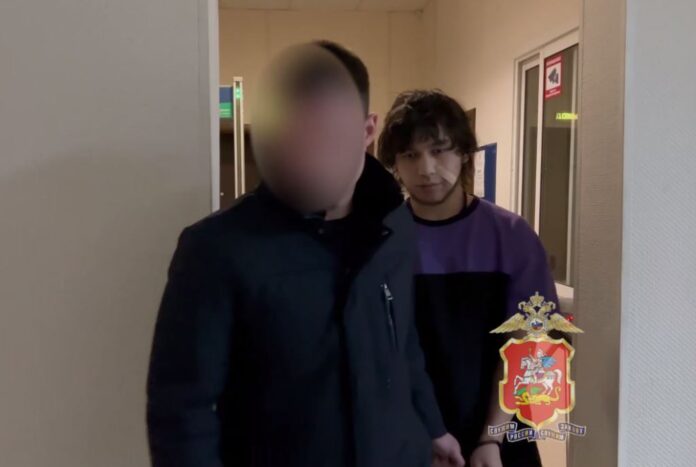
A 18-year-old man was killed during a fight in the town of Elektrostal, in the Moscow region. A 19-year-old native of Tajikistan has been arrested on suspicion of committing the crime, MSK1 reports, citing the Investigative Committee of the Moscow Region.


Incident details

According to the investigation, the victim was taken to the hospital, but despite efforts to save him, he died from his injuries.

The conflict reportedly took place on a bus, where a group of teenagers was acting aggressively, using foul language, provoking passengers, making obscene gestures towards a woman, and making faces. These actions were recorded on video and shared by the Telegram channel "112."

A 19-year-old passenger reacted to the situation by reprimanding the teenagers. In response, the group reportedly sprayed pepper spray and fired a flare at him. In retaliation, the passenger pulled out a knife and fatally stabbed 18-year-old Ilya P. in the torso and neck area.


Identity of the suspect

The passenger who intervened to defend the woman was identified as Imomali Turdiyev, originally from Tajikistan, though his family later moved to the Moscow region. According to MSK1, Turdiyev, during interrogation, admitted to the killing, explaining the details of the incident. He said he had been in a state of shock and unaware of his actions at the time.


Media coverage and investigation

Several Russian Telegram channels have presented the incident as an attack by a "migrant" on a "Russian guy," without mentioning the circumstances of the altercation.

The Investigative Committee of the Russian Federation has instituted criminal proceedings under Article 105 (1) of Russia’s Criminal Code – murder; an investigation is under way.  

Turdiyev has been detained, and forensic medical, molecular genetic, and criminalistic expert examinations have been scheduled.


Background of the victim

According to the project "Antifa.ru," the deceased, Ilya P., was known in neo-Nazi circles by the nickname Ilya Kvas. In 2025, he was involved in provocations during a memorial rally for lawyer Stanislav Markelov and journalist Anastasia Baburova, who were murdered in 2009 by neo-Nazi Nikita Tikhonov.


Kazakhstan’s president proposes renaming parliament and introducing vice-president position

0
Akorda

In a significant development, Kazakhstan's President Kassym-Jomart Tokayev has proposed renaming the country’s future one-chamber parliament to "Kurultai." Orda.kz says this suggestion was put forward yesterday during a session of the National Kurultai, a consultative body that meets annually.


Constitutional reform

Tokayev emphasized that the upcoming year would be one of the most crucial for Kazakhstan, significantly influencing the nation's future. He stated that the country is entering a new phase of large-scale political modernization, with the upcoming parliamentary reform at its core.

"In my address, I proposed the creation of a unicameral parliament. As you know, this critical issue has been widely discussed in society," Tokayev said.

A specially-formed working group analyzed all proposals related to the parliamentary reform and considered various directions for its implementation. The president personally oversaw this process. He outlined the main proposals discussed in the group:

·         Parliament's Name: Tokayev suggested naming the new parliament "Kurultai," explaining that the historical and cultural significance of the term resonates strongly with the people of Kazakhstan.

·         Number of MPs: The issue sparked intense debate. The conclusion was that the parliament should consist of 145 seats. However, Tokayev emphasized that the focus should not be on the number of seats, but on the quality of parliamentarians. It is vital that the parliament consists of true patriots and qualified professionals.

·         Deputy speakers and committees: The new parliament may have up to three deputy speakers, and the number of committees should not exceed eight.

·         Parliamentary competencies in key state appointments: Tokayev proposed that key bodies, including the Constitutional Court, the Supreme Audit Chamber, and the Central Election Commission, be appointed exclusively with the consent of parliament. Additionally, the president suggested that members of the Supreme Court be elected by parliament based on the president’s recommendations.

·         Election system: MPs will be elected using a proportional representation system, meaning that the number of parliamentary seats will correspond to the votes received by each political party. However, Tokayev believes that the majoritarian system, where MPs are elected from specific regions or districts, should be preserved for maslikhats (local representative bodies).

·         Quota for the assembly of the People of Kazakhstan: The quota for the Assembly of the People of Kazakhstan (APK) will be abolished.

·         Quota for women, youth, and people with disabilities: The existing quotas for these groups will remain.

·         Party election threshold: The 5% threshold for political parties to enter parliament will remain.

·         Term length: Deputies will be elected for a five-year term.

·         Lawmaking process: A three-step process for passing laws is proposed: first, parliament will approve the draft law as a whole; second, they will approve any amendments; and third, the law will be adopted.


Creation of the National Council of Kazakhstan

Tokayev also proposed the establishment of the National Council of Kazakhstan. This new body will assume the core functions of the APK in promoting interethnic and interfaith harmony, including representatives from various ethnic groups, regions, and population segments. It will continue the mission of both the APK and the National Kurultai.

On the other hand, the National Council will also be a new institution with the status of the highest advisory body in the country. It will focus on domestic policy, state ideology, and the Constitution, among other key national issues.

The National Council will comprise 126 members: 42 from ethnic-cultural organizations, major public associations, maslikhats, and regional public councils. All members will be appointed by the president, while the council will elect its chairman. The council will also have two deputy chairs and a head of the secretariat. The highest decision-making body will be the session, convened at least once a year.


Introduction of the vice-president position

Kazakhstan will also introduce a new position—the Vice-President—set to be enshrined in the Constitution. The vice-president will be appointed by the president with the consent of parliament through a simple majority vote.

The vice-president is expected to:

·         Represent Kazakhstan at international forums and in negotiations with foreign state delegations.

·         Represent the president’s interests in parliament.

·         Interact with domestic and international public, political, scientific, and cultural organizations.

·         Carry out other presidential assignments.
 

India Steps Up Diplomatic Engagements in Central Asia

0

In a series of high level diplomatic engagements, India expanded its outreach to different geographical regions across the world. In this series, Ministry of External Affairs (MEA) Secretary (West) Sibi George met Tajikistan’s Deputy Foreign Minister Sharifzoda Farukh Homiddin in Minsk  on the  sidelines of III Minsk International Conference on Eurasian Security.

MEA Spokesperson Randhir Jaiswal confirmed the meeting with the Tajik delegation in a post on X. “Secretary (West) Sibi George met Deputy FM Sharifzoda Farukh Homiddin of Tajikistan. Both sides reviewed India–Tajikistan bilateral relations and discussed ways to further strengthen cooperation,” Jaiswal wrote. According to officials, the talks focused on consolidating the traditionally close and cordial ties between New Delhi and Dushanbe, marked by deep-rooted historical, cultural and linguistic linkages.

India and Tajikistan established diplomatic ties in August 1992, and the relationship has since evolved into a broad-based partnership spanning political, development, security, and cultural cooperation. Officials noted that Tajikistan has consistently supported India in multilateral bodies, including votes in favour of India at UN institutions and endorsement of its candidature for key positions. Tajikistan has previously backed India’s membership bids for the Intergovernmental Committee for the Safeguarding of Intangible Cultural Heritage, the UN Security Council non-permanent seat for 2021–22, and India’s aspiration for permanent membership in the UNSC.

India’s relationship with Tajikistan is anchored in deep civilizational and historical ties that span millennia. Records preserved in Buddhist annals trace India–Tajikistan linkages as far back as 2,500 BCE, pointing to early cultural and civilizational interactions across the region. Archaeological findings in Panjikent, located in present-day Tajikistan, provide further evidence of these ancient connections, revealing artistic, religious and trade exchanges that shaped early contact between the two societies.


Remnants of Zoroastrian temples and Buddhist viharas scattered across Tajikistan stand as enduring markers of India’s civilizational connections with Central Asia. These historical sites underscore the region’s role as a meeting ground of major Asian civilizations and highlight the depth of Indo–Central Asian engagement long before modern political boundaries emerged.

During the medieval period, two major streams of interaction defined India’s engagement with Tajikistan and the broader Central Asian region. The first was the steady movement of Buddhist monks, scholars and missionaries from India into Central Asia, with Tajikistan serving as a crucial transit corridor. These emissaries carried religious texts, philosophical ideas and artistic traditions that contributed to the spread of Buddhism across the region and onward to China.

The second major linkage was trade. Commercial caravans moved through the mountain passes and plains of Central Asia, connecting India with the ancient Silk Road. Goods, technologies, languages and cultural traditions flowed across these routes, weaving India and Tajikistan into a larger network of transcontinental exchange.

A new phase in Indo–Tajik relations emerged with the rise of the Mughal Empire in India. The dynasty’s founder, Zahir-ud-din Babur, hailed from the Fergana Valley—an area in close proximity to modern Tajikistan—and travelled through the region before crossing the Khyber Pass into the Indian subcontinent. His decisive victory over Ibrahim Lodi in 1526 laid the foundation of Mughal rule in India, initiating an era that further reinforced historical and cultural affinities between South Asia and Central Asia.

Today, these layers of shared heritage continue to influence and enrich contemporary India–Tajikistan relations, providing a strong civilizational basis for cooperation in the modern era.

The cultural dimension of the partnership also remains robust. Indian films and television serials dubbed in Russian and Farsi continue to be widely popular in Tajik households. The Swami Vivekananda Cultural Centre in Dushanbe, operated by the Indian Council for Cultural Relations (ICCR), offers regular training in Kathak, Tabla and Hindi language studies. Yoga, too, has seen a surge in popularity, with the International Day of Yoga celebrated enthusiastically across the country. Cultural exchanges, including ICCR-funded performances, participation of Tajik artists in India’s Surajkund Crafts Mela, and academic collaborations such as the Hindi-Urdu Chair at Tajik National University, reflect the close people-to-people ties that support the broader diplomatic relationship.

The discussion between George and Homiddin also touched upon travel and consular cooperation. India maintains a liberal visa regime for Tajik nationals, with most visas processed within one to two days. A large number of Tajik visitors prefer India’s e-visa system for tourism and medical travel. Tajikistan, too, operates a simplified e-visa regime, facilitating mobility between the two nations.

The MEA highlighted the significance of these engagements with Tajikistan, noting that they come at a time when India is actively strengthening its diplomatic footprint across Central Asia. As part of its “Extended Neighbourhood”, New Delhi has increased high-level exchanges, strategic dialogues and collaborative initiatives with the region's countries.

India’s ties with Tajikistan, in particular, continue to benefit from strong political support from Dushanbe in multilateral forums. Tajikistan has publicly supported India’s admission to the Shanghai Cooperation Organisation and backed its accession to the World Trade Organization in 2013. India, in turn, has consistently supported Tajikistan’s water-related initiatives at the United Nations and endorsed its candidature to ECOSOC.

As New Delhi’s diplomatic calendar intensifies towards beginning of the year, officials indicated that more engagements with Central Asian partners are expected. In the backdrop of regional security shifts, emerging economic opportunities, and the need for closer cultural and people-to-people exchanges, India and Tajikistan reaffirm their commitment to strengthening ties and people to people contact between two countries.

https://www.tribuneindia.com/news/world/mea-secretary-west-tajikistan-deputy-fm-review-bilateral-ties-with-focus-on-strengthening-cooperation/

https://www.mid-day.com/news/world-news/article/india-tajikistan-hold-talks-to-strengthen-bilateral-cooperation-and-regional-ties-23600722

https://www.mea.gov.in/Portal/ForeignRelation/Bilateral_Brief_EOI_Dushanbe__Nov_2022.pdf

https://ccas.uok.edu.in/Files/93269b6c-7f53-4439-ae9a-3bdf55a4c649/Journal/b4ebd5bd-c45a-41d7-8bff-1db1bccb44a6.pdf

Tajikistan cuts exports of finished cotton products in 2025

0
photo_2026-01-20_09-32-09

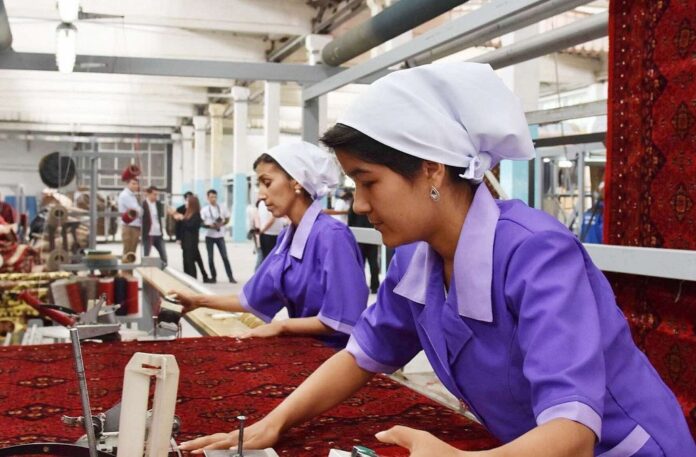
In 2025, Tajikistan increased cotton production and exports of raw materials, but shipments of finished cotton products declined. The country continues to export mainly raw cotton, while domestic cotton processing remains limited.

According to the Ministry of Agriculture of Tajikistan, cotton production totaled 392,200 tons in 2025, slightly exceeding planned targets. Compared with 2024, output increased by 139,500 tons.

Exports of cotton fiber exceeded government forecasts. About 93,000 tons of cotton fiber were shipped abroad during the year, worth $142.1 million, compared with a planned export volume of 71,100 tons valued at $135 million.

At the same time, exports of higher value-added products fell short of expectations. Cotton yarn exports amounted to 11,240 tons worth $25.05 million, while the forecast had projected exports of around 16,000 tons valued at $56.1 million.

A decline was also recorded in exports of fabrics and finished cotton goods. In 2025, exports in this category totaled 3,250 tons worth $9.45 million, compared with a forecast of 5.8 thousand tons valued at $17.6 million.

Overall, the 2025 results indicate that despite increased cotton production and higher exports of raw materials, exports of processed cotton products continue to lag behind planned targets.

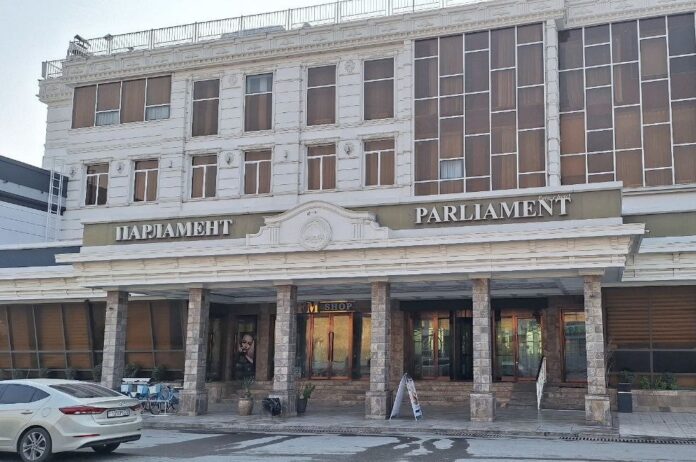
Buston prosecutor dismissed after clash at “Parliament” restaurant

0

Abduqahhor Azizov, the prosecutor of the city of Buston (formerly Chkalovsk) in Sughd province, has been dismissed following a conflict with the owner of the “Parliament” restaurant, Parviz Ashourov. The information was confirmed to Asia-Plus by Dal­er Mahmadalizoda, Deputy Prosecutor of Buston.

Mahmadalizoda said no further details regarding Azizov’s dismissal were available and did not clarify whether the decision was directly linked to the incident at the restaurant. The position of city prosecutor remains vacant.

Earlier, on January 19, Radio Liberty’s Tajik Service, known locally as Radio Ozodi reported that following the publication of a report on a fight involving the Buston prosecutor and a restaurant owner in Khujand, Azizov was removed from office and dismissed from the prosecution service by order of the country’s Prosecutor-General.

So far, neither the authorities nor the parties involved have officially commented on the incident. The Prosecutor-General’s Office has neither confirmed nor denied Azizov’s dismissal.

According to Radio Ozodi, a minor nephew of Parviz Ashourov is currently being held in custody in connection with the case.

The management of the “Parliament” restaurant, located inside a hotel of the same name, declined to comment. An Asia-Plus correspondent who visited the site on the morning of January 20 was told by a security guard that the management had not returned to work after the New Year holidays and was not communicating with the media.

Radio Ozodi reports that the conflict occurred in late December. According to the outlet, the dispute began when the prosecutor, who was at the restaurant with friends, allegedly assaulted Ashourov. In response, Ashourov and several of his relatives reportedly attacked the prosecutor.

To separate those involved, a police officer present at the restaurant fired a warning shot into the air. Additional police units later arrived at the scene to investigate the incident.

According to the source, Abduqahhor Azizov is the son of Abdujabbor Azizov, a former president’s aide for personnel affairs and former first deputy chairman of the ruling People’s Democratic Party of Tajikistan. Parviz Ashourov is the former son-in-law of Tajik Prime Minister Qohir Rasoulzoda.

Similar incidents involving children or close relatives of senior officials have previously been reported in Tajikistan. In particular, media outlets have repeatedly covered conflicts involving the sons of former Energy Minister Gul Sherali.