Home Blog Page 80

Kyrgyz human rights defender Aziza Abdirasulova awarded 2026 Raoul Wallenberg Prize

0

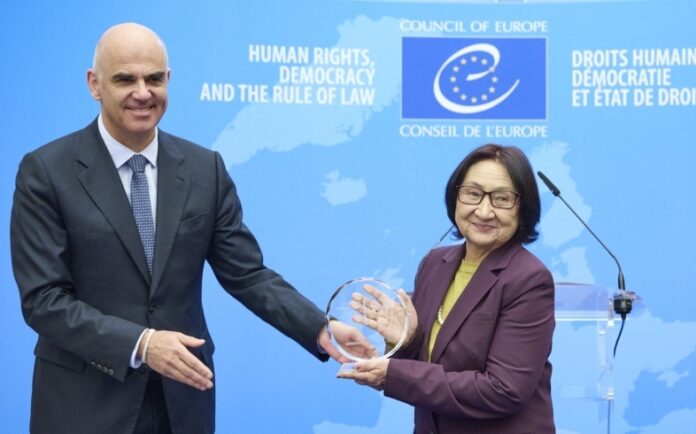
Aziza Abdirasulova, a prominent human-rights defender from Kyrgyzstan, has been awarded the 2026 Raoul Wallenberg Prize by the Council of Europe. Abdirasulova was recognized for her tireless efforts in protecting fundamental rights, with a special focus on prisoners' rights, the fight against torture, and the right to peaceful assembly.

The award was presented during a ceremony in Strasbourg, where Council of Europe Secretary-General Alain Berset lauded Abdirasulova's immense courage and determination. He praised her for making a significant impact on human rights in Kyrgyzstan, often at great personal and physical risk.

"As one of the first independent human-rights defenders in Kyrgyzstan to systematically document torture and arbitrary detention, Aziza Abdirasulova has kept crucial facts on the record when silence would have been easier," Berset said. "Her work reminds us that the Raoul Wallenberg Prize brings the focus back to human-rights defenders, even in times of geopolitical crisis."

The jury emphasized that Abdirasulova, despite facing intimidation and harassment, refused to be silenced. Her organization, Kilim Sham, has played a key role in exposing systemic human-rights violations in Central Asia, providing legal support to victims, and mobilizing both national and international public opinion.

The jury also highlighted Abdirasulova’s essential work in promoting freedom of assembly and the right to peaceful protest, particularly in the face of severe official restrictions. "Her organization has been a vital source of credible information for the international community on human-rights issues in Central Asia," the jury stated.

In her acceptance speech, Abdirasulova reflected on the profound value of every human life, drawing a parallel with Wallenberg's dedication to saving lives during the Holocaust. "Over the years, I have consistently defended fundamental human rights: freedom of peaceful assembly, freedom from torture and cruel treatment, and freedom of speech," she said. "This work required not only professional knowledge but also great personal courage. I have witnessed hundreds of cases of torture, and in each case, I have tried to provide whatever support I could to the victims."

The ceremony, which took place on January 17, also included speeches from Roderick Liddell, Chair of the Prize Jury, Ambassador Harry Russ (Permanent Representative of Hungary to the Council of Europe), and Ambassador Nikolas Ebon (Permanent Representative of Sweden to the Council of Europe).

The Raoul Wallenberg Prize, established in 2014 by the Swedish Government and the Hungarian Parliament, is awarded biennially on the anniversary of Wallenberg’s arrest in Budapest in 1945. Wallenberg’s heroic efforts to save tens of thousands of Jews from the Holocaust serve as a powerful reminder of the impact one person can have on the fight against persecution and xenophobia.

The prize, which honors extraordinary humanitarian efforts, is awarded to individuals, groups, or organizations that demonstrate exceptional courage and commitment to human rights. The jury is composed of seven independent experts with recognized moral standing in the field of human rights and humanitarian action, appointed by the Council of Europe, the Swedish Ministry of Foreign Affairs, the Hungarian Parliament, the municipality of Budapest, the Raoul Wallenberg Institute in Lund, the United Nations High Commissioner for Refugees (UNHCR), and the Raoul Wallenberg family.
Khatlon police chief calls on Kulob residents to help combat juvenile violence

0

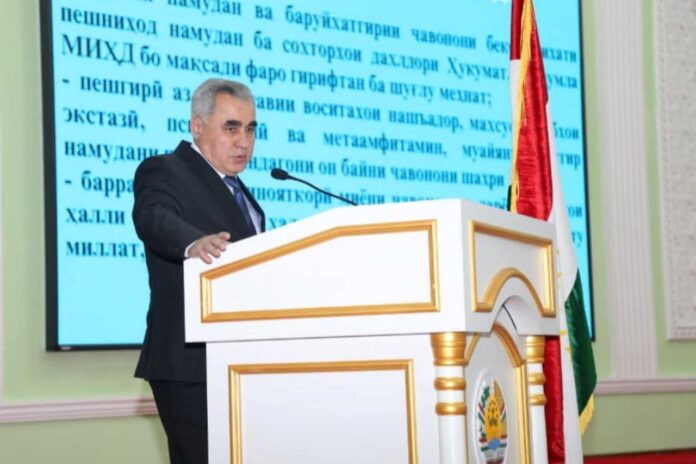
On January 22, Khatlon police chief  Sharif Nazarzoda met with residents of Kulob to discuss key issues related to security and crime prevention among adolescents.

Nazarzoda emphasized the need for active cooperation between citizens and law enforcement agencies to prevent conflicts among minors. He specifically called on the city's youth to participate in efforts to prevent violence, crime, extremism, and drug-related offenses.

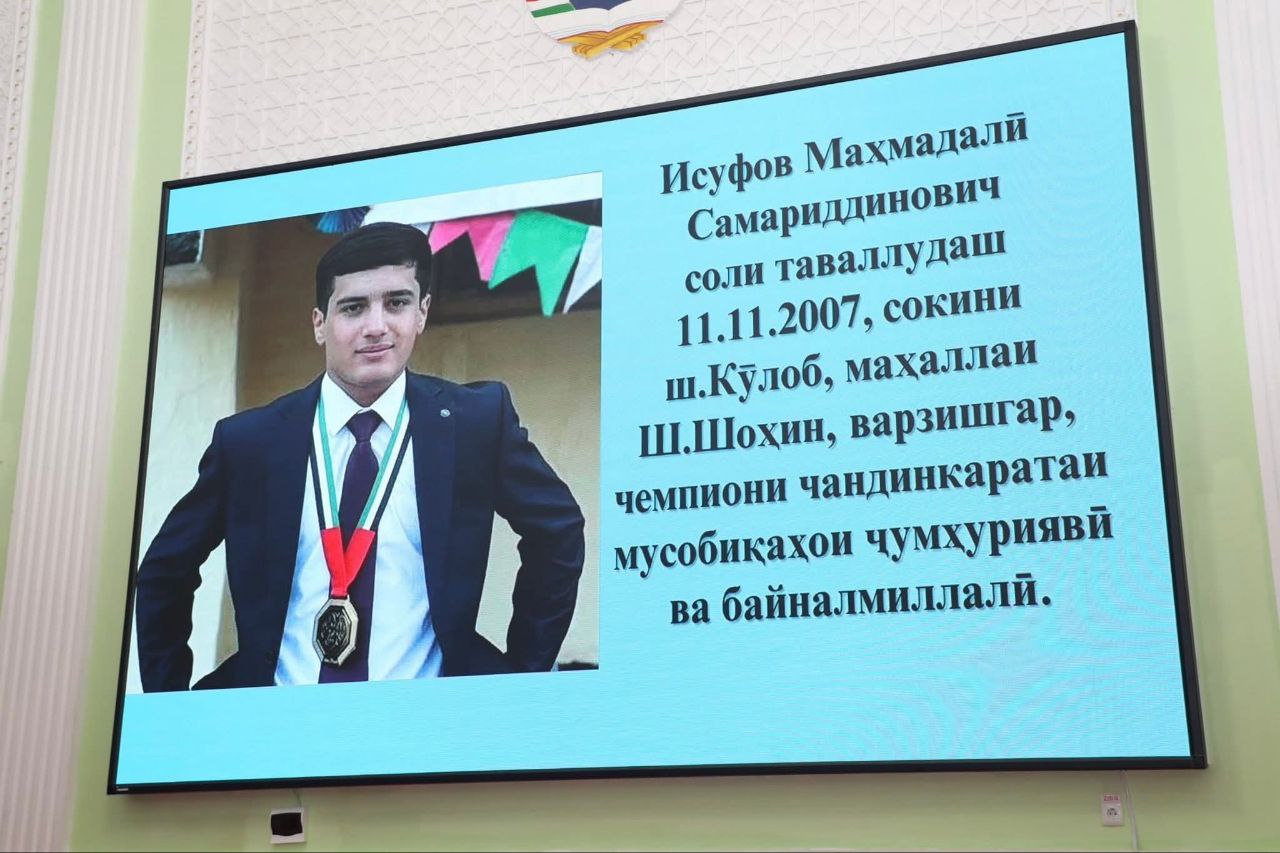
During the meeting, the Khatlon police chief showed photographs of those detained, confiscated weapons, and victims, which vividly demonstrated the consequences of crimes committed by minors. One such photo featured athlete Mahmadali Isufov (Muhammadali Sa’dulloyev), who was killed in a group fight on the evening of January 11.

Three of his peers were injured in the incident. Authorities have charged the 19-year-old Kulob resident Suleimon Odinayev, who was detained in connection with the crime.

Nazarzoda pointed out that issues such as knife fights among teenagers, the spread of extremist views, and the use of psychoactive substances remain among the most pressing challenges for the city.

The meeting also focused on the presentation of statistical data and criminal case materials, highlighting the real consequences of involving minors in criminal activity.

The Khatlon police chief underscored the crucial role that athletes, sports coaches, and active youth play in shaping legal consciousness among teenagers.

He urged them to personally contribute to crime prevention and to strengthen public order in the city. Nazarzoda emphasized that stability and safety at the community level can only be ensured through constructive collaboration with law enforcement.

At the conclusion of the meeting, participants proposed a number of practical initiatives to enhance cooperation between local residents and law enforcement agencies. The primary focus was on creating a safe and stable environment for the younger generation, which would contribute to strengthening public order and improving the social atmosphere in Kulob.

According to the Khatlon police directorate, 719 crimes were registered in Kulob last year, surpassing the figures of previous years.

Trump establishes new “Council of Peace” as an alternative to the UN

0

On January 22, at the World Economic Forum in Davos, US President Donald Trump signed the charter for the newly created "Council of Peace" (Board of Peace), positioning it as an alternative to the United Nations. The ceremony drew representatives from countries in the Middle East and South America, including Saudi Arabia, Qatar, the UAE, Argentina, and Paraguay, as well as the Prime Ministers of Hungary, Viktor Orban, Armenia’s Nikol Pashinyan, and Azerbaijan’s President Ilham Aliyev, according to Meduza.

The event also saw nearly 20 delegates from various nations take the stage with Trump, though notably, no traditional Western European allies of the US were present, CNN reported.

In his speech, Trump emphasized that the Council would cooperate with organizations like the UN. White House Press Secretary Caroline Levitt confirmed that the Council of Peace has now officially been recognized as an international organization.


From Gaza to Global governance

Initially conceived by Trump as a governing body for the Gaza Strip in the aftermath of conflict, the scope of the Council has expanded significantly. Its charter suggests the Council’s role will be far broader, potentially making it a rival to the UN.

Trump will serve as the Council's Chairman, and countries will be invited to contribute $1 billion each to gain lifetime membership. Upon returning to Washington from Switzerland, Trump told reporters on his plane that he was open to remaining Chairman even after his second term ends, possibly for life. "I have the right to do so if I wish. Ultimately, I’ll decide," Trump said, adding that while some had urged him to stay in the position, he was not sure if he wanted to.


Structure of the Council of Peace

The Council of Peace will operate as a global board of directors, with Trump holding the position of Chairman. Even after his presidency ends, he will continue to represent the United States in the role. The Chairmanship is non-elective, and Trump will appoint his successor, but can only be removed through voluntary resignation or incapacity. Trump will act as a controlling shareholder rather than a representative of the US.

Membership in the Council will be limited to countries, not individuals, and nations must be invited by Trump. Membership terms will last three years, but countries that contribute $1 billion by January 22, 2027, will become permanent members. A two-thirds majority of Council members would be required to expel any country. The Council operates without binding international legal obligations and relies on voluntary contributions. It is structured as a non-profit international organization (NGO), so no parliamentary ratification is necessary for countries to join.

Critics have dubbed the Council a “pay-to-play club,” while supporters argue that nations contributing to global governance should have more influence.


Who’s in the Council of Peace?

Nearly 60 countries have been invited to join the Council of Peace, including Russia, Belarus, Ukraine, Kazakhstan, and Uzbekistan. However, several European nations plan to decline participation, partly due to Russia’s invitation. Trump explained that the Council needed powerful countries, not “children.”

At the Davos ceremony, the charter was signed by the following representatives:

·         Bahrain Prime Minister Salman bin Hamad Al Khalifa

·         Moroccan Foreign Minister Nasser Bourita

·         Argentine President Javier Milei

·         Armenian Prime Minister Nikol Pashinyan

·         Azerbaijani President Ilham Aliyev

·         Bulgarian Prime Minister Rosen Zhelyazkov

·         Hungarian Prime Minister Viktor Orban

·         Indonesian President Prabowo Subianto

·         Jordanian Deputy Prime Minister and Foreign Minister Ayman Safadi

·         Kazakh President Kassym-Jomart Tokayev

·         Kosovo President Vjosa Osmani

·         Pakistani Prime Minister Shehbaz Sharif

·         Paraguayan President Santiago Peña

·         Qatari Prime Minister Mohammed bin Abdulrahman Al Thani

·         Saudi Foreign Minister Faisal bin Farhan Al Saud

·         Turkish Foreign Minister Hakan Fidan

·         UAE President’s Office Head Khaldoon Al Mubarak

·         Uzbek President Shavkat Mirziyoyev

·         Mongolian Prime Minister Gombojavyn Zandanshatar

China, Russia, and several other countries have yet to provide a final response. Russian President Vladimir Putin suggested that the $1 billion fee could be sourced from Russia’s frozen assets in the US.

Several Western countries, including the UK, France, Sweden, and Norway, have declined the invitation, with Canada seemingly following suit after its Prime Minister criticized Trump’s policies at Davos.


The Ukraine dilemma

Among the invitees is Ukrainian President Volodymyr Zelensky, who met with Trump in Davos. While Zelensky received an invitation, analysts note that his participation may be complicated due to the potential for cooperation with Belarus and possibly Russia. Despite this, Trump’s support for Ukraine is now seen as crucial for Kyiv, perhaps more than for any other nation.

As the Council of Peace continues to evolve, it remains to be seen whether it will successfully challenge the long-standing influence of the United Nations in global governance.

Job interviews for work in Qatar: Tajikistanis invited to interview with dress code

0
2023-12-19_155521

Tajikistan’s Ministry of Labor, Migration, and Employment of the Population (MoLMEP) has announced the schedule for job interviews for those wishing to work in Qatar. A mandatory requirement is formal attire: suit, white shirt, tie, and classic shoes. Applicants who do not comply with the dress code will not be allowed to attend the interviews.

The MoLMEP Agency for Overseas Employment has organized interviews with representatives from the company Jusour (Qatar Manpower Solutions Co.), which represents six of Qatar's largest companies, including Ali Bin Ali, UDC, Rosewood Hotels, Accor Hotels, Marriott Group, and Qatar Airways.

The interviews will take place in the capital, Dushanbe, at the Ministry of Labor, Migration, and Employment of the Population, located at: 5/2 Alisher Navoi Street.

Interview Schedule:

·         January 25 (Sunday) — 10:00 AM

·         January 26 (Monday) — 09:00 AM

·         January 27 (Tuesday) — 09:00 AM

Resume submissions for the interviews are open from January 22 and will close on January 24. Candidates must submit their documents to the Agency by the stated deadline.

Applicants are required to attend in formal attire: suit, formal trousers, white shirt, tie, and classic shoes. Those who do not adhere to the dress code will not be allowed to participate in the interview.

In addition to positions in the hospitality, logistics, and aviation sectors, vacancies are also available in technical, driving, and service fields.

For more information, candidates can contact the Agency’s main office in Dushanbe or reach out to the contact numbers in various regions of the country.

Contact telephone numbers:

·         Dushanbe: 221-39-67, 221-39-83, +992 55 555 1080, +992 987 906 666, +992 918 391 575, +992 930 934 994

·         Sughd Province: +992 93 999 0909, +992 88 440 6633

·         Khatlon Province: +992 905 800 063

·         Gorno-Badakhshan Autonomous Region: +992 935 101 439

For further details about the interviews, candidates can contact the Agency for Overseas Employment. 

Registration of pensioners in Tajikistan via Face ID system extended?

0

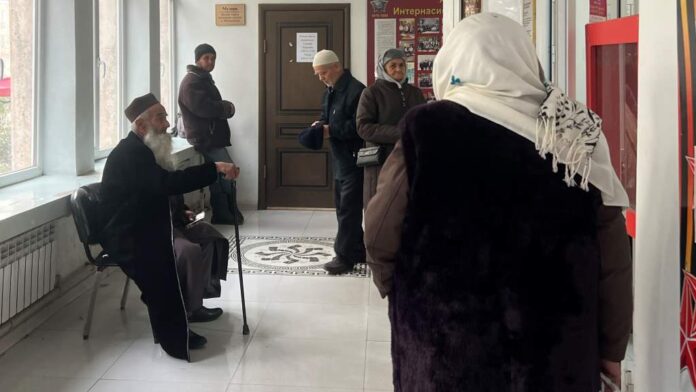
Despite the official deadline for the digital registration of pensioners in Tajikistan having passed more than 20 days ago, the process of electronic identification is still ongoing. Officials at the Social Security and Pension Fund have not provided official comments on the matter. However, a visit to at least two pension departments in the capital revealed that registration for pensioners is still underway.

The registration process, which began in the second half of November, was initially scheduled to conclude by December 30, 2025, in all cities and districts of the country. However, observations made on January 20 at two pension offices in the capital showed that pensioners are still coming in to register. Some individuals who had already completed their digital registration were called in again for a second time.

An employee from the Shohmansour district pension department, who asked to remain anonymous, explained that the repeat visits were due to "technical issues" that prevented their data and facial images from being properly uploaded to the system.

At the Social Security and Pension Fund office in Dushanbe, officials confirmed that the exact number of registered pensioners in the capital is currently unavailable. They did not specify a final deadline for the registration process but mentioned that "this process will continue, and all pensioners will undergo authentication when receiving their pensions."

Despite repeated inquiries from Asia-Plus about the registration statistics, the Tajikistan Social Security and Pension Fund has yet to respond.

Previously, the agency reported that, as of December 11, 2025, around 40% of pensioners had completed their digital registration or authentication.

It’s important to note that the decision to introduce digital registration and authentication for pensioners was made by the Tajik government on October 31, 2025. A working group was established through an order issued by the agency's director on November 14, 2025.

Pensioner data is being registered via mobile phones, with photographs and personal information being uploaded into a special system. To register, pensioners must visit one of the agency’s offices with an official identification document.

Earlier, the agency had announced that pensioners could register at any of the agency's offices, not necessarily the one in their place of permanent residence. Additionally, pensioners residing abroad could complete their registration upon returning to Tajikistan. Those unable to visit the office due to illness or disability would be registered at home by agency employees.

The purpose of the program, according to the agency, is to ensure "transparency and management efficiency." The registration will be carried out in all 68 cities and districts across the country.

As of January 1, 2026, official data indicates that Tajikistan has 877,206 pensioners. The average pension amounts are as follows: 509 somoni for the insurance pension, 641 somoni for the labor pension, and 362 somoni for the social pension.

Artist from Asht revives fairytales by painting on stones

0

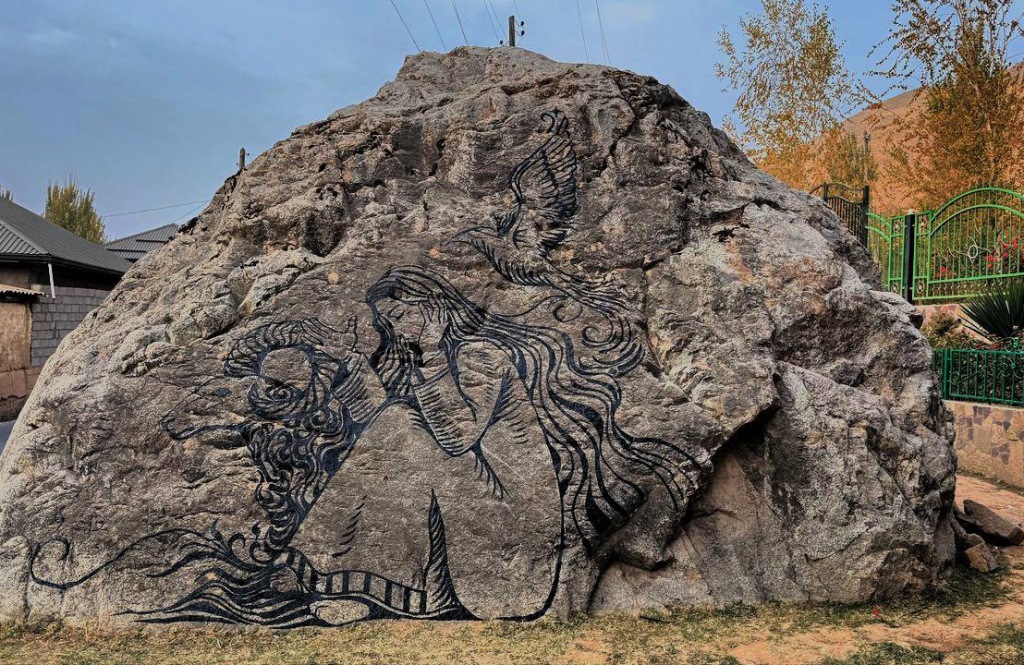
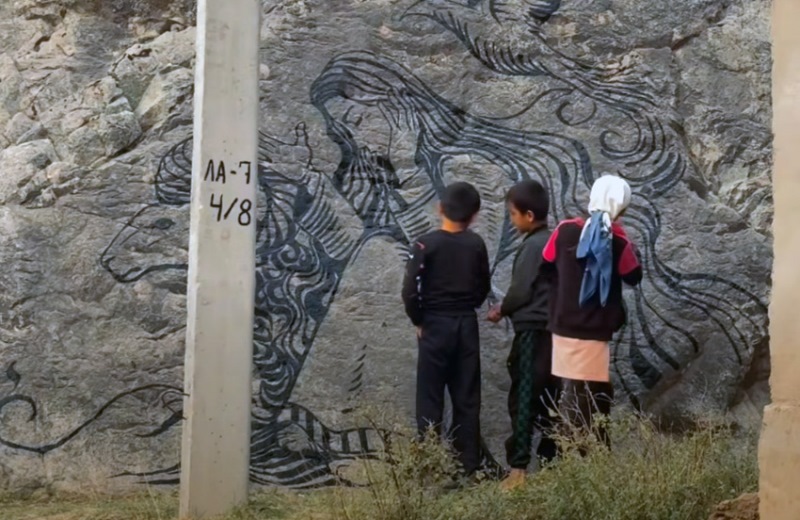
Amir Kholmatov doesn’t paint in a studio or exhibition hall. His canvases are stones, his audience is made up of random passersby, and the themes for his artwork stem from fairytales, memories, and conversations with local residents. The artist intentionally steps away from the traditional art format and seeks to create a dialogue with those who rarely visit galleries.

We traveled to the Asht district, Amir's hometown, to see how art emerges on this unconventional canvas.


Why stones?

Amir’s decision to paint on stones came to him only recently. After returning to Tajikistan following a long period abroad, he found himself undergoing an internal reevaluation. Not only had his living situation changed, but his understanding of himself, his identity, and how and what he wanted to express as an artist also evolved.

Drawing had accompanied Amir since childhood. It began with simple sheets of paper, then moved to canvases. Although there were no artists in his family, art was long considered a frivolous pursuit. Therefore, Amir received his degree, with honors, in a completely different field—he became a physical education teacher.

After university, he tried various career paths but never stopped drawing. He began attending art exhibitions, quickly noticing a recurring pattern: the same people—those already involved in the art world—kept showing up.

"If we create art for someone but those people don’t come, then something’s not working. For example, exhibitions about violence—the very people these projects are intended for rarely attend. This raises the question: How can we engage with the audience?" Amir reflects.

The answer turned out to be surprisingly simple—he would go directly to the people. Thus, the idea to paint on stones was born. This choice was not accidental, as painting on stones is one of the oldest forms of art, dating back to petroglyphs.

Moreover, stones belong to no one. They are often overlooked, but once an image appears, they start to attract attention.

"Some stop, some ask questions, some don't understand at first but later start thinking about it. The stone seems to belong to no one, but someone will always come over and ask, 'Why are you doing this?'" Amir says.


When fairytales reach the people

Amir painted his first stone artwork relatively recently, when he began working on a project centered around fairytales.

"It’s through fairytales that children learn about good and evil, responsibility, and mutual support. It’s a universal language understood by people of all ages and viewpoints," he explains.

Before starting a new piece, Amir always speaks with local residents, asking about the stories they grew up with, the fairytales their parents and grandparents told them, and the oral traditions passed down through generations.

The artist’s goal is to remind people that fairytales used to be an important part of life but are slowly disappearing today.

"Sometimes, I feel old-fashioned with these eternal truths—about honor, courage, responsibility. But that’s exactly what fairytales teach. And nowadays, it seems like we live as if no one owes anything to anyone—neither parents to children, nor society to individuals," Amir reflects.

In a short time, Amir has worked in various locations. One of the most memorable pieces was created in Hisor, where he painted a local legend on a large stone that the community believes to have healing powers. Women with children gather there every Wednesday.

Despite the sacred nature of the stone, the head of the mahalla allowed Amir to paint on it, and he depicted a girl from a local legend. Later, he painted the famous Hisor goat on the same stone.

"The most touching part is when children approach and ask why it's okay to paint on stones. It’s a very important question because we need to understand where the line between art and vandalism is drawn. To work in a public space requires responsibility. Before painting on stones, I ruined tons of paper to make sure I was doing the right thing," Amir says.

For his stone paintings, Amir uses regular enamel or acrylic, which ensures the artwork lasts for years, even through rain and snow.

Amir dreams of working with stones in the picturesque mountain valley of Childukhtaron, a place steeped in legends.


“The weeping willow tales”

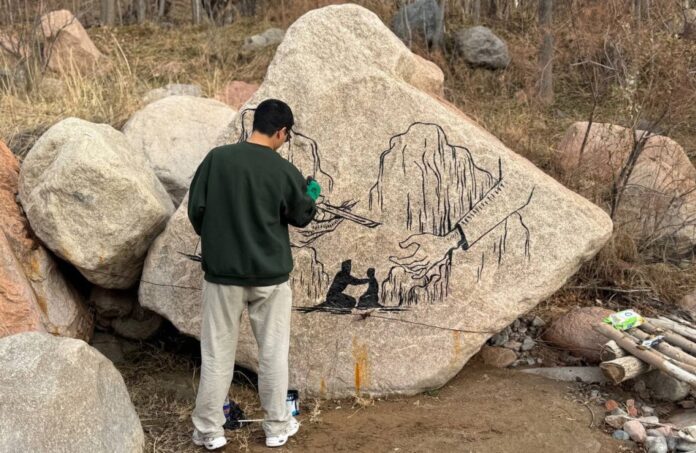
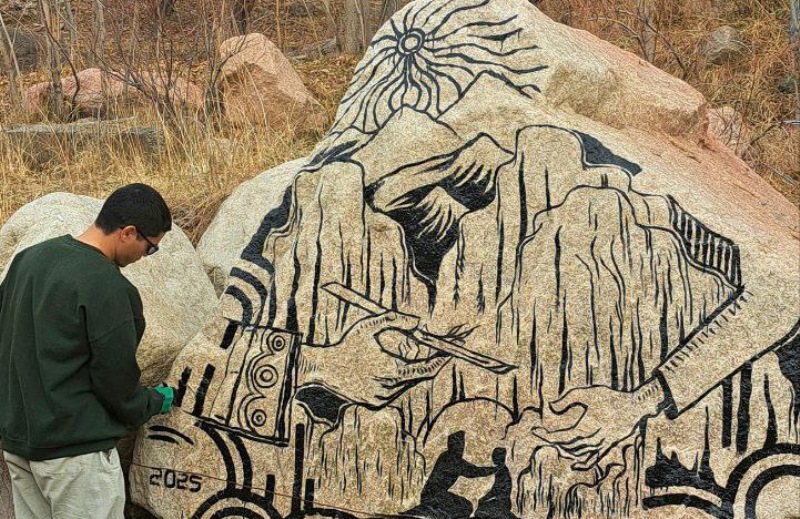
This time, we found Amir working in his hometown of Asht. He chose his stone from among the many boulders scattered across the dried-up wadi near the village of Dahana.

This area holds memories of a tragedy from the late 1990s when a powerful landslide caused by the floods nearly destroyed the village. People died, homes were ruined, and for the locals, these boulders serve as a constant reminder of that horrific event.

The subject for his artwork was an essay titled "Qissahoi Majnunbed" (“Tales of the Weeping Willow”) by the famous Asht journalist and writer Solehomoh Ramhatulloyeva, who wrote extensively about women's lives and advocated for their rights. She passed away at 48, and the street where she was born now bears her name.

In her essay, the story tells of a woman who had to move repeatedly due to war and natural disasters. Despite the constant relocation, she always took a branch of a weeping willow and planted it in each new place, nurturing gardens and caring for nature.

On the stone, Amir did not depict the literal scene but instead created a symbolic image—depicting the transmission of experience from the older generation to the younger. The artist believes that each viewer will interpret the image in their own way.


Art beyond commerce

Amir makes a point of not turning his stone paintings into commercial art. For him, this is not a way to earn money but an attempt to restore art’s social function and establish a live connection with people.

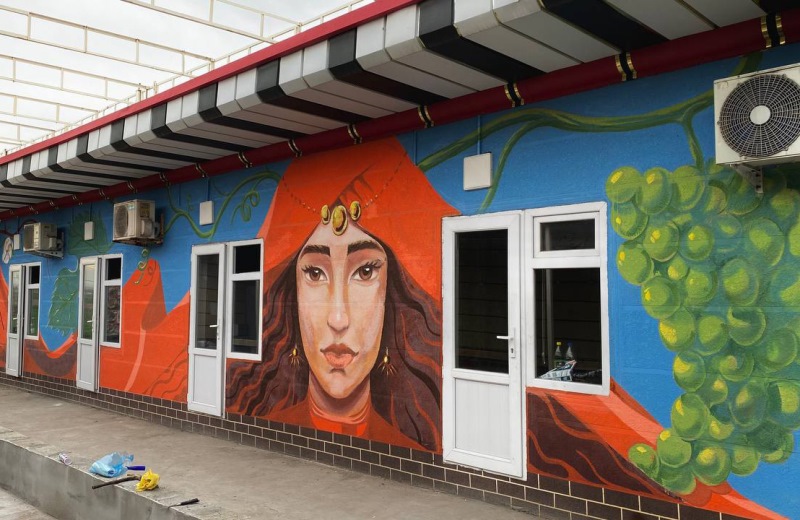
He earns his living through other forms of art—on canvases and murals in urban spaces. As for a solo exhibition, Amir is still unsure.

"Perhaps, from each place where I paint on stones, I’ll take small stones with me and add more drawings to them. Eventually, they will form a small traveling exhibition," he shares.

When he first began painting on stones, Amir thought that society wouldn’t be ready for this kind of art—that people wouldn’t understand it and that it would be too unconventional for Tajikistan. But practice proved otherwise: most people reacted calmly and with interest.

"No one has chased me with shovels or tried to drive me off," Amir laughs. "And it’s not that the audience isn’t ready. Sometimes, I think that we, ourselves, are just not ready to approach people. And if at least one person, walking by a stone with a painting, stops and reflects, then it’s all worth it, and my task as an artist is fulfilled." 

Woman arrested for attempting to sell her 8-month-old baby

0
photo_2026-01-22_10-32-02

In Roudaki district, law enforcement officials have arrested a 34-year-old woman who attempted to sell her 8-month-old child for 100,000 somonis.

According to the Ministry of Internal Affairs, the woman, a resident of the village of Turdiyev in the same district, was apprehended on January 18 while receiving the money.

Criminal proceedings have been instituted against her under Article 167 of Tajikistan’s Criminal Code – child trafficking; an investigation is under way. 

If found guilty, the woman could face a prison sentence of no less than five years.

The woman's motives and her perspective on the incident remain unclear, and there have been no reports about the child's current condition or whereabouts.

In a related incident, earlier in the Sughd province’s Asht district, a woman was arrested for attempting to sell her newborn child. A 34-year-old M. Madadova was suspected of violating the law concerning the trafficking in minors.

According to the Ministry of Internal Affairs, Madadova, a resident of the village of Iftikhor, was apprehended while trying to sell her one-month-old baby for 15,000 somonis (more than $1,400 USD).

Reports indicated that Madadova had been married four times and was raising five children. One of her children was adopted, two others were sent to an orphanage, and she was raising her youngest daughter on her own. When she was pregnant with her fifth child, the father abandoned her, leading her to attempt to sell the baby.

Madadova was arrested while receiving an advance of 5,000 somoni. An investigation has been launched into her case. 

Tajikistan to introduce new professional holiday

0

The Government of Tajikistan has issued a decree to approve and submit amendments to the law "On Public Holidays" for consideration to the Majlisi Namoyandagon (Tajikistan’s lower chamber of parliament). 

Under the proposed amendments, it is suggested to celebrate the Day of Social Insurance and Pension Workers annually on July 1st. It will be a working day

Currently, Tajikistan officially recognizes 97 public holidays. Among them, 12 days are considered non-working holidays, including the following:

·         January 1 – New Year’s Day;

·         March 8 – Mother’s Day;

·         March 21-24 – Navrouz Festival

·         May 9 – Victory Day;

·         June 27 – National Unity Day;

·         September 9 – Tajikistan’s Independence Day;

·         November 6 – Constitution Day of the Republic of Tajikistan;

·         Idi Ramazon or Eid al-Fitr — one of two major holidays celebrated by Muslims and commemorates the end of the holy month of Ramadan, in which Muslims fast daily from before dawn until sunset;   

·         Idi Qurbon or Eid al-Adha — the second of the two main festivals in Islam alongside Eid al-Fitr. It falls on the 10th of Dhu al-Hijja, the twelfth and final month of the Islamic calendar.

Why doesn’t Tajikistan process leather?

0
Leather

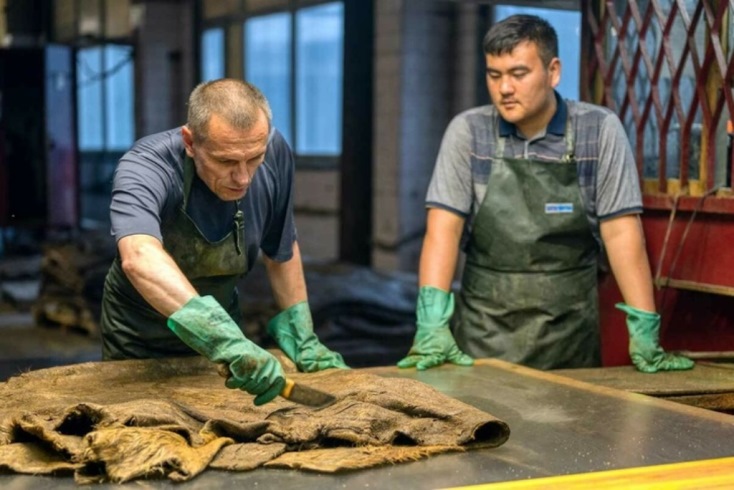
Only 1.0 percent of the leather Tajikistan produces is processed into manufactured goods in Tajikistan, while the remainder is exported for manufacturing outside the country, mainly to China. Despite having significant potential in the leather industry, the country remains an exporter of semi-processed raw materials, and finished products such as shoes, clothing, and accessories are almost entirely imported.

The main reasons for this situation are outdated technologies, a lack of investment, and weak government support, leading to annual losses of millions of dollars and job opportunities.


Historical context: decline after the collapse of the Soviet Union

During the Soviet era, Tajikistan had a developed leather and footwear industry. Factories in Dushanbe and Khujand processed up to 150 million square decimeters of leather per year, supplying the local population with footwear and leather goods and exporting products to other Soviet republics. However, after the collapse of the Soviet Union, these enterprises shut down, and the industry fell into decline.

Today, Tajikistan produces 1.5–1.7 million hides annually, but only 5,000–6,000 are processed, less than 1%. The vast majority of the raw material is sent to China, limiting opportunities for the development of domestic production.


Issues with processing and export

The lack of modern processing facilities for leather and its further use in the production of footwear and accessories remains one of the main reasons why Tajikistan does not develop domestic leather processing. In 2023–2024, the export of tanned leather amounted to $5.2–5.3 million, but the share of finished products was minimal — only a few thousand dollars.

In 2025, the situation did not improve: leather worth $2.46 million was exported, while the export of finished products was practically nonexistent. This highlights the raw-material nature of the industry and its dependence on external markets.


What is needed for industry development?

Despite attempts to change the situation, Tajikistan has not been able to achieve its goals. The Full Livestock Raw Material Processing Program, completed in 2015, set objectives to attract investments and increase domestic processing volumes, but these were not fulfilled.

The Industrial Development Strategy until 2030 calls for a shift from raw material exports to the production of finished goods, but these plans remain unimplemented.

To turn the situation around, Tajikistan needs to modernize its enterprises, attract investment, and create a cluster model that integrates raw material producers with processors. This will not only improve leather processing but also reduce dependence on the export of semi-processed raw materials.


Problems with government support and programs

After the completion of the livestock raw material processing program in 2015, no new specialized programs for the leather industry were developed. Requests to Tajikistan's Ministry of Industry and New Technologies remain unanswered. This indicates that the development of the leather industry is not receiving the necessary attention, despite its significant potential.

Migrant workers in Samara region will be banned from working as couriers and janitors

0

Starting in April 2026, the Samara region of Russia will impose restrictions on migrant labor in several sectors. The corresponding decree was signed by the region’s governor, Vyacheslav Fedorishchev, TASS reports.

Foreign nationals will be prohibited from working as couriers, drivers, and janitors, as well as in education, staffing agencies, and fields related to information processing.

According to the document published on the region’s government website, these restrictions are being introduced "to ensure the safety of citizens and protect the regional labor market."

According to RIA Novosti, the list of professions banned for migrants has been expanded to nearly 120 positions. Foreign workers will be prohibited from conducting regular passenger transport services for urban, suburban, and intercity transport. Additional restrictions are also being applied to trade and public catering.

Migrant workers will also be banned from working in education, including teaching and providing daytime care for children. The restrictions will cover employment services and personnel recruitment, as well as work related to information processing and database management.

A year earlier, the region had already introduced restrictions for foreign workers with patents in the industrial sector. They were prohibited from participating in the production of unmanned aerial vehicles, aviation and space technology, turbines, jet engines, and pumps, as well as the repair and maintenance of aircraft.

In addition, foreign workers with patents were restricted from conducting scientific research in fields such as biotechnology, nuclear energy, nanotechnology, and information security. The production and sale of certain food products, beverages, alcohol, and tobacco were also banned.

Similar restrictions have already been imposed in other regions of Russia.