Home Blog Page 89

Tajikistan ratifies agreement with Kyrgyzstan on mutual stay of citizens

0

Tajikistan’s parliament has ratified an agreement with Kyrgyzstan allowing citizens of both countries to stay on each other’s territory for up to 60 days without mandatory registration.

On January 9, the Majlisi Namoyandagon (Tajikistan’s lower chamber of parliament) ratified the Agreement between the Republic of Tajikistan and the Kyrgyz Republic on the Procedure for the Mutual Stay of Citizens, which was signed on February 1, 2018. The parliamentary newspaper Sadoi Mardum reported the decision.

It remains unclear whether the agreement has been ratified by Kyrgyzstan’s parliament.

Presenting the document to lawmakers, First Deputy Interior Minister Abdurahmon Alamshozoda said the agreement is aimed at further developing friendly relations between the two countries, regulating cross-border travel, and creating favorable conditions for the stay of Tajik and Kyrgyz citizens in each other’s territory.
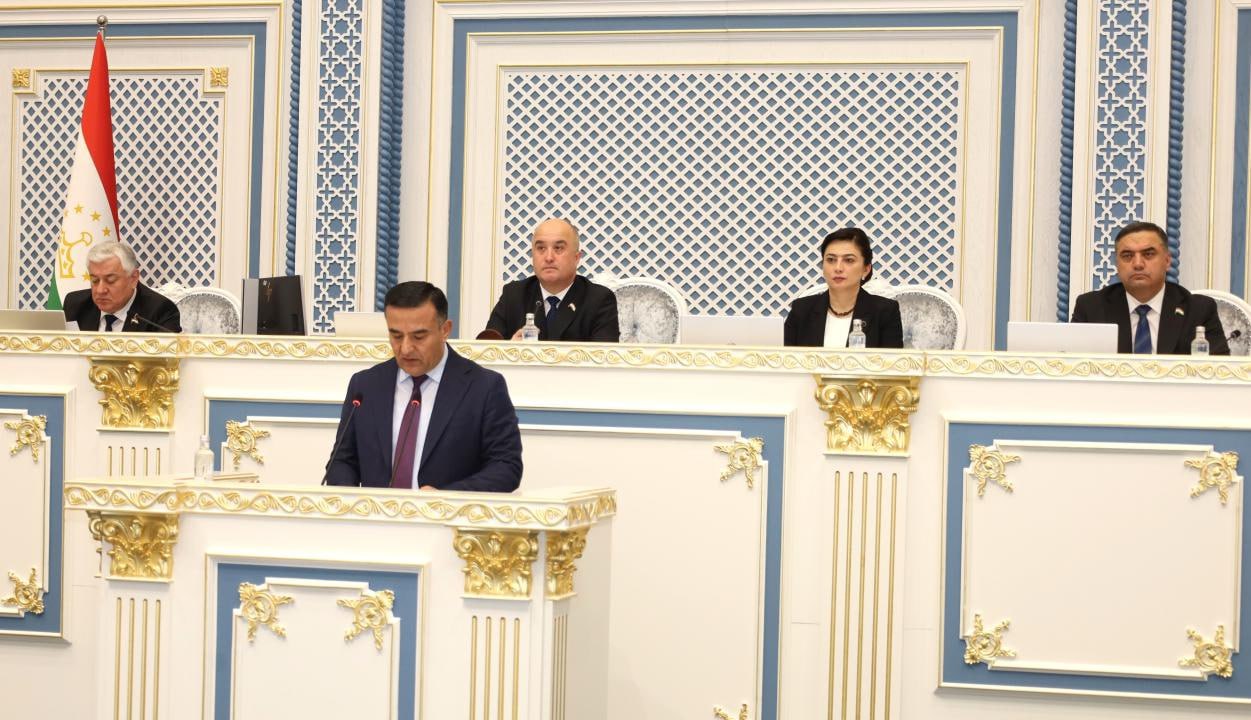
“The agreement establishes conditions under which citizens are exempt from registration requirements with the competent authorities, regulates temporary stays, defines the list of documents granting the right to enter the territory of the two states, and sets out other provisions governing lawful residence in line with international treaties,” Alamshozoda said.

During the presentation, the deputy interior minister did not specify the length of visa-free stay without registration, noting only that the agreement consists of 10 articles and “contains no corruption-related factors.”

Later, MP Shuhrat Ghanizoda told Asia-Plus that the agreement provides for a 60-day stay without registration for citizens of Tajikistan and Kyrgyzstan.

“The agreement states that citizens of the Republic of Tajikistan and the Kyrgyz Republic have the right to remain in each other’s territory for up to 60 days without official registration,” Ghanizoda said.
He added that regulating travel between the two countries would help protect the rights, freedoms, and legitimate interests of citizens on both sides.

In March 2025, Tajik President Emomali Rahmon and Kyrgyz President Sadyr Japarov signed a landmark agreement on the state border in Bishkek, ending years of border disputes that had resulted in dozens of deaths on both sides.

The two leaders also attended the ceremonial opening of two border crossings, restoring cross-border movement after the border had been closed for more than four years. The border agreement was ratified by the parliaments of both countries on March 18–19.
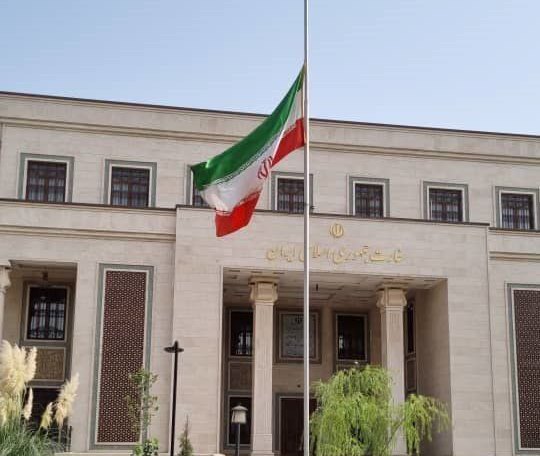
Iranian Embassy flag in Dushanbe lowered in mourning

0
photo_2026-01-13_13-07-20

The national flag of Iran has been lowered at the Iranian Embassy in Dushanbe following the declaration of three days of nationwide mourning in the Islamic Republic.

In a statement, the diplomatic mission said the mourning period was announced in memory of what it described as the “martyrs of national resistance.”

“In connection with the declaration of three days of nationwide mourning, the flag of Iran at the embassy in Dushanbe has been lowered. The embassy expresses its deep condolences and full solidarity with the proud people of Iran and extends gratitude for the nation’s heroic participation in the nationwide march as a vivid demonstration of unity, resilience, and national resistance,” the statement said.

The nationwide mourning period in Iran was declared on January 11 for those killed during what authorities describe as resistance against the United States and Israel.

Iranian Foreign Minister Abbas Araghchi said during a meeting with foreign ambassadors in Tehran that the United States and Israel were involved in the unrest in Iran and that Tehran has evidence to support these claims, RBC reported.

“We have numerous documents and evidence of U.S. and Israeli involvement in the terrorist actions of recent days in Iran,” Araghchi said, adding that those responsible would be held accountable. He also stated that the authorities had brought the protest situation under control.

Iranian officials have previously said that 38 law enforcement officers were killed during the dispersal of protests. No official figures were provided regarding civilian casualties.

The Iranian authorities called on citizens to take part in a march on January 12 to “demonstrate national unity and cohesion to the world.” The rally was titled “National Solidarity and Respect for Peace and Friendship.”

According to Iranian state media, thousands of people responded to the call and gathered in Tehran in support of the government. State television aired footage of a large crowd in central Tehran waving Iranian flags. Deutsche Welle reported that similar pro-government rallies were held in other cities across the country.

Meanwhile, the human rights organization IHR reported that the number of protesters killed has exceeded 600, with 48 members of the security forces also reported dead. The Tasnim news agency, for its part, reported 109 fatalities among security personnel.

Protests in Iran began on December 28 at Tehran’s main bazaar, initially led by shop owners and students angered by the sharp devaluation of the national currency and soaring prices. Amid the economic turmoil, Iran’s Central Bank Governor Mohammad Farzin resigned.

The demonstrations later spread to other cities and took on a political dimension, with protesters calling for a change of regime.

Iranian President Masoud Pezeshkian earlier acknowledged the legitimacy of the protesters’ socio-economic demands, stating, “If we do not solve the everyday problems of the people, we will go to hell.” He also said that Iran is, in his words, “in a full-scale war with Israel, Europe, and America.” 

Kidnapping of former Dushanbe prosecutor’s son solved after 25 years

0
photo_2026-01-13_10-51-37

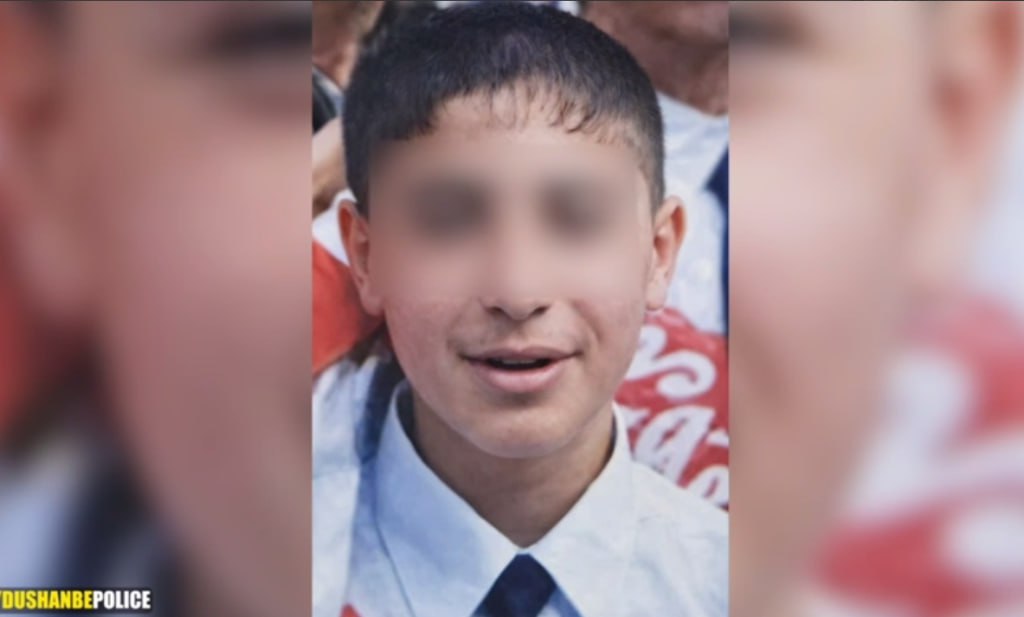
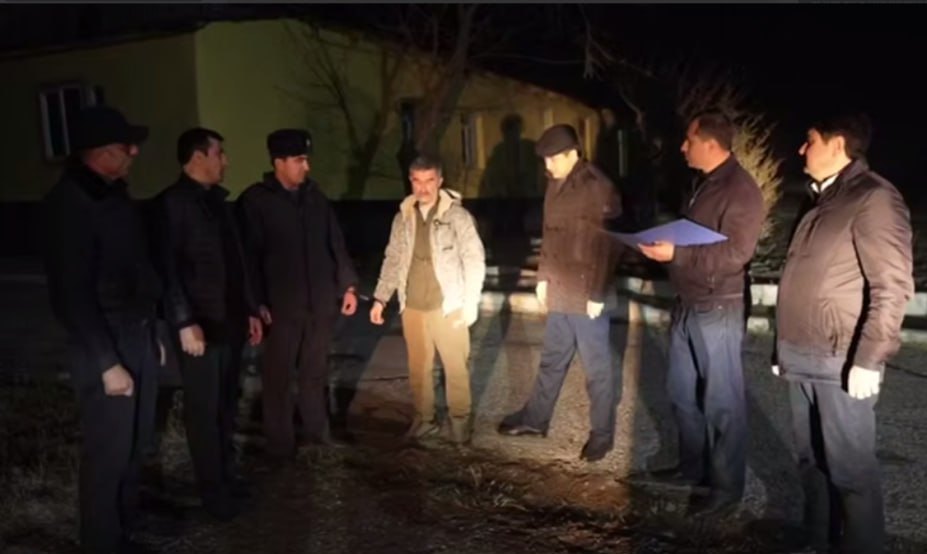
Law enforcement authorities in Dushanbe have solved a kidnapping carried out by an organized criminal group 25 years ago, the Dushanbe Police Department reported.

According to police, on the morning of January 21, 2000, unknown individuals abducted 16-year-old Manouchehr Sharipov near School No. 55 in the capital. The teenager was the son of Haqnazar Sharipov, who at the time served as deputy prosecutor of Tajikistan’s Transport Prosecutor’s Office.

Investigators said the crime was committed for personal motives and for the purpose of obtaining a large ransom. The kidnapping was allegedly organized by Khudoynazar Odinayev, identified as the leader of an organized criminal group.

Other participants included Abdulhaq Samadov, Rivojiddin Odinayev, and several other residents of Vahdat Township.

The kidnapped teenager was held for 65 days under armed guard in the village of Tangai, which is subordinate to Vahdat Township. The perpetrators demanded and received a ransom of $50,000 from the victim’s parents, after which the boy was released.

Criminal proceedings have now been instituted against members of the group under Article 130 (2) of Tajikistan’s Penal Code — kidnapping.

Police noted that the alleged ringleader, Khudoynazar Odinayev, was killed in 2013 after resisting law enforcement officers following the commission of another crime.

Among the group’s members, Abdulhaq Samadov has been detained and placed in custody, while the remaining suspects have been declared wanted.

The authorities did not disclose how investigators identified the suspects or the circumstances under which Samadov was arrested.

Will Tajikistan take part in the 2026 Winter Olympics in Italy?

0
Milano

The 2026 Winter Olympic Games, set to take place from February 6 to 22 in the Italian cities of Milan and Cortina d’Ampezzo, are expected to be one of the major global sporting events of the coming years. These will be the 25th Winter Olympics in history, the fourth hosted by Italy, and the first in which Milan will serve as an Olympic host city. Cortina d’Ampezzo previously hosted the Winter Games in 1956.

Around 3,000 athletes from 91 countries are expected to compete, with 116 sets of medals to be awarded—seven more than at the Beijing 2022 Winter Olympics.  

Several countries, including Benin, Guinea-Bissau, and the United Arab Emirates, will be represented at the Winter Olympics for the first time in history.

The Milano–Cortina 2026 program will be one of the most diverse in the history of the Winter Games. It will include 16 disciplines, such as biathlon, bobsleigh, curling, cross-country skiing, figure skating, ice hockey, luge, short track speed skating, skeleton, ski jumping, Nordic combined, and freestyle skiing. Ski mountaineering will make its Olympic debut, with medals awarded in men’s and women’s sprint events as well as a mixed relay.

For Tajikistan, the 2026 Winter Olympics could mark a return to the Olympic winter stage after a long absence. Currently, four Tajik alpine skiers are still competing for Olympic qualification spots.

The qualification competitions will continue until the end of January, after which it will become clear whether Tajikistan’s national team will once again compete at the main winter sporting event of the four-year cycle.

Tajik athletes last took part in the Winter Olympics in 2014 in Sochi. The 2018 Games in PyeongChang and the 2022 Games in Beijing were held without representatives from Tajikistan. As a result, a potential appearance in Milan and Cortina d’Ampezzo would be seen as an important step and a symbolic return of the country to winter Olympic sports.

Olympic competitions will be held across several locations in Italy. Milan will host events in ice hockey, figure skating, speed skating, and short track. Cortina d’Ampezzo will stage competitions in curling, bobsleigh, skeleton, luge, and women’s alpine downhill skiing. Additional events will take place in Val di Fiemme, Antholz (Anterselva), Bormio, and Livigno.

The opening ceremony will be held at San Siro Stadium in Milan, while the closing ceremony will take place at a historic arena in Verona. The qualification period will conclude on January 18, 2026.

Iran protests seen as most serious challenge to Islamic Republic in years

0
Iran

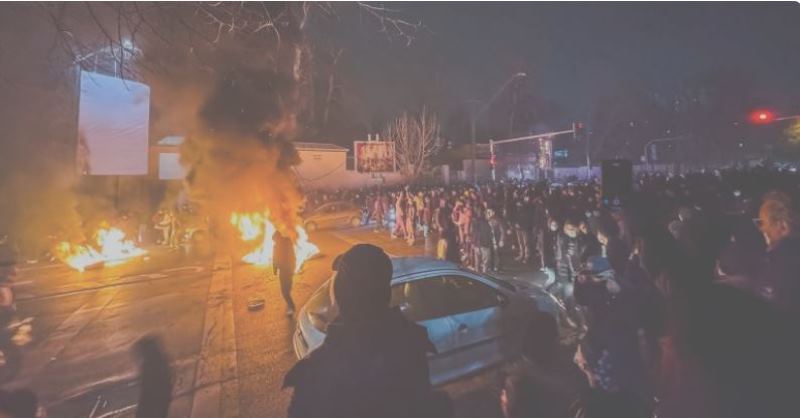
Ongoing anti-government protests in Iran are widely regarded as the most serious challenge to the Islamic Republic in recent years, according to international media and human rights groups.

The Guardian, citing the Norway-based NGO Iran Human Rights, reports that at least 648 protesters have been killed in a nationwide crackdown. Thousands more have reportedly been injured since demonstrations erupted on December 28, triggered by the collapse of Iran’s currency, the rial, and worsening economic conditions.

Speaking during a diplomatic visit to India on January 13, German Chancellor Friedrich Merz reportedly said he believes the Iranian government may be in its “final days and weeks,” arguing that the regime lacks “legitimacy through elections in the population.”

“If a regime can only keep itself in power by force, then it’s effectively at the end,” Merz said, according to The Guardian.

The Associated Press reported on Tuesday that Iranian mobile phone users were again able to make international calls, although restrictions on internet access remain in place.

The protests, which began in Tehran on December 28 before spreading nationwide, have evolved into broader demonstrations against Iran’s political leadership, with protesters voicing anger over economic hardship as well as social and political restrictions. The rial has continued to depreciate sharply, while the government’s decision to end a subsidized exchange rate for importers has led to a surge in food prices, The Guardian reported.

Iran’s economic crisis has been exacerbated by international sanctions. In September last year, wide-ranging United Nations sanctions were reimposed for the first time in a decade after the United Kingdom, France, and Germany triggered the measures, citing Tehran’s failure to address concerns over its nuclear program. Iran was already under significant strain from U.S. sanctions that cut the country off from much of the global financial system.

Sanctions imposed by the United States, the European Union, the United Nations, and other actors have contributed to high inflation, soaring consumer prices, and a sharp devaluation of the rial, worsening living conditions for ordinary Iranians.

At the same time, pro-government rallies have been held in several cities. State media reported that a large demonstration took place in Tehran, attended by thousands of people, including President Masoud Pezeshkian.

According to Al Jazeera, Iranian Foreign Minister Abbas Araghchi accused foreign actors of fueling the unrest, claiming the protests had “turned violent and bloody to give an excuse” for U.S. President Donald Trump to intervene militarily.

Araghchi told foreign diplomats in Tehran that violence spiked over the weekend but insisted that the “situation is now under total control.” He alleged that Trump’s warnings of military action had encouraged “terrorists” to target protesters and security forces in an attempt to provoke foreign intervention.

“We are ready for war but also for dialogue,” Araghchi was quoted as saying. He also claimed authorities possess footage showing weapons being distributed to protesters and said confessions from detainees would soon be released. The demonstrations, he added, were “stoked and fueled” by foreign elements, warning that security forces would “hunt down” those responsible.


Trump threatens tariffs on countries trading with Iran

Meanwhile, U.S. President Donald Trump said on January 12 that any country conducting business with Iran would face a 25% tariff on trade with the United States, according to Reuters.

“Effective immediately, any Country doing business with the Islamic Republic of Iran will pay a Tariff of 25% on any and all business being done with the United States of America,” Trump said in a post on Truth Social, adding that the order was “final and conclusive.”

Reuters reported that no official documentation of the policy had appeared on the White House website, and it remains unclear what legal authority would be used to impose the tariffs or whether they would apply to all of Iran’s trading partners. The White House did not respond to requests for comment.

Iran has been under heavy U.S. sanctions for years and reportedly exports most of its oil to China. Other major trading partners include Türkiye, Iraq, the United Arab Emirates, and India.

A bill on annexation Greenland reportedly introduced in the US Congress

0
347682169381410

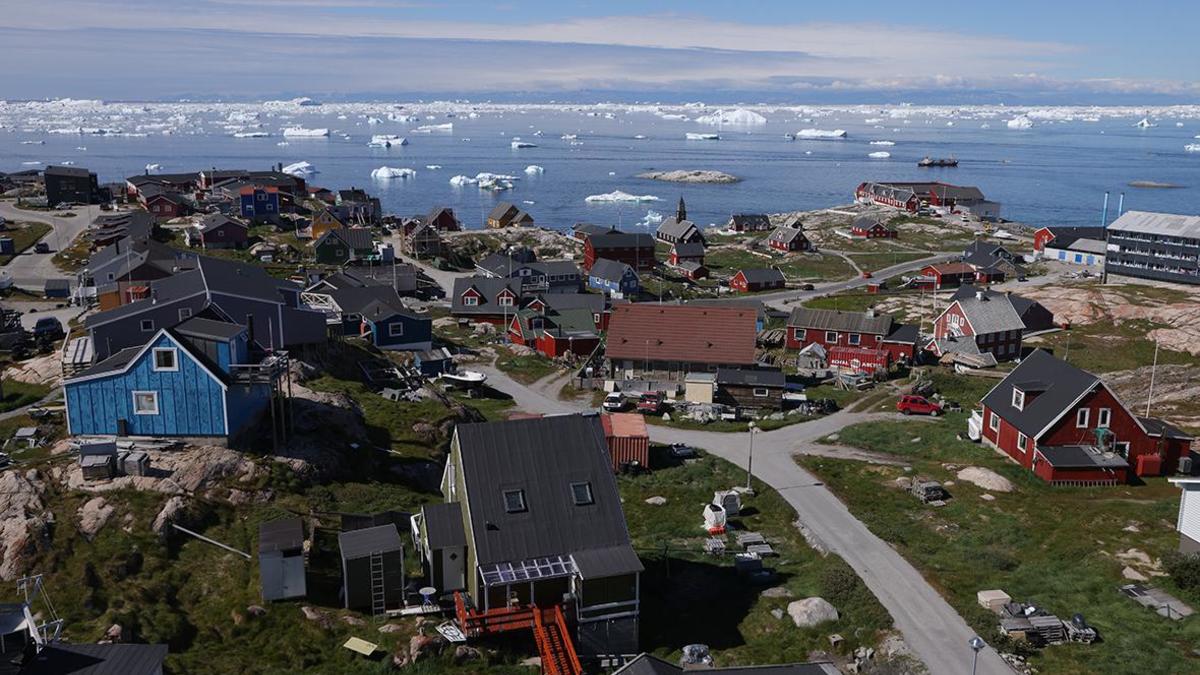
Republican Congressman Randy Fine has introduced a bill in the U.S. Congress proposing the annexation of Greenland and granting the island the status of a U.S. state. The initiative was announced in a press release published on the congressman’s official website, Ukrainian Pravda reports.

The explanatory note to the bill reportedly states that the United States must take steps to protect its strategic interests. According to the author of the initiative, establishing full control over Greenland is a matter of U.S. national security, particularly amid intensifying geopolitical competition in the Arctic.

“Greenland is critically important to the security of the United States. We cannot ignore the growing threats in the Arctic region and must act decisively to ensure that its development aligns with America’s interests,” the press release says.

The bill also proposes granting U.S. President Donald Trump the authority to take “any necessary measures” to establish control over the island.

“For too long, American leadership has stood by while our adversaries undermined our geopolitical influence,” Fine said, according to Ukrainian Pravda.

According to analysts, the escalation in rhetoric may be linked to a U.S. special operation carried out in Venezuela on January 3, 2026, which is believed to have reinforced the Trump administration’s confidence in pursuing a tougher foreign policy.

On January 9, Trump said during a meeting with oil and gas industry executives that the United States would obtain Greenland “one way or another.” White House Press Secretary Karoline Leavitt later confirmed that the administration is “considering all options,” including the possible use of military force, to “protect U.S. interests.”

Radio frequency fees in Tajikistan increase hundreds of times

0
photo_2026-01-13_07-42-06

Fees for the use of radio frequencies in Tajikistan have increased hundreds of times for mobile operators. Charges for 2G and 3G standards have risen roughly 400 times, while fees for 4G and 5G have increased more than 560 times compared to previous rates.

The changes are stipulated in Government Decree No. 476 of September 8, 2025, which introduced a new system for calculating payments for the use of radio frequency spectrum.

According to Annex No. 16 to the decree, fees are now calculated using a formula that includes the commercial value coefficient of the spectrum, a regional coefficient, and a base calculation indicator. The regional coefficient (G) is set at 3 for Dushanbe and 2 for Sughd and Khatlon provinces.

The commercial value coefficient is set at 60 for 2G and 3G mobile standards and ranges from 70 to 85 for 4G and 5G. With a calculation indicator of 78 somonis approved for 2026, the annual cost of using a single radio frequency in Dushanbe amounts to 14,040 somonis for 2G–3G and between 16,380 somonis and 19,890 somonis for 4G–5G.

Previously, the annual fee for one radio frequency was 35 somonis and did not depend on the communication standard.


Should consumers expect higher prices for mobile services and the internet?

Mobile operators have officially declined to comment. However, industry representatives speaking on condition of anonymity say the additional costs could amount to tens of millions of somonis.

“If previously an operator paid about 3,500 somonis per year for 100 radio frequencies, under the new rules—based on Dushanbe rates—that figure could rise to 1.4 million somonis for 2G–3G and nearly 2 million somonis for 4G–5G,” a company representative said.

Experts note that operators often use 200, 300 or more radio frequencies, which significantly multiplies the financial burden.

“Such a sharp and simultaneous increase in the cost of using radio frequencies, the introduction of disposal fees, and other new requirements may lead to higher prices for mobile and internet services. This contradicts the large-scale objectives set for telecommunications companies, including expanding nationwide mobile coverage, deploying 5G networks, and improving the quality and affordability of communications,” an industry expert said on condition of anonymity.


New rates for radio and television

The new tariffs extend beyond mobile communications. Annex No. 16 to Decree No. 476 also sets updated fees for other types of radio frequency use, including television broadcasting, radio broadcasting, radio relay links, satellite communications, and wireless data transmission technologies.

Under the document, these categories are also subject to a unified calculation formula using the base indicator and regional coefficient. The rates include:

·         state television frequencies — 5 calculation indicators;

·         non-state television frequencies — 8 indicators;

·         radar systems — 5 indicators;

·         radio broadcasting stations — 8 indicators;

·         satellite communication terminals such as Thuraya, Starlink, OneWeb, and similar systems — 5 indicators;

·         radio relay stations in the band up to 28 MHz — 30 indicators;

·         radio relay stations in the 56–500 MHz band — 35 indicators;

·         wireless data networks, including Wi-Fi (2,400–2,483.5 MHz and 5,000–6,000 MHz bands) — 5 indicators;

·         WiMAX wireless networks — 10 indicators.

The value of one calculation indicator in 2026 is set at 78 somoni, while the final payment amount depends on the applicable regional coefficient.

As a result, the new rules affect not only mobile operators but also a wide range of radio frequency users, for whom the cost of spectrum use has increased significantly compared to previous rates.

Heat purchase rates in Dushanbe to rise by 17%: will heating costs increase for households?

0

Starting February 1, purchase rate for thermal energy in Dushanbe will increase by 17%, alongside a rise in electricity prices. The decision is stipulated in a government decree that has already been signed.

The document identifies three categories of heat energy consumers: federally funded institutions and government bodies; the municipal enterprise Dushanbe City Heating Networks; and all other consumers.

Under the decree, the purchase price of thermal energy from producers—Dushanbe’s combined heat and power (CHP) plants and boiler houses—will rise by 17% for all these categories beginning February 1.

As a result, Dushanbe Heating Networks, which supplies heat to the city’s residents, will purchase thermal energy from producers (CHP plants and boiler houses) at 29.8 somonis per gigacalorie (Gcal), up from the previous rate of 25.50 somonis.

The federally funded institutions will pay 173.16 somonis per Gcal, compared to 148 somoni previously, while other consumers will be charged 199.1 somonis instead of 170.20 somonis.

An official source within the Dushanbe Heating Networks told Asia-Plus that the federally funded institutions include all ministries, committees, and agencies financed from the state budget.

The Dushanbe City Heating Networks is responsible for transporting and supplying heat to households, while the category of other consumers includes private, non-budgetary, and self-financed organizations.

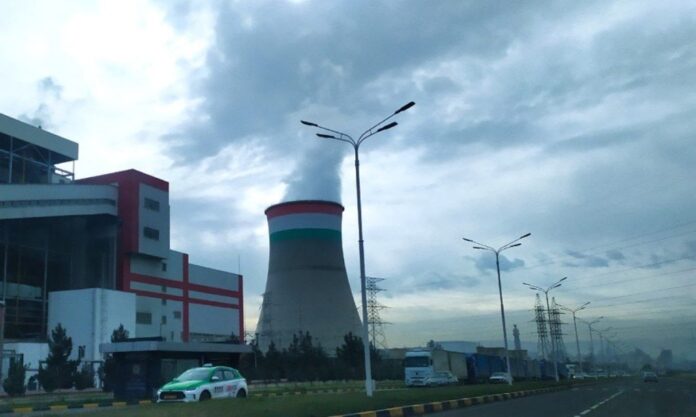
Thermal energy in Dushanbe is produced by the Dushanbe-1 and Dushanbe-2 CHP plants, as well as several boiler houses. All consumers purchase heat from these producers, after which suppliers sell it to end users, including households, at tariffs approved by the Antimonopoly Service.

In the energy sector, thermal energy is measured in gigacalories. One Gcal is required to heat 1,000 tons of water by one degree Celsius.


Will heating costs rise for residential consumers?

At the same time, the Dushanbe City Heating Networks representative told Asia-Plus that tariffs for households have not yet been increased.

“From February 1, we will be purchasing thermal energy at a 17% higher price—29.8 somonis per Gcal instead of 25.50 somonis. However, any increase in tariffs for residential consumers requires a decision by the city authorities, and no such decision has been made so far,” the source said.

Currently, residential consumers pay 1.18 somonis per month for each square meter of living space. This tariff has been in effect since 2019.

If household heating tariffs are raised by 17%, the monthly cost would increase to 1.38 somonis per square meter.

It is also noted that between 2020 and 2024, tariffs for thermal energy for heating networks, budget institutions, and other consumers remained unchanged. In 2025, the purchase price of heat increased by 50%, but household tariffs were not affected.

The heating season in Tajikistan typically begins in mid-November and lasts until mid-March. Authorities say the tariff increase is necessary to ensure the stable operation of heat supply enterprises and to cover rising production costs.

Radio Ozodi reports another Tajik citizen killed in the war in Ukraine

0

A 22-year-old citizen of Tajikistan, Muhammadnazri Salomzoda, has been killed in the war in Ukraine, Radio Liberty’s Tajik Service, known locally as Radio Ozodi, reported, citing the victim’s relatives.

According to them, Salomzoda’s body is currently being held at a morgue in the Russian city of Rostov-on-Don. His relatives, together with members of the Tajik diaspora, are taking steps to transport the body to Tajikistan for burial.

Family members said that Salomzoda held a Russian residence permit and had been working in Tyumen in recent months. He had applied for Russian citizenship and planned to return to Tajikistan to hold his wedding.

“After receiving his Russian passport, he was offered participation in the hostilities in Ukraine. He was forced to agree and was sent to the front. We learned about what had happened through social media and hoped until the very end that he would return,” one of his relatives said.

Friends of Salomzoda also told Radio Ozodi that he was sent to the war shortly after obtaining Russian citizenship. The exact date and location of his death remain unknown.

Relatives reported that as of January 8, Russian authorities had not provided them with official documents confirming the young man’s death. Salomzoda’s Russian passport and military ID have also not been found.

The funeral is planned to take place in his native village in Tajikistan’s Rasht district.

As Radio Ozodi notes, this is at least the fourth known case of a Tajik citizen killed in the war in Ukraine over the past month. In December 2025, three other natives of Tajikistan who died while serving in the Russian army were buried in their homeland: Ayubjon Pirov from Roudaki district, Azamat Sanginov from Panjakent, and Ghairat Begaliyev from Hamadoni district. According to the outlet’s sources, two of them were sent to the war from places of detention, while another was deployed after being promised assistance with legalizing his stay in Russia.

According to data from the Ukrainian state project “I Want to Live” as of November 2025, more than 7,500 people from Central Asian countries have joined the Russian armed forces, about 1,500 of whom have been killed.

Earlier, the project published three lists containing the names of around 2,000 natives of Tajikistan who fought on Russia’s side in the war, many of whom are believed to have been killed.


Noisy teen party disrupted in Dushanbe: knives seized, fines imposed

0
photo_2026-01-13_08-50-14

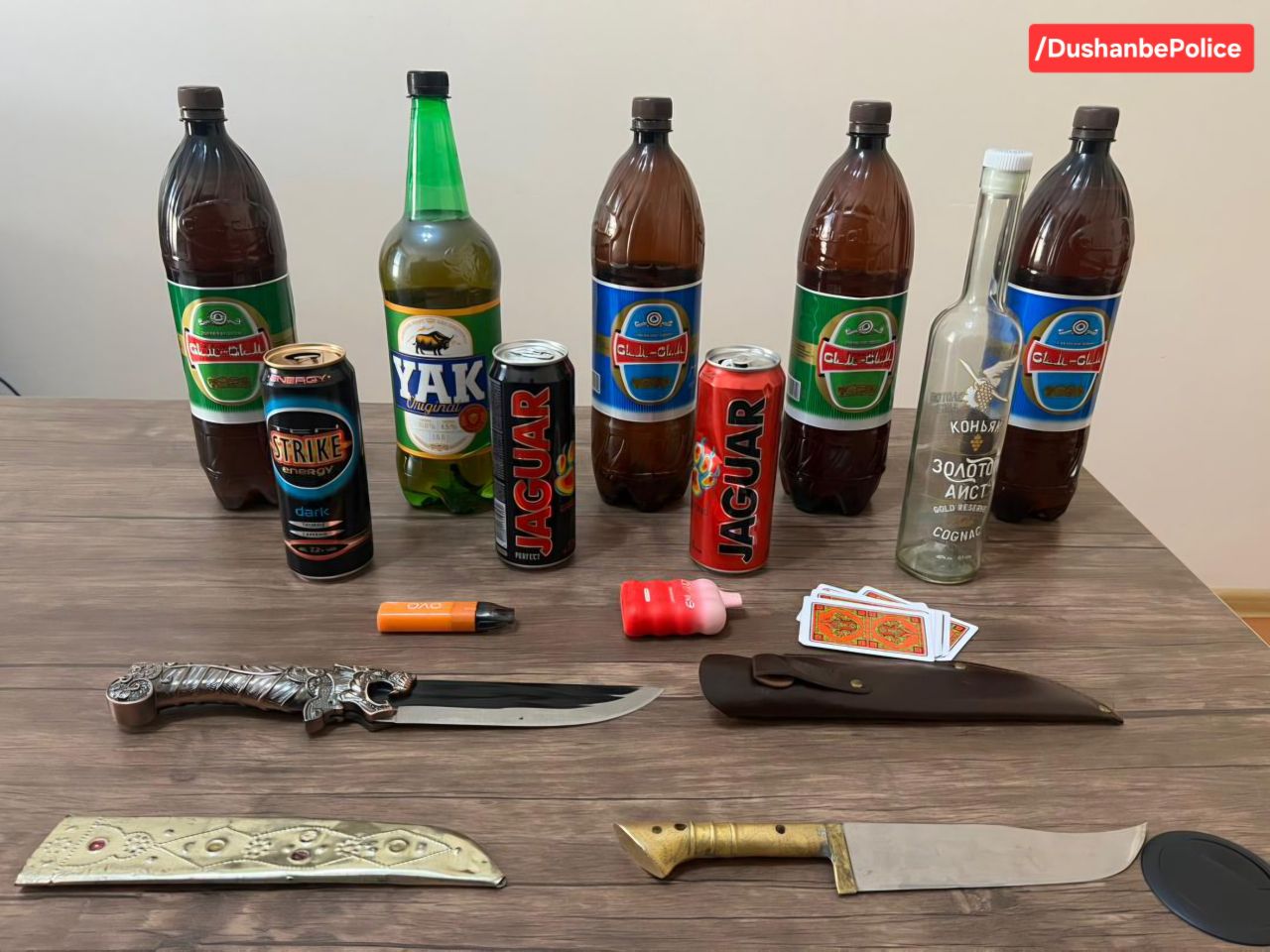
Police in Dushanbe have disrupted a noisy party involving teenagers that violated public order and disturbed residents.

The Dushanbe Police Department reports that police officers responded to a call and inspected an apartment located on Roudaki Avenue, where a gathering involving minors was taking place. The inspection revealed that the teenagers had been consuming alcoholic beverages.

Law enforcement officers also seized two knives found inside the apartment.

The owner of the apartment was held administratively liable. A court sentenced him to five days of administrative detention.

It was further established that the teenagers had purchased alcohol and tobacco products from the “Tim” store. An administrative protocol was drawn up against a store employee for selling alcohol and tobacco to minors.

In addition, the underage birthday celebrant was held liable for violating the Law on the Regulation of Traditions, Celebrations, and Rituals.

Administrative protocols were also issued against the parents of the teenagers, and the case materials have been forwarded to the court for further consideration.