Home Blog Page 90

Tajik MMA fighter killed in Teen Brawl in Kulob

0

A Tajik mixed martial arts (MMA) fighter, Muhammadali Sadulloyev, was killed during a fight between a group of teenagers in southern the city of Kulob, Khatlon province. Two other participants were injured and have been hospitalized.

The incident occurred on the evening of January 11 at around 8:00 p.m. in a computer gaming center. Speaking to Asia-Plus, the athlete’s coach, Kamol Valiyev, said the conflict began as a verbal dispute and escalated into a physical altercation.

“During the fight, one of the teenagers stabbed Muhammadali in the area of the heart. He died at the scene before reaching the hospital. The knife penetrated approximately 12 centimeters,” Valiyev said.

Sadulloyev’s funeral took place on January 12 after the midday prayer in Kulob’s 10th neighborhood unit.

According to his coach, the boy’s father returned to Tajikistan from Russia the same day after learning of his son’s death.

Kulob city authorities confirmed the teenager’s death and said two other individuals were injured and remain in hospital. Officials did not specify how many people were detained in connection with the incident.

Law enforcement agencies have yet to issue an official statement. The Interior Ministry’s department in Khatlon Region said details would be provided later.

Meanwhile, Radio Liberty’s Tajik Service, known locally as Radio Ozodi, reported that criminal proceedings have been instituted  on charges of “intentional infliction of grievous bodily harm” and “hooliganism.” According to the outlet, two suspects have been arrested and the investigation is ongoing.

A video of the fight, which surfaced on social media and quickly drew public attention, shows at least seven teenagers involved in the altercation and captures the moment when Sadulloyev is stabbed and collapses.

In 2024, Muhammadali Sadulloyev reportedly won the world championship in mixed martial arts and also became Tajikistan’s national champion. According to his passport, he was born in 2010, although some sources list his year of birth as 2007.

Observers note that this is not the first fatal incident involving minors in group clashes. In November last year, a similar conflict among teenagers in Dushanbe resulted in one death and serious injuries to another individual. Authorities at the time said the dispute had begun over verbal disagreements on social media.

Tajik citizens invited to work in South Korea under the EPS TOPIK system

0
photo_2026-01-12_10-42-28

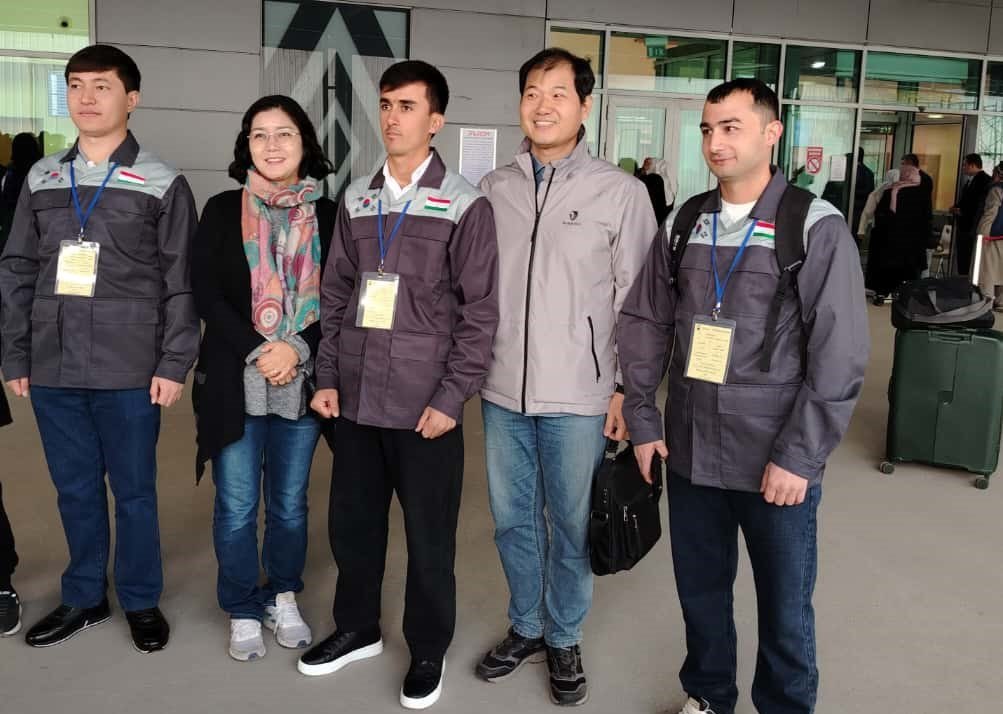
Tajikistan’s Agency for Overseas Employment (AOE) under the Ministry of Labor, Migration, and Employment of the Population (MoLNEP) has announced the registration of citizens seeking employment in South Korea through the government-run Employment Permit System (EPS).

The recruitment process includes participation in the EPS TOPIK exam, passing which is a mandatory requirement for legal employment in South Korea.

According to the Agency, the program is open to Tajik citizens aged between 18 and 38 who have no criminal record and have not previously been deported from South Korea. Applicants are also required to demonstrate proficiency in the Korean language at the level specified by the EPS TOPIK system.

For those planning to work in South Korea but who do not yet speak Korean, the Agency provides guidance and assistance with language training.

To support candidate preparation, the Titan Training Center, a Korean language training facility, was opened in Dushanbe in December 2025. The center offers language instruction and preparation for the EPS TOPIK exam, including the use of digital technologies and artificial intelligence tools. Officials say the program has produced results in a remarkably short period of time.

In recent years, South Korea has actively recruited foreign labor, including workers from Tajikistan. The EPS program allows foreign nationals to obtain employment legally, without intermediaries or additional fees.

After passing the required exams, candidates undergo a selection process, during which South Korean employers choose workers through the state-run system. Successful applicants sign employment contracts and are issued an E-9 work visa valid for up to five years.

Tajikistan joined the EPS program in 2025, and within the first year, dozens of Tajik citizens successfully passed the exams and departed for employment in South Korea.

New electricity rates in Tajikistan: what consumers will pay from February 1,2026

0

Tajikistan’s Ministry of Energy and Water Resources (MoEWR) has published a government resolution introducing new electricity tariffs that will take effect on February 1, 2026.

Under the new rates, electricity prices for residential customers will rise by 6 dirams per kilowatt-hour. As a result, the tariff for residential consumers will increase from 35.38 to 41.37 dirams per kWh.


Electricity rates from February 1, 2026 (per kWh, in dirams)

1.     Industrial and non-industrial consumers94.65

2.     Federally funded institutions, utilities, sports facilities, transport tunnels, electric public transport — 41.37

3.     Water supply pumps and irrigation pumping stations:
from April 1 to September 30 — 14.36; from October 1 to March 31 — 41.37

4.     Land reclamation wells and pumping stations — 14.36

5.     Drinking water supply and sewage pumps (excluding individual pumps) — 19.67

6.     CJSC Tajik Metallurgical Plant — 24.30

7.     OJSC Tajik Aluminum Company — 24.30

8.     OJSC Azot and the Smart City state enterprise (Dushanbe) — 41.37

9.     Textile enterprises processing cotton fiber into finished products — 47.33

10.  Private educational institutions not funded from the state budget — 71.02

11.  Residential customers — 41.37

If a household’s monthly electricity consumption exceeds 10,000 kWh, the amount above this threshold will be charged at the industrial tariff of 94.65 dirams per kWh, excluding VAT.

Most tariffs, with the exception of household consumers and certain specific categories, are set without value-added tax (VAT), which stands at a standard rate of 14%. The tariff for commercial electric vehicle charging stations has also been set at 94.65 dirams per kWh, excluding VAT.


Electricity rates in Tajikistan prior to February 1, 2026 (per kWh in dirams)

Before the new electricity tariffs took effect on February 1, the following rates were in force in Tajikistan (per kWh, in dirams):

1.     Industrial and non-industrial consumers — 80.90

2.     Federally funded institutions, utilities, sports facilities, transport tunnels, and electric public transport — 35.36

3.     Water supply pumps and irrigation pumping stations: from April 1 to September 30 — 12.27; from October 1 to March 31 — 35.36

4.     Land reclamation wells and pumping stations — 14.36

5.     Drinking water supply and sewage pumps (excluding individual pumps) — 16.81

6.     CJSC Tajik Metallurgical Plant: from May 1 to September 30 — 14.19
– October 1 to April 30 — 80.90

7.     OJSC Tajik Aluminum Company — 20.77

8.     OJSC Azot — 35.36

9.     Textile enterprises processing cotton fiber into finished products — 40.45

10.  Private educational institutions not funded by the state budget — 60.70

11.  Residential customers — 35.38

Until 2016, electricity tariffs in Tajikistan were increased every two years, only in even-numbered years. Since then, tariff hikes have occurred annually, with the exception of 2020–2021, when the government refrained from raising prices due to the economic impact of the COVID-19 pandemic.

The most recent tariff increase, including for household consumers, took effect on April 1, 2025—about nine months before the latest adjustment.

Tajikistan cuts fruit exports to Kazakhstan in 2025

0
photo_2026-01-12_10-07-58

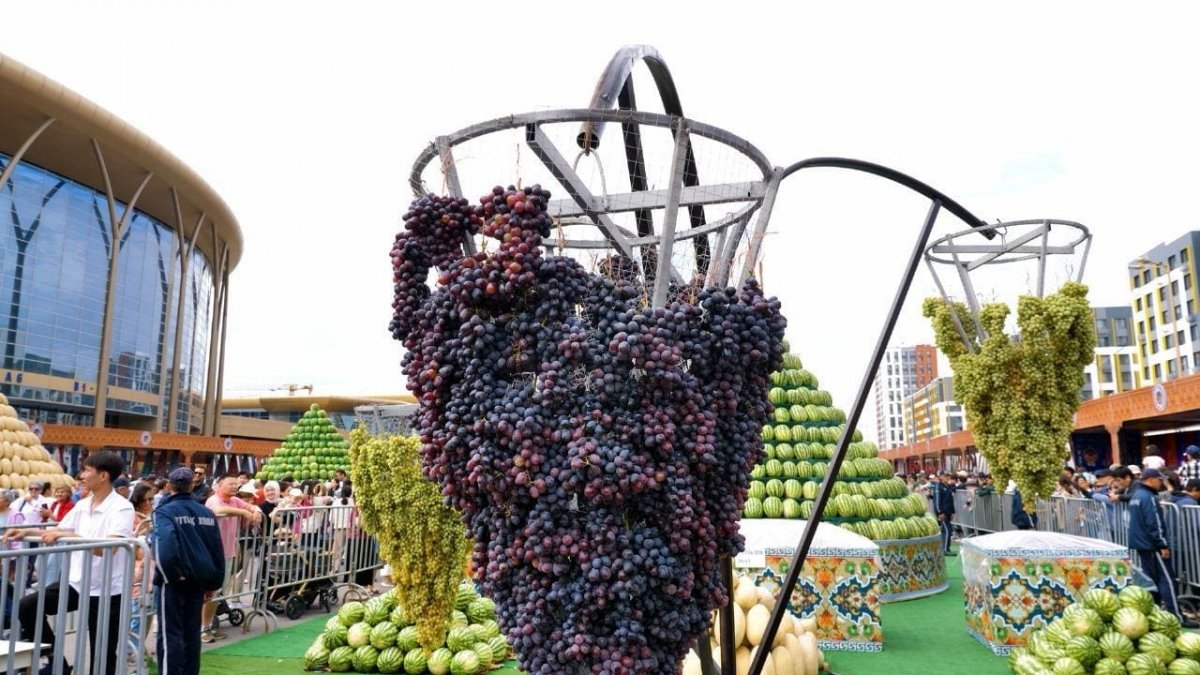
Tajikistan reduced its fruit exports to Kazakhstan in 2025, with shipments of grapes and stone fruits declining and the country failing to rank among the key suppliers in several product categories.

According to data from the LS portal covering January–October 2025, Tajikistan remains one of the suppliers of fruits to the Kazakh market, although its export volumes continue to lag behind those of neighboring countries.

Grapes remain Tajikistan’s main export item. During the first ten months of 2025, Kazakhstan imported 9,400 tons of grapes from Tajikistan, down 9.7 percent year-on-year. The value of these shipments amounted to approximately $3 million.

A decline was also recorded in the stone fruit segment. Exports of peaches, plums, cherries, and apricots totaled 1,700 tons, which is 2.5 times less than in the same period last year. The value of imports in this category was estimated at around $795,000.

In several other fruit categories, Tajikistan did not rank among Kazakhstan’s main suppliers. Apples were mainly imported from China, while watermelons came primarily from Iran. Additional fruit supplies were sourced from Chile and Algeria.

Overall, Tajikistan’s fruit exports to Kazakhstan in 2025 were largely concentrated on grapes and stone fruits, with both categories experiencing a decline in shipment volumes.


Cost of Hajj for Tajik citizens drops by nearly 4,000 somonis in 2026

0

The cost of performing the Hajj for Tajik citizens in 2026 has been set at 53,000 somonis, nearly 4,000 somonis less than last year. In 2025, the Hajj pilgrimage cost 56,800 somonis.  It is to be noted the cost of the Hajj in somoni depends largely on the exchange rate of the national currency against the US dollar.  In 2022, the cost of the Hajj for Tajik Muslims was raised from 3,750 U.S. dollars to 5,350 U.S. dollars.

Afshin Muqim, a spokesperson for Tajikistan’s Committee on Religious Affairs (CRA), told Asia-Plus that in line with Saudi Arabian requirements, countries with Muslim populations began accepting applications for the 2026 Hajj season earlier than usual.

“Over the past month, pilgrims in Tajikistan have submitted the required documents and completed payments. The application process has now concluded, and pilgrims are preparing for their journey,” Muqim said.

The departure of Tajik pilgrims to Saudi Arabia is tentatively scheduled for May 2026.

“The cost of Hajj-related services for 2026 has been set at 53,000 somonis. This rate was approved in December last year, and applicants have already made payments through Orienbonk,” he added.

The CRA has also announced a competitive selection process for Hajj guides for the 2026 season. Candidates are required to have thorough knowledge of Hajj rituals, strong organizational and communication skills, and conversational proficiency in Arabic or English. Applicants must be under 60 years of age. Preference will be given to candidates, who have performed the Hajj fewer than three times, either as pilgrims or guides. Applications will be accepted until January 20.

According to the CRA, around 5,000 Tajik citizens participated in Hajj this year.  Saudi Arabia had allocated 7,000 pilgrimage slots for Tajikistan.

Recall, Tajik authorities have introduced age restrictions for those who want to perform the Hajj.  For the first time, the CRA introduced age restrictions in 2010.  Only citizens aged 18 to 80 were able to perform the Hajj. In 2016, the CRA introduced new age restrictions, under which citizens under the age of 40 are no longer allowed to perform the Hajj.  The new age limit of 40 was raised from the limit of 35 that was instituted in April 2015. The aim of the decision to introduce the new age restrictions is reportedly to give older people an opportunity to achieve their dream to perform the Hajj.

In 2011, the CRA designed a new Hajj uniform; men don two-piece suits, while women wear long-sleeved dresses complete with headscarves.  The Tajik Hajj uniform is embroidered with the country’s symbols.

Hajj is one of the Five Pillars of Islam and becomes mandatory for Muslims once in their lifetime, provided certain conditions are met. These include being a Muslim, of sound mind, an adult, and financially and physically capable. For women, traveling with a mahram (a male guardian) is also required.

The concept of istita’ah—having the means and ability—is central to the obligation.  This includes affording travel costs, being able to support one's family during the absence, and being physically fit to perform the demanding rites of Hajj. If these conditions are not met, the obligation does not apply.

President Rahmon makes personnel changes in Tajikistan’s judiciary system and foreign ministry

0
55035955262_8568f71667_b

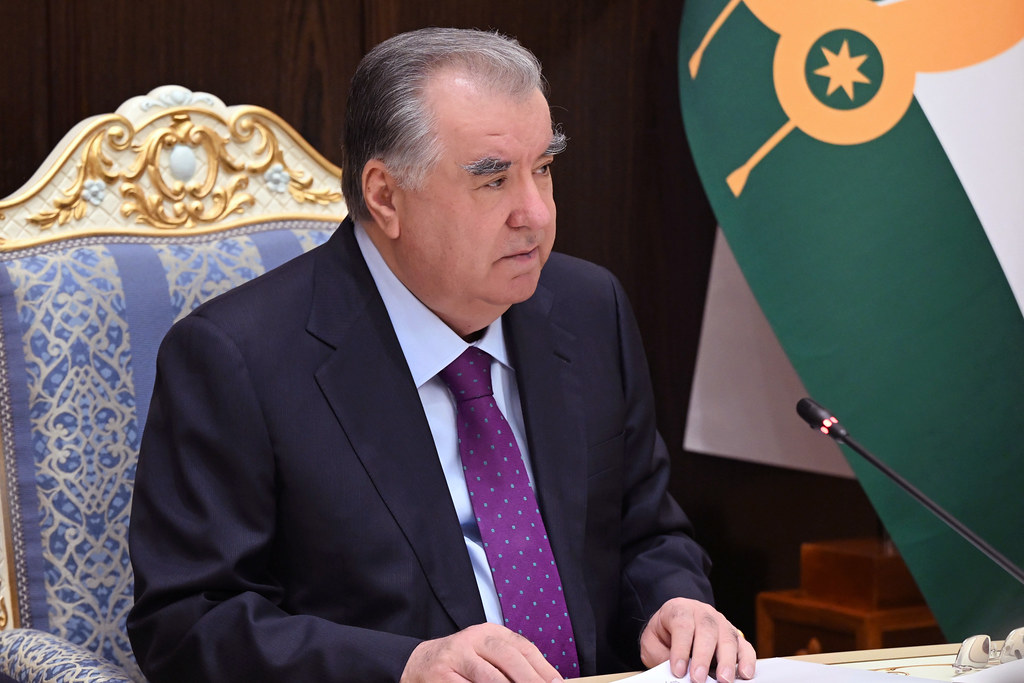
President of Tajikistan Emomali Rahmon carried out a series of personnel changes on January 12 affecting the country’s judicial system, the Ministry of Foreign Affairs, and several other state institutions, the president’s official website reported.

In particular, the president submitted proposals to parliament to recall Supreme Court judges Muhammadjaloliddin Kenjazoda and Safarbek Ghulomzoda due to the expiration of their terms.

At the same time, both candidates were nominated for reappointment as Supreme Court judges. Ms. Mahinabona Safarzoda and Ikrom Rahmonzoda were also proposed for appointment to the Supreme Court of Tajikistan.

Odil Nouralizoda was nominated for the position of judge of the High Economic Court.

By president’s decrees, new court chairpersons were appointed in Dushanbe’s Sino and Shohmansour districts, as well as in the districts of Murgab, Shahriston, Vakhsh, Rasht, Khovaling, Roudaki, and in the city of Nurek.

New deputy court chairpersons were also appointed in Khatlon and Sughd provinces, in Dushanbe, and in several other cities and districts.

Personnel changes were also made at the Ministry of Foreign Affairs. Three new deputy foreign ministers were appointed: Idibek Qalandar, who had previously served as Tajikistan’s Ambassador to Vienna; Ms. Nigina Alizoda, formerly First Deputy Minister of Justice; and Sanoi Boyzoda, who had worked at the State Committee on Investment and State-owned Property (GosKomInvest).

And official source within the Foreign Ministry told Asia-Plus that the three positions had remained vacant following recent staffing changes, but did not specify whom the new appointees replaced.

In addition, the president reportedly introduced personnel changes at the National Center for Legislation, the Agency for Supervision in Education and Science, the Chamber of Commerce and Industry, and other state bodies.

Growing glacier discovered in the Pamirs, defying global warming trends

0
photo_2026-01-12_11-43-31

Scientists have discovered a rare natural anomaly in Tajikistan’s Pamir Mountains—a glacier that is growing in size despite the widespread retreat of glaciers worldwide due to climate change.

According to the international science magazine Popular Mechanics, an expedition earlier this year to the Pamir Mountains in Tajikistan retrieved two ice cores from a glacier that seems to be perplexingly increasing in size.

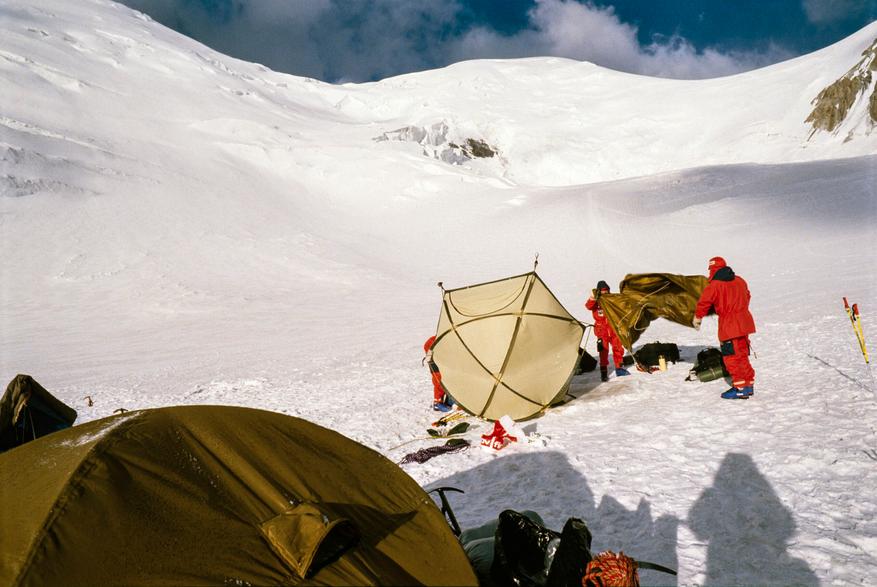
An international team of researchers reportedly conducted an expedition to the Kon-Chukurbashı ice cap, located at an altitude of around 5,810 meters above sea level. Observations showed that the glacier has been expanding, even as most glaciers across the planet continue to shrink.

During the expedition, scientists extracted two ice cores, each more than 100 meters long. One sample was sent to the Ice Memory Foundation’s underground archive in Antarctica for long-term preservation of climate data. The second core was transported to the Institute of Low Temperature Science at Hokkaido University in Japan, where it will be analyzed by Professor Yoshinori Iizuka to determine the factors behind the glacier’s unusual stability.

Researchers say the ice cores contain up to 30,000 years of climate records. The data are expected to shed light on why the Kon-Chukurbashı glacier continues to grow and what this phenomenon could mean for the future of glaciers worldwide.

The Kon-Chukurbashı ice cap is located in the Sarykol Range of the Pamir Mountains in eastern Tajikistan, within the Gorno-Badakhshan Autonomous Region (GBAO), close to the border with China. The glacier formed on the slopes of Mount Kon-Chukurbashı, which rises 5,811 meters above sea level.

The area is a remote high-altitude plateau characterized by a harsh continental climate and minimal human presence. Due to its isolation and extreme conditions, access to the ice cap is largely limited to scientific expeditions. 

How food prices in Tajikistan changed over the past year

0
photo_2026-01-12_09-44-55

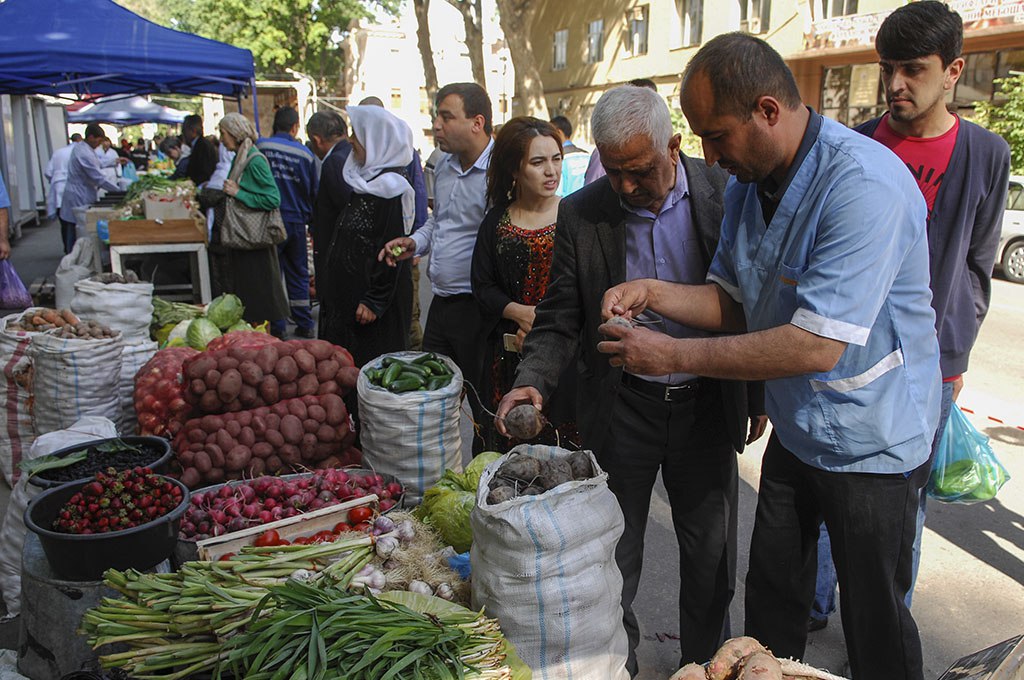
Over the past year, food prices in Tajikistan have shown mixed trends. According to nationwide averages, some products became more expensive, others saw little change, while prices for certain items declined.

Overall, prices for staple food products remained relatively stable. A slight increase was recorded for vegetables. Among fruits, pomegranates became cheaper, while lemons rose in price.

For most food items, no sharp fluctuations were observed. Flour, pasta, rice, sugar, and milk are generally sold within the same price ranges as a year ago, with slight decreases noted for some products.

At the same time, prices for eggs and vegetable oil increased. The most significant price growth was recorded in meat products.

Overall, in 2026 price increases mainly affected meat and certain imported goods.


Prices in somoni (country-wide average)


Product

Unit

2025

 2026

Flour

1 kg

4.6–5.7

 4.5–5.5

Pasta

1 kg

9.5–12

 8.5–11.5

Rice

300 g

15–25

 12–20

Milk

1 liter

6–10

 5–10

Sugar

1 kg

10–11

 9–11

Eggs

1 piece

1.1–1.4

 1.3–1.5

Vegetable oil

1 liter

15–19

 16–20

Meat

1 kg

80–90

 95–110

Chicken meat

1 kg

30–43

 34–43

Source: Asia-Plus

Attempt to smuggle medicines worth over 1 billion soums from Uzbekistan to Tajikistan Foiled

0
photo_2026-01-11_21-17-17

Uzbekistan’s State Security Service (SSS) Border Troops, in cooperation with customs authorities, have prevented an attempt to illegally transport a large consignment of medicines to Tajikistan.

The incident occurred at the Farhod border customs post in the city of Bekabad. According to Podrobno.uz, officers stopped a Lochin brand motorcycle driven by a 27-year-old local resident.

During an inspection, more than 20 types of pharmaceutical products were discovered and seized from a trailer attached to the motorcycle, concealed among food items. The seized medicines included Immunoglobulin and Ferritin, which had not been declared to customs authorities.

Preliminary estimates put the total value of the confiscated drugs at approximately 1.05 billion soums, or about $125,000.

An expert examination of the seized medicines has been ordered, and an investigation into the incident is currently underway.

IOM warns Tajik citizens of job scams linked to employment in the UK

0

The International Organization for Migration (IOM) office in Tajikistan has warned citizens about fraudulent job offers related to employment in the United Kingdom (UK).

In a statement published on its official Facebook page, the IOM said that job invitations for work in the UK circulated via WhatsApp and Telegram are fake. According to the organization, legitimate employers do not use messaging apps to recruit workers or conduct official communication.

IOM specialists advise Tajik citizens interested in seasonal work in the UK to register only through the official websites of licensed companies.

“Do not trust job advertisements on social media, as most of them may be fraudulent. All information should be carefully verified. For Tajik citizens, there are no legal employment opportunities in the UK other than the Seasonal Worker Program,” the statement said.

The IOM also noted that it has previously shared information about employers licensed to hire foreign workers.

“If you plan to travel to the UK for seasonal employment, register only on official company websites. This will help you avoid fraud and protect your rights,” the organization emphasized.

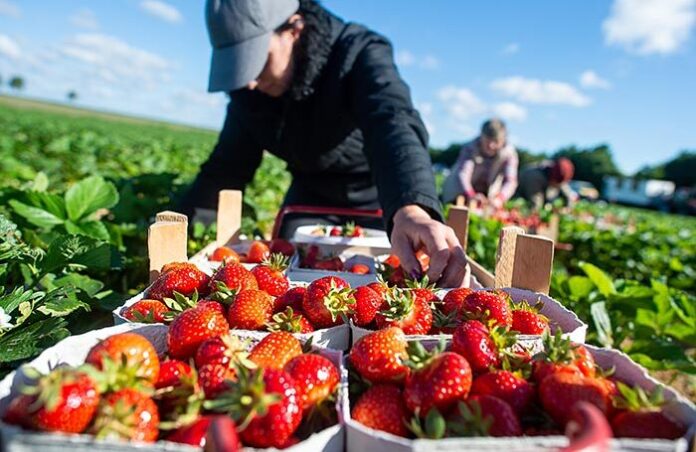
At the same time, the IOM pointed out that employment opportunities in the UK remain limited for most Tajik citizens. The most accessible option is seasonal work in agriculture, including fruit picking, greenhouse work, and field labor.

Such employment is arranged under the Seasonal Worker visa, which is issued for a maximum of six months. The visa cannot be extended or switched to another category, and workers are required to return home once their contract ends.