Home Blog Page 93

US Embassy in Dushanbe confirms suspension of Green Card lottery program

0
Ig64ipgImgCMpCGorhHM26W9zWyBYgHQ

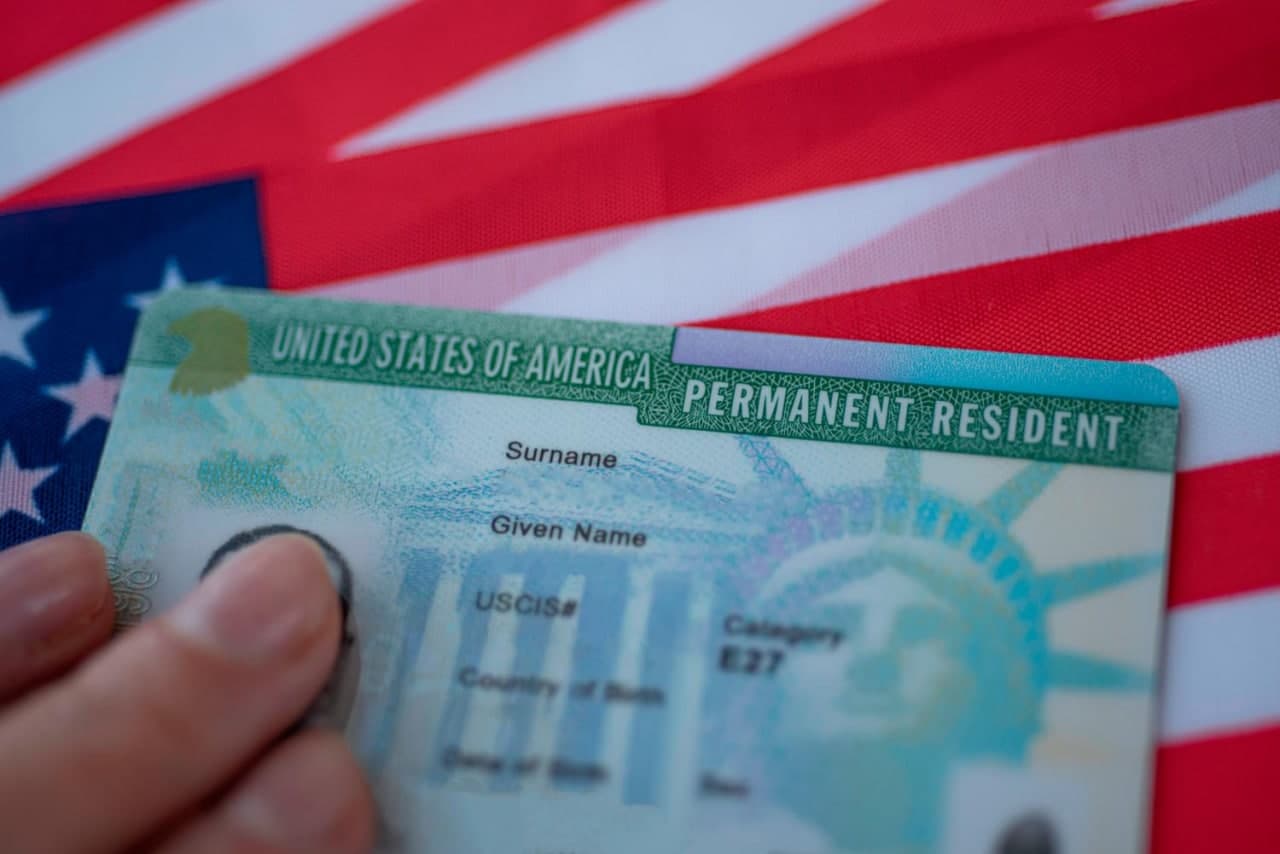
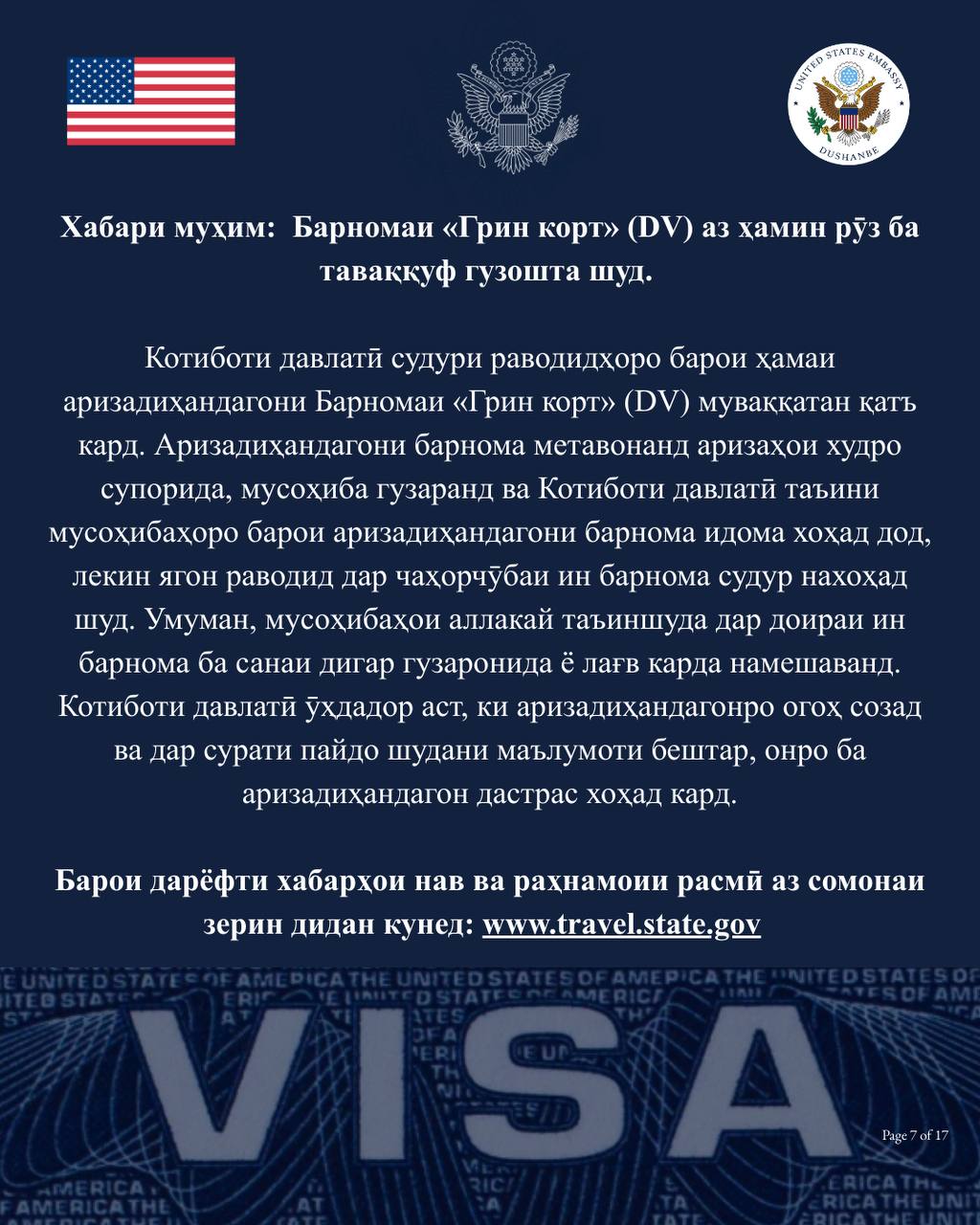
The US Embassy in Dushanbe has officially confirmed the suspension of the Green Card lottery program, as announced by the US Department of State.

According to the Embassy's statement, applicants can still submit their applications and attend interviews, and the Department of State will continue to schedule interviews for program participants. However, no visas will be issued under this program. All previously scheduled interviews will not be canceled but will be rescheduled for later dates. The Department of State will notify applicants if further information becomes available.

The Embassy did not provide additional details on the reasons for the suspension.

However, the decision comes after a tragic incident involving a person who arrived in the United States through the Green Card program. It was revealed that the suspect in the shooting at Brown University in Rhode Island entered the country using the program.

The shooting at Brown University in Providence occurred on December 13 near the Barus & Holley building, where final exams were being held that day. The tragedy resulted in two deaths, and around 20 others were injured.

The mysterious discovery of a Tajik teahouse in Maryland

0
Teahouse

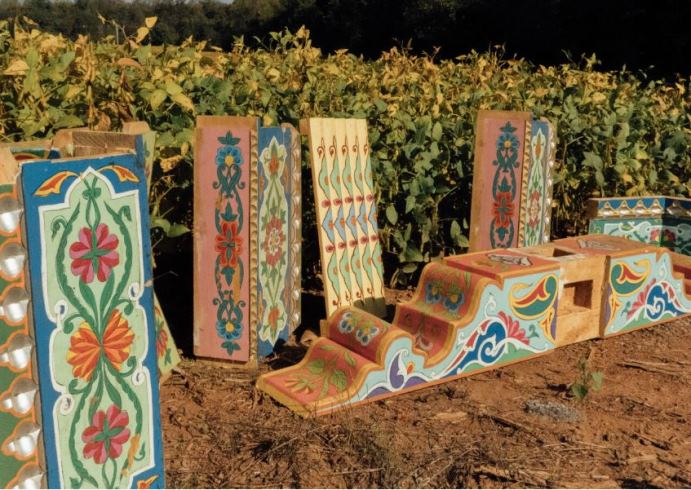
The story of how realtor Brian Jamison came to possess a rare and intricate Tajik teahouse sounds almost too unbelievable to be true. What began as a simple clean-up job evolved into a decades-long mystery. 

City Lifestyle reports that years ago, Jamison was hired to clear debris from a property after a couple’s divorce. Among the clutter in a barn, he and his crew stumbled upon stacks of wooden crates buried beneath a “mountain of trash.” The property owners dismissed the crates as useless, abandoned junk. But Jamison, ever curious, decided to open them. Inside, he found pieces of what appeared to be an ornate, hand-carved teahouse.

Instead of following the owner's advice to scrap the crates, Jamison carefully loaded them onto trailers. Over the next decade, the crates were moved from one farm in Maryland to another, all the while Jamison didn’t fully understand the significance of what he had uncovered.

"Last year, I decided to take a closer look," Jamison recalled. His curiosity led him to Nate Jones, a professor at the University of Colorado Boulder and a board member of Boulder’s Sister Cities of Dushanbe, Tajikistan. Jones had co-authored a book about the Dushanbe-Boulder Teahouse, a gift from Tajikistan to the United States in the late 1980s as a symbol of peace and friendship. The teahouse had been built by Tajik artisans, and it quickly became a local landmark.

Jamison purchased the book and reached out to Jones directly, sparking an unexpected chain of events. Intrigued by the possibility, Jones and his co-author, Kate Sector, traveled to Maryland to examine the crates firsthand. Upon arrival, they confirmed an astonishing truth: The crates contained pieces of another Tajik teahouse, crafted by the same artisans who built the one in Boulder.

How the second teahouse ended up in Maryland remains a mystery. The previous barn owner recalled a man named “Izat” who had brought the crates to the barn and then disappeared without a trace. Interestingly, some who were involved with the Boulder teahouse recall a man named Izatullo Khoshmukhamedov, whose name is etched on a plaque inside the Boulder teahouse, mentioning plans to build a similar structure in Maryland decades ago. The exact circumstances surrounding the Maryland teahouse’s journey to the U.S. remain unclear.

For now, the teahouse remains boxed up in two trailers, filled with massive, vividly painted panels. Jones has proposed involving University of Colorado students in digitally scanning and reconstructing the structure, potentially paving the way for its physical restoration, as no existing blueprints or plans are available.

For Jamison, who has spent years safeguarding the crates, the dream is to see the teahouse restored and displayed as a cultural and architectural monument. “It would be amazing to bring it to life,” he says. “It deserves to be seen.”

The same artisans who created Boulder’s iconic teahouse were behind this mysterious structure, and now, decades later, their craftsmanship may soon find a new home in Maryland, bridging the gap between Tajikistan, Boulder, and the United States.

National Bank of Tajikistan warns about fake information on subsidized loans

0
photo_2026-01-09_08-47-34

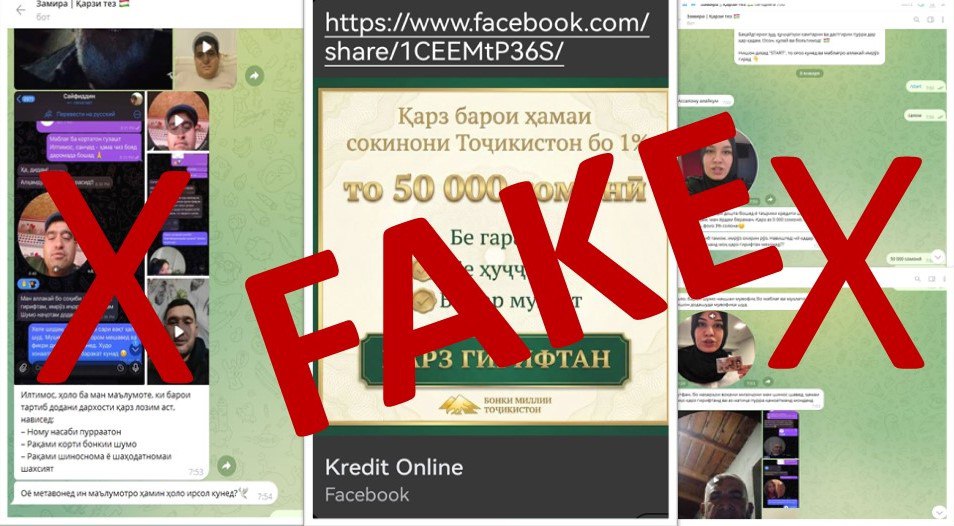
The National Bank of Tajikistan (NBT) has denied claims circulating on social media about loans allegedly offered by the bank at an interest rate of 1%. In an official statement, the financial regulator clarified that this information is false.

"According to Tajikistan's legislation, the National Bank is a regulatory and supervisory authority, responsible for macro-regulation of credit and financial institutions and implementing monetary and credit policies. The bank does not provide banking services to individuals and does not issue loans," the statement reads.

The National Bank emphasized that loans are provided exclusively by commercial banks and other credit and financial institutions according to their own terms and requirements.

The National Bank strongly urges citizens not to trust false information and to obtain official updates only from reliable sources.

Man in Khatlon sentenced to 21 years in prison for killing his wife with electric shock

0
photo_2026-01-08_17-20-30

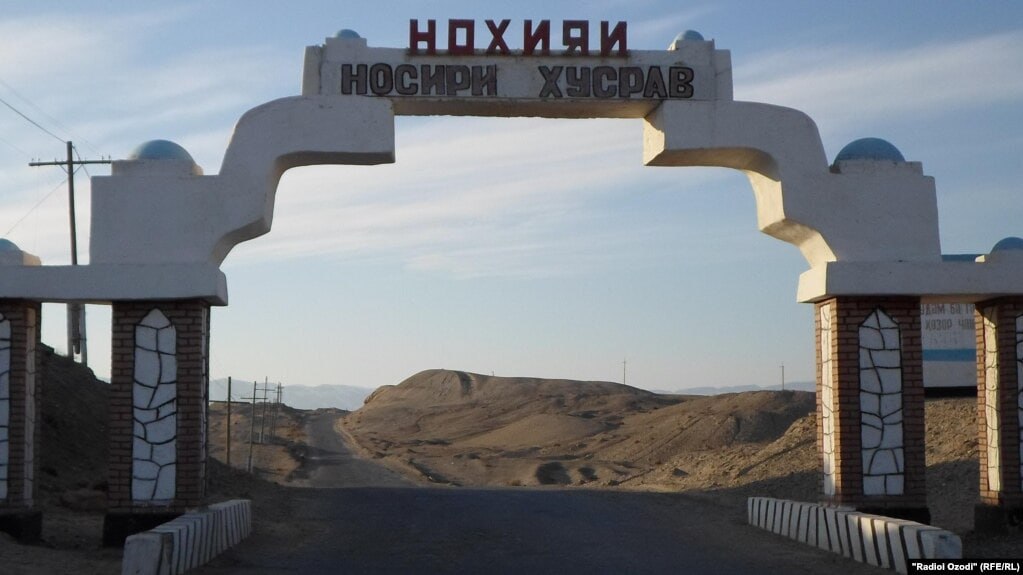
A tragic incident occurred in the summer of 2025 in the Nosir-Khusrav district of Khatlon province, where a domestic dispute between Chori Kuliyev and his wife Uldonoy Ruziyeva over their son's wedding led to her death.

According to the assistant prosecutor of the Khatlon province, Varqa Zayniddin, the couple had frequently quarreled about the wedding preparations. The latest argument took place on August 20, when they argued over the lack of funds to buy wedding supplies. The wedding was planned for December 2025.

"After his wife fell asleep that night, Kuliyev struck her twice on the head with a stone. He then wrapped an electric wire around her fingers and connected it to the power supply, causing Ruziyeva's death," Zayniddin explained.

In an attempt to cover up the crime, Kuliyev tried to stage the incident as an accident. He changed his wife's bloodstained clothes and sent their son to the pharmacy, claiming that his mother’s blood pressure had spiked. Kuliyev then went to the local chairman, telling him that his wife had lost consciousness.

When the chairman and the mullah arrived at their home, they found the woman’s body and reported it to the police. A forensic examination determined that her death was caused by an electric shock, not high blood pressure.

Following the investigation, the prosecution filed criminal charges against Chori Kuliyev under Article 104 (2) of Tajikistan’s Criminal Code — murder. The Khatlon Regional Court found him guilty and sentenced him to 21 years in prison.

World Bank assesses global business climate: how does Tajikistan compare?

0

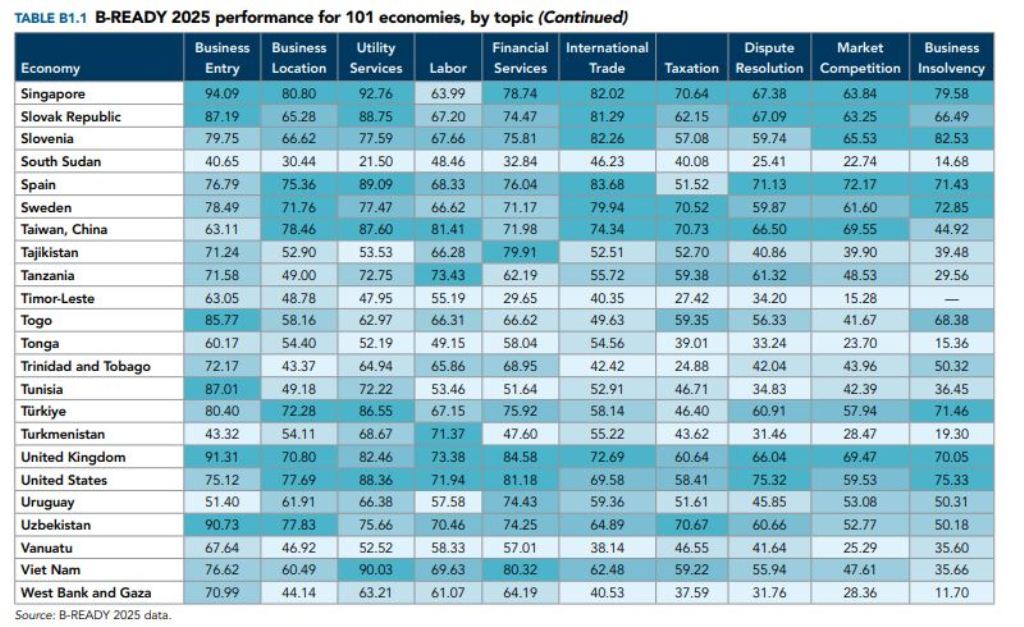
The World Bank has released its Business Ready (B-READY) 2025 report, which evaluates the business and investment climate across countries. The report covers 101 economies, including Tajikistan.

The report assesses the legal framework and government services aimed at supporting businesses, as well as the effectiveness of the combination of these services and regulations. The B-READY project is designed to provide data on various stages of a business's lifecycle, with the 2025 report serving as an interim publication. The full version, which will include more comprehensive data for 164 countries, is expected this year.

The project gathered insights from nearly 5,000 local respondents, 58,000 companies, including lawyers and industry experts, to assess the legal and regulatory environment in each country through surveys and interviews.


Key performance indicators

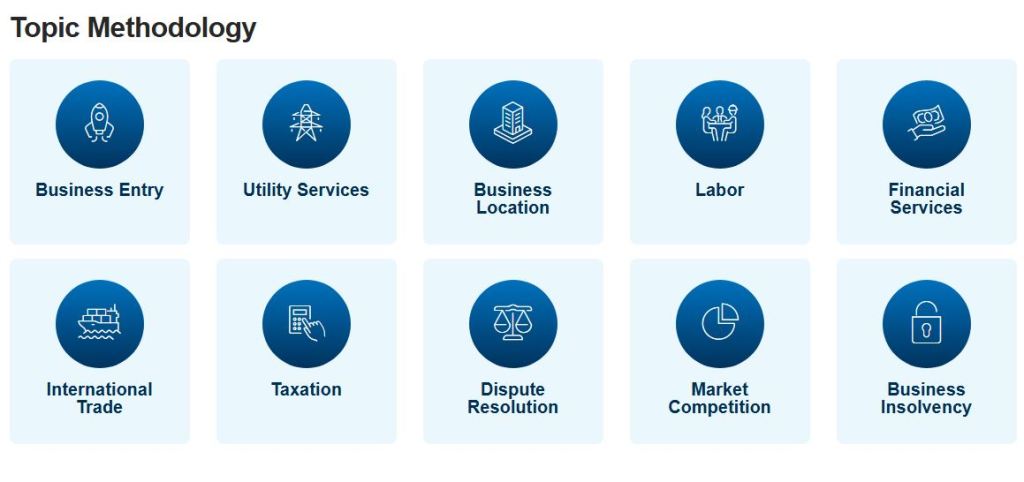
The report evaluates countries across three main areas: "Legal Framework," "Government Services," and "Operational Efficiency." Scores are calculated by averaging ratings across 10 key topics, with scores ranging from 0 (worst) to 100 (best).

Tajikistan received the following scores:

·         Legal Framework: 59.8 points

·         Government Services: 40.4 points

·         Operational Efficiency: 64.6 points


Detailed scores by business life cycle stage

The B-READY report also provides data on the effectiveness of each economy across specific business life cycle stages: opening, operating or expanding, and closing or restructuring. These categories assess various aspects of policy affecting the business environment.

Tajikistan’s scores for each topic are as follows:

·         Starting a Business: 71.2 points

·         Business Location (purchasing, renting, or building): 52.9 points

·         Utilities: 53.5 points

·         Labor (assessing labor law and services for businesses and workers): 66.3 points

·         Financial Services: 79.9 points

·         International Trade: 52.5 points

·         Taxation: 52.7 points

·         Dispute Resolution (effectiveness of resolving commercial disputes): 40.9 points

·         Market Competition: 39.9 points

·         Business Insolvency (bankruptcy procedures and related infrastructure): 39.5 points


Areas for improvement

The report highlights where countries need to improve their business climate. In Tajikistan, the strongest performance was in financial services, which covers commercial credit, secured transactions, electronic payments, and credit information. However, the weakest area was business insolvency, where significant improvements are needed.


Key findings from the report

The World Bank's Business Ready 2025 report makes a concerning observation: countries that most need new jobs are the least prepared to create them. On average, business conditions worldwide are only at 60% of their potential, and there has been little improvement in 2025.

The report specifically highlights the vulnerability of countries with young populations and low growth rates, where there is a high demand for jobs but weak government services and a gap between laws and their enforcement. This directly stifles economic growth and exacerbates socio-economic risks. 

Trump signs executive order for U.S. withdrawal from 66 international organizations

0
8e28493b-c496-432f-b206-ff08b0a1424d

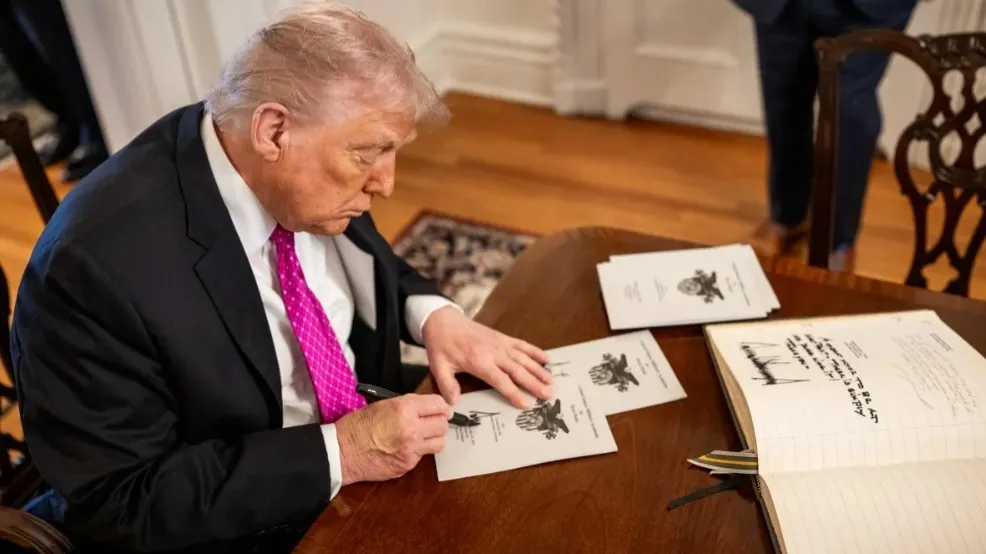
U.S. President Donald Trump has signed an executive order to withdraw the United States from 66 international organizations and institutes, which, in his view, no longer serve the national interests of the country. This information was published on White House’s official website.

Of the total number, 31 organizations are affiliated with the United Nations. The order states that their activities contradict U.S. interests and threaten national security, economic development, or sovereignty. The order mandates that all federal agencies and departments immediately cease funding for these organizations.

The White House emphasized that the decision aims to stop the use of American taxpayers' money to support institutions that promote a globalist agenda at the expense of U.S. priorities or operate inefficiently and irrationally.

A complete list of the organizations has been published on the president's administration website. It includes the Venice Commission, the UN International Law Commission, the UN International Trade Centre, the Ukrainian Scientific and Technology Center, and the UN Secretary-General’s Special Representative on Violence Against Children.

Earlier, during his second term, Trump also signed orders for the U.S. to withdraw from the World Health Organization (WHO), the UN Human Rights Council, the UN Relief and Works Agency for Palestine Refugees, and UNESCO. The withdrawal from UNESCO will take effect in December 2026.

Who is Kamoliddin Muminzod, the new head of the Committee for Local Development?

0

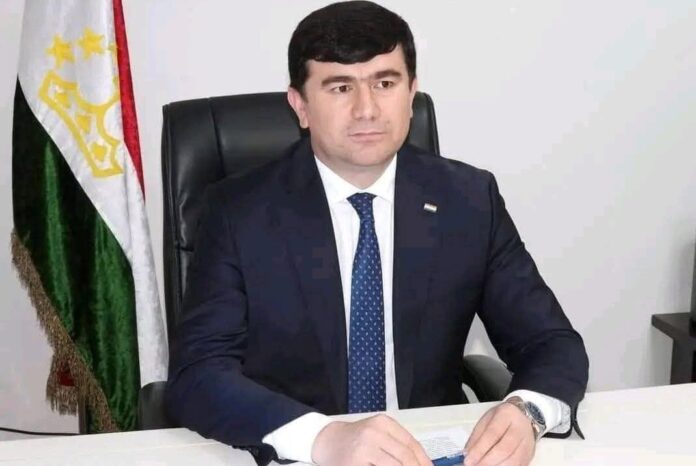
Kamoliddin Muminzod has been appointed the new chairman of the Committee for Local Development under the President of Tajikistan. The corresponding decree was signed by President Emomali Rahmon on January 7. Prior to this appointment, Muminzod held the position of first deputy chairman of the Committee.

At 42, Kamoliddin Muminzod has been working in various government roles since 2007. He began his career as a monitoring and evaluation specialist at the Ministry of Education’s Education Renewal Project Implementation Unit from 2007 to 2010. Afterward, he worked for nearly a year as the chief monitoring and evaluation specialist at the Ministry of Agriculture’s Debt Resolution and Sustainable Cotton Industry Development Project Implementation Unit.

From 2010 to 2011, Muminzod served as a monitoring and evaluation assistant for the Economic and Social Opportunities for Youth in Tajikistan Project under the Committee for Youth, Sports, and Tourism. Before 2014, he also served as the national coordinator for monitoring and evaluation of the HIV/AIDS Prevention Among Rural Youth Project, and later as the director of the State Unitary Enterprise Youth Center of Dushanbe.

In 2014, Muminzod returned to the Ministry of Agriculture, where he worked as a procurement consultant in the Livestock Development and Pasture Utilization Project Implementation Unit until 2016. From 2016 to 2018, he served as a procurement consultant for the Strengthening Vocational Education and Training Project at the Ministry of Labor, Migration, and Employment of the Population.

After working for a year as a project procurement specialist at the NGO Light of Hope, he was invited to the Russian-Tajik (Slavonic) University in 2019, where he worked as a leading specialist in the program, project, and grant coordination department for education and science.

From 2020 to 2023, Muminzod served as Deputy Chairman of the Committee for Tourism Development and headed the Committee from 2023 to 2025. He was First Deputy Chairman of the State Committee for Local Development starting January 29, 2025.

Muminzod holds a degree in law from the National University of Tajikistan (2006), a degree in accounting, analysis, and auditing from the Russian-Tajik (Slavonic) University (2012), and a master's degree in international public procurement management from the University of Rome Tor Vergata (Italy) from 2019 to 2020.

As the head of the Committee for Tourism Development, Kamoliddin Muminzod was known for his openness with the press. He was not a bureaucratic official and often found himself on the ground, addressing issues where solutions were needed.

Electricity rates in Tajikistan set to rise again

0

Starting February 1, 2026, electricity tariffs in Tajikistan will increase, with unofficial sources indicating a 17% hike for residential customers. Authorities justify this move as necessary for the financial recovery of the energy sector, but experts and residents are increasingly questioning whether the price rise reflects actual production costs or systemic losses and inefficiencies.

The new tariffs, outlined in the "Electricity and Heat Energy Tariffs" decree, were approved on December 29, 2025, during a government meeting. The decree aims to develop the energy sector and achieve financial self-sufficiency for the state-owned companies Barqi Tojik, Electricity Transmission Network, and Electricity Distribution Network.

While ministries have withheld specific details, anonymous sources claim the new rates will raise electricity costs for households from the current 35.36 dirhams (3.84 USD cents) per kWh to 41.37 dirhams (4.49 USD cents) per kWh. Other categories of consumers will see similar increases across ten sectors.

Electricity tariffs in Tajikistan have been rising annually since 2016, with the only exception being 2020-2021, when the government froze increases due to the economic impact of the COVID-19 pandemic. The last tariff hike occurred on April 1, 2025, just nine months ago.


Higher prices, heavier burden

For ordinary citizens, the price increase will add more pressure to household budgets. For vulnerable groups—such as pensioners, large families, and rural residents—even moderate hikes can significantly reduce their real income. Electricity is used in nearly every sector, from production and storage to transportation, trade, and services. Thus, the impact on small businesses, such as bakeries, workshops, and retail stores, is significant.

While tariff hikes rarely lead to immediate price increases, they often trigger a "second wave" of inflation, as businesses gradually pass on higher costs to consumers. Growing tariffs also raise concerns about "energy poverty," where households must limit their energy use to meet basic needs. This is especially relevant in regions with limited alternative energy sources and low-income populations.


Comparing tariffs across Central Asia

To understand the scale of the price hike, it is essential to compare Tajikistan’s tariffs with those of its Central Asian neighbors.

In Kyrgyzstan, electricity remains one of the cheapest in the region. The rate for the general population is 1.37 soms per kWh for consumption up to 700 kWh/month (around 1.6 USD cents), and for higher consumption, the rate rises to 2.6 soms per kWh (2.97 USD cents). For low-income families receiving benefits and consuming up to 700 kWh, the rate is 0.5 som per kWh (0.57 USD cents). Even with the upcoming price hike in Tajikistan, the country’s rates (3.84 USD cents) are significantly higher than Kyrgyzstan’s.

Kazakhstan, in contrast, has the highest rates in Central Asia, with consumers paying around 30-31 tenge per kWh (about 6 USD cents). However, rates vary by region in Kazakhstan.

In Uzbekistan, a tiered system applies: rates are relatively low for consumption up to 200 kWh/month (around 4.99 USD cents), but prices can rise to 6.65-8.31 USD cents per kWh for higher consumption, bringing them closer to Kazakhstan's levels.

Turkmenistan is an outlier, with electricity heavily subsidized by the government, resulting in symbolic tariffs. Before January 1, 2019, electricity in Turkmenistan was provided free of charge to the population.

Thus, the idea that Tajikistan has the lowest electricity tariffs in the world is a misconception, even within the region. While the country pays less than Kazakhstan and Uzbekistan, it pays considerably more than Kyrgyzstan and Turkmenistan.


Benchmarking against Kyrgyzstan

Given the similar hydroelectric bases of both countries, Tajikistan’s electricity tariffs should be compared with Kyrgyzstan’s rather than with Kazakhstan or Uzbekistan, where thermal power plants dominate. Around 94% of Tajikistan’s electricity comes from hydropower, and in Kyrgyzstan, hydropower accounts for around 90% of electricity generation.

This is important because hydropower stations use water as a "free fuel" and primarily incur maintenance and network costs. In contrast, thermal power plants rely on gas, coal, or oil, making their production costs much higher due to the need to purchase and transport fuel.

Therefore, it is reasonable to compare Tajikistan’s tariffs with those of Kyrgyzstan, as both countries rely heavily on hydropower, rather than with Kazakhstan or Uzbekistan, where a significant portion of electricity is generated by more expensive thermal power plants.


"Low tariffs" or high losses?

Tajik authorities often justify tariff increases by claiming that current prices are "too low" and do not cover the energy sector’s costs. However, the comparison with Kyrgyzstan, where tariffs are lower despite a similar hydropower base, raises questions: could the issue be not just the price for consumers, but how the system operates?

The primary concern with tariff hikes is the efficiency of electricity production and distribution. How much energy is lost in the networks due to outdated lines and equipment, and how much is lost due to unaccounted consumption, theft, and human error? And most importantly, why do these losses continue to be passed on to consumers through higher tariffs?

President Emomali Rahmon recently acknowledged that significant portions of these "losses" may have been related to human factors and abuses. He explained that before the implementation of the digital billing system, 30-40% of the population did not pay for electricity. However, after the system was introduced, it was discovered that 100% of the population in certain areas were fully accounted for as paying customers.

Before justifying another price hike with "low tariffs," it would be prudent for the authorities to address the question: how much money is lost due to theft, unrecorded consumption, and systemic failures, and why are these losses consistently transferred to the population through higher rates?
Russia to shorten medical exam process for migrants and increase penalties for fake health certificates

0

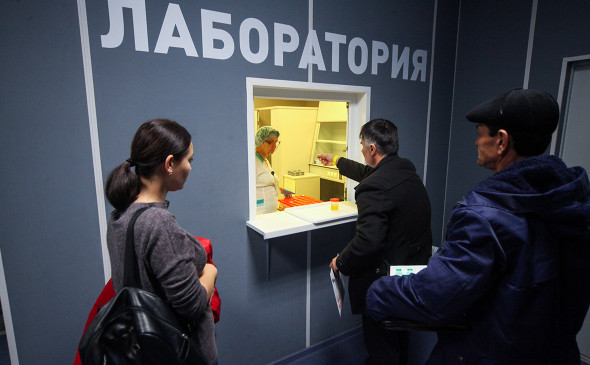
The State Duma (Russia’s lower chamber of parliament) is preparing a series of changes to migration laws regarding medical examinations for foreign nationals. This was announced by State Duma Speaker Vyacheslav Volodin on his Telegram channel. The proposed changes reportedly aim to "improve migration policy," Volodin stated.

According to Volodin, the new measures will reduce the mandatory medical examination period from 90 days to 30 days for all foreign nationals who come to Russia for more than three months. Additionally, medical organizations will be required to send information about completed medical certificates to the Russian Ministry of Internal Affairs and notify Rospotrebnadzor if an infectious disease is detected in a migrant, in order to facilitate their prompt deportation.

The proposals also include introducing administrative penalties for foreign nationals who evade medical examinations, with fines and the possibility of deportation by court decision. Furthermore, there will be increased criminal liability for falsifying official documents about the absence of diseases that pose a risk to public health, as well as for the circulation of such documents.

“These measures are aimed at strengthening control over migrants and improving public safety in our country,” Volodin concluded.

Earlier, it was reported that Russia and Tajikistan had simplified the medical examination process for migrants. Now, migrants can undergo their medical check-up in Dushanbe before departure, eliminating the need for a repeat examination upon arrival in Russia. 

“We had a heated 10-hour discussion with Emomali Rahmon” — Japarov reveals details of border dispute resolution

0

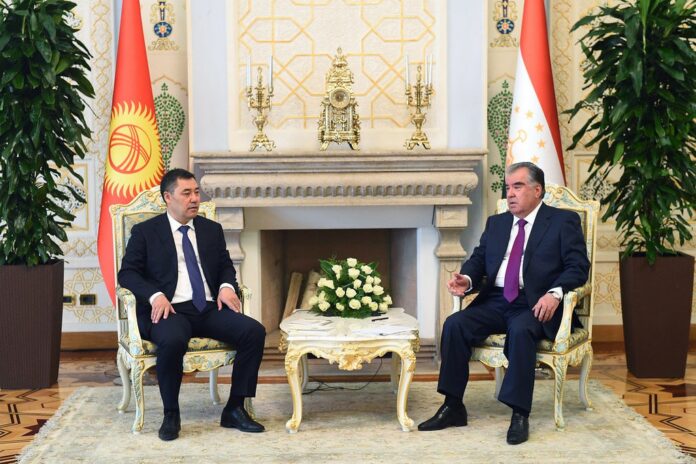
President of Kyrgyzstan Sadyr Japarov shared that a 10-hour meeting with Tajik President Emomali Rahmon in Dushanbe paved the way for resolving the border dispute between the two countries. He also emphasized the crucial role of Uzbek President Shavkat Mirziyoyev in signing the trilateral border agreement in Khujand.

In the second part of the documentary President, released on January 6, Japarov revealed key details of the border negotiations and the signing of the agreement between Tajikistan, Uzbekistan, and Kyrgyzstan. He recalled the border incidents with Tajikistan, calling them "days of historic testing and sorrow" and stressed that such events should never be repeated.

Japarov recalled the armed conflict between Kyrgyzstan and Tajikistan in April 2021 in Batken, which resulted in human casualties. He emphasized the destruction of homes and the suffering of residents in border villages, noting that he visited Batken multiple times to witness the challenges of resettling people and rebuilding their homes.


"We spent 10 hours in one room, having heated discussions"

Japarov explained that in June 2021, following the armed clashes, he traveled to Dushanbe to meet President Rahmon to establish a ceasefire and start negotiations. “We spent 10 hours in one room, having a heated discussion. In the end, we agreed that we would resolve the main issues peacefully, ensuring no more armed conflicts and transforming the border into a source of cooperation, not conflict,” said Japarov.

He noted that the main dispute involved areas totaling 166 kilometers, such as Vorukh, and mentioned working with Soviet-era maps and joint commissions.

While the documentary provides Japarov's perspective, it does not include direct statements from Rahmon or delve into the sensitive details of the negotiations, such as the terms proposed by both sides.

Tajikistan's presidential press service confirmed the meeting in Dushanbe, stating that border security and preventing future conflicts were discussed. However, they did not mention the 10-hour duration of the talks.


The agreement and post-signing disputes

Japarov explained that the June 2021 meeting marked the beginning of the process that shifted the border issue from a conflict to a legal and diplomatic matter, culminating in the signing of the state border agreement.

After completing the demarcation process in December 2024, the final legal steps were taken:

·         On March 13, 2025, the state border agreement was signed in Bishkek.

·         On March 31, 2025, the documents were exchanged in Khujand.

Japarov emphasized that the land exchange was equitable, aimed at resolving contentious "chessboard" areas. He rejected claims of "losing too much land," stating that the agreement’s goal was not territorial loss but resolving the source of conflict.

The agreement involves the exchange of disputed land in the Isfara and Batken regions, each covering about 190–200 hectares. Tajikistan receives access to roads, the "Druzhba" market, and areas around Vorukh, while Kyrgyzstan gains agricultural land in Leylek, Lakkon, Min-Bulak, and near the "Golovnoy" water intake.


Border dispute history

Negotiations over the common border between Tajikistan and Kyrgyzstan began in 2002 but were irregular and infrequent until 2022. The unclear border often led to conflicts over water and land distribution, road access, and pastures, sometimes involving military personnel.

Major armed conflicts occurred on the Tajik-Kyrgyz border in April-May 2021 and September 2022, resulting in dozens of deaths and injuries. As a result, Kyrgyzstan closed the border starting in May 2021. The last major conflict accelerated the negotiation process.

Finally, on February 21, 2025, the two countries initialed the demarcation and delimitation documents in Bishkek, and the presidents signed them in March 2025.


"The resolution with Uzbekistan was key for Kyrgyzstan"

In the film, Japarov highlighted the role of Uzbekistan’s President Shavkat Mirziyoyev in resolving the regional border issues. “The border dispute involved not only Tajikistan but also Uzbekistan. The resolution with Uzbekistan, before reaching an agreement with Tajikistan, became an important and key experience for Kyrgyzstan,” Japarov said.

He praised Mirziyoyev’s leadership in striving for stability in Central Asia. The trilateral document, signed in Khujand on March 31, 2025, officially defined the borders between Tajikistan, Kyrgyzstan, and Uzbekistan.

Japarov concluded that after the agreement's signing and its legalization in the respective parliaments, border disputes were resolved, and any future disagreements should be settled through legal means, not with weapons.