Home Blog Page 92

Tajikistan’s debt web: who holds the strings?

0

Tajikistan’s external debt has exceeded $3 billion. Who does the country owe, how serious is the burden, and what can be expected in 2026? Asia-Plus analyzes the current situation and outlook.

As of October 1, 2025, Tajikistan’s total external debt stood at $3.037 billion. Compared to the beginning of the year, when the figure reached $3.188 billion, the debt has decreased by $151 million, or 4.7%.

At the same time, external debt accounts for 17.2% of the country’s gross domestic product (GDP). Is this a cause for concern? Asia-Plus asked prominent Tajik economist Hojimuhammad Umarov.


China remains the main creditor

China is Tajikistan’s largest creditor. According to official data, Dushanbe owes Beijing more than $700 million—over a quarter of the country’s total external debt. Most loans are provided through the Export-Import Bank of China and are directed toward infrastructure projects, including roads and energy facilities.

In addition, Tajikistan has significant obligations to the World Bank, the Asian Development Bank (ADB), the Islamic Development Bank (IsDB), and the European Bank for Reconstruction and Development (EBRD), according to the Ministry of Finance.


Structure of external debt

Direct government debt makes up about 95.5% of Tajikistan’s external debt, totaling roughly $2.9 billion. These are loans taken directly by the government, which bears full responsibility for repayment. Funds are typically used for public investment projects and infrastructure development.

External borrowing includes multilateral loans, bilateral loans, and guaranteed loans.

Multilateral loans from international financial institutions, usually offered on concessional terms with low interest rates and long maturities.

Tajikistan’s Bilateral Loans (in million USD)

Creditor

01.01.2025

  01.10.2025

 Change

China (Exim Bank)

820.96

  744.81

 −76.15

Saudi Fund for Development

97.95

  93.26

 −4.69

Kuwait Fund for Arab Economic Development

41.08

  38.67

 −2.41

France (Natixis Bank)

20.79

  23.48

 +2.69

Germany (KfW)

14.97

  16.20

 +1.23

Abu Dhabi Fund for Development (ADFD)

4.71

  4.21

 −0.50


Bilateral loans between states or national banks, including loans from China’s Exim Bank ($744.81 million) and Germany’s KfW ($16.2 million).


Tajikistan’s Bilateral Loans (USD million)

Creditor

01.01.2025

  01.10.2025

  Change

China (Exim Bank)

820.96

  744.81

  −76.15

Saudi Fund for Development

97.95

  93.26

  −4.69

Kuwait Fund for Development

41.08

  38.67

  −2.41

France (Natixis Bank)

20.79

  23.48

  +2.69

Germany (KfW)

14.97

  16.20

  +1.23

Abu Dhabi Fund for Development (ADFD)

4.71

  4.21

  −0.50


Guaranteed loans, taken by private entities but backed by state guarantees.

Another component of Tajikistan’s external debt is Eurobonds. In 2017, the country issued its first Eurobonds worth $500 million with a 10-year maturity and a yield of 7.125%.


Debt servicing in 2025

In the first nine months of 2025, Tajikistan spent $377.25 million on servicing external debt. Of this amount, $312.58 million went toward principal repayment and $64.67 million toward interest payments.

During the same period, the country attracted only $109.89 million in new external loans, meaning debt servicing significantly exceeded new borrowing.


Outlook for 2026

The draft 2026 budget suggests the government will continue its current approach. Approximately 5.1 billion somoni (about $548 million) is earmarked for servicing the principal of external debt—more than was spent during the first nine months of 2025.

State-owned enterprises will also contribute. Barqi Tojik is expected to allocate 1.553 billion somonis, the Tajik Aluminum Company 84 million somonis, and Tajik Railways 80.2 million somonis.

Other contributors include Dushanbevodokanal, Tojiktransgaz, Pamir Energy, and utilities enterprises.

At the same time, the government plans to attract more than 6.3 billion somoni (around $678 million) in new loans in 2026 to finance public investment projects. This means old debts will continue to be repaid while new ones are accumulated.

A total of 473 million somoni is planned for repayment of domestic debt, financed through the state budget and revenues from the Ministry of Finance, including proceeds from National Bank assets and the sale of property from liquidated banks.


“No reason for alarm, but risks remain”

According to Professor Umarov, Tajikistan’s external debt level of 17.2% of GDP is not alarming.

“For a developing country, this level is considered normal and even below average. In many transition economies, external debt reaches around 35% of GDP,” he said.

However, Umarov stressed the importance of diversifying borrowing sources and maintaining a balance between external loans and foreign direct investment. He also called for revising Tajikistan’s debt strategy, reducing the state’s dominant role, and improving oversight.

“The Ministry of Finance conducts monitoring, but it is not sufficient. Repayment deadlines are sometimes missed. The country should adopt best practices from more developed economies,” he concluded. 

Amir Tour named best domestic tourism company in Tajikistan

0

Amir Tour has been awarded the title of Best Domestic Tourism Company for 2025 as part of the Government of the Republic of Tajikistan Tourism Award.

The award ceremony for the winners of national tourism competitions took place on December 24, 2025, in Dushanbe. Amir Tour has been actively developing domestic tourism in Tajikistan for nearly 15 years.

Company director Amir Isayev thanked the Tourism Development Committee, the government, and the Dushanbe mayor’s office for recognizing the company’s work. In a blog post, he said the award confirmed the importance of tourism for the country and acknowledged the long-term efforts of the Amir Tour team.

“Diploma No. 1 signed by the Leader of the Nation is the highest recognition of our work. For nearly 15 years, we have been developing domestic tourism by bringing together mountain and outdoor enthusiasts and promoting a culture of hiking and responsible travel in the mountains,” Isayev wrote.

Amir Tour offers not only mountain hikes, routes through scenic gorges, and visits to amethyst mines, but also gastronomic tours featuring traditional Tajik cuisine. Some tour programs also include traditional national costumes for photo sessions highlighting Tajik cultural heritage.

According to Isayev, the company’s goal is to make domestic tourism a cultural experience comparable to attending theaters, exhibitions, and concerts.

He also announced on the company’s Telegram channel that Amir Tour plans to open a camping site in 2026 and launch a blog dedicated to the natural beauty of Tajikistan.


About the award

The Government of the Republic of Tajikistan Tourism Award is presented annually for achievements in the tourism sector, innovation, promotion of tourism products, and raising public awareness of the country’s cultural and natural heritage.

In 2025, awards were presented in six main categories, including domestic and international tourism achievements, investment, innovation, scientific research, and tourism promotion.

In addition, a separate competition was held among tourism service providers in five categories, including best tourism company, best hotel, best restaurant, best tour guide, and best blogger or online promoter.

Winners received diplomas and cash prizes. Deputy Prime Minister, Ms. Dilrabo Mansouri, emphasized that such competitions stimulate industry growth, encourage innovation, and help promote Tajikistan’s tourism potential both domestically and internationally.

The event also featured the presentation of the Tourism Map of Tajikistan mobile application.


Tajikistan’s ambassador urges students studying in Russia to respect local laws and values

0
photo-540221211163669630-5

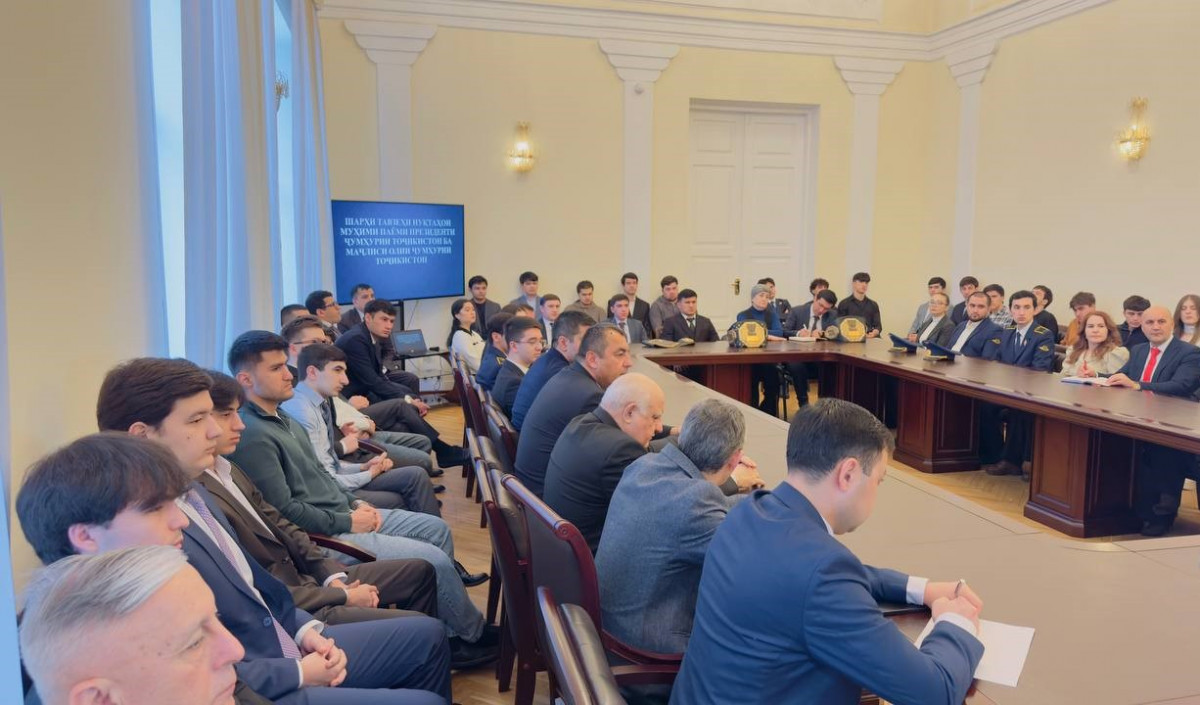
Tajikistan’s Ambassador to Russia, Gulmahmadzoda, has held a meeting with Tajik students studying at Russian universities, according to the official website of the Embassy of Tajikistan in Moscow.

During the meeting, the ambassador outlined key points from President Emomali Rahmon’s address on the main directions of Tajikistan’s domestic and foreign policy. He stressed that the country’s priorities include ensuring a decent standard of living, strengthening security and the rule of law, maintaining peace and stability, and developing education, culture, and healthcare.

Special attention was paid to the role of youth in the country’s development. Gulmahmadzoda noted that the professions Tajik students are acquiring abroad are in demand in Tajikistan and encouraged them to take full advantage of the educational opportunities offered by Russian universities, including improving their professional skills and learning foreign languages.

The ambassador also called on students to uphold national values, foster patriotism, and actively oppose extremism and terrorism. He urged them not to succumb to provocations and to prevent the involvement of young people in extremist and radical organizations.

In addition, Gulmahmadzoda emphasized the importance of respecting the traditions and cultural values of the host country and strictly observing Russian law.

The embassy recalled that earlier the ambassador had met with Tajik citizens at Moscow’s Domodedovo and Sheremetyevo airports, where issues related to the protection of Tajik nationals’ rights in Russia and their timely return home were discussed.

During those meetings, the diplomat stressed the need to comply with Russian legislation, prevent criminal incidents involving Tajik citizens, counter extremism and youth radicalization, and promote responsible use of social media.

Certain batches of NAN baby formula withdrawn in Tajikistan over potential toxin risk

0
612333795_1188167330158590_6311242118082207259_n

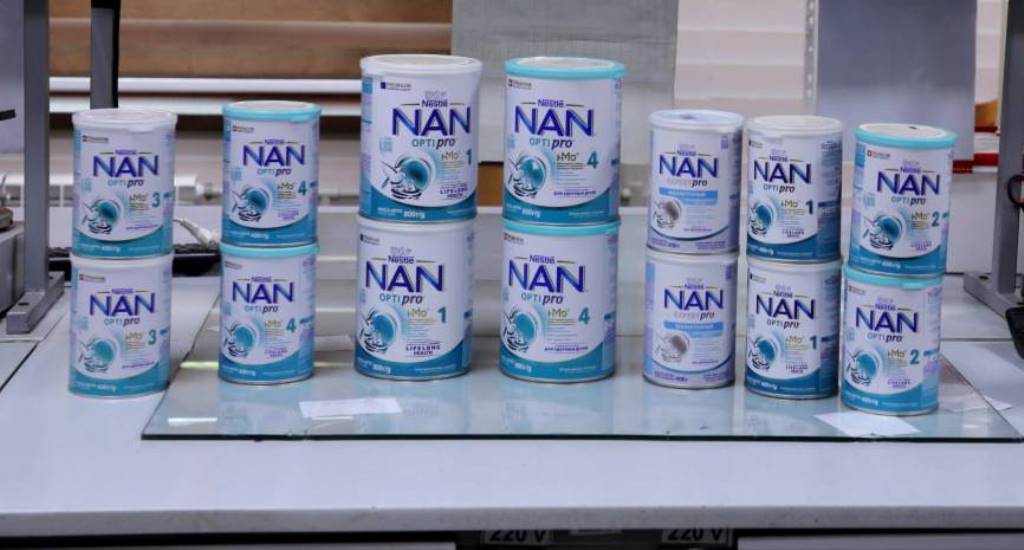
Sales of certain batches of NAN baby formula are being suspended in Tajikistan due to a potential safety concern, according to Tajero LLC, the official importer of Nestlé products in the country.

The measure is part of a global voluntary recall of a limited number of batches and is being carried out as a precaution in coordination with authorized government agencies.

“The issue concerns a potential risk of the toxin cereulide being present in one of the ingredients—arachidonic acid. Despite the very small amount of this ingredient and the absence of regulatory limits for cereulide in food products under Tajik law, the recall is being conducted as a preventive measure in the interest of consumer safety,” the company told Asia-Plus.


Products affected

The recall applies only to specific batches of powdered milk formulas, fermented milk formulas, and specialized baby food under the following names:

·         NAN 1 OPTIPRO — batches: 51490346AA, 51810346AA, 51910346AA, 52180346AC, 51510346AB, 52190346BA, 52200346BA

·         NAN 2 OPTIPRO — batches: 51240017C1, 51240017C2, 51420017C6, 51570017C1, 52800017C2, 52940017C3, 52950017C1, 53130017C1, 53140017C1, 51550017A1, 52920017A1, 53130017A1, 5200167811, 5200167821, 5240167821

·         NAN Lactose-Free — batch: 51400346AA

·         PreNAN — batch: 52560346AA

·         NAN SUPREME 0–12 — batch: 52790742C1

·         NAN Fermented Milk — batches: 51220017A2, 51230017A1

Tajero emphasized that the recall does not affect other batches or any other Nestlé baby food products available in Tajikistan.

According to the importer, the affected batches are already being withdrawn from wholesalers and retail outlets. Consumers who have purchased products from the listed batches are advised to stop using them and return them to the place of purchase.

Tajikstandard has also announced a ban on the sale and use of the specified batches following a request from the importer.

Similar voluntary recalls have previously been announced by regulators and Nestlé representatives in several countries, including EU member states, Russia, Kazakhstan, and Uzbekistan. In early December 2025, Nestlé warned of the possible presence of cereulide in certain batches of baby food.


What is cereulide?

Cereulide is a toxin produced by certain strains of the bacterium Bacillus cereus. It is heat-resistant and is not destroyed by boiling. Exposure can cause rapid onset of food poisoning symptoms, including nausea, vomiting, and abdominal cramps. Infants with underdeveloped immune systems are particularly vulnerable.

Arachidonic acid is an omega-6 polyunsaturated fatty acid naturally found in breast milk. Nestlé adds it to infant formulas to more closely replicate the natural composition of breast milk and support balanced infant nutrition.

Legendary U.S. investor buys shares on Uzbekistan’s stock exchange

0

Prominent American investor Jim Rogers has fully exited the U.S. stock market and redirected a significant portion of his capital to Uzbekistan. By the end of 2025, he had sold all his U.S. assets and said he had purchased most of the shares available on the Uzbek stock exchange, according to Fergana News.

The investments were made on the Tashkent Republican Stock Exchange, which lists around 85 companies from the banking, oil and gas, telecommunications, and other sectors.

Rogers reportedly views the Uzbek market as young and promising. While current market capitalization and liquidity remain low, he believes growth potential lies in ongoing economic reforms, privatization efforts, and the prospect of future IPOs by state-owned and private companies.

As early as 2021, Rogers publicly said he was watching Uzbekistan closely, anticipating economic liberalization, privatization, and public listings. He now says the economy has “finally opened up,” prompting him to actively invest in Uzbek equities.

The investor expects international funds to eventually enter the market, which could lead to higher valuations for local companies.

Rogers’ strategy in Uzbekistan reportedly focuses exclusively on equities, avoiding the country’s sovereign debt. He does not hedge currency risks, signaling confidence in the Uzbek som and expecting either exchange-rate stability or additional returns.

Against this backdrop, his exit from the U.S. market following the longest bull run in history appears logical. At the same time, Rogers remains cautious about China: while he still holds assets there, he is considering taking profits amid elevated market valuations.

In his view, Uzbekistan represents a frontier market with asymmetric potential—high risks offset by the possibility of substantial asset appreciation if reforms succeed and foreign capital flows into the country.

“I don’t need international law”: Trump says his power is limited only by his “own morality”

0

U.S. President Donald Trump has said that his authority as commander-in-chief is limited only by his “own morality.” He made the remarks in an interview with The New York Times published on January 8.

Trump was responding to a question about whether any legal constraints exist on his global powers.
“I don’t need international law. I don’t want to harm people,” the U.S. president said.

When asked to clarify whether his administration is obligated to comply with international law, Trump said that he personally decides when such rules apply to the United States.
“Yes, but I decide when those limits apply to the U.S. It depends on how you define international law,” he added.

Earlier, on January 5, White House Homeland Security Adviser Stephen Miller told CNN that the Trump administration intends to pursue its foreign policy objectives through force rather than adherence to international legal norms.

“We are a superpower. And under President Trump, we are going to act like a superpower,” Miller said.
“We live in a real world governed by force, coercion, and power. That is the iron law of the world,” he added.

The statements come amid controversy surrounding a U.S. operation carried out in Caracas on the night of January 3, during which Venezuelan President Nicolás Maduro and his wife, Cilia Flores, were detained. International law experts have described the operation as illegal.

Construction of the Qalai-Khumb – Vanj highway frozen for second month

0

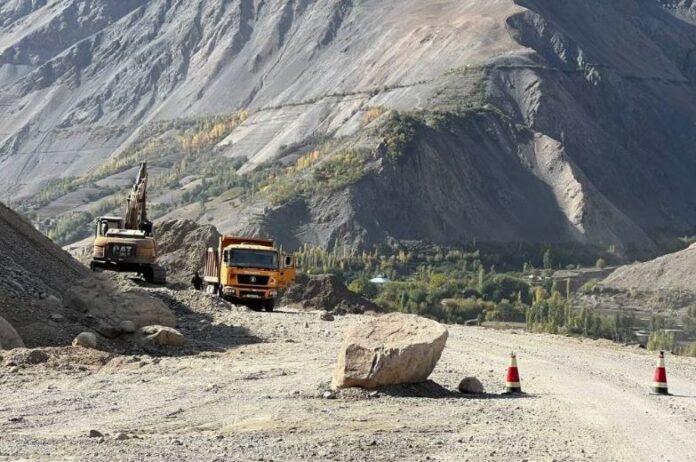
Construction of the Qalai-Khumb (administrative center of Darvoz district) – Vanj section of the Dushanbe–Khorog–Kulma highway remains suspended for the second consecutive month and will resume only after security is restored along the Tajik-Afghan border, according to the Ministry of Transport (MoT).

An official source within a MoT told Asia-Plus that the decision followed an armed attack on November 30, 2025, in the village of Shodaki in the Darvoz district.

Armed individuals crossed into Tajikistan from the Afghan village of Ruzvaiyak in Badakhshan province and attacked workers of the Chinese construction company China Road and Bridge Corporation (CRBC), which was implementing the project.

CRBC has been building the Qalai-Khumb–Vanj section of the Dushanbe–Khorog–Kulma (China border) highway since September 2022.

According to the Main Border Guard Directorate of the State Committee for National Security (SCNS) of Tajikistan, two Chinese nationals were killed and two others injured in that attack.

The Ministry of Foreign Affairs said construction was halted on December 1, 2025, following instructions from the Chinese Embassy in Dushanbe, citing the need to ensure the safety of foreign specialists. At the same time, the Ministry of Transport noted that local contractors continue to carry out limited rehabilitation work on the road.


Project significance

The Qalai-Khumb – Vanj section, which runs through the mountainous terrain of the Darvoz district, is considered one of the most technically challenging road segments in the country and has not undergone major repairs for many years.

Once reconstruction and modernization are completed—including the construction of two tunnels with a total length of 5.2 km—the travel distance will be reduced by 16.7 km. The total length of the section will decrease from 109 km to 92.3 km, with 53 km in the Darvoz district and 39.3 km in the Vanj district.

The MoT source says the project aims to improve road safety, ensure uninterrupted year-round traffic, and bring the highway in line with international standards. It is also expected to reduce travel time and fuel costs, create jobs, and contribute to poverty reduction.

In January 2025, the ministry had announced plans to complete the section a year ahead of schedule, by June 2025.


Funding

The project is financed through a $230 million grant provided by the Chinese government. Tajik authorities have also prepared a rehabilitation project for the 235-kilometer section Rushan–Varkhedz (near the administrative border of Murgab district), with World Bank support and are negotiating with China on financing.

Surveys have been completed on the remaining 296-kilometer stretch of the Dushanbe–Khorog–Kulma highway in the Murgab district, with design work underway. Once fully rehabilitated, the road is expected to become an international multimodal corridor of major economic importance for Tajikistan.


Project details

Construction began on September 20, 2022, with the Ministry of Transport as the client, China Railway Design Corporation as the managing partner, and China Road & Bridge Corporation as the contractor. Completion is scheduled for September 20, 2026.

The road is designed to Class III standards, with two lanes, a total width of 12 meters, and 2.5-meter shoulders on both sides. The project includes 92.34 km of roadway, two tunnels (3.4 km and 1.8 km), five avalanche protection galleries, 14 bridges, and other engineering structures.

Concrete works in both tunnels have been completed, while installation of utilities, lighting, and fire safety systems continues. Twelve of the 14 bridges have been completed, and asphalt paving has been finished on most sections.

Internet nearly completely shut down in Iran amid protests and rial collapse

0

In Iran, where street protests have been ongoing for the 12th day, sparked by the collapse of the national currency, the rial, the authorities have fully restricted internet access, reports Deutsche Welle.

The British organization NetBlocks stated that the country is experiencing an "almost complete nationwide internet blackout."

According to IT company Cloudflare, on January 8, internet traffic in Iran fell by about 90%. It is believed that only government officials and security forces still have access to the internet, according to dpa.

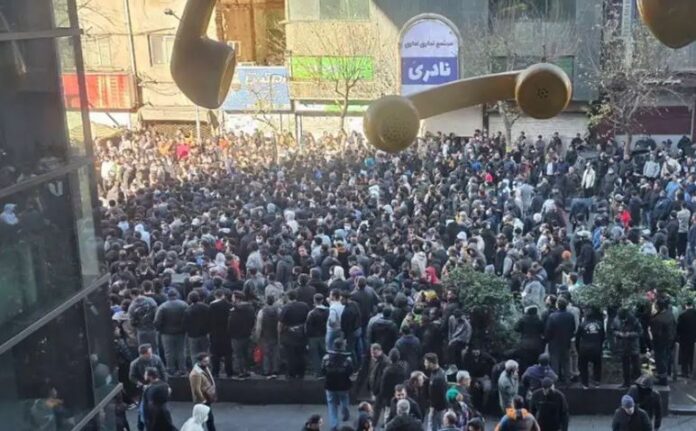
On Thursday, January 8, protestors blocked one of Tehran’s main roads—Ayatollah Kashani Boulevard. Videos posted on social media show large crowds of demonstrators and vehicles honking in support. In response, security forces used tear gas against the protesters, some of whom were masked, according to witnesses.

Activists shared footage showing burning police cars in Tehran. There are also reports of widespread protests in Mashhad, Kermanshah, and other major cities. According to the U.S. agency HRANA, the protests have spread to 111 cities and towns across Iran, as reported by the BBC's Russian Service.

The protests began on December 28, triggered by the collapse of the national currency and soaring inflation. In late December, the rial fell to a historic low, and in October, the World Bank reported 64.2% food inflation in Iran—the worst in the region, second only to South Sudan.

The initial protests began at Tehran’s main market, where shop owners closed their stores in protest against hyperinflation and sharp price fluctuations. Iranian authorities acknowledged the economic issues but attributed them to "the enemies of the country."

According to the Iran Human Rights (IHR) organization, at least 45 people have been killed since the protests began, including eight minors.

Earlier, Iranian authorities reported 21 deaths, including security personnel.

On January 2, U.S. President Donald Trump warned that the United States would intervene if Iranian authorities began opening fire on peaceful demonstrators protesting against the economic crisis and high inflation.

Earthquake of magnitude 5.3 recorded in GBAO’s Murgab district on January 9

0

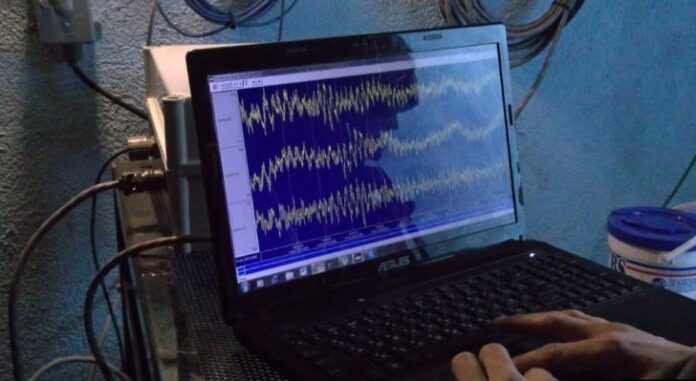
An earthquake with a magnitude of 5.3 struck Tajikistan’s Gorno-Badakhshan Autonomous Region (GBAO) at 2:14 AM local time on January 9.

According to the Geophysical Service of the National Academy of Sciences of Tajikistan, the earthquake’s epicenter was located 61 kilometers from the administrative center of Murgab district in GBAO.

The tremors there registered at the magnitude of 5.3. However, Tajik seismologists did not report the intensity of the tremors in other regions of the country.

Residents of Dushanbe reported feeling the tremors, which lasted only a few seconds, on social media. There have been no reports of damage or casualties.

It’s worth noting that in April of last year, a 5-6 magnitude earthquake, which occurred on the northeast of Tajikistan, on April 13, caused extensive damage. In the Rasht and Tajikobod districts, 94 residential homes were completely destroyed, and dozens of other buildings sustained partial damage.

Protests erupt in the U.S. after woman killed during immigration operation

0

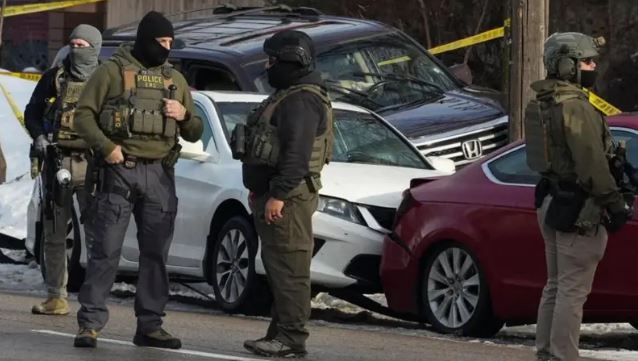
Protests erupted in Minneapolis after U.S. Immigration and Customs Enforcement (ICE) officers shot and killed 37-year-old local resident Renee Nicole McLean Good during an operation aimed at conducting "address checks."

Meduza reports that according to the U.S. Department of Homeland Security, the woman allegedly tried to use her car as a weapon, attempting to run over officers involved in the operation. The department stated that the shooting occurred in self-defense. Secretary of Homeland Security Kirstjen Nielsen claimed that ICE officers had become stuck in the snow when a group of people began obstructing their actions. She also stated that Good allegedly pursued the officers and refused to leave her vehicle. When she tried to run over one of the officers, he was injured and taken to the hospital. The incident has been described as an “act of domestic terrorism,” and the FBI has opened an investigation.

Videos from the scene, posted on social media, show that an ICE officer opened fire at close range when the car began to move.

According to CNN and the Associated Press, it is unclear whether Good posed an immediate threat at the time of the shooting.

Renee Good was a U.S. citizen and mother of three. Her relatives maintain that she was not an activist and had not participated in protests. On social media, she described herself as a poet and writer. Her death sparked protests across the country, with many participants holding signs reading “Justice for Renee.”

According to Good’s ex-husband, she had just dropped her six-year-old son off at school and was on her way home with her current partner before the confrontation with ICE officers. President Donald Trump, commenting on the incident, stated that the woman acted “extremely aggressively” and “deliberately attempted to run over an officer,” who, he claimed, shot in self-defense. Trump added that the situation was being “fully examined,” but attributed such incidents to ongoing threats from “radical left” groups.

Following Good’s death, protests broke out in Minneapolis calling for the removal of ICE officers from the city, according to the BBC’s Russian Service. Later that evening, hundreds gathered for a memorial rally in her honor. Minneapolis Mayor Jacob Frey sharply criticized ICE’s actions, publicly demanding the agency leave the city. “Your stated reason for being here is to ensure safety, but you’re doing the exact opposite—someone has died, and that’s on your conscience,” Frey said.

It is also worth noting that just two days before the incident, the Trump administration announced plans to send around 2,000 additional ICE officers to Minnesota to strengthen efforts against illegal immigration. The shooting took place just south of downtown Minneapolis, less than two kilometers from the site of George Floyd’s killing in 2020.