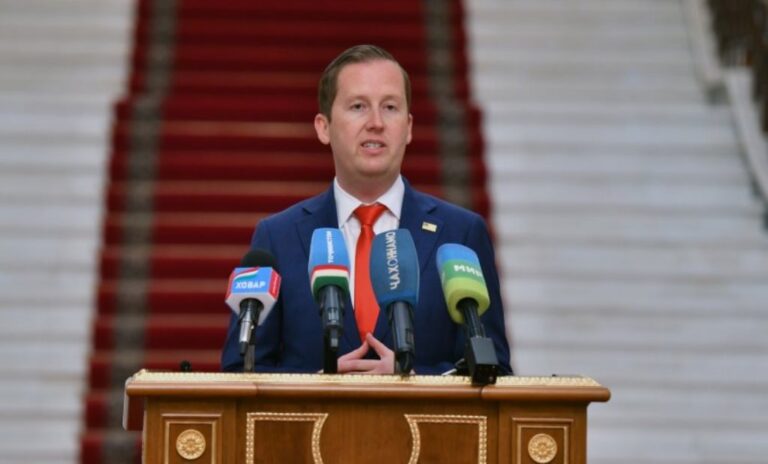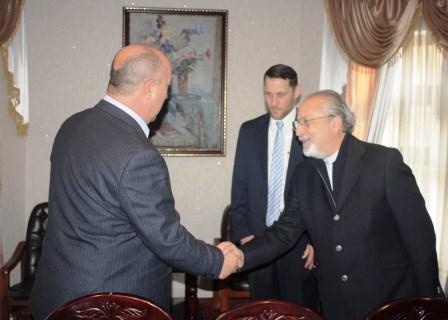
DUSHANBE, December 12, 2012, Asia-Plus — Visiting U.S. Commissioner on International Religious Freedom Sam Gejdenson yesterday met here with Nourullo Oripov, the First Deputy Minister of Interiors of Tajikistan.
According to the Interior Ministry’s website, the sides discussed issues related to observance of freedom of conscience and religion in Tajikistan as well as prevention of terrorism, extremism and separatism in society.
In the course of the talks, Mr. Oripov reportedly briefed Mr. Gejdenson on new manifestations of terrorism, extremism and separatism that have been revealed by Tajik law enforcement officers in recent years.
The United States Commission on International Religious Freedom (USCIRF) is an independent, bipartisan U.S. federal government commission created by the International Religious Freedom Act of 1998. USCIRF Commissioners are appointed by the President and the leadership of both political parties in the Senate and the House of Representatives. USCIRF”s principal responsibilities are to review the facts and circumstances of violations of religious freedom internationally and to make policy recommendations to the President, the Secretary of State, and the Congress. It is rooted in the U.S. Evangelical movement and its original intention was to protect Christians around the world. Such organisations as Christian Solidarity International, International Christian Concern, Open Doors and the Cardinal Kung Foundation as well as the lawyer Michael Horowitz were influences for the foundation of the International Religious Freedom Act.
It is funded entirely by the federal government on an annual basis and its staff members are government employees.
USCIRF researches and monitors international religious freedom issues. The Commission is authorized to travel on fact-finding missions to other countries; Consult and meet various entities like officials of foreign governments, religious groups, human rights group, policy experts etc; Hold public hearings, and issue reports as well other public statements; Participate in U.S. delegations to international meetings and conferences as well as train Foreign Service Officers and other U.S. officials.
The Commission on International Religious Freedom issues an annual report every May 1. The Annual Report describes conditions for freedom of religious or belief in countries of concern to the Commission and provides policy recommendations to ensure that the promotion of freedom of religious belief becomes a more integral part of U.S. foreign policy. The report contains chapters on countries the Commission had recommended for designation as Countries of Particular Concern (CPCs) for severe violations of religious freedom; countries the Commission has placed on a Watch List for violations of religious freedom that do not meet the CPC threshold but require attention; and other countries USCIRF is monitoring closely. The Annual Report also includes chapters on U.S. policy on expedited removal and multilateral organizations.