DUSHANBE, February 6, 2013, Asia-Plus — Representatives of the Islamic Revival Party (IRP) in Tajikistan’s lower house (Majlisi Namoyandagon) of parliament will insist on parliament’s adoption of amendments proposed by the to the Constitutional Law “On Election of the President of the Republic of Tajikistan.”
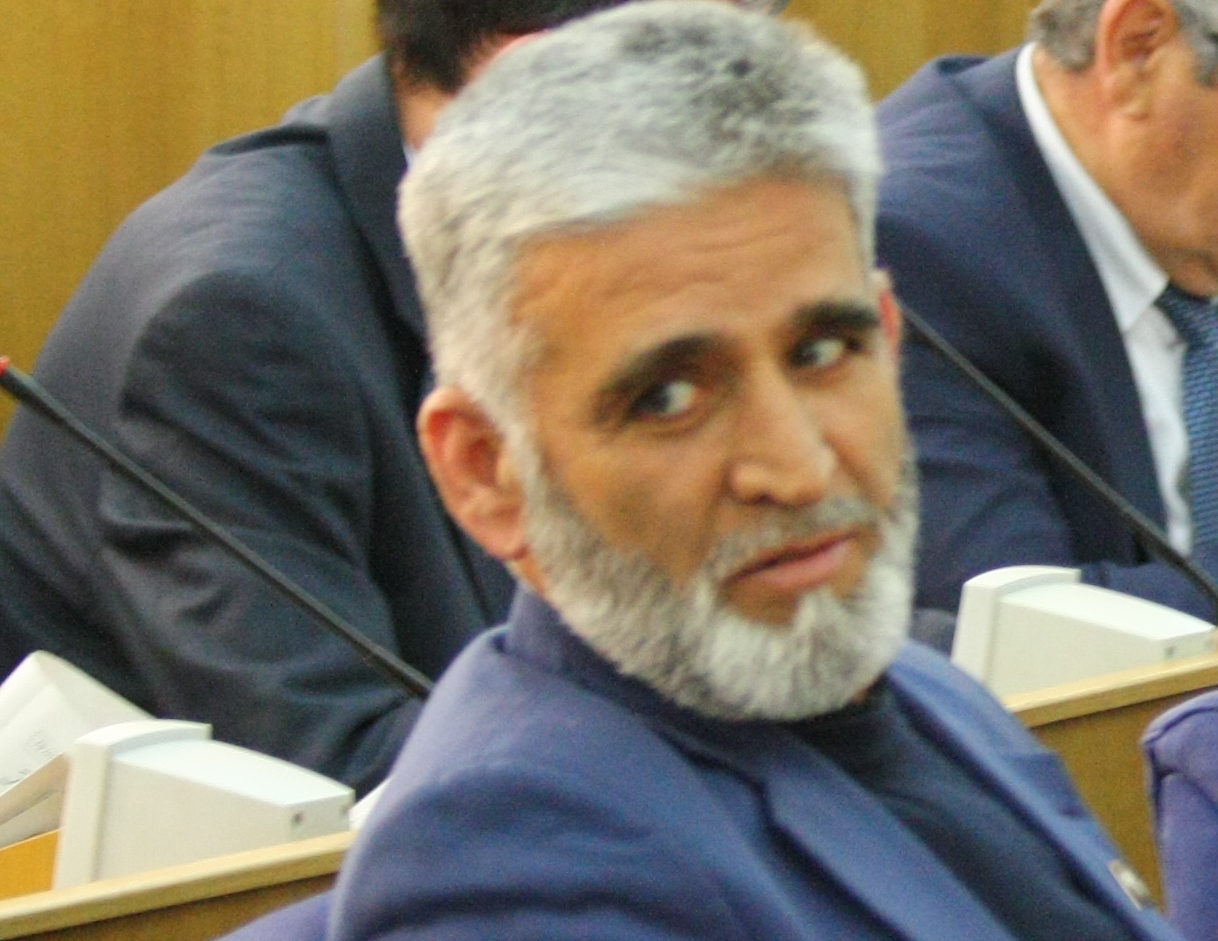
“We will do all that is in our power, within legal boundaries of course, to ensure that our amendments to the presidential election law will be adopted,” IRP deputy chairman Saidumar Husaini, who is one of two parliamentarians representing the IRP in the Majlisi Namoyandagon, told Asia-Plus in an interview.
“It is quite possible that the form and the number of amendments will change but we will do our utmost to ensure that they will be adopted. We realize that adoption of the amendments is the call of the time,” Husaini noted.
We will recall that MPs Muhiddin Kabiri and Saidumar Husaini, who represent the IRP in the Majlisi Namoyandagon, have worked out amendments to the Constitutional Law “On Election of the President of the Republic of Tajikistan,” which was adopted in July 1994. They, in particular, propose to provide equal representation of political parties in electoral commissions at all levels. They also propose that a candidate for the post of the President should have the support of two percent of citizens of the Republic of Tajikistan who have universal suffrage.
Under the current law, a candidate for the post of the President shall have the support of 5 per cent of citizens of the Republic of Tajikistan who have universal suffrage.
Besides, the IRP MPs propose that candidates nominated by political parties, who win five and more percent of the vote, should be exempted from collecting signatures.
Earlier, MP Shodi Shabdolov, who is also leader of the Communist Party of Tajikistan (CPT), said in an interview with Asia-Plus that MPs representing the CPT in the Majlisi Namoyandagon might support IRP’s amendments to the law on presidential election.
On January 21, the Majlisi Namoyandagon board (Shuro) voted down the amendments offered to presidential election law by the IRP.
Under the current election legislation of Tajikistan, the President of the Republic of Tajikistan is elected by national vote for the seven-year term. Tajikistan held a constitutional referendum on June 22, 2003 and the 2003 Constitution, among other amendments, set a limit of two seven-year terms for the president.
Emomali Rahmon’s election to the office of the president in 2006 counts as his first 7-year term under the 2003 Constitution, and in principle he may be re-elected for a second term in 2013, remaining in office until 2020.
Founded in October 1990, the Islamic Revival Party of Tajikistan was registered on December 4, 1991. It was banned by the Supreme Court in June 1993 and legalized in August 1999. Its official newspaper is
Najot
(Salvation). According to some sources, IRP now has more than 50,000 members. It won two seats in the 2010 parliamentary elections. The Islamic Revival Party of Tajikistan is the only Islamic party registered in CIS Central Asia.