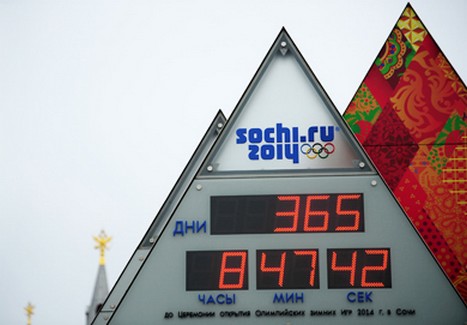
DUSHANBE, February 7, 2013, Asia-Plus — A Human Rights Watch (HRW) report released on February 6, says intensive construction at the 2014 Winter Olympics venue in Sochi, Russia has come at the cost of human rights abuses of migrant workers. The reports say some employers at key Olympic sites cheated workers out of wages, confiscated workers” documents and denied them adequate rest. Sochi”s mayor has played down the allegations saying he has had only two complaints from those working on the project
Associated Press reports that one year ahead of the Winter Olympics in Sochi, the roads in the Black Sea resort and its surrounding mountains are lined with migrants from Central Asia doing the grunt work that Russians find too low-paid and physically demanding.
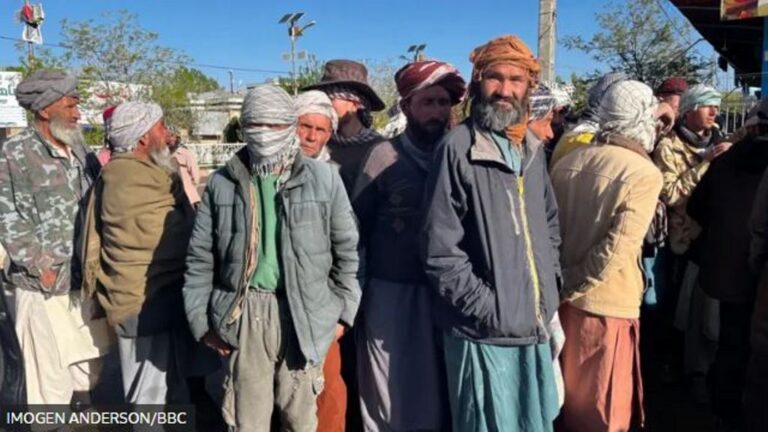
Tens of thousands of migrant workers from Uzbekistan, Tajikistan and Kyrgyzstan are a key element in Russia”s intense drive to build facilities for the 2014 Sochi Games.
But many migrants, whose pay typically provides for their entire families back home, complain that Russian contractors are cheating them and withholding their wages, Associated Press said, noting that most of the foreign laborers speak poor Russian and many are afraid to assert their rights.
The HRW report draws a vivid picture of the routine abuse faced by Sochi migrant workers: underpayment, withheld wages and the absence of employment contracts.
The report, in particular, notes that for Eshkobil Ashurov of Tajikistan, working in Sochi has been a boon and a bane. The 27-year-old steel-fitter has been able to send money home to his wife, children, parents and sisters in his impoverished homeland — but that”s only when his employers actually pay him.
In December, he said, he walked off his previous job after going 40 days without pay. He said 40 of the 100 men in his work group also weren”t paid and most of them left Sochi.
Ashurov found another construction job in the mountain area where the outdoor Olympic competitions will be held, but it”s still a difficult life. He typically works 10 hours a day, seven days a week and earns about 30,000 rubles ($1,000 a month). He sends 27,000 rubles of that home, leaving him little to live on besides his employer-provided accommodation and food.
“We”re here to work,” he said in an interview. “You get back, spend some time at home and go back here to work.”
Ashurov”s situation is common, according to Semyon Simonov, who runs a two-man advocacy group for migrants in Sochi that provides free legal help. But it”s hard to tell how many workers truly are affected.
Federal Migration Service chief Konstantin Romodanovsky recently said that out of 74,000 people involved in construction in Sochi, only 16,000 are foreigners.
But the actual figure of foreign laborers in Sochi is likely much higher. According to Simonov, who contrasted official statistics on work permits with data on foreigners registered in the area, about 50,000 people may be working in Sochi without work permits.
Simonov and Human Rights Watch list the withholding of wages, the failure to provide employment contracts and excessive working hours as the most common rights violations that migrants in Sochi face.
The rights group called on the International Olympic Committee to set up a working group to monitor and prevent the mistreatment of workers.
Olympstroi, the Russian state company responsible for building the Olympic venues, said in a statement it has carried out more than 1,300 work inspections since 2011 but has identified only five cases of “wage irregularities.”
The IOC reiterated its “long-standing commitment” to follow up cases of mistreatment or abuse and said it has been in contact with Human Rights Watch. In a statement, the IOC said it brought the issue of migrant workers to the attention of the Sochi organizing committee and had received information on the topic from Olympstroi.
“We can confirm that Olympstroi has carried out more than 1,300 work inspections since 2011 and that a small number of cases regarding wage irregularities were identified and dealt with satisfactorily,” the IOC said. “We would continue to urge HRW to furnish us with the details of cases that allow us to deal with them on a case-by-case basis and to push for action when necessary.”
Simonov said his group was collecting complaints and documenting rights abuses about the migrants. “The most sensitive thing for them is when they don”t get paid,” he said. “They don”t mind the miserable conditions they live in. They”re willing to put up with this as long as they get paid.”
Up in the mountains in the Krasnaya Polyana area where Ashurov works, 37-year-old Dilya Saipova from Kyrgyzstan was meeting with a potential employer, hoping for a better position than her odd jobs cleaning and working in a kitchen, which she said was strenuous and underpaid.
Local employers “can”t pull these things off” with Russians, Saipova said, because “Russians have a law and they can assert their rights using that law.”
Workers in Sochi “consistently” spoke about employers failing to pay full wages and in some cases failing to pay workers at all, the HRW report said.
The Olympic venues where workers interviewed by Human Rights Watch reported abuse are the Olympic Stadium, the Olympic Village and the media center in the coastal cluster. Simonov”s group is working on a complaint concerning the media center filed by 20 Uzbek workers seeking back wages worth a total of 1 million rubles ($33,000) from a subcontractor.