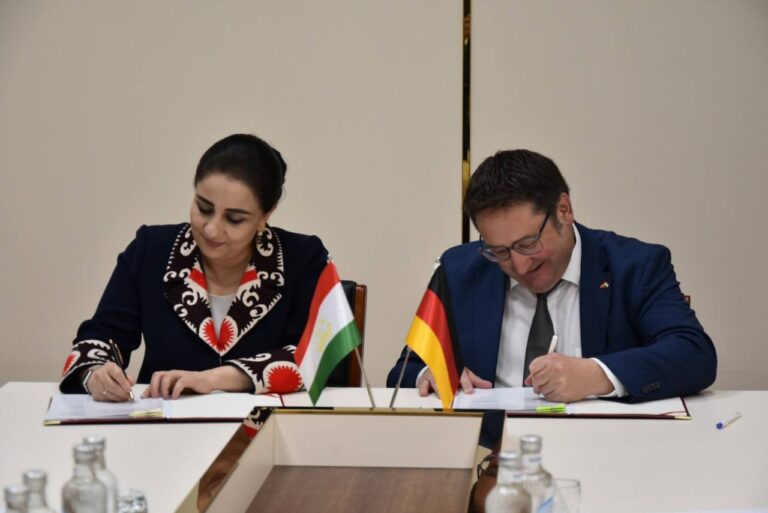
DUSHANBE, August 26, 2008, Asia-Plus — Over the past seven years, the Shanghai Cooperation Organization (SCO) has made significant success in political and economic spheres as well as in addressing modern challenges and threats that draws great attention to the Organization, the SCO Secretary General Bolat Nurgaliyev remarked, while inaugurating a session of the SCO Business Council in Dushanbe on August 26.
He identified making shift from functional to systemic cooperation, based on implementation of bilateral and multilateral trade-economic and investment projects, as one of priority areas of the SCO activities.
According to him, successful economic development of all six member nations of the Organization is the most effective factor for providing stability and security within the SCO area and effective address to challenges and threats existing in the Eurasian region.
“Good results have been made in economic sphere, in particular an intergovernmental agreement on cooperation and mutual aid in the customs sphere has been signed and the pilot project for organization of cross-border interaction with use of electronic digital signature of the SCO member nations is being prepared for implementation,” said the secretary general, noting implementation of this project will allow promoting further expansion economic cooperation.
He also pointed to the necessity of enlisting the services of observer countries for implementation of economic projects.
The meeting is considering issues related to energy and food security, development of tourism and relevant industries, as well as problems facing the agrarian sector.
Said Sharif, head of the Chamber of Commerce and Industry (CCI), is representing Tajikistan at the meeting that will end today evening.
The SCO Business Council was set up in Shanghai, China on June 14 2006 with the aim to promote further expansion of cooperation between the SCO member nations in trade and economic, financial, scientific-technical, energy, transportation, communication, agricultural and other spheres. It is intended to serve as an instrument of building direct ties and dialogue between the business and financial circles of the SCO member states, involving them in multi-faceted business cooperation in economic and investment spheres.