DUSHANBE, January 11, 2015, Asia-Plus — The work on completion of the Istiqlol Tunnel is expected to be finished by November this year, Sijouddin Salomzoda, the head of the Main Directorate for State Supervision over Safety in Industry and Mining under the Government of Tajikistan, announced at a news conference in Dushanbe on January 9.
According to him, repair works are currently being carried out in the ventilation-and-drainage tunnel and the process of installation of illuminators in the tunnel is nearing completion.
We will recall that Tajik Minister of Transport Khairullo Asozoda told journalist sin Dushanbe on July 18, 2014 that mistakes have been made during development of the Istiqlol Tunnel construction project. Specialists from the Ministry of Transport (MoT) have reportedly detected mistakes while analyzing and implementing the project.
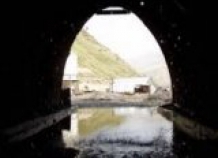
The Istiqlol Tunnel, better known among the population as the Anzob Tunnel, has been built with assistance of Iranian specialists. Iran’s Saber International has constructed the Istiqlol Tunnel.
The total project cost was estimated at 40 million US dollars, and Iran has provided US$10 million in a form of grant and extended a preferential loan worth US$21 million to Tajikistan.
The Istiqlol Tunnel is a five kilometer long tunnel located 80 kilometers northwest of Dushanbe. It connects the Tajik capital to Tajikistan’s second largest city, Khujand. It is also a transit route between Dushanbe and Uzbekistan’s capital Tashkent. Previously, especially during the cold seasons, a lack of a direct link between northern and southern Tajikistan led to disruptions of commerce. The tunnel makes the highway from Dushanbe to Khujand open for traffic the whole year round and drops the transit time by four to five hours.
An official opening ceremony of the Istiqlol Tunnel was held in July 2007; however, some works have remained unfinished.
A memorandum of understanding (MoU) between the governments of Tajikistan and Iran on completion of the Istiqlol Tunnel that was endorsed by the Tajik parliament in April 2013 provides for allocation of additional 6 million U.S. dollars. This amount includes a US$3 million grant provided by the Government of Iran and US$3 million provided by the Government of Tajikistan.