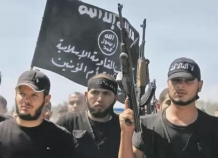
DUSHANBE, January 29, 2015, Asia-Plus – Black flags of the Islamic State of Iraq and the Levant (Isil) have appeared at Afghanistan’s border with Turkmenistan, Russia’s
Nezavisimaya Gazeta
reports.
The militants have reportedly been moved from southern provinces of the country to northern Afghanistan and they are currently recruiting local residents to join their ranks.
Afghan Senator Gul Muhammad Rasouli says they intend to destabilize the situation on the Afghan border.
According to him, there are representatives of the Taliban and nationals of Central Asia’s countries among the Isil militants.
Afghan senator reportedly admitted that the Afghan government forces could not cope with the Isil militants.
Meanwhile, a new armed group called “Marg” (Death), numbering nearly 5,000 militants, has been formed in Balkh Province to protect the north of the country against the Isil militants.
Experts say concentration of the militants along the Central Asian countries’ borders carries instability to the Central Asian countries and the Tajik-Afghan border is considered to be the weakest link.
The Crisis Group (ICG) says the five Central Asian countries need to develop a credible, coordinated action plan to counter the threats posed by Isil militants and “growing radicalism” in the region.
A report,
Syria Calling: Radicalization in Central Asia
, which was released by ICG on January 20 notes that between 2,000 and 4,000 Central Asians have left for areas held by Isil militants or otherwise support the extremist group”s cause.
The ICG said Kazakhstan, Kyrgyzstan, Tajikistan, Turkmenistan, and Uzbekistan — crippled by corruption and poor governance and policing — have done little to address a threat as intricate as radical Islam.
Instead, they are fuelling further radicalization by curtailing civil liberties and initiating security crackdowns, the report said.
ICG urged the governments to improve security coordination, as well as to liberalize religious laws and provide greater economic opportunities for young people.