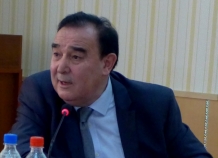
DUSHANBE, May 7, 2015, Asia-Plus — A roundtable on problems of development of civil society and religious radicalism in Tajikistan took place in Dushanbe on May 6.
Speaking at the meeting, the head of the Center for Strategic Studies under the President of Tajikistan, Dr. Khudoberdi Kholiqnazar, outlined factors fueling religious radicalism in the country.
According to him, the main factors fueling religious radicalism in society are unemployment, poverty and corruption.
Socioeconomic problems have exacerbated the issue of radicalization in Tajikistan, Kholiqnazar said. “Today, poverty rate in Tajikistan is 32.8 percent and some forces using this situation seduce our unemployment citizens by money,” Tajik think tank head noted.
Ignorance and religious illiteracy also constitute foundation for radicalism in society.
Besides, young people are also drawn into extremist groups through social networks.
Labor migration has also become one of factors fueling radicalism in Tajik youth. Extremist organizations are attracting unemployed Tajik youth, including those who travel to Russia as labor migrants. Tajik labor migrants who travel to Russia seeking better employment opportunities are offered only low-paid jobs. Moreover, many of them have lost their jobs because of crisis in Russia. As a result of the hardships faced by the labor migrants in Russia, some are attracted to radicalism.
Kholiqnazar noted that the Tajik Embassy in Moscow and the Migration Service’s office in Russia did not work properly with Tajik labor migrants working in Russia. According to him, imam-khatibs and specialists from the Islamic Center ought to travel to Russia to carry out explanatory work among Tajik migrant workers.
He noted that experts conducting surveys on this subject propose to organize short-term courses for youth on the foundations of Islam and religious and secular tolerance as well as establish libraries, clubs and sports groups in the regions.
Kholiqnazar also proposed to organize courses for imam-khatibs on reasons for growth of radicalism among Tajik youth.
He also proposes to resume study of foundations of traditional Islam in high schools. We will recall that the Ministry of Education in 2009 introduced “Knowledge of Islam” as compulsory coursework for high school but it later was suspended.
Tajik think tank head also suggested that the Interior Ministry should carry out work with people released from prison because they are also at high risk of being attracted to religious radicalism. “We suggest that people convicted of being members of extremist groups should be held in separate cells. According to information we have, emissaries arrive in Tajikistan in order to commit any crime and go to jail. If they are not held in separate cells, they may recruit other prison inmates,” Kholiqnazar noted.
Tajik pundit also noted that extremist groups also try to recruit Tajik nationals during the Hajj.