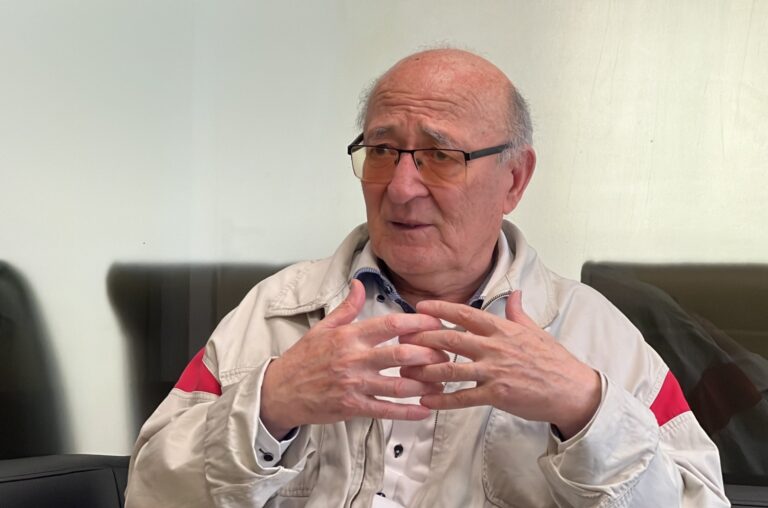



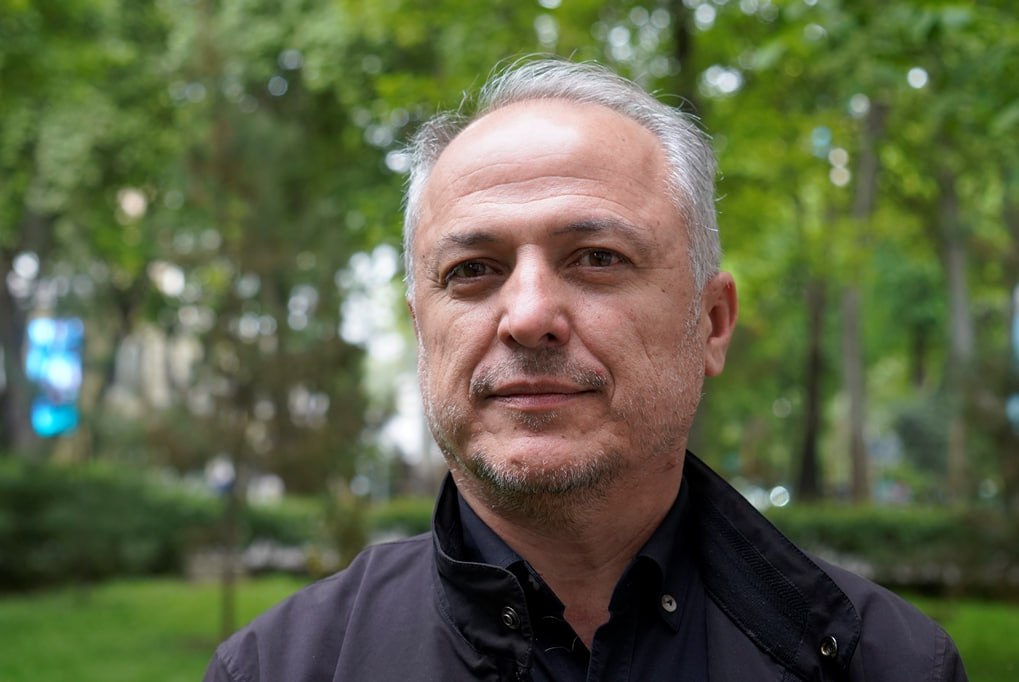
On the occasion of the 30th anniversary of the Asia-Plus Media Group, renowned Tajik historian, Professor Saifulloh Mullojon, shared his thoughts on our media and offered ideas for its development.
Professor Mullojon says he has been following Asia-Plus since its inception, initially reading the print version of the newspaper, and today keeping up through social networks and the internet. He is more interested in analytical materials concerning international relations, integration in Central Asia, and social news.
“For almost 30 years, since the year I graduated from university and took my first steps in research, I have been alongside Asia-Plus. And, of course, I trust them,” our interlocutor said.
According to Saifulloh Mullojon, one of the main features of Asia-Plus that distinguishes it from other media is the high professionalism and reliability of the published news. He noted that over all these years, it has been extremely rare for this publication to release unchecked or inaccurate information.
“Most of the events published in Asia-Plus sometimes come with a delay, but these are the events that actually happened, that took place. It is rare for ‘Asia-Plus’ to write something and then apologize a day or a few days later. Their news is usually verified and final,” he emphasized.
It is this objectivity in covering events, according to the professor, that has made “Asia-Plus” a recognized media outlet not only in the country but also at the regional level and in the post-Soviet space as an authoritative news agency.
“If rated, ‘Asia-Plus’ might be at the top in terms of recognition in the post-Soviet space. I am not mistaken because in the region, in Central Asia, ‘Asia-Plus’ is recognized as a respected and professional news agency,” Mullojon added.
The emergence at the right time
Professor Mullojon recalled that Asia-Plus emerged at the right time, in the early years of independence, when after the collapse of the Soviet Union, Tajikistan was experiencing an “information hunger.”
According to him, Asia-Plus played two historical roles during those years — it conveyed the voice of Tajikistan to the world and simultaneously brought the voice of the world into the country.
“We were separated from the Soviet Union and were not yet integrated into the global community. It was necessary for us to be represented by an independent institution from within Tajikistan in the Russian language. And it was this vacuum that Asia-Plus managed to fill. It is very important that this newspaper carried our voice to the world, and the voice of the world to us,” the historian noted.
The art of staying on stage
The historian also noted how Asia-Plus has managed to remain active and independent amidst political instability and restrictions over all these years.
“Saadi says: ‘The traveler is the one who moves slowly and steadily.’ And there is a Tajik proverb that says: ‘A crooked path also leads.’ That is, you must simultaneously coordinate your actions, reconcile interests, and at the same time perform your task,” the professor says.
In his opinion, the main art of the publication lies in “the ability to stay and serve”: “What you say for several years or one year, and then you are removed, or you cannot compete, or you are altogether excluded — that is not art. Art is to stand in this situation, maintain your success, and serve society.”
“In fact, it is not necessary to speak about everything. It is the task of history, after everything is summed up, to conduct analysis and evaluation. You should focus on what you have now, with the opportunities available at this moment. This is the art — to preserve yourself, to say your word. It is important that you do not lie,” said Mullojon.
Criticism and proposal: creating a Persian language section
In the final part of the conversation, Professor Mullojon noted that he does not agree with “Asia-Plus” on all issues, and over the years has sometimes made remarks to the founders of the publication. However, the main topic he persistently returned to was the necessity of creating a Persian language section in Asia-Plus:
“It is a law of history that every 30-35 years the world changes. It has been 30 years since the founding of ‘Asia-Plus.’ The world has changed and is in the process of changing. What I dream of is that with the team that ‘Asia-Plus’ has, with the decisions and good intentions regarding the country and the people, you should have your place in today’s Persian-speaking space.”
According to the professor, this necessity is confirmed by the numbers:
– the population of Afghanistan is 40 million;
– the population of Iran is over 90 million;
– and in total, the Persian-speaking world numbers around 150 million people.
“That is, just as the Russian-language press has its audience, so too does the Persian-speaking world have its audience. And this space is vacant,” the interlocutor noted.
Professor Mullojon emphasized that the information situation in Afghanistan, which despite 50 years of political instability, is more active information-wise than Tajikistan, is a clear example of this gap. In his opinion, the conditions to fill this gap are quite established.
“What could be better than this foundation, when 90% of Asia-Plus employees are Tajiks, you know this language. The place for a powerful news agency in our language in Tajikistan is currently vacant. What is needed for this? For this, one decision and good intent are needed.”
He concluded his reflections with the words: “You have achieved success, now it is important to maintain this success and serve society.”
We remind you that on April 2, 2026, the Asia-Plus Media Group celebrated its 30th anniversary.