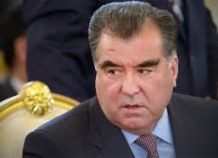
DUSHANBE, December 7, 2015, Asia-Plus — The board (Shuro) of Tajikistan’s lower house (Majlisi Namoyandagon) of parliament has decided to table the draft law on leader of the nation to the agenda of the next sitting of the second session of Majlisi Namoyandagon of the fifth convocation that will take place on December 9.
Muhammadato Sultonov, a spokesman for Majlisi Namoyandagon, says the board also discussed a draft law on peacekeeping activity and draft laws amending the country’s laws on Majlisi Oli (Tajikistan’s parliament), internal audit at state-run enterprises, leasing, public service, Tajik ombudsman, and the procedure of holding suspects and defendants in custody at a December 7 meeting.
A group of deputies of Majlisi Namoyandagon have worked out a draft law titled “On Initiator of Peace and Accord – Leader of the Nation.” The bill is currently being at committee stage in Majlisi Namoyandagon and since 51 of 63 seats in Majlisi Namoyandagon are held by the ruling People’s Democratic Party (PDP) there is little doubt that the bill will not be endorsed.
We will recall the Kazakh parliament on June 15, 2010 passed the law granting President Nursultan Nazarbayev the right to shape policy after retirement and immunity from prosecution and he was declared Kazakhstan”s Leader of the Nation. The law reportedly gives Nazarbayev control over government policy after leaving the presidency as well as immunity from criminal prosecution for any actions taken while in office. It also protects all assets of the president and his family.
In mid-January 2011, Kazakh parliament voted in favor of holding a referendum to keep Nazarbayev in office until 2020, citing issues of stability and continuity. But there were only two options being debated: 2020, or simply declaring Nazarbayev president-for-life. Nazarbayev rejected the proposal, but announced that, true to form, there would be another early presidential election on April 3, 2011.
Meanwhile, some experts in Tajikistan consider that granting the status of leader of the nation to the incumbent President Emomali Rahmon is aimed at doing away with the legalities technically limiting his right to seek reelection in perpetuity.
The President of the Republic of Tajikistan is elected by national vote for the seven-year term. President Emomali Rahmon won a third term in office in November 2006 by capturing more than 79% of the total vote.
Tajikistan held a constitutional referendum on June 22, 2003 and the 2003 Constitution, among other amendments, set a limit of two seven-year terms for the president. Emomali Rahmon’s election to the office of the president in 2006 counts as his first 7-year term under the 2003 Constitution, and in principle he may be re-elected for a second term in 2013, remaining in office until 2020.