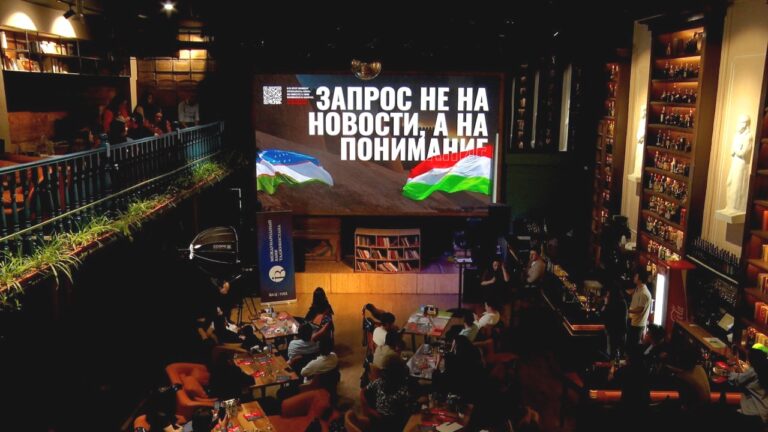
DUSHANBE, March 4, Asia-Plus — A meeting of the Mini-Dublin Group was held at the Drug Control Agency (DCA) in Dushanbe yesterday.
Members of the Mini-Dublin Group, representing the European Union countries, the United States and the UN Office on Drugs and Crime (UNODC), noted that they will provide assistance to Tajikistan with combating drug trafficking in future as well, the source at a DCA said.
According to him, the promised aid includes technical assistance, training of personnel and exchange of operational information.
Italian Ambassador to Tajikistan and Uzbekistan, Mr. Angelo Persiani, who presided over the meeting, informed the participants of the Group’s activity, its tasks in coordinating regional cooperation among central Asia’s states on the fight against drug trafficking, the source said.
Speaking at the meeting, Mr. James Callahan, UNODC Regional Representative for Central Asia, familiarized those present on the drug-trafficking situation in Afghanistan and the region.
The DCA first deputy director, Vaysiddin Azamatov reported on the drug-trafficking situation in the country and measures taken by the government to combat drug trafficking.
The meeting participants also discussed priorities of activities of the Mini-Dublin Group, the source said.
The Dublin Group was established in 1990 on the occasion of a CELAD (European Committee to Combat Drugs) meeting in Dublin under the Irish Presidency. However, it is not an EU mechanism but, rather, a broad based initiative.
The Dublin Group is an informal coordination group made up of like-minded countries that meets periodically with three main objectives: firstly, to analyze and exchange views on international drug problems – as regards production, trafficking and abuse – particularly in mainly-producing and transit countries. Secondly, to make recommendations both to its members and to its partner countries on how to address these problems. Thirdly, to coordinate their response to these problems particularly as regards their members’ cooperation with partner countries.
Members of the Dublin Group are the European Commission and the Member States of the EU, the United States, Canada, Australia, Japan and Norway. The UNODC also participates in the Group’s meetings and the Secretariat of the Group is assured by the EU Council Secretariat.
The Dublin Group meets in Brussels at central level twice a year in June/July and December/January. Delegations are usually led by officials from the Ministries of Foreign Affairs, or similar departments, often at Ambassador level. Every two years the Regional chairs are elected by consensus at these meetings. Each of these chairs – there are about ten – have the responsibility for monitoring and informing the Dublin Group at the central level about the evolution of the drug situation in a particular region. They do so by preparing once a year a “regional report” (and six months later a “follow-up” to this report), which contains (sometimes proceeded by a regional summary) the information and recommendations submitted by the mini-Dublin Groups established in the region.
These mini-Dublin Groups (one per host country) consist of representatives from the Missions and Embassies of Dublin Group members in each host country. They usually meet twice a year at the initiative, and under the chairmanship, of the Mission whose country holds the regional chair. Often, their meetings are also attended (in part or entirely) by officials from the host country.