Tajik media organizations against amendments offered by the government to the media law

DUSHANBE, February 1, 2016, Asia-Plus — Tajik media organizations have come out against amendments offered by the government to the country’s law on periodical press and other mass media. In a statement  released on February 1, Tajik Journalists’ Union (TJU), the National Association of Independent Media of Tajikistan (Nansmit), the Homa Public Association and the […]

DUSHANBE, February 1, 2016, Asia-Plus — Tajik media organizations have come out against amendments offered by the government to the country’s law on periodical press and other mass media.

In a statement  released on February 1, Tajik Journalists’ Union (TJU), the National Association of Independent Media of Tajikistan (Nansmit), the Homa Public Association and the Media Council of Tajikistan, in particular, noted that they come out against the amendments proposed by the government to the country’s media law.

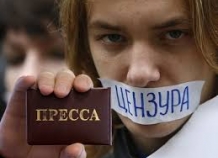
If adopted, the amendments would legitimate censorship in Tajikistan, according to the statement.

The media organizations consider that the amendments will deal a heavy blow to the country’s media.

One of the amendments gives the prosecutor’s offices the right of giving written directions to  media “to remove first irregularity.”

“If the irregularities are not removed in the required time, prosecutor’s offices may apply to the bodies engaged in registration of media for suspension of the media activity,” the amendment said, noting that in this case, the registration bodies may suspend the media activity for three months.

According to the amendments, the media activities can also be suspended by the court.

Tajikistan’s Law on Periodical Press and Other Mass Media was adopted on March 19, 2013.

An international, non-governmental human rights organization, ARTICLE 19, noted on October 2, 2014 that it finds that the Media Law includes a number of provisions that are in breach of international freedom of expression standards.

At the same time, ARTICLE 19 finds that the Media Law includes a number of provisions that are in breach of international freedom of expression standards, in particular, the regulations dealing with: media registration; content restrictions; the right of reply and refutation; access to state information; the protection of confidential information; the accreditation of journalists; duties of journalists; and the accreditation of foreign media.
Join us on social media!

Article translations:

Related Article

Оби зулол
Tenisi
Оби зулол

Most Read

Коммерсбонк Точикистон

Recent Articles

Gusty winds and mudslides damage houses, roads, and cars in Dushanbe and some other regions

At least 9 vehicles were damaged, including three in Dushanbe and six in Vahdat.

The US struck military facilities in Iran. Trump expressed dissatisfaction with Tehran’s proposals and threatened Oman.

Earlier, Iran's state TV reported receiving a draft unofficial framework agreement between Tehran and Washington to settle the conflict.

How much did Tajikistan’s budget earn from the “Google tax”?

The law is already 5 years old, but the Tax Committee provided data only for the last 2 years.

The bilateral trade between Tajikistan and Iran increased by 8% in Q1 2026

Another meeting of the joint intergovernmental commission of the two countries took place in Dushanbe.

Russia and Taliban government sign military-technical cooperation agreement

The document may open up opportunities for the exchange of weapons, military technologies, and other types of defense cooperation.

“Hit with fists on the lower back and abdomen.” A teacher from Nurobod, claiming he was beaten by a student’s brother, details the attack

According to him, he is being threatened with murder, and law enforcement agencies have not yet detained the attacker.

International internet starts coming back in Iran after long shutdown 

Western media reports says Iranians ​isolated by a long...

Tajikistan listed among countries with low generative AI usage

Among the Central Asian countries, Kazakhstan has the highest rate.

Prices in Tajikistan rise almost 2% in January-April: apples, fuel, and utilities become particularly more expensive

In April, inflation was 0.6%: food products became more expensive, non-food products increased in price comparatively less, and tariffs for paid services remained unchanged.

Drought in Central Asia becoming a chronic threat, IWMI expert warns

The temperature in the region is rising faster than the global average.