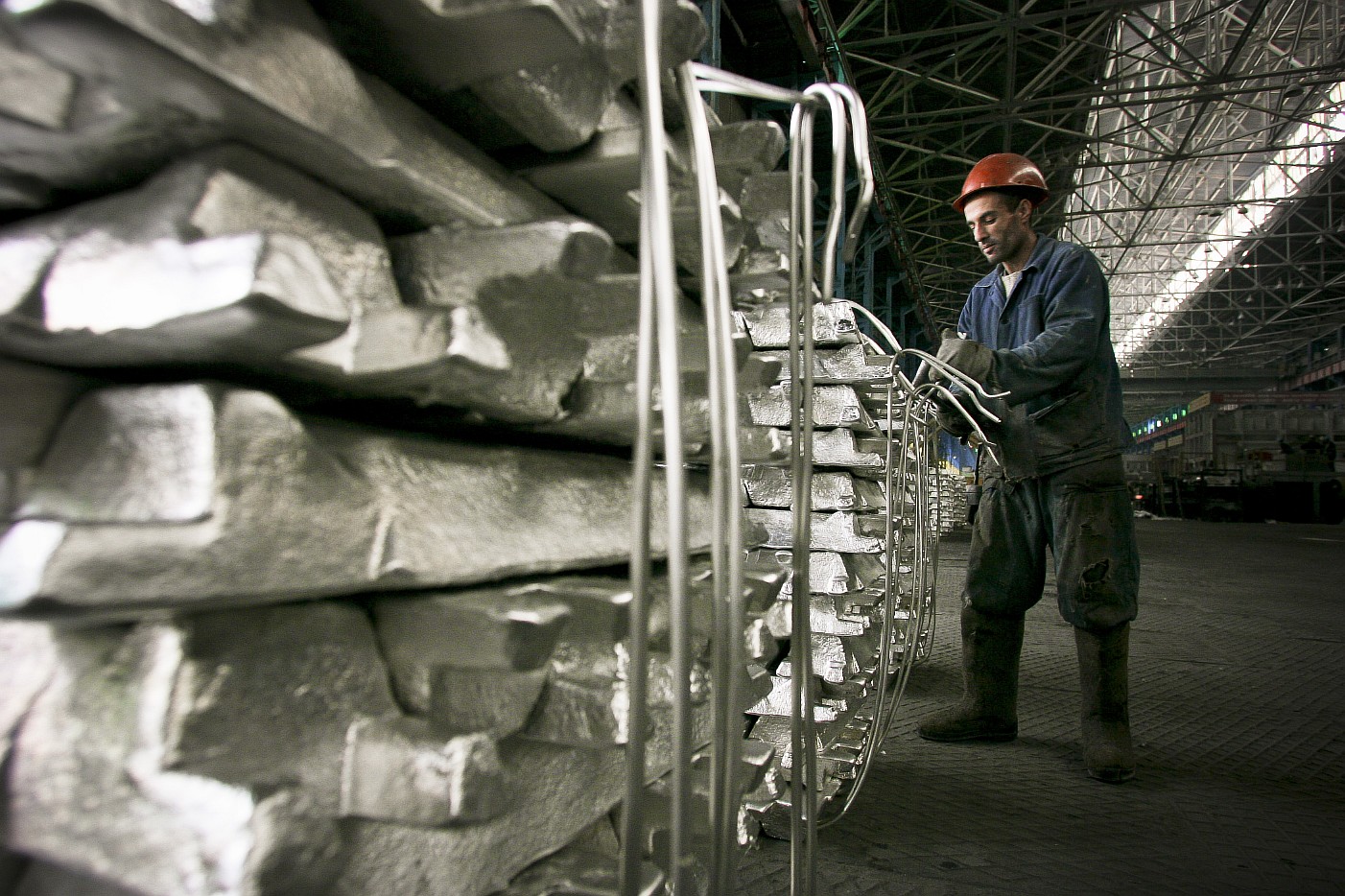
Low prices and insignificant demand have reportedly impeded growth in production of primary aluminum in Tajikistan.
In a report released at a news conference in Dushanbe, the Minister of Industry and New technologies, Shavkat Bobozoda, revealed on January 25 that production of primary aluminum last year remained at the 2015 level.
Recall, Tajikistan produced 139,000 tons of primary aluminum in 2015, which was 14,000 tons more compared to 2014.
“However, we plan to increase production of primary aluminum and processing of primary aluminum in Tajikistan this year,” the minister noted.
He further added that the country’s annual requirements in the processed aluminum are 30,000 tons. “This year, we plan to increase processing of aluminum to 10,000 tons,” Bobozoda said.
The Tajik Aluminum Company (TALCO) initially planned to produce 158,000 of aluminum last year. But at the beginning of the second half of 2016, the company management noted that it would decrease production of primary aluminum.
TALCO noted in September last year that speed fall in the international aluminum prices that began in July 2013 has resulted in 80 percent of world’s aluminum producers operating without getting profit and most of them are incurring losses. In connection with the considerable fall in the international aluminum prices the company’s crisis management has proposed to consider the possibility of reducing the aluminum production volumes for the purpose of minimizing financial losses.
In November 2015, the government granted the company licenses to develop two gold deposits in the northern Sughd province, Konchoch and Chulobi. Usage rights over the deposits will extend to 25 years.
In 2016, the major trading partners to Tajikistan’s primary were Turkey, Taiwan, the Virgin Islands, Uzbekistan, and Pakistan.
The Tajik Aluminum Company (TALCO) is one of the ten largest aluminum smelters in the world and provides up to 70% of the country’s foreign currency earnings, consuming 40% of the country’s electrical power. TALCO is wholly owned by the Tajik government. Tajikistan does not mine alumina but imports the raw material through tolling arrangements.
Construction of the Tajik aluminum plant (TadAZ) began in 1972, and the first pouring of aluminum took place on March 31, 1975. On April 3, 2007, TadAZ was officially renamed to TALCO – Tajik Aluminum Company. The Tajik aluminum smelter had the capacity to produce 517,000 metric tons per year.