The UK’s Department for International Development (DFID) will help Tajik authorities transform Dushanbe into smart city.
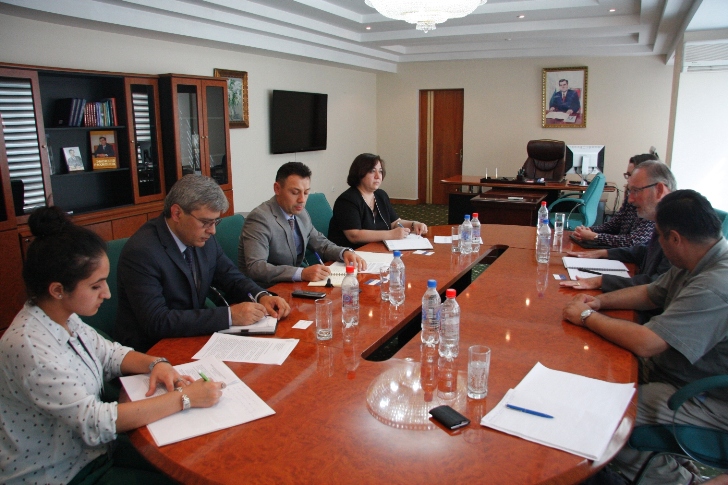
Issues related to introduction of the ‘Smart City’ concept in the framework of the implementation of the Dushanbe infrastructure development project were discussed at a meeting of Jamoliddin Nouraliyev, the Frist Deputy Chairman of the National Bank of Tajikistan (NBT), with representatives of DFID.
Nicholas Miles, DFID Senior Private Sector Adviser, in particular, noted that the Cities and Infrastructure for Growth (CIG) program, which is supported by the British Government, is aimed at infrastructural and economic development of a city.
The sides reportedly discussed the possibility of expansion of the project and involvement of development of infrastructures of other large cities of Tajikistan in that project.
A smart city is an urban development vision to integrate information and communication technology (ICT) and Internet of things (IoT) technology in a secure fashion to manage a city's assets. These assets include local departments' information systems, schools, libraries, transportation systems, hospitals, power plants, water supply networks, waste management, law enforcement, and other community services. A smart city is promoted to use urban informatics and technology to improve the efficiency of services. ICT allows city officials to interact directly with the community and the city infrastructure and to monitor what is happening in the city, how the city is evolving, and how to enable a better quality of life.
Cities and Infrastructure for Growth, (CIG), is a new, 5-year, multi-country DFID program designed to support inclusive economic growth and job creation.
This program will enable cities to function effectively, attract new businesses and create employment. It will provide reliable energy for households and businesses, thereby reducing production costs and removing the barriers to investment in much needed infrastructure services, such as energy, water and sanitation, transport and communications.