DFID will help transform Tajik capital into smart city

The UK’s Department for International Development (DFID) will help Tajik authorities transform Dushanbe into smart city.   Issues related to introduction of the ‘Smart City’ concept in the framework of the implementation of the Dushanbe infrastructure development project were discussed at a meeting of Jamoliddin Nouraliyev, the Frist Deputy Chairman of the National Bank of Tajikistan […]

Asia-Plus

The UK’s Department for International Development (DFID) will help Tajik authorities transform Dushanbe into smart city.  

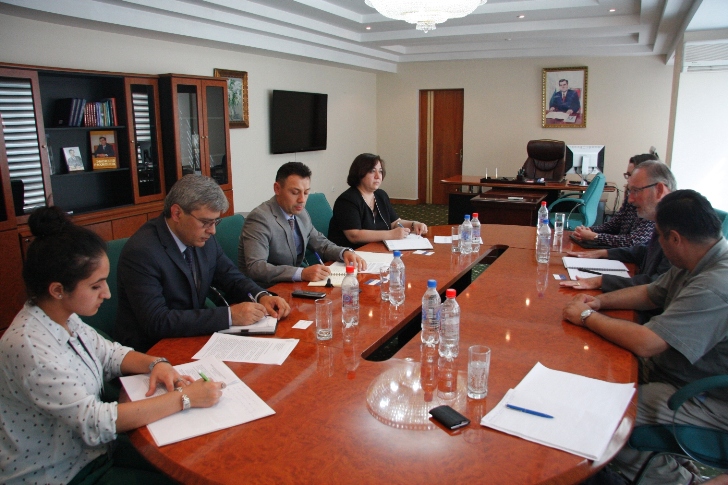
Issues related to introduction of the ‘Smart City’ concept in the framework of the implementation of the Dushanbe infrastructure development project were discussed at a meeting of Jamoliddin Nouraliyev, the Frist Deputy Chairman of the National Bank of Tajikistan (NBT), with representatives of DFID.

Nicholas Miles, DFID Senior Private Sector Adviser, in particular, noted that the Cities and Infrastructure for Growth (CIG) program, which is supported by the British Government, is aimed at infrastructural and economic development of a city.  

The sides reportedly discussed the possibility of expansion of the project and involvement of development of infrastructures of other large cities of Tajikistan in that project.

A smart city is an urban development vision to integrate information and communication technology (ICT) and Internet of things (IoT) technology in a secure fashion to manage a city's assets.  These assets include local departments' information systems, schools, libraries, transportation systems, hospitals, power plants, water supply networks, waste management, law enforcement, and other community services.  A smart city is promoted to use urban informatics and technology to improve the efficiency of services.  ICT allows city officials to interact directly with the community and the city infrastructure and to monitor what is happening in the city, how the city is evolving, and how to enable a better quality of life.  

Cities and Infrastructure for Growth, (CIG), is a new, 5-year, multi-country DFID program designed to support inclusive economic growth and job creation.

This program will enable cities to function effectively, attract new businesses and create employment.  It will provide reliable energy for households and businesses, thereby reducing production costs and removing the barriers to investment in much needed infrastructure services, such as energy, water and sanitation, transport and communications.


Article translations:

Related Article

Оби зулол

Most Read

Join us on social media!

Aura

Recent Articles

Sanctions lifted: Dushanbe City Bank resumes international operations

The bank is returning to full-scale international operations.

Gasoline and diesel fuel in Dushanbe rose in price by 8.9% due to the war in the Middle East

The rise in global oil prices and, consequently, the cost of petroleum products has triggered the closure of the Strait of Hormuz.

The Ministry of Labor organizes consultations for migrants returning from Russia at Dushanbe airport

Employees of the Migration Service explain the requirements of Russian legislation and offer job vacancies in their homeland.

Tajikistan and Uzbekistan discuss simplification of customs procedures and implementation of VIN.TJ system

The VIN.TJ system is designed to simplify the process of vehicle registration and control.

Tajikistan climbs four places in the global fixed internet speed ranking

This is the country's best performance in the past five years.

President of Tajikistan launches hydro unit No. 7 at Nurek HPP

As of today, three units have been completely replaced at the country's largest hydroelectric power station.

Italian Opera in Dushanbe: Shohrukh Yunusov invites to an evening of musical revelations

The evening will feature the most recognizable Italian works alongside world and Tajik classics.

The European Union lifts sanctions on Tajik banks

This is attributed to successful reforms and improved financial transparency in the country.

Meta announced plans to lay off about 10% of its staff

The reason cited is the high costs of artificial intelligence development.