Kazakhstan’s long-awaited transition from the Cyrillic to the Latin alphabet may be on the verge of happening, according to EurasiaNet.org.
Lawmakers in early September considered a preliminary proposal for a 25-letter Kazakh alphabet that will eventually lead to phasing out of the 42 Cyrillic symbols currently in use. The government’s goal is ostensibly to streamline the alphabet and create a neater fit between the written and spoken language, but many commentators are determined to see the change in grander terms. Some even see a plot to nudge Kazakhstan away from Russia’s cultural influence.
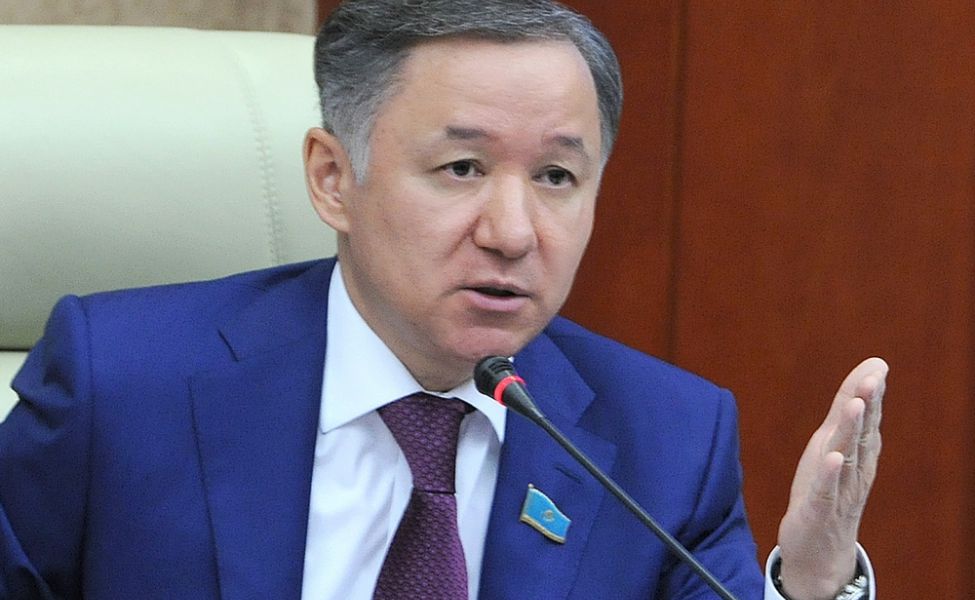
Speaking at a session of parliament on September 11, Nurlan Nigmatulin, the speaker of the lower house, said what was happening was more than just a change of script. “Latinization should help the Kazakh language become a powerful factor of spiritual regeneration and empower national identity,” he said.
Experts on the issue cite more practical points. “There are … several linguistic factors in favor of switching to the Latin alphabet. One, of course, is that the Latin alphabet is familiar to a far larger number of educated persons [around the world] than the Cyrillic alphabet. It is also used widely for communication over the internet and telephones,” Uli Schamiloglu, a professor at the Department of Kazakh Language and Turkic Studies in Nazarbayev University, told EurasiaNet.org.
The discussions in parliament mark the initial formal phase of a process that will take years to complete.
President Nursultan Nazarbayev issued instructions in April for a new alphabet to be drawn up by the end of the year, but implementation is expected to run through to 2025.
The new-look alphabet, as it is now, will be almost identical to the English alphabet, except for the lack of the letter “x.”
History shows that moving from one script to another can be a stop-and-start affair.
Kazakhstan has adopted the Latin alphabet before. Soviet authorities in June 1927 created the Committee of New Kazakh Alphabet to begin the process of moving away from the Arabic script, which was understood by only a tiny educated minority of the population. Legislation on the adoption of Latin script was passed in January 1929. Within a little over two months, a decree was adopted requiring all government offices to familiarize themselves with and begin integrating the new alphabet. A definitive 32-letter alphabet was only approved in 1938, however, just two years before the transition to Cyrillic.
Nazarbayev’s statement in April immediately generated a swell of indignant reactions among nationalistically inclined commentators in Russia. “The leadership of Kazakhstan will deny this, but this is a political step,” Alexei Pilko, director of the Russian state-affiliated Eurasian Communication Center think tank, told Gazeta.ru at the time.
Amangeldy Aitaly, a scholar at the Aktobe Regional State University, said that while he approved of the adoption of Latin letters as part of Kazakhstan’s ongoing effort to shed what he described as a colonial legacy, he warned that the process could also create fresh schisms in society by alienating certain communities, namely the ethnic Russians. “The transition to the Latin alphabet will indubitably increase the social status and function of the Kazakh language, but substituting an alphabet is accompanied by serious cultural and ethnic problems,” he told 365info.kz.
Saule Kalikova, public policy adviser at Soros Foundation–Kazakhstan, said that the Russian-speaking population is wrong to see the move away from Cyrillic as “the building of a barrier and a departure into a camp of European languages.”
“The meaning of the transformation goes much deeper than that,” she told EurasiaNet.org.