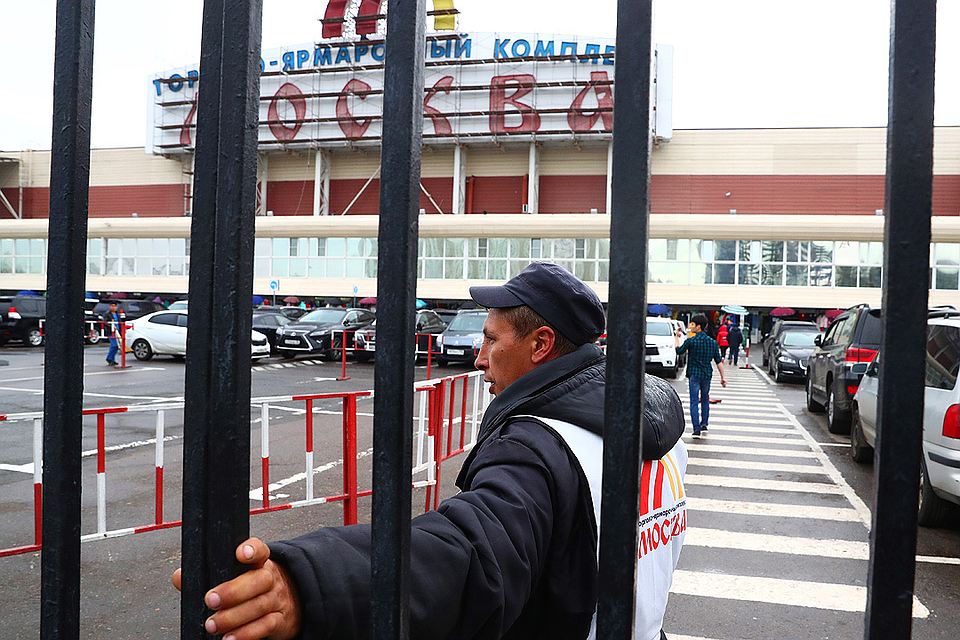
Moscow police department has instituted two criminal proceedings over an incident that took place at “Moskva” shopping mall in Moscow’s Lyublino district on September 20.
According to Kommersant, criminal proceedings have been instituted under the provisions of two articles of Russia’s Penal Code: Article 116 – beating; and Article 213 – hooliganism.
Wednesday evening Tajik national Navrouz Zikirov was severely beaten by security personnel at the shopping mall. He was hospitalized with injuries and brain concussion. Other employees stood up for him. According to some Russian media outlets, there was a conflict between them and security personnel, while other media outlets say that the mall employees, mostly nationals of Tajikistan, just gathered to protest over the beating and were not going to beat security personnel.
According to the Tajik Embassy in Moscow, 14 Tajik nationals are still being held in the Lyublino police department.
Meanwhile, Russian human rights activists say they have revealed violations of rights of Tajik nationals being held in the Lyublino police department.
Council for Civil Society and Human Rights under the President of Russia has applied to the Russian Interior Ministry with solicitation to investigate Tajik national’s beating and detention of Tajik nationals that followed the incident.
Denis Nabiullin, the member of the Moscow Public Monitoring Commission (PMC), told Itar Tass that human rights activists had revealed violations of rights of the Tajik nationals being held in the Lyublino police department.
“The police department is overcrowded. Twenty-two people have been held there for a day but they have not yet been provided with meals. Besides, twenty other Tajik nationals are just in the department hall because the cells are overcrowded,” Nabiullin said.
According to him, some of the detainees say that they have nothing to do with the incident that took place at the shopping hall. “They say they were detained at the Sadovod market where they work as vendors. They say they were detained because they have Tajik passports,” the human rights activist noted.
The Council for Civil Society and Human Rights under the President of Russia is a consultative body established to assist the President in the exercise of his constitutional responsibilities to guarantee and protect human rights and freedoms, keep the President informed on the situation in this area, facilitate development of civil society institutions in Russia, and draft proposals for the President on matters within its mandate.
Public monitoring commissions (PMCs) were founded in 2008, after a new law on public oversight was passed by the Russian Parliament. It allowed independent, non-governmental rights advocates to get elected to the monitoring bodies that inspect prisons.