

Tajikistan is interested in implementation of the regional railway project that will connect Tajikistan, Afghanistan and Turkmenistan.
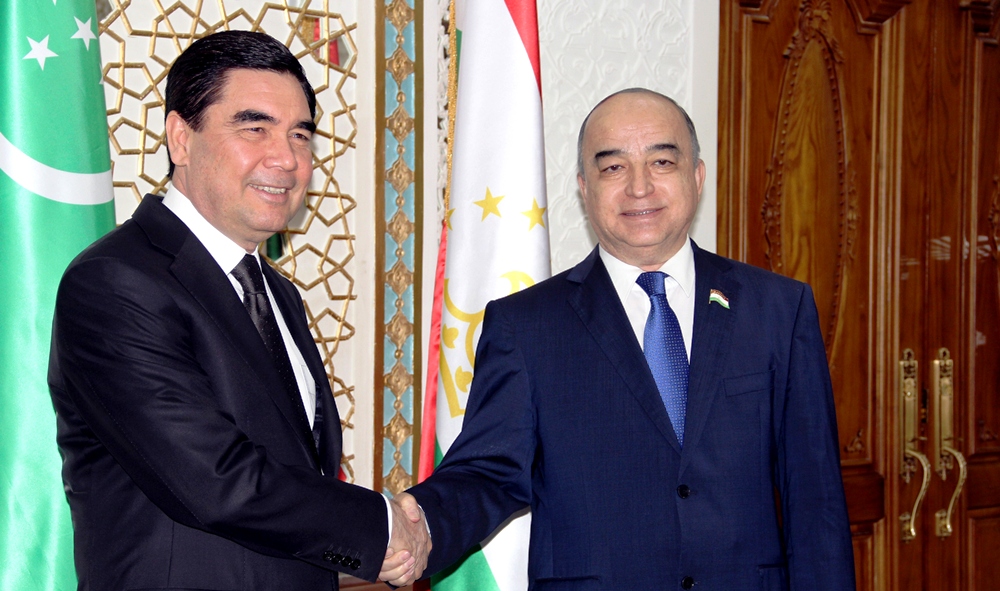
“It is necessary to make a consolidated decision on the construction of the Tajikistan-Afghanistan-Turkmenistan railway in the near future,” Shukurjon Zuhurov, Chairman of Majlisi Namoyandagon (Tajikistan’s lower chamber of parliament) noted here on November 3 during a meeting with visiting Turkmen President Gurbanguly Berdimuhamedov.
“The said also concerns an additional project aiming at construction of a 160-kilometer rail link connecting Beshkent, Kaldor, Islompanja and Kelif,” Zuhurov noted.
Recall, a memorandum of understanding (MoU) for construction of the rail link connecting the three countries was signed during a trilateral meeting of the presidents of Tajikistan, Turkmenistan and Afghanistan that took place in the Turkmen capital Ashgabat on March 20, 2013.
The 400-kilometer railroad is expected to connect the Afghan town of Akina-Andkhoy to Atamurat-Ymamnazar in Turkmenistan and Panj in Tajikistan.
The presidents of Afghanistan, Tajikistan, and Turkmenistan officially inaugurated the construction of the railway connecting the three nations on June 5, 2013. Presidents Hamid Karzai, Emomali Rahmon and Gurbanguly Berdimuhamedov participated in the ceremony that took place in Turkmenistan’s northeastern province of Lebap. They buried a time capsule with a message to future generations under the first section of the railway line near the town of Atamyrat.
TAT railway will be a part of a broader regional transportation initiative that will open a new transit corridor between Central Asia and world markets through Indian Ocean ports, a route less than half as long as Central Asian existing railway export options through Russia to the Baltic Sea coast. The TAT railway has a regional strategic implication, as it will enable Turkmenistan, Afghanistan and Tajikistan to have a railway line bypassing Uzbekistan. While the TAT railroad will diversify the transport routes of Tajikistan and Afghanistan, the greatest beneficiary will be Tajikistan, as the TAT rail line will allow it to overcome its current transportation deadlock and dependency on Uzbek railroads for transit. In the past Uzbekistan has frequently blocked its railway lines linking to Tajikistan, using Tajik transit dependency as leverage for political pressure.
