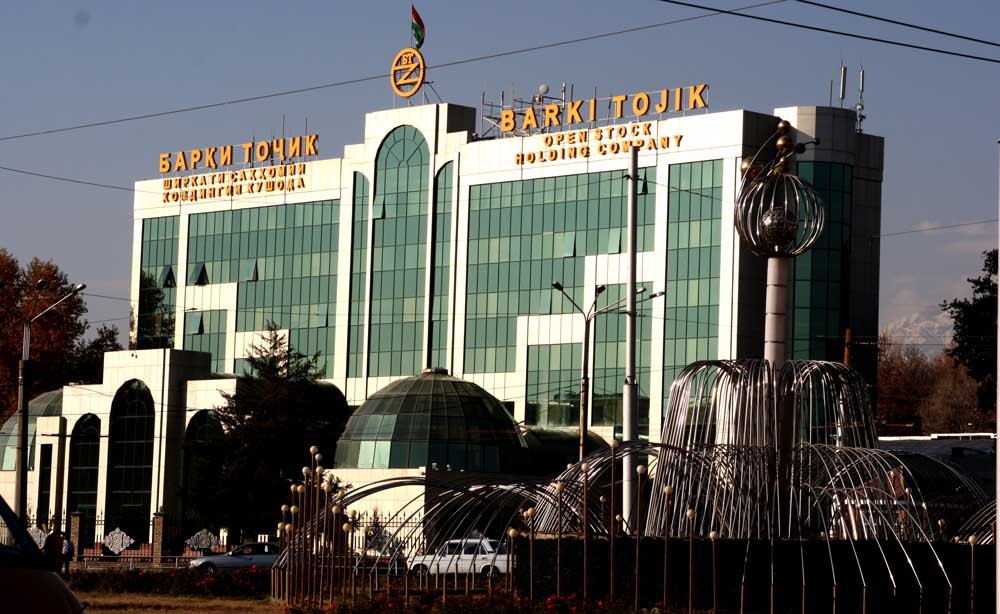
Tajik government seeks solution to the problems of Barqi Tojik’s debt relief

The issue of repayment of the debt of Barqi Tojik power holding (a national integrated power company of Tajikistan) to Open Joint-Stock Company (OJSC) Sangtudinskaya GES-1, which operates the Sangtuda-1 hydroelectric power plant (HPP), was discussed today at a meeting of Tajik Deputy Prime Minister, Azim Ibrohim, with senior representatives of OJSK Sangtudinskaya GES-1, a […]

The issue of repayment of the debt of Barqi Tojik power holding (a national integrated power company of Tajikistan) to Open Joint-Stock Company (OJSC) Sangtudinskaya GES-1, which operates the Sangtuda-1 hydroelectric power plant (HPP), was discussed today at a meeting of Tajik Deputy Prime Minister, Azim Ibrohim, with senior representatives of OJSK Sangtudinskaya GES-1, a source in the Tajik government told Asia-Plus in an interview.

The meeting participants also discussed the process of implementation of the provisions of the protocol of the 14th session of the Tajik-Russian commission for trade and economic cooperation as well as the process of coordination of a financial-economic model of return of investments and efficient use of the profit earned form attraction of investments and finding of new external markets for distribution of electricity, the source added.   

Meanwhile, Barqi Tojik now owes 876 million somoni to OJSC Sangtudinskaya GES-1. 

The construction of the Sangtuda-1 hydropower plant located some 110 kilometers southeast of Dushanbe began in the late 1980s.  By the early 1990s, only 20% of the construction work had been completed, and further construction was suspended due to a civil war that broke out in Tajikistan in the early 1990s.  The talks between Russia and Tajikistan on completing the construction of the Sangtuda-1 HPP began in 2003 and in 2004 the parties signed an inter-governmental agreement.

Russian-Tajik OJSC Sangtudinskaya GES-1 was established to complete the construction of the Santuda-1 power plant.  Russia’s Inter RAO YeES and the Ministry of Energy and Industries of Tajikistan signed an agreement on the establishment of the company in Dushanbe on February 16, 2005.

Russia owns 75% percent of the shares minus one share and Tajikistan assumes the 25% ownership interest plus one share in Sangtudinskaya GES-1.

The Sangtuda-1 HPP was officially commissioned on July 31, 2009.  The plant now reportedly provides around 15% of Tajikistan’s electricity output.
Join us on social media!

Article translations:

Related Article

Оби зулол
Tenisi
Оби зулол

Most Read

Коммерсбонк Точикистон

Recent Articles

Gusty winds and mudslides damage houses, roads, and cars in Dushanbe and some other regions

At least 9 vehicles were damaged, including three in Dushanbe and six in Vahdat.

The US struck military facilities in Iran. Trump expressed dissatisfaction with Tehran’s proposals and threatened Oman.

Earlier, Iran's state TV reported receiving a draft unofficial framework agreement between Tehran and Washington to settle the conflict.

How much did Tajikistan’s budget earn from the “Google tax”?

The law is already 5 years old, but the Tax Committee provided data only for the last 2 years.

The bilateral trade between Tajikistan and Iran increased by 8% in Q1 2026

Another meeting of the joint intergovernmental commission of the two countries took place in Dushanbe.

Russia and Taliban government sign military-technical cooperation agreement

The document may open up opportunities for the exchange of weapons, military technologies, and other types of defense cooperation.

“Hit with fists on the lower back and abdomen.” A teacher from Nurobod, claiming he was beaten by a student’s brother, details the attack

According to him, he is being threatened with murder, and law enforcement agencies have not yet detained the attacker.

International internet starts coming back in Iran after long shutdown 

Western media reports says Iranians ​isolated by a long...

Tajikistan listed among countries with low generative AI usage

Among the Central Asian countries, Kazakhstan has the highest rate.

Prices in Tajikistan rise almost 2% in January-April: apples, fuel, and utilities become particularly more expensive

In April, inflation was 0.6%: food products became more expensive, non-food products increased in price comparatively less, and tariffs for paid services remained unchanged.

Drought in Central Asia becoming a chronic threat, IWMI expert warns

The temperature in the region is rising faster than the global average.