

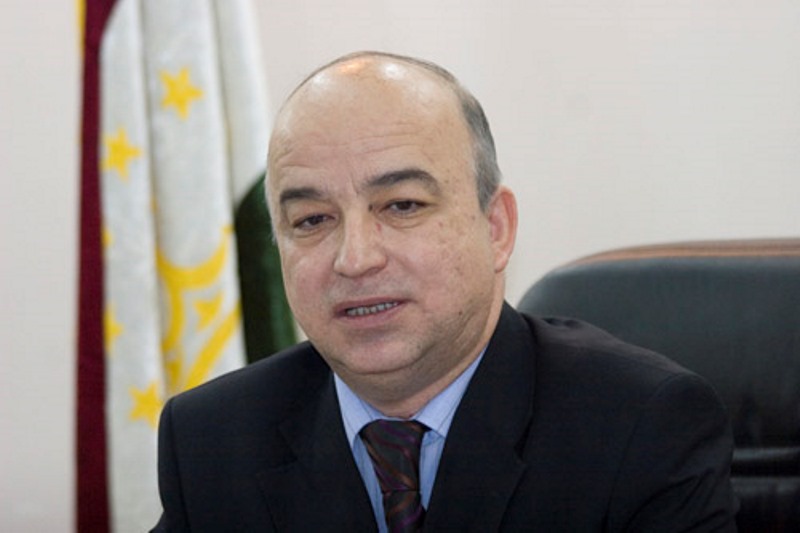
Chairman of Tajikistan’s lower house (Majlisi Namoyandgon) of parliament, Shukurjon Zhurov, does not trust statistical data offered by the government bodies and ordered to define more precisely what criteria are used to identify poverty in a family in Tajikistan.
A regular sitting of the Majlisi Namoyandagon, presided over by its head, Shukurjon Zhurov, took place on June 20.
Speaking at the meeting, Zuhurov said that he is confident that nobody in the country knows exactly what criteria are used to identify poor families in Tajikistan.
The parliament speaker criticized work carried out by the government bodies, first of all, the Ministry of Health and Social Protection of Population, to identify poor families in the country.
“According to the statistical date, the poverty rate in Tajikistan declined from 73 percent in 2003 to 31 percent in 2015,” said Zuhurov. “On what this statistical data is based? Therefore, I ask the Ministry of Health to provide a specific report on how poor families are identified in our country.”
Speaking on this issue, the head of the Majlisi Namoyandagon Committee on Finance and Economics, Sharif Rahimzoda, noted that the poverty rate in the country is identified by the Agency for Statistics under the President of Tajikistan through sociological surveys conducted quarterly.
Meanwhile, a report by the World Bank, Tajikistan: Country Economic Update Spring 2017, notes that 13 percent of Tajikistan's population lives below the poverty line, and this indicator has not changed since 2009. The World Bank defines a poverty threshold of $3.1 per person per day. Thus, the person whose expenses per day is less than the specified one is identified as poor, and those who spend less than $1.1 a day are below the poverty line.
